Calendar 1912/13
 83
83

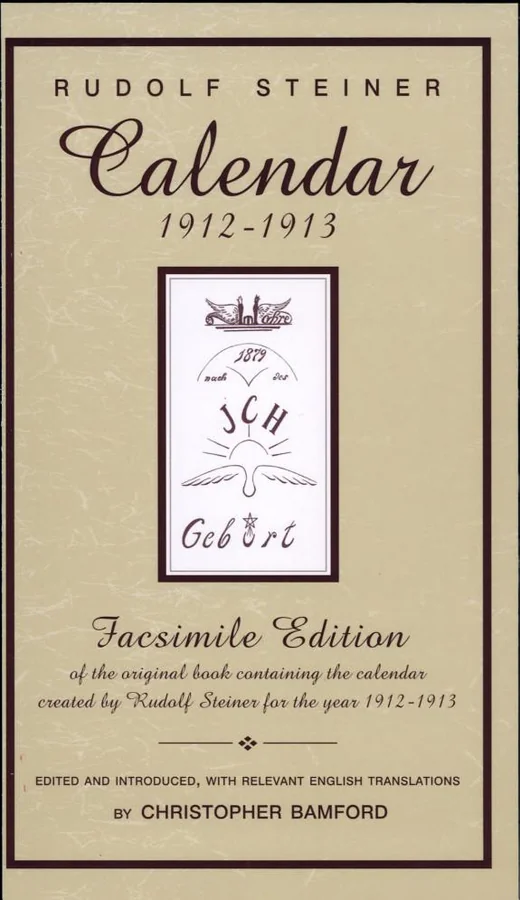
Calendar 1912/13
The Calendar 1912/13 facsimile offers a rare, unvarnished look at Rudolf Steiner's structured approach to spiritual perception for a specific temporal period. Unlike his more didactic works, this calendar presents a more fragmented, perhaps even cryptic, series of observations intended for a dedicated following in 1912. Its strength lies in its historical authenticity, providing direct access to Steiner's thought as it was being disseminated annually. However, without extensive prior knowledge of Anthroposophical concepts, the translated entries can feel disconnected, requiring significant interpretive effort. The passages concerning the 'spiritual tasks' of the year, for example, demand a deep familiarity with Steiner's cosmology to yield their full meaning. This is not introductory material; it is a primary source for committed students.
📝 Description
83
Rudolf Steiner's Calendar 1912/13 offers a facsimile of a yearly publication from that period.
This volume reproduces Rudolf Steiner's calendar from 1912-1913, including English translations for broader access. It serves as a historical document, showing spiritual and intellectual ideas of the early 20th century as Steiner understood them. The calendar is for students of Anthroposophy, the spiritual philosophy Steiner founded. Researchers of early esoteric movements and historians of spiritual science will also find it useful. Anyone interested in Steiner's method of relating to spiritual awareness through calendrical cycles may find value. Individuals working with Steiner's educational or agricultural methods might also see its relevance for understanding foundational contexts.
The 1912-1913 period was active for esoteric thought in Europe. Steiner was developing Anthroposophy, having left Theosophy in 1913. This calendar appeared during a time of intellectual change, when figures like Carl Jung were examining the unconscious and science was shifting. The work shows Steiner's attempts to create a spiritual science separate from existing religious or philosophical systems.
Published in 1912-1913, this calendar emerged during a period when Rudolf Steiner was formalizing Anthroposophy, a spiritual philosophy he developed after his departure from Theosophy in 1913. It reflects the intellectual climate of early 20th-century Europe, a time of significant exploration in areas like psychology and the nature of consciousness, with figures like Carl Jung also active. Steiner's work aimed to establish a distinct spiritual science, independent of established religious and philosophical frameworks, focusing on understanding the spiritual forces influencing human life and the cosmos.
💡 Why Read This Book?
• Understand Steiner's specific calendrical approach to spiritual awareness, as presented for the 1912-1913 year, which differs from generic seasonal reflections. • Engage directly with the historical development of Anthroposophy by examining a primary source from 1912, a pivotal year for Steiner's independent work. • Gain insight into Steiner's conceptualization of spiritual cycles and their perceived influence on human consciousness during the early 20th century.
⭐ Reader Reviews
Honest opinions from readers who have explored this book.
❓ Frequently Asked Questions
What is the primary purpose of the Calendar 1912/13?
The Calendar 1912/13 serves as a spiritual guide and observational tool, presenting Steiner's insights into the cosmic and spiritual forces active during that specific year, intended for followers of Anthroposophy.
Is this book suitable for beginners in esoteric studies?
While accessible via translation, the calendar assumes a foundational understanding of Rudolf Steiner's philosophical and spiritual concepts, making it more suitable for those already familiar with Anthroposophy.
What is a facsimile edition?
A facsimile edition is a precise reproduction of an original document, in this case, the 1912/13 calendar by Rudolf Steiner, preserving its original layout and content, often accompanied by translations.
When did Rudolf Steiner develop Anthroposophy?
Rudolf Steiner began to develop Anthroposophy in the years leading up to and following his departure from the Theosophical Society in 1913, with this calendar appearing during that formative period.
What kind of content can be expected in the Calendar 1912/13?
Readers can expect contemplations on spiritual events, cosmic influences, and the inner development of the human being as related to the specific time frame of 1912-1913, framed within Steiner's spiritual science.
Are there English translations included?
Yes, the edition explicitly states it includes relevant English translations, making the German original accessible to English-speaking readers.
🔮 Key Themes & Symbolism
Spiritual Chronology
The calendar functions as a unique spiritual chronicle, mapping out perceived cosmic and spiritual events and their significance for human consciousness during the 1912-13 period. It moves beyond a simple listing of dates to imbue time itself with spiritual meaning. Steiner suggests that specific spiritual impulses are active at different points in the year, influencing human evolution and individual karma. Understanding these temporal dynamics is presented as key to conscious spiritual development.
Anthroposophical Practice
This publication is a direct artifact of early Anthroposophical practice, intended for adherents to use in their daily spiritual work. It provides contemplative material, encouraging readers to align their inner lives with the spiritual rhythms Steiner outlines. The emphasis is on cultivating inner perception and recognizing the spiritual realities behind the physical world, using the calendar as a practical tool for this purpose.
The Michaelic Impulse
While not always explicitly named, the underlying currents of the calendar often relate to Steiner's concept of the Michaelic impulse, a spiritual force he associated with consciousness, freedom, and the development of individuality. The period of 1912-13 was critical in Steiner's own development and articulation of this impulse, following his separation from Theosophy. The calendar may contain veiled references to this ongoing spiritual battle and the emergence of human spiritual freedom.
Karma and Reincarnation
Steiner frequently linked earthly events and human experiences to the principles of karma and reincarnation. The Calendar 1912/13 likely contains insights into how karmic processes unfold within the context of specific yearly cycles. It suggests that understanding these spiritual temporal patterns can aid individuals in comprehending their own life path and the unfolding of collective destiny.
💬 Memorable Quotes
Direct passages from the work, attributed to the author.
“The spiritual world is not hidden from us; it is structured in a way that it can be perceived by the human soul.”
— This statement reflects Steiner's core assertion that the spiritual realm is not an abstract or inaccessible dimension but possesses an inherent order and intelligibility that can be apprehended through developed human faculties.
“To perceive the spiritual, one must spiritualize perception itself.”
— This captures the essence of Anthroposophical training – the idea that developing higher cognition requires transforming one's own consciousness, rather than passively receiving information.
“The rhythm of the year mirrors the rhythm of the soul's journey.”
— This interpretation emphasizes the connection Steiner draws between cosmic cycles (the year) and inner human experience (the soul's evolution and reincarnation).
💡 Key Ideas
Editorial paraphrase of the work's core concepts — not direct quotes.
Each year carries its own unique spiritual tasks and challenges for humanity.
This paraphrase highlights the calendar's function: it's not merely a timekeeping device but a map of the specific spiritual energies and developmental imperatives active within the 1912-13 cycle.
Understanding the calendar means understanding the spiritual forces shaping the present.
This paraphrase underscores the practical application Steiner intended: using the calendar's insights to navigate contemporary events and personal circumstances with spiritual awareness.
🌙 Esoteric Significance
Tradition
This work firmly belongs within the modern Western esoteric tradition, specifically Anthroposophy, which Steiner founded. It departs from Theosophy, from which Steiner had recently separated, by emphasizing a more individualized path of spiritual development and a specific methodology for perceiving spiritual realities, grounded in 'spiritual science' rather than purely mystical intuition or ancient dogma.
Symbolism
The calendar likely employs symbols representing cosmic forces and spiritual beings. For instance, celestial bodies like the Sun and Moon often symbolize consciousness and the soul, respectively. Seasonal changes might represent stages of spiritual development or karmic cycles. Specific festival days (e.g., Easter, Michaelmas) carry profound symbolic weight in Steiner's work, representing key moments of spiritual struggle and renewal.
Modern Relevance
Contemporary practitioners of Waldorf education, biodynamic agriculture, and anthroposophical medicine continue to draw upon the foundational principles articulated by Steiner, including his understanding of spiritual time cycles. Thinkers in consciousness studies and integral philosophy also engage with Steiner's concepts as a historical precursor to modern transpersonal psychology and holistic worldviews.
👥 Who Should Read This Book
["• Students of Rudolf Steiner's work: Those seeking to deepen their understanding of Anthroposophy will find this a valuable primary source for the 1912-13 period.", '• Historians of esoteric movements: Researchers interested in the development of early 20th-century spiritual philosophies and their dissemination will benefit from this document.', '• Individuals exploring spiritual timekeeping: Readers curious about non-traditional approaches to understanding the spiritual significance of the calendar year will find unique perspectives.']
📜 Historical Context
The Calendar 1912/13 emerged during a period of intense spiritual exploration and philosophical innovation in Europe. Rudolf Steiner, having recently broken from the Theosophical Society in 1913, was solidifying his independent movement, Anthroposophy. This era saw figures like Carl Jung exploring archetypes and the collective unconscious, while Henri Bergson championed intuition as a mode of knowledge. Steiner’s work positioned itself as a distinct 'spiritual science,' aiming to provide verifiable insights into realms beyond the physical. Unlike purely materialistic philosophies or traditional religious doctrines, Steiner sought a middle path accessible through rigorous inner training. The publication of such calendars was a characteristic method for disseminating his yearly spiritual insights and guiding adherents, reflecting a broader European interest in esoteric traditions and alternative worldviews.
📔 Journal Prompts
The spiritual tasks of 1912-13: How might these abstract challenges manifest in tangible life events?
Reflect on the concept of 'spiritual science' as presented by Steiner in this calendar.
Consider the relationship between the earthly year and the soul's journey.
How does the calendar's approach to time differ from conventional methods?
Identify potential symbols within the calendar that speak to inner transformation.
🗂️ Glossary
Anthroposophy
A spiritual philosophy founded by Rudolf Steiner, seeking to investigate the spiritual worlds through a developed human consciousness, often termed 'spiritual science'.
Spiritual Science
Steiner's term for his method of investigating the spiritual world, emphasizing methodical, conscious, and verifiable perception beyond ordinary senses.
Karma
In Anthroposophy, the law of cause and effect governing moral and spiritual consequences, often linked to reincarnation and influencing human destiny.
Michaelic Impulse
A spiritual current Steiner associated with the Archangel Michael, representing forces of consciousness, freedom, and the development of individuality in humanity.
Facsimile
An exact copy or reproduction of an original document or work, preserving its appearance and content.
Esoteric
Relating to or accessible only by a relatively small number of people with specialized knowledge or interest; pertaining to inner, spiritual truths.
Cosmic Forces
Spiritual or energetic influences originating from the celestial bodies and the universe, believed by Steiner to impact earthly life and human consciousness.
This book appears in 1 collection
🔮 Readers Also Liked
Browse all →








From the “Anthroposophy” Collection
View all →






More Free Theosophy & Anthroposophy Books
View all →