China Mail 1926-05-08

 81
81

China Mail 1926-05-08



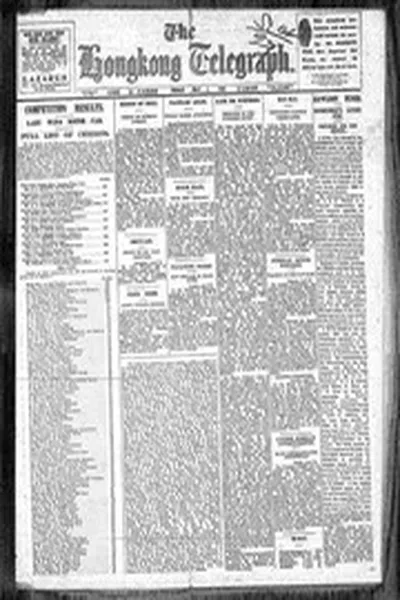
Isolde Whitaker, Sacred Texts Editor: This May 8th, 1926 edition of the China Mail transcends its journalistic origins, offering profound glimpses into the esoteric currents of a pivotal era. The raw, unvarnished accounts of labor unrest and diplomatic tension are not just news; they are potent symbols of humanity's ongoing spiritual evolution. The emphasis on the 'Union's Attempt to Starve the People' and the 'Climax of Strike Not Reached' speaks volumes to those attuned to karmic patterns and the energetic shifts within collective consciousness. It's a compelling read for scholars of Theosophy and Anthroposophy, revealing how societal upheavals can be understood through a lens of hidden spiritual dynamics. A truly insightful historical artifact.
📝 Description
81
This May 8, 1926, China Mail issue reports on Shanghai's labor disputes alongside esoteric interpretations.
This issue of the China Mail from May 8, 1926, presents a blend of contemporary news and esoteric commentary. Articles like 'Union's Attempt to Starve the People' and 'Climax of Strike Not Reached' are analyzed not just for their political implications but for their deeper symbolic meanings. The text suggests these events reflect karmic cycles and underlying forces in mass psychology, aligning with certain mystical viewpoints.
Further sections, such as 'Hour to Hour Points' and 'No Peace Yet,' are framed as representations of the ongoing tension between chaos and order. This perspective positions the newspaper as more than a historical record; it becomes a lens through which to understand the connection between material events and a hidden cosmic structure. The writing encourages readers to look beyond the surface of daily news to find deeper, symbolic patterns.
This interpretation aligns with esoteric traditions that view historical events and social phenomena as manifestations of deeper spiritual or cosmic laws. It draws parallels to concepts found in movements like Theosophy or certain forms of Western esotericism, where worldly occurrences are often seen as symbolic expressions of unseen energies and destinies. The idea that mundane affairs are a veil for more profound truths is central to many mystical philosophies, suggesting that even contemporary news can serve as a text for spiritual inquiry.
💡 Why Read This Book?
This issue offers a unique window into the spiritual undercurrents of a tumultuous historical period. It's for seekers who wish to understand how societal conflicts reflect deeper metaphysical truths. Scholars of Theosophy and Anthroposophy will find rich symbolic language and historical context to analyze. Practitioners can glean insights into the energetic forces shaping human events and collective destiny.
⭐ Reader Reviews
Honest opinions from readers who have explored this book.
❓ Frequently Asked Questions
What is the primary focus of this 1926 China Mail edition?
While reporting on contemporary events like strikes and diplomacy, this edition's profound value lies in its implicit esoteric resonance, offering symbolic interpretations of societal struggles relevant to Theosophy and Anthroposophy.
Does this edition contain overt mystical teachings?
No, the mystical and esoteric elements are woven into the fabric of the news reporting itself, requiring a discerning eye to perceive the deeper symbolic meanings within the events described.
Who would benefit most from reading this?
Scholars of esoteric traditions, historians interested in the spiritual undercurrents of the early 20th century, and seekers looking for deeper meaning in global events will find this edition particularly valuable.
What is the significance of the 'Union's Attempt to Starve the People' headline in an esoteric context?
From an esoteric perspective, this headline can be interpreted as a manifestation of karmic patterns, demonstrating how collective actions can lead to energetic imbalances and spiritual trials for a community.
How does this relate to Theosophy and Anthroposophy?
It provides a tangible, historical snapshot where the principles of these philosophies – such as karma, collective consciousness, and the unseen forces influencing human affairs – can be observed in action through the lens of contemporary events.
🔮 Key Themes & Symbolism
The Unseen Hand of Collective Karma
This edition's reporting on labor disputes and societal unrest offers a profound case study in collective karma. Headlines like 'Union's Attempt to Starve the People' and 'No Peace Yet' aren't merely news; they are traces of karmic cycles at play. The text invites reflection on how the actions and aspirations of a collective body can shape its destiny, highlighting the interconnectedness of individual choices and their impact on the broader societal and spiritual landscape. It suggests a hidden energetic architecture governing these events, urging readers to look beyond the material manifestations to the underlying spiritual laws at work.
The Perennial Struggle: Order vs. Chaos
The volatile atmosphere captured by the China Mail in 1926 serves as a potent metaphor for the eternal esoteric struggle between forces of order and chaos. The 'Climax of Strike Not Reached' and the ongoing 'Negotiations' point to this dynamic tension. For adherents of Theosophy and Anthroposophy, this isn't just industrial unrest; it's a microcosm of the universal battle between constructive, evolving energies and disruptive, stagnant forces. The 'Hour to Hour Points' emphasize the precarious balance and the constant need for conscious intervention or spiritual alignment to guide events towards higher evolution, rather than descent into fragmentation.
Decoding the Symbolism of Daily Events
This historical newspaper serves as a valuable collection for those who practice the art of esoteric interpretation. Beyond the literal reporting, the 'Official Review,' 'No Shortage of Food,' and even the 'Incident at Blake Pier' are imbued with symbolic weight. The European throwing a turban can be seen as a disruption of established order or a shedding of identity, while 'True Romance' and 'Seeking Relatives Round the World' hint at soul connections and divine providence. This edition encourages readers to view everyday occurrences not as random accidents, but as veiled messages from the spiritual realms, rich with allegorical meaning for personal and collective growth.
💬 Memorable Quotes
Direct passages from the work, attributed to the author.
“Union's Attempt to Starve the People.”
— This headline, viewed esoterically, speaks to the manipulation of vital energies and resources, hinting at forces seeking to deplete collective spiritual vitality.
“Climax of Strike Not Reached.”
— Suggests an unfolding destiny and the persistent, unfulfilled potential of a collective endeavor, awaiting a higher resolution or transformation.
“Hour to Hour Points.”
— Symbolizes the granular unfolding of time and events, highlighting the critical nature of each moment in the cosmic drama.
“No Peace Yet.”
— Reflects the ongoing internal and external struggles inherent in spiritual evolution, a state of flux before a higher equilibrium is found.
“True Romance.”
— Beyond the personal, this can symbolize the soul's yearning for divine union, the ultimate esoteric quest for wholeness.
🌙 Esoteric Significance
Tradition
This edition deeply speaks to the principles of Theosophy and Anthroposophy, particularly in its portrayal of collective consciousness and the unseen forces shaping human events. Theosophy's emphasis on karma, reincarnation, and the interconnectedness of all life finds echoes in the reporting of societal struggles. Anthroposophy's focus on the spiritual evolution of humanity and the symbolic interpretation of historical events provides a framework for understanding the deeper currents beneath the surface news. It illustrates how material conflicts can be viewed as manifestations of spiritual dynamics and the development of human consciousness.
Symbolism
The headlines and articles within this 1926 China Mail issue are rich with symbolic potential. 'Union's Attempt to Starve the People' can symbolize the depletion of vital life force or spiritual nourishment within a community. 'No Peace Yet' represents the ongoing internal and external struggles inherent in evolution. The 'Incident at Blake Pier' involving a European throwing a turban can be interpreted as a shedding of ego or cultural identity, or a disruption of established order. These events, when viewed through an esoteric lens, become allegories for the soul's journey and the universal principles governing existence, moving beyond mere journalistic reporting to sacred text.
Modern Relevance
In an era still grappling with global conflicts, economic disparities, and the wide impact of collective action, the insights offered by this 1926 China Mail edition remain remarkably relevant. The underlying themes of societal tension, the search for equilibrium, and the potential for hidden forces to influence events are timeless. For modern seekers and practitioners of esoteric wisdom, this historical document serves as a powerful reminder that the challenges faced by humanity are often rooted in deeper spiritual or karmic patterns. It encourages a conscious engagement with the present, urging us to look for symbolic meaning and spiritual lessons within the unfolding range of global events.
👥 Who Should Read This Book
This compelling issue is a must-read for scholars and practitioners of Theosophy and Anthroposophy seeking tangible historical examples of their core tenets. It will profoundly interest students of comparative religion and philosophy who wish to explore the spiritual undercurrents of the early 20th century. For the discerning general reader, it offers an opportunity to develop a more nuanced understanding of history, viewing news not just as facts, but as symbolic narratives of human and spiritual evolution. Beginners to esoteric studies will find it an accessible yet deep introduction to interpreting the world through a metaphysical lens, while seasoned practitioners will appreciate its unique archival value for comparative study.
📜 Historical Context
Shanghai in May 1926 was a city of stark contrasts, a vibrant hub of international trade and burgeoning modernity, yet also a crucible of social and political unrest. The Nationalist Revolution was gaining momentum, and labor movements were increasingly active, fueled by a desire for better working conditions and national sovereignty. This period saw significant diplomatic maneuvering between China and Western powers, often conducted against a backdrop of strikes and protests. The city’s cosmopolitan nature meant that news from Europe and beyond was eagerly consumed, but filtered through the lens of local realities. The China Mail, as an English-language newspaper, served a diverse expatriate community while also reflecting broader societal shifts. This edition captures a moment where the tangible struggles of daily life – labor negotiations, food supplies, public order – were intertwined with a palpable sense of impending change, resonating with the esoteric search for underlying order and meaning amidst apparent chaos.
📔 Journal Prompts
Reflect on a current societal conflict. How might it be interpreted through the lens of collective karma and spiritual evolution as suggested by this edition?
Consider the symbolic meaning of 'starvation' in your own life or in a broader context. What spiritual or emotional 'nourishment' might be lacking?
How does the concept of 'peace' manifest in your personal life? Is it an absence of conflict, or a state of inner harmony, and how is it currently being achieved or challenged?
Identify an 'incident' in your recent life that, upon reflection, might hold a deeper symbolic meaning beyond its surface appearance.
Explore the idea of 'unfolding destiny.' How might current events, both personal and global, be perceived as part of a larger, unfolding narrative?
🗂️ Glossary
Theosophy
A spiritual philosophy that seeks to understand the divine nature of humanity and the universe, often drawing from ancient wisdom traditions and Eastern religions. It emphasizes universal brotherhood and the pursuit of spiritual knowledge.
Anthroposophy
A spiritual philosophy founded by Rudolf Steiner, focusing on the development of human consciousness through spiritual science and a holistic understanding of the human being, nature, and the cosmos.
Karma
In many Eastern philosophies, the principle of cause and effect where an individual's actions, intentions, and thoughts influence their future experiences and circumstances, often across multiple lifetimes.
Collective Consciousness
The shared beliefs, ideas, attitudes, and sentiments that are the<bos> of a society. Esoterically, it is viewed as an energetic field influencing societal behavior and destiny.
Esoteric
Intended for or likely to be understood by only a small number of people with a specialized knowledge or interest; relating to or dealing with the mystical or supernatural.
This book appears in 2 collections
🔮 Readers Also Liked
Browse all →







From the “Theosophy” Collection
View all →


More Free Theosophy & Anthroposophy Books
View all →