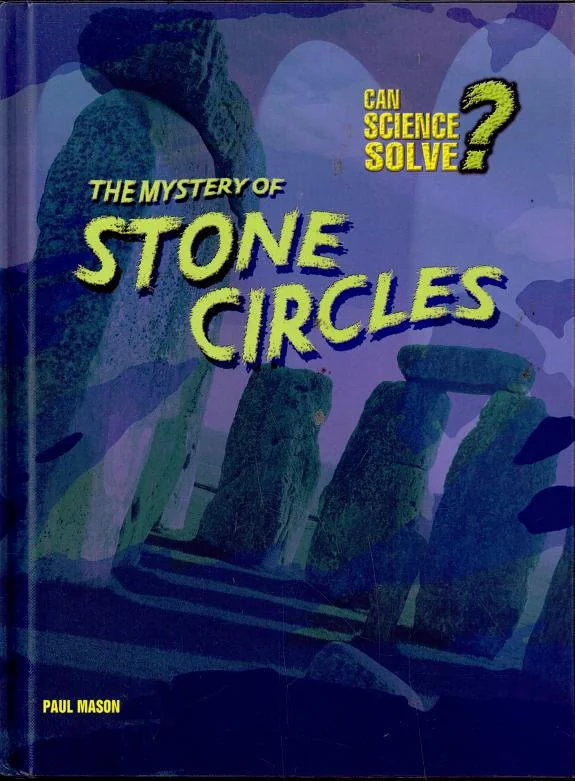
Buddhistisch-hermetische Aufsätze vom "Golden Dawn"-Mitglied Allan Bennett

 80
80

Buddhistisch-hermetische Aufsätze vom "Golden Dawn"-Mitglied Allan Bennett
Allan Bennett's essays offer a rare and unvarnished look at Buddhist monasticism through the eyes of a Western occultist. His account of entering a Burmese Buddhist order is starkly detailed, avoiding the romanticism that often colors such narratives. The strength of this work lies in its unflinching honesty regarding the challenges and profound simplicity of the path. A particularly striking section describes the initial days within the temple, highlighting the stark contrast between worldly life and the monastic discipline Bennett embraced. However, the book occasionally suffers from a slight didacticism, where Bennett's interpretations, while informed by his esoteric background, can sometimes feel imposed upon the Buddhist narrative rather than organically arising from it. The work's ultimate value is in its bridge-building between disparate spiritual landscapes, presenting a compelling, if occasionally dense, exploration of spiritual discipline. Bennett's direct experience in Burma provides an anchor of authenticity that few Western accounts of this era possess.
📝 Description
80
Allan Bennett's Buddhistisch-hermetische Aufsätze offers a firsthand account of monastic life in Burma from a Golden Dawn member.
This volume collects essays by Allan Bennett, a member of the Hermetic Order of the Golden Dawn who also engaged deeply with Buddhist philosophy. Bennett's writings detail his experiences within a Burmese Buddhist order, providing a rare, personal perspective on monastic life and spiritual training. The essays go beyond simple descriptions, aiming to illuminate the core principles and practices that define this spiritual path. The work is for anyone interested in the connections between Western esotericism and Eastern spiritual traditions.
Readers curious about Theravada Buddhism, particularly its monastic aspects, will find Bennett's observations insightful. Practitioners of Western magical systems may also find value in understanding these cross-cultural influences. Scholars specializing in comparative religion or esoteric history will benefit from Bennett's direct accounts. The book addresses concepts like renunciation as a means to liberation, the demanding discipline and inner changes necessary for new monks, and the mind's capacity for both distraction and stillness. It also discusses meditation's role in achieving inner balance.
Allan Bennett (1872-1923) was an important figure in early 20th-century Western esotericism, known for his membership in the Golden Dawn. His work stands out for its attempt to reconcile Western magical theory with his direct experiences in Theravada Buddhism, particularly during his time in Burma. This period saw growing Western interest in Eastern thought, influenced by groups like the Theosophical Society. Bennett's writings, however, offer a distinctly personal and detailed exploration of these traditions, distinguishing him from more general accounts.
💡 Why Read This Book?
• Gain an authentic, firsthand account of entering a Theravada Buddhist monastic order in Burma, as detailed in Bennett's 'The First Day in the Temple' section, offering a rare glimpse into a spiritual path. • Understand the practical application of spiritual discipline through Bennett's rigorous self-examination, a core element explored in 'The Path to Peace,' providing concrete methods for inner cultivation. • Explore the synthesis of Western Hermeticism and Eastern Buddhism, as exemplified by Bennett's unique perspective as a Golden Dawn member observing Buddhist practices, revealing cross-cultural esoteric influences.
⭐ Reader Reviews
Honest opinions from readers who have explored this book.
❓ Frequently Asked Questions
What is Allan Bennett's connection to the Golden Dawn?
Allan Bennett was a member of the Hermetic Order of the Golden Dawn, a significant influence on Western esotericism. His background within this magical order informs his unique perspective on Buddhist practices and philosophy presented in his writings.
What makes Bennett's account of Burmese Buddhism unique?
Bennett provides one of the few authentic, detailed, and firsthand reports of initiation and life within a Buddhist order in Burma, written by a Westerner at the turn of the 20th century.
When was Allan Bennett active?
Allan Bennett was active in esoteric circles primarily in the late 19th and early 20th centuries, with his significant writings and experiences in Burma occurring around the turn of the century.
What is the 'Golden Dawn' mentioned in relation to Allan Bennett?
The 'Golden Dawn' refers to the Hermetic Order of the Golden Dawn, a secret society founded in 1888 that greatly influenced modern Western occultism, magic, and esotericism.
What does the book reveal about Buddhist monastic life?
The book offers detailed insights into the process of leaving worldly life, the novitiate period, and the daily practices and philosophical underpinnings of a Buddhist temple in Burma.
Who is Horst E. Miers?
Horst E. Miers is cited as the author of 'Lexikon des Geheimwissens' (Encyclopedia of Esoteric Knowledge), who recognized Bennett's work as an authentic report on Buddhist monastic entry.
🔮 Key Themes & Symbolism
The Path of Renunciation
Bennett's essays emphasize renunciation not as loss, but as a deliberate shedding of worldly attachments to achieve spiritual freedom. He meticulously details the process, from 'The Leaving of Home' to the rigorous discipline of the novitiate. This theme is central to understanding how Buddhist monasticism, as experienced by Bennett, functions as a practical method for the sublimation of ego and the attainment of inner peace, challenging conventional Western notions of personal fulfillment.
Mindfulness and Stillness
Central to Bennett's exploration is the nature of the mind and the cultivation of stillness. He describes the challenges of a restless mind and the systematic approach required to achieve meditative concentration. The 'Path to Peace' is presented as a journey of developing mental discipline, where observation and detachment lead to clarity. This focus on internal states aligns with both Buddhist meditation techniques and Hermetic principles of mental control.
Esoteric Synthesis
The work stands as a significant example of cross-cultural esoteric synthesis. Bennett, a member of the Golden Dawn, applies his understanding of Western occult principles to interpret his experiences in a Theravada Buddhist context. This unique fusion highlights how diverse spiritual traditions can offer complementary paths to similar ultimate goals, bridging the perceived gap between Eastern spirituality and Western magic.
Authentic Experience in Burma
The essays provide a rare, unvarnished account of life within a Buddhist order in Burma. Bennett's descriptions of 'A Burmese Holiday,' the temple environment, and the daily life of monks offer a grounded, empirical perspective often missing in more theoretical works. This direct engagement with the practicalities of monastic existence lends significant weight and authenticity to his philosophical reflections.
💬 Memorable Quotes
Direct passages from the work, attributed to the author.
“The novitiate demands strict discipline and unwavering focus.”
— This interpretation highlights the rigorous nature of spiritual training for new entrants into a monastic order. It underscores the requirement for sustained self-control and mental concentration as essential elements for progressing on the spiritual path.
“The origin of suffering lies within the mind's perceptions.”
— This concept points to the Buddhist understanding that external circumstances are less the cause of suffering than our internal interpretations and attachments to them. It frames the spiritual journey as one of transforming one's own mental landscape.
“The temple is a sanctuary for cultivating inner stillness.”
— This phrase captures the essence of the Buddhist temple as described by Bennett: a place set apart from the world, dedicated to the practice of meditation and the attainment of mental quietude.
💡 Key Ideas
Editorial paraphrase of the work's core concepts — not direct quotes.
The leaving of home is the first step on the path to peace.
This paraphrased concept emphasizes the foundational act of renunciation in spiritual progression. It suggests that detaching from worldly ties and familiar comforts is a necessary precursor to beginning a path of inner peace and spiritual development.
A Burmese holiday offers a glimpse into local spiritual observances.
This paraphrased concept relates to Bennett's observations of cultural and religious festivals in Burma, suggesting they provide a window into the societal integration and public expression of Buddhist traditions.
🌙 Esoteric Significance
Tradition
Bennett's work sits at the nexus of Western Hermeticism and Theravada Buddhism. As a member of the Golden Dawn, he approached Buddhist practices with a framework of magical and alchemical understanding, seeking universal principles. This volume represents a departure from purely Western esoteric lineages, demonstrating how Eastern contemplative methods could be integrated into an occultist's worldview, suggesting a potential for a unified esoteric science transcending geographical and cultural boundaries.
Symbolism
Within the Buddhist context Bennett describes, the temple itself functions as a potent symbol of the ordered mind and the ordered cosmos. The act of shaving one's head symbolizes the shedding of ego and worldly identity, a common motif in initiatory traditions. The monastic robes represent simplicity and detachment. These external symbols, for Bennett, would likely have resonated with Hermetic principles of correspondence and the use of ritualistic elements to effect inner transformation.
Modern Relevance
Contemporary practitioners of mindfulness and meditation, often divorced from their religious origins, can find in Bennett's work a historical link to the rigorous discipline that underpins these practices. Modern esotericists interested in comparative spirituality and the integration of Eastern techniques into Western magical systems continue to draw on Bennett's unique synthesis. His direct, experiential approach offers a model for authentic engagement with diverse spiritual paths beyond superficial study.
👥 Who Should Read This Book
• Students of comparative religion and esoteric history seeking primary source material on the cross-pollination of Western occultism and Eastern spirituality. • Practicing Buddhists, particularly those interested in the Theravada tradition and the historical context of monastic life in Burma. • Occultists and Hermeticists looking to understand how individuals from Western magical orders engaged with and interpreted Eastern contemplative practices.
📜 Historical Context
Allan Bennett (1872-1923) operated within a fertile, yet often contentious, period for esoteric thought in the West. His membership in the Hermetic Order of the Golden Dawn, established in 1888, placed him among contemporaries like Aleister Crowley and A.E. Waite, figures who would later diverge dramatically. Bennett's unique contribution was his direct immersion in Theravada Buddhism in Burma around the turn of the 20th century. This era saw a surge of interest in Eastern religions, largely popularized by figures like Helena Blavatsky and the Theosophical Society, which presented a more generalized, often syncretic, view of Eastern philosophies. Bennett, however, offered a distinctively personal and detailed account of authentic monastic practice, bridging the gap between Western occultism and a specific, disciplined Buddhist tradition. His work provided a counterpoint to more generalized Orientalist interpretations, grounding esoteric exploration in direct, lived experience.
📔 Journal Prompts
The leaving of home: Reflect on the concept of renunciation as a spiritual catalyst.
The first day in the temple: Consider the initial challenges of adapting to a new, disciplined environment.
The path to peace: Analyze the relationship between mental discipline and inner stillness.
The origin of the mind: Explore Bennett's views on perception and its role in spiritual understanding.
The Burmese holiday: How do external cultural observances reflect internal spiritual states?
🗂️ Glossary
Golden Dawn
The Hermetic Order of the Golden Dawn, a secret society founded in London in 1888, influential in the development of modern Western occultism, magic, and esotericism.
Theravada Buddhism
The 'School of the Elders,' the oldest surviving branch of Buddhism, prevalent in Sri Lanka, Cambodia, Laos, Myanmar (Burma), and Thailand, emphasizing the original teachings of the Buddha.
Novitiate
The period or state of being a novice or beginner in a religious order, involving training and testing before full admission.
Renunciation
The act of abandoning or disclaiming a right, claim, or possession; in a spiritual context, the relinquishing of worldly desires and attachments.
Esotericism
Beliefs, practices, and traditions concerned with the hidden nature of reality, often involving initiation, secret knowledge, and spiritual transformation, distinct from exoteric or public teachings.
Hermeticism
A philosophical and religious tradition based on the purported teachings of Hermes Trismegistus, emphasizing divine wisdom, the unity of all things, and the power of the mind.
Burma
The former name for the country now known as Myanmar, a Southeast Asian nation where Theravada Buddhism is the dominant religion.
This book appears in 1 collection
🔮 Readers Also Liked
Browse all →







From the “Golden Dawn” Collection
View all →

More Free Occult Philosophy Books
View all →