Fundamental Principles of the Metaphysics of Ethics
 73
73

Fundamental Principles of the Metaphysics of Ethics



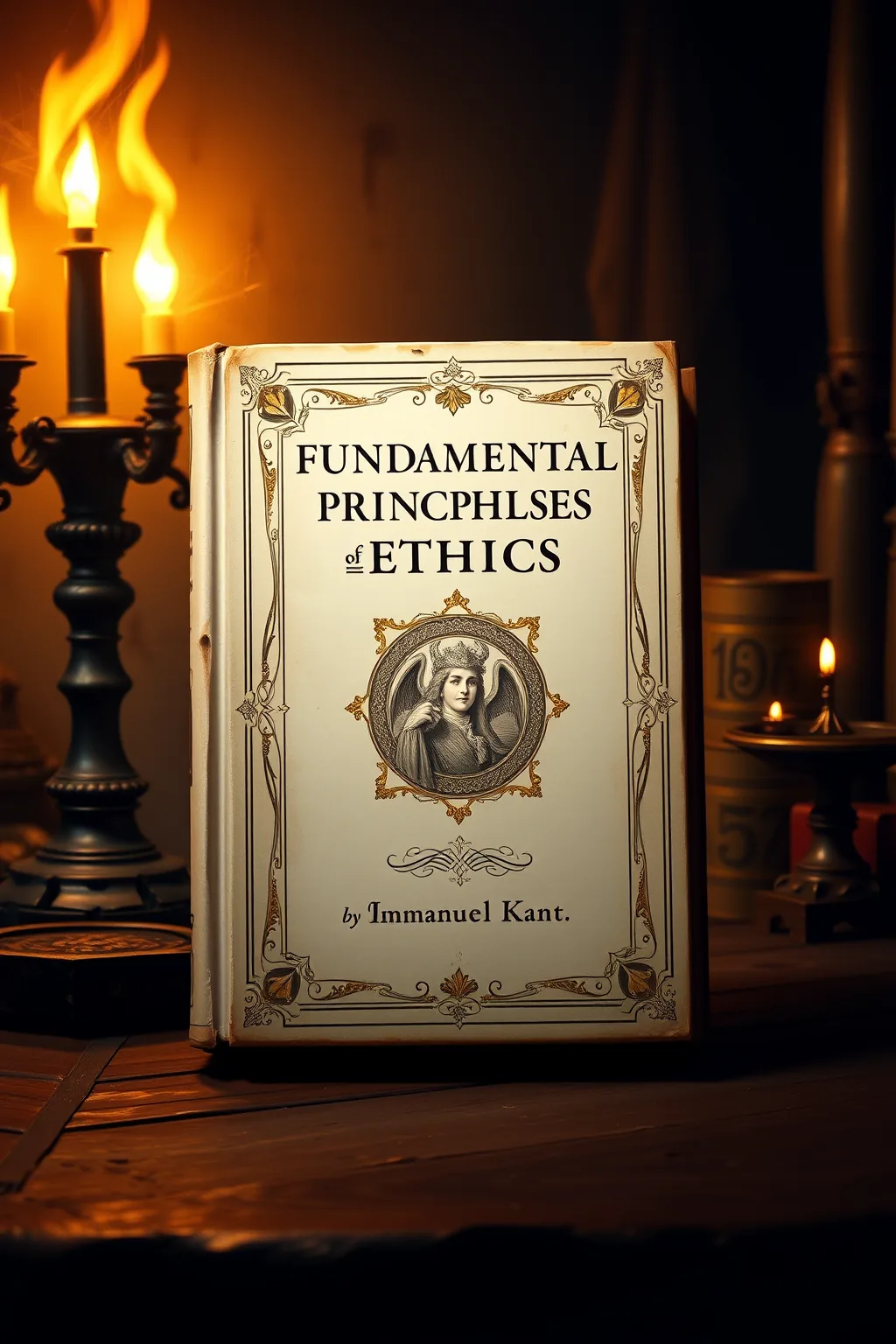
'Fundamental Principles of the Metaphysics of Ethics' by Immanuel Kant is a profound exploration of ethical philosophy that also delves into occult and esoteric themes. For modern esoteric seekers, this book offers a unique perspective on morality and ethics, providing a bridge between traditional philosophical inquiry and the mystical. Kant's meticulous examination of the categorical imperative and the autonomy of the will challenges readers to consider the deeper implications of their actions and the nature of duty. The text's historical significance, coupled with its enduring relevance, makes it a valuable addition to any esoteric library. While the language and concepts may be dense for some, the effort to engage with Kant's ideas is richly rewarded. For those interested in the occult and esoteric dimensions of philosophy, this book is a must-read.
📝 Description
73
In 1785, Immanuel Kant laid out his core ethical system in 'Fundamental Principles of the Metaphysics of Ethics'.
Kant's 1785 work establishes his moral philosophy, moving beyond empirical observation to a priori principles. He introduces the concept of the categorical imperative, a universal moral law derived from reason itself. This imperative is presented in several formulations, notably the principle of universalizability and treating humanity as an end in itself. Kant argues that true morality stems from duty, acting not from inclination but from respect for the moral law. He also discusses the autonomy of the will, asserting that rational beings are free and capable of legislating their own moral code. The text examines the distinction between hypothetical and categorical imperatives, stressing that only the latter binds us unconditionally.
This book is not concerned with empirical ethics or the consequences of actions, but with the very possibility of morality as a rational science. Kant seeks to identify the supreme principle of morality, believing it to be discoverable through reason alone. He contends that understanding this principle is crucial for grasping the foundation of all moral obligation and the nature of freedom. The work sets the stage for his later ethical writings, providing the conceptual framework for his deontological system.
While Kant's primary focus was rational philosophy, his rigorous system of a priori moral laws and the concept of the noumenal self, distinct from the phenomenal world, resonated with later esoteric traditions. His emphasis on an inner, rational source of moral authority and the potential for self-legislation by the rational will mirrored themes found in certain mystical and occult philosophies that sought universal principles governing existence. The 'hidden forces' aspect often associated with esoteric thought can be seen as a metaphorical interpretation of Kant's metaphysical grounding of ethics, where the moral law itself operates as a fundamental, albeit abstract, structure of reality accessible through pure reason.
💡 Why Read This Book?
Reading 'Fundamental Principles of the Metaphysics of Ethics' today offers readers a deep dive into the esoteric and occult dimensions of ethical philosophy. Kant's ideas challenge conventional thinking and inspire a more profound understanding of morality and duty. This book is particularly valuable for those seeking to integrate philosophical inquiry with spiritual and mystical practices. By exploring Kant's foundational principles, readers can gain insights that enrich their personal and intellectual journeys.
⭐ Reader Reviews
Honest opinions from readers who have explored this book.
❓ Frequently Asked Questions
What makes 'Fundamental Principles of the Metaphysics of Ethics' an esoteric text?
The book's exploration of the categorical imperative and the autonomy of the will delves into occult philosophy, offering a unique perspective on ethics and morality that transcends traditional boundaries.
Who should read this book?
This book is ideal for philosophers, esoteric seekers, and anyone interested in the intersection of ethics and occult philosophy.
Is this book accessible to beginners in philosophy?
While the text is dense and requires some familiarity with philosophical concepts, it is accessible to beginners with a willingness to engage deeply with the material.
🔮 Key Themes & Symbolism
Categorical Imperative
Kant's categorical imperative is a moral law that transcends empirical reality, inviting readers to align their actions with the moral law. This theme examines the esoteric dimensions of ethical duty, revealing the hidden knowledge that underlies our moral choices.
Autonomy of the Will
The autonomy of the will is a central theme in Kant's work, exploring the idea that the will is free and autonomous, capable of acting in accordance with the moral law. This theme offers a mystical perspective on the nature of free will and moral responsibility.
Moral Law
Kant's exploration of the moral law reveals a profound symbolism that transcends mere rationalism, inviting readers into a realm where moral law is the foundation of all ethical thought. This theme provides a pathway to understanding the hidden forces that govern our moral universe.
💬 Memorable Quotes
Direct passages from the work, attributed to the author.
“The will is nothing but the practical reason.”
— This statement underscores the autonomy of the will, highlighting its ability to act in accordance with the moral law.
“Duty is the necessity of acting out of respect for the law.”
— This statement emphasizes the importance of ethical duty, revealing the hidden knowledge that underlies our moral choices.
💡 Key Ideas
Editorial paraphrase of the work's core concepts — not direct quotes.
Act only according to that maxim whereby you can, at the same time, will that it should become a universal law.
This quote captures the essence of the categorical imperative, inviting readers to align their actions with the moral law.
The moral law is a law of freedom.
This quote reveals the mystical dimensions of the moral law, suggesting that it is a law that governs the free will.
The good will is the only thing that is good without qualification.
This quote highlights the value of a good will, suggesting that it is the foundation of all ethical thought.
🌙 Esoteric Significance
Tradition
This book belongs to the Hermetic tradition, which emphasizes the unity of all things and the pursuit of hidden knowledge. Kant's exploration of the moral law and the autonomy of the will aligns with Hermetic principles, offering a mystical pathway to understanding ethical duty.
Symbolism
Key symbols in this work include the categorical imperative and the autonomy of the will. These symbols represent the moral law and the free will, respectively, and are central to understanding the esoteric dimensions of ethics.
Modern Relevance
Today, Kant's work continues to influence modern practitioners who seek to align their actions with the moral law. His exploration of the categorical imperative and the autonomy of the will provides a framework for understanding the hidden knowledge that underlies our moral choices, making it relevant for contemporary seekers of esoteric wisdom.
👥 Who Should Read This Book
Beginners interested in occult philosophy will find 'Fundamental Principles of the Metaphysics of Ethics' an enlightening introduction to the mystical dimensions of ethics. Scholars of occult philosophy will appreciate the depth and clarity of Kant's exploration of the categorical imperative and the autonomy of the will. Spiritual seekers will find inspiration in the book's emphasis on the moral law and its hidden knowledge. Practitioners of esoteric traditions will benefit from the book's insights into the esoteric dimensions of ethical duty.
📜 Historical Context
Published in 1785, 'Fundamental Principles of the Metaphysics of Ethics' emerged during the Enlightenment era, a time of intellectual and philosophical revolution. Kant's work was important in shifting the focus from empirical observation to the metaphysical foundations of ethics. This book's influence can be seen in the development of modern ethical theory and its impact on the esoteric traditions that seek to understand the hidden forces that govern our moral universe.
📔 Journal Prompts
Reflect on the concept of the categorical imperative and how it applies to your own ethical decisions.
Explore the idea of the autonomy of the will and its implications for free will and moral responsibility.
Consider the symbolism of the moral law and its role in governing our moral universe.
Write about how Kant's philosophy influences your understanding of ethical duty.
Reflect on the hidden knowledge that underlies our moral choices and how it shapes your actions.
🗂️ Glossary
Categorical Imperative
A moral law that transcends empirical reality, inviting readers to align their actions with the moral law.
Autonomy of the Will
The idea that the will is free and autonomous, capable of acting in accordance with the moral law.
Moral Law
A law that governs the free will and is the foundation of all ethical thought.
Ethical Duty
The necessity of acting out of respect for the moral law, revealing the hidden knowledge that underlies our moral choices.
Good Will
The foundation of all ethical thought, valued for its ability to act in accordance with the moral law.
This book appears in 4 collections
🔮 Readers Also Liked
Browse all →









More by Immanuel Kant
All books →

From the “Occultism” Collection
View all →









More Free Occult Philosophy Books
View all →