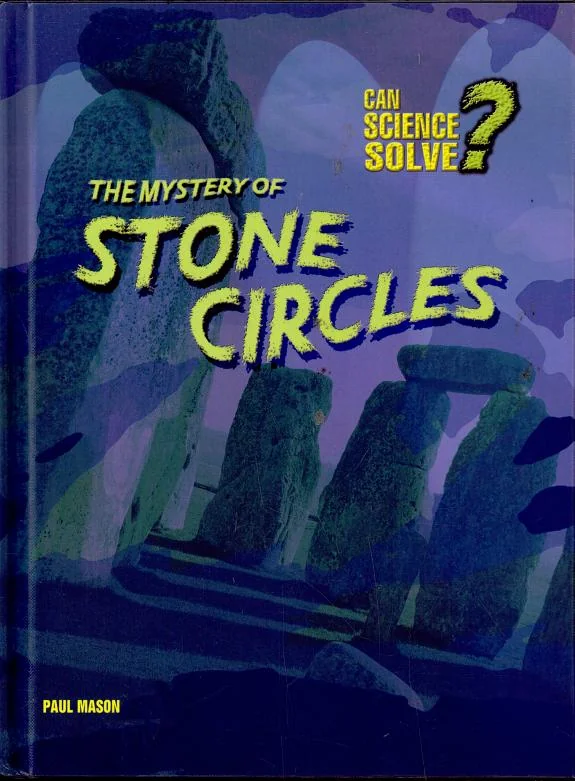
The Mystery of Stone Circles
 73
73

The Mystery of Stone Circles
Paul Mason’s 2002 volume, *The Mystery of Stone Circles*, attempts to catalogue the sheer volume of speculation surrounding these ancient monuments. The strength lies in its breadth, surveying numerous hypotheses from astronomical to ritualistic. However, the work occasionally feels like a survey rather than a deep dive, particularly when discussing the complex social implications of their construction and use. A particularly illustrative section examines Alexander Thom's controversial 'megalithic yard' theory, highlighting the persistent quest for mathematical order in these sites. Mason himself doesn't definitively solve the mystery, which is perhaps the point, but the book could benefit from more direct engagement with the archaeological evidence that underpins or refutes various theories. It serves as a useful, if somewhat detached, compilation of ideas.
📝 Description
73
Paul Mason's 2002 book examines the many theories about stone circles.
The Mystery of Stone Circles by Paul Mason investigates the enduring questions surrounding megalithic stone arrangements. Published in 2002, the book moves past simple descriptions to address the diverse theories about their construction and function. It covers astronomical alignments, ritualistic uses, and potential social roles attributed to these ancient sites. Mason provides a thorough overview of both academic and speculative ideas.
This work is suited for anyone curious about the distant past. It will interest amateur archaeologists, students of ancient history, and those focused on archaeoastronomy. Readers looking to grasp the ongoing discussions about places like Stonehenge and the Callanish Stones will find ample information. It also speaks to individuals drawn to the connection between human creativity, the natural world, and possible spiritual practices from thousands of years ago.
Mason situates the study of stone circles within a larger historical and intellectual context. The early 20th century saw significant archaeological work and the development of theories linking ancient structures to celestial observation. The book engages with later interpretations, contrasting them with earlier antiquarian speculation and the more scientific methods that emerged.
This book engages with traditions of interpreting ancient sites that have long held esoteric significance. While Mason focuses on archaeological and historical analysis, the subject of stone circles itself is rich with Neopagan and occult associations. Many practitioners of modern witchcraft and paganism view these sites as places of power, ancient temples, or astronomical observatories tied to earth energies and celestial cycles. Mason's work provides a scholarly counterpoint to, or foundation for, these more spiritually inclined interpretations, examining the very theories that fuel esoteric interest.
💡 Why Read This Book?
• Gain a consolidated understanding of the diverse theories surrounding megalithic sites, including the astronomical calculations proposed by figures like Alexander Thom. • Explore the evolution of thought on stone circles from early antiquarian interest to 21st-century archaeological interpretation, understanding how perspectives have shifted since the early 2000s. • Confront the inherent ambiguity of ancient evidence and appreciate the challenges of interpreting sites like Stonehenge, fostering a critical approach to historical mysteries.
⭐ Reader Reviews
Honest opinions from readers who have explored this book.
❓ Frequently Asked Questions
When was *The Mystery of Stone Circles* first published?
The book was first published in 2002, placing its synthesis of theories firmly in the early 21st century, reflecting ongoing debates in archaeology and archaeoastronomy at that time.
What are some of the main theories discussed regarding the purpose of stone circles?
The book examines theories suggesting stone circles served as astronomical observatories, ritualistic centers, public gathering places, and even territorial markers. It explores how these functions might have overlapped or varied by site and period.
Does the book focus on a specific stone circle, like Stonehenge?
While Stonehenge is a prominent example, *The Mystery of Stone Circles* covers a broader range of megalithic sites across Britain and Europe, offering a comparative perspective on their construction and potential uses.
What academic fields does this book draw from?
The work integrates insights from archaeology, archaeoastronomy, anthropology, and history. It engages with scholarly debates and speculative hypotheses that span these disciplines.
Is Paul Mason an archaeologist?
Paul Mason is presented as an author examining archaeological and historical phenomena. The book synthesizes existing research and theories rather than presenting new primary archaeological findings.
What is archaeoastronomy?
Archaeoastronomy is the interdisciplinary study of how people in the past perceived and used celestial phenomena, and how these relationships with the sky influenced their cultures and built environments.
🔮 Key Themes & Symbolism
Megalithic Astronomy
The book scrutinizes the evidence and arguments for stone circles functioning as sophisticated astronomical tools. It discusses how alignments with solstices, equinoxes, and lunar cycles, as proposed by researchers like Alexander Thom, might have guided ancient agricultural and ritual calendars. Mason presents these theories alongside critiques, highlighting the difficulty in definitively proving intent versus coincidence in the placement of stones dating back millennia.
Ritual and Social Hubs
Beyond celestial observation, *The Mystery of Stone Circles* explores the role of these sites as focal points for community rituals and social gatherings. The sheer scale and labor involved in their construction suggest a significant communal investment, pointing to their importance in the spiritual, social, or political lives of prehistoric peoples. The work explores how ceremonies, sacrifices, or assemblies might have taken place within these monumental enclosures.
Interpretive Methodologies
A significant theme is the examination of how we interpret such ancient monuments. Mason addresses the evolution of approaches, from early antiquarian romanticism to the more rigorous, albeit still debated, scientific and statistical methods applied in the late 20th century. The book implicitly questions the reliability of imposing modern frameworks onto the motivations and understanding of long-vanished cultures.
Regional Diversity
The text emphasizes that 'stone circle' is not a monolithic category. It highlights variations in design, scale, and potential function across different geographical regions and time periods. This recognition of diversity is crucial for understanding that a single explanation for all such sites is unlikely, encouraging a more nuanced appreciation of prehistoric human ingenuity and cultural expression.
💬 Memorable Quotes
Direct passages from the work, attributed to the author.
“The enduring presence of stone circles challenges our understanding of ancient capabilities.”
— This sentiment captures the awe inspired by these megalithic structures. It suggests that their survival and the mystery surrounding their creation force us to reconsider the technological, organizational, and perhaps even intellectual capacities of prehistoric societies.
“Scholarly debate often hinges on the interpretation of faint alignments and presumed functions.”
— This highlights the tentative nature of much research into stone circles. It points out that conclusions are frequently based on subtle patterns and educated guesses, rather than concrete, irrefutable evidence, making definitive answers elusive.
“Theories range from sophisticated calendars to simple ceremonial gathering spaces.”
— This succinctly illustrates the broad spectrum of proposed uses for stone circles. It contrasts highly complex, technical functions with more basic, communal ones, underscoring the wide range of possibilities considered by researchers.
“Proving deliberate astronomical intent remains a persistent challenge for researchers.”
— This expresses a core difficulty in the field of archaeoastronomy. It notes that while many stone circles exhibit celestial alignments, demonstrating that these were intentional and precisely calculated, rather than coincidental, is often difficult.
💡 Key Ideas
Editorial paraphrase of the work's core concepts — not direct quotes.
Prehistoric peoples likely invested immense social capital in these monumental constructions.
This paraphrased concept emphasizes the communal effort and societal importance required to build sites like Stonehenge. It suggests that the construction itself was a significant social event, reflecting shared beliefs and collective identity.
🌙 Esoteric Significance
Tradition
While not explicitly tied to a single esoteric lineage like Theosophy or Hermeticism, *The Mystery of Stone Circles* engages with themes that resonate across many esoteric traditions. The focus on ancient wisdom, celestial alignments, and sacred geometry connects with Neopaganism, Druidry, and modern interpretations of earth mysteries. The book’s exploration of hidden knowledge and the search for meaning in ancient sites aligns with the esoteric pursuit of understanding the universe through symbolic and often forgotten systems.
Symbolism
The primary symbols examined are the standing stones themselves and the circular arrangement. In esoteric contexts, circles often represent wholeness, eternity, and the cyclical nature of time, while standing stones can symbolize earthly power, connection to the land, or markers of sacred space. The precise alignments, if intentional, symbolize the cosmic order and the human desire to harmonize with celestial movements, reflecting a belief in a divinely ordered universe accessible through observation and ritual.
Modern Relevance
Contemporary practitioners of Druidry, Neopaganism, and earth-based spiritualities often draw upon the interpretations presented in works like Mason's. The book's exploration of potential ritualistic uses and connections to the landscape informs modern ceremonies and pilgrimage practices. Thinkers in the 'sacred landscape' movement and those interested in geomancy also find value in understanding the potential energetic and symbolic significance attributed to these ancient sites.
👥 Who Should Read This Book
• Students of archaeoastronomy seeking a comprehensive overview of theories regarding celestial alignments in megalithic structures. • Enthusiasts of ancient history and mystery interested in the ongoing debates surrounding the purpose and construction of sites like Stonehenge and Avebury. • Practitioners of earth-based spiritualities and Neopaganism looking to understand the historical and theoretical underpinnings of sacred sites and their potential ritualistic uses.
📜 Historical Context
When Paul Mason's *The Mystery of Stone Circles* was published in 2002, the study of megalithic monuments occupied a fascinating intersection of established archaeology and more speculative archaeoastronomy. The preceding decades had seen significant work, notably by figures like Alexander Thom, who in the 1950s and beyond, championed the idea of sophisticated astronomical knowledge embedded in structures like the Callanish Stones. Mason’s work engages with this legacy, but also reflects a growing skepticism and a push towards more grounded interpretations that acknowledge the limitations of evidence. Competing schools of thought debated whether these sites were primarily functional (calendrical, astronomical) or symbolic and ritualistic. The reception in 2002 would have found a field grappling with digital analysis techniques and a greater emphasis on social archaeology, moving beyond purely astronomical or functional explanations.
📔 Journal Prompts
Theories on astronomical alignments and their potential for ancient calendrical systems.
The concept of 'sacred geometry' as applied to megalithic constructions.
The role of monumental architecture in prehistoric social cohesion.
Interpreting evidence of ritualistic activity at stone circle sites.
The tension between scientific evidence and speculative interpretations of the past.
🗂️ Glossary
Megalith
A large stone that forms part of a prehistoric monument, either standing alone or part of a group, such as a stone circle or a tomb.
Archaeoastronomy
The interdisciplinary study of how people in the past perceived and used celestial phenomena and how these relationships influenced their cultures and built environments.
Megalithic Yard
A proposed unit of measurement, approximately 2.72 feet, allegedly used by Neolithic builders of megalithic monuments, notably theorized by Alexander Thom.
Solstice
The two times of the year, around June 21 and December 21, when the sun reaches its highest or lowest point in the sky at noon, marking the longest and shortest days.
Equinox
The two times of the year, around March 20 and September 22, when the sun crosses the celestial equator, making day and night of approximately equal length everywhere.
Neolithic
The later part of the Stone Age, when ground or polished stone weapons and implements prevailed, and when agricultural communities had developed.
Antiquarian
A person who collects or studies old things, especially for their historical interest rather than their aesthetic value.