Healing Touch
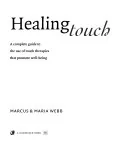
 75
75

Healing Touch
Marcus A. Webb and Maria Webb's *Healing Touch* attempts a broad survey of somatic and energy therapies, a commendable but inherently challenging endeavor for a single volume. Its strength lies in its comprehensive overview; by touching upon shiatsu, reflexology, reiki, acupressure, massage, aromatherapy, and rolfing, it offers a valuable initial map for the uninitiated. However, this breadth comes at the cost of depth. The explanations for complex modalities like rolfing, for instance, are necessarily brief, providing only a superficial understanding. A particular passage discussing the meridians in Traditional Chinese Medicine, while accurate in principle, could benefit from more detailed anatomical or energetic mapping for practical application. The book serves as an excellent primer but rarely moves beyond foundational explanations to offer advanced techniques or nuanced theoretical discussions. Despite these limitations, *Healing Touch* remains a useful, accessible starting point for exploring the diverse landscape of hands-on healing.
📝 Description
75
Published in 1999, Healing Touch offers an introduction to complementary therapeutic practices.
Marcus A. Webb and Maria Webb's 1999 guide, Healing Touch, serves as a comprehensive introduction to various complementary and alternative therapeutic modalities. The book aims to clarify practices that interact with the body's energetic systems and natural healing capabilities. It presents these disciplines as accessible techniques for personal well-being and for assisting others. The text is organized to impart fundamental knowledge across these different healing arts.
This guide is mainly for people new to energy work and somatic therapies. It provides a starting point for those interested in holistic health, wanting to grasp the ideas behind practices such as shiatsu, reflexology, reiki, acupressure, massage, aromatherapy, rolfing, and different kinds of energy massage. Wellness practitioners seeking to expand their knowledge of various healing modalities and possibly incorporate them into their work will also find it useful. No prior specialized knowledge is assumed.
Healing Touch arrived in 1999 amid a growing interest in complementary and alternative medicine. The late 20th century saw increased attention on mind-body connections and energy-based healing systems. This period featured more interaction between Western medicine and traditional healing practices, influenced by figures like Dr. Andrew Weil and a wider acceptance of Eastern philosophies. The book's broad coverage mirrors this cultural moment, attempting to unify various modalities that were gaining recognition.
💡 Why Read This Book?
• Gain a foundational understanding of shiatsu, a Japanese practice involving pressure on specific points to influence Qi, enabling you to explore its principles of energy flow and balance. • Learn the basic concepts of reflexology, which maps specific points on the feet and hands to different bodily organs, offering insights into targeted self-massage techniques. • Discover the principles of reiki, a Japanese technique focused on channeling universal life force energy through gentle touch, providing an introduction to energy transfer for well-being.
⭐ Reader Reviews
Honest opinions from readers who have explored this book.
❓ Frequently Asked Questions
What is the primary focus of "Healing Touch"?
"Healing Touch" serves as an introductory guide to various hands-on healing modalities, including shiatsu, reflexology, reiki, acupressure, massage, aromatherapy, rolfing, and energy massage, aiming to demystify these practices for beginners.
When was "Healing Touch" first published?
The book "Healing Touch" by Marcus A. Webb and Maria Webb was first published in 1999.
Does "Healing Touch" teach advanced techniques?
While it covers a wide array of practices, "Healing Touch" primarily focuses on foundational knowledge and basic principles, serving as an introduction rather than an advanced practitioner's manual.
What is shiatsu as described in the book?
The book describes shiatsu as a Japanese therapy that involves applying pressure to specific points on the body, often along energy pathways, to promote the flow of vital energy, known as Qi.
Is "Healing Touch" suitable for someone with no prior knowledge of energy work?
Yes, the book is specifically designed for individuals new to holistic health and energy therapies, presenting complex topics in an accessible manner without requiring prior specialized knowledge.
What is the difference between acupressure and shiatsu according to the book?
While both are rooted in Traditional Chinese Medicine and involve pressure, acupressure typically focuses on specific acupuncture points, whereas shiatsu often involves broader pressure techniques along meridians or energy channels.
🔮 Key Themes & Symbolism
Energetic Anatomy
The work introduces the concept of subtle energy systems within the human body, central to practices like shiatsu and reiki. It discusses the flow of Qi (or Prana) through meridians and energy centers, positing that blockages or imbalances in this flow can lead to physical and emotional disharmony. Understanding these invisible pathways is presented as crucial for effective therapeutic intervention, forming the basis for many of the techniques described.
Holistic Wellness
Healing Touch advocates for a holistic approach to health, emphasizing the interconnectedness of the mind, body, and spirit. It posits that external interventions like massage, acupressure, or aromatherapy can influence internal states, promoting not just physical relief but also emotional balance and mental clarity. This perspective challenges purely symptom-based treatment, favoring methods that address the root causes of imbalance across the entire being.
Manual Therapy Principles
A significant theme is the power of direct, intentional touch. The book details various manual techniques, from the precise finger pressure of acupressure and shiatsu to the broader strokes of massage and the specific manipulations of rolfing. It explores how skilled touch can release tension, improve circulation, stimulate nerve pathways, and facilitate the body's innate healing responses, highlighting touch as a primary therapeutic modality.
Complementary Modalities
The book serves as a compendium of diverse, yet often complementary, healing arts. It explores how practices like aromatherapy, using plant essences, can work synergistically with physical therapies. By presenting these varied disciplines side-by-side, it encourages readers to see them not as isolated practices but as parts of a larger, integrated system of natural healing available outside conventional Western medicine.
💬 Memorable Quotes
Direct passages from the work, attributed to the author.
“Energy flows through specific pathways in the body.”
— This core tenet, often referencing meridians or channels, underscores the book's focus on subtle energetic systems that practitioners aim to influence for therapeutic benefit.
“Pressure applied to reflex points can affect distant organs.”
— This concept, central to reflexology, suggests a non-local connection within the body, where stimulating specific areas like the feet can produce systemic healing responses.
“The body possesses an innate capacity for self-healing.”
— This principle underlies many of the techniques, framing the practitioner's role as facilitating or unblocking this natural restorative process rather than imposing an external cure.
“Aromatherapy utilizes plant essences for therapeutic effects.”
— This highlights the integration of botanical remedies, specifically essential oils, as a complementary method to support physical and emotional well-being alongside other manual therapies.
“Rolfing involves deep tissue manipulation for postural alignment.”
— This definition points to a specific, intensive form of bodywork aimed at restructuring connective tissues to improve posture and release chronic tension patterns.
🌙 Esoteric Significance
Tradition
The work draws heavily from Eastern esoteric traditions, particularly Traditional Chinese Medicine (TCM) concepts like Qi and meridians, and Japanese practices like Shiatsu and Reiki. It also touches upon Western concepts of subtle energy and somatic awareness. While not strictly adhering to a single lineage like Hermeticism or Gnosticism, it engages with the universal esoteric principle of life force energy (Prana, Qi, Ki) and its manipulation for healing, fitting within a broader pan-cultural esoteric healing framework.
Symbolism
Key symbolic elements include the concept of Qi (or vital energy), often visualized as flowing through invisible channels (meridians) in Shiatsu and Acupressure. The hands themselves become potent symbols, acting as conduits for energy transfer in Reiki and tools for diagnostic and therapeutic pressure in Shiatsu and Reflexology. The body's map, particularly in Reflexology where the feet symbolize the whole person, serves as a microcosm of the macrocosm, a common esoteric motif.
Modern Relevance
Contemporary holistic health practitioners, yoga instructors, and wellness coaches frequently incorporate principles and techniques introduced in works like *Healing Touch*. The book's accessible approach to energy work continues to inform modern practices in somatic therapy, mindfulness-based stress reduction, and integrative healthcare, bridging the gap between traditional esoteric knowledge and contemporary well-being applications.
👥 Who Should Read This Book
• Aspiring practitioners of energy healing: Those beginning their journey into modalities like reiki, shiatsu, or acupressure will find a clear overview of foundational principles and techniques. • Wellness enthusiasts seeking self-care tools: Individuals interested in natural methods for stress reduction, pain management, or general well-being can learn practical applications of massage, aromatherapy, and reflexology. • Comparative health researchers: Students and professionals exploring the breadth of complementary and alternative medicine will gain an understanding of diverse hands-on healing systems and their theoretical underpinnings.
📜 Historical Context
Published in 1999, *Healing Touch* arrived during a period when interest in complementary and alternative medicine (CAM) was rapidly expanding within Western societies. The late 20th century saw a growing acceptance, or at least exploration, of holistic health practices that diverged from the purely biomedical model. This era was influenced by the burgeoning New Age movement and a greater openness to Eastern philosophies and healing traditions, partly popularized by figures like Dr. Andrew Weil, who championed integrative medicine. The book's broad inclusion of practices like shiatsu, reflexology, and reiki reflects this trend. While not facing significant censorship, these therapies were often viewed with skepticism by the mainstream medical establishment, existing in a space between traditional healing and emerging scientific validation. The work positioned itself within this dynamic, offering accessible introductions to modalities gaining traction outside conventional clinical settings.
📔 Journal Prompts
The concept of Qi flow as described in shiatsu.
The mapping of reflex points on the feet and hands.
The principles of energy channeling in reiki practice.
The use of specific acupressure points for common ailments.
The role of aromatherapy in complementing physical therapies.
🗂️ Glossary
Shiatsu
A Japanese form of bodywork involving finger, thumb, and palm pressure applied to specific points and meridians to balance the body's energy (Qi).
Reflexology
A therapy involving physical manipulation of specific points on the feet, hands, and ears that correspond to different organs and systems of the body.
Reiki
A Japanese technique for stress reduction and relaxation that also promotes healing. Practitioners place hands lightly on or just above specific points of the body.
Acupressure
A Traditional Chinese Medicine technique involving applying firm pressure to specific points on the body to stimulate natural healing responses.
Aromatherapy
A holistic healing treatment that uses natural plant extracts to promote health and well-being, often involving the inhalation or topical application of essential oils.
Rolfing
A system of deep tissue manipulation and movement education designed to improve posture and release chronic patterns of tension.
Qi
A fundamental concept in Traditional Chinese Medicine, referring to the vital life force or energy that flows through the body.
This book appears in 1 collection
🔮 Readers Also Liked
Browse all →

From the “Energy Healing” Collection
View all →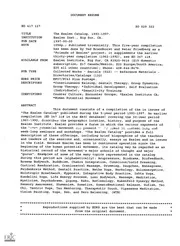


More Free Occult Philosophy Books
View all →