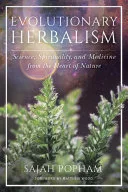
Evolutionary Herbalism
 73
73

Evolutionary Herbalism
Sajah Popham's Evolutionary Herbalism offers a compellingly intricate model for understanding plant medicine. Its signal strength lies in its ambitious synthesis, linking botanical properties to a rich symbolic and evolutionary framework. The 'Plant Intelligence Spectrum' is a particularly illuminating concept, providing a novel lens through which to view the subtle actions of herbs. However, the sheer density of the material, while impressive, can occasionally feel overwhelming. The integration of astrology and alchemy, while central to its unique perspective, may require dedicated study for those unfamiliar with these disciplines. A passage discussing the archetypal resonance of Solanaceae plants, for instance, exemplifies the book's capacity to connect botanical classification with deeper psychological symbolism. Evolutionary Herbalism is a significant contribution for those willing to engage with its demanding yet rewarding intellectual architecture.
📝 Description
73
Sajah Popham's 2019 book, Evolutionary Herbalism, proposes that plants possess their own intelligence.
Evolutionary Herbalism offers a framework for plant-based healing that goes beyond basic materia medica. Sajah Popham combines botanical understanding with a deeper view of consciousness and the natural world. The book suggests that plants have an evolutionary intelligence. By studying their patterns, people can find new insights into their own healing and spiritual growth. Popham presents a system for working with herbs that recognizes their energetic and archetypal qualities.
This work is for serious students of herbalism, plant medicine, and esoteric philosophy. It will appeal to practitioners wanting to strengthen their connection with plants and grasp healing's core principles. Those interested in the links between botany, psychology, and spirituality will find its layered approach especially valuable. The book is suitable for individuals with some background in herbal traditions or those ready to explore plant use from a more philosophical and alchemical viewpoint.
Published in 2019, Evolutionary Herbalism fits within a renewed interest in traditional and esoteric knowledge. It connects modern ecological ideas with older, often scattered, plant lore. The book's approach draws from vitalism, Jungian archetypes, and Hermetic principles, offering a synthesis distinct from purely academic or purely practical herbal guides. It implicitly comments on these schools of thought by weaving them into its own structure.
💡 Why Read This Book?
• Gain a unique perspective on plant intelligence by understanding the 'Plant Intelligence Spectrum,' a classification system that moves beyond conventional botanical descriptions to explore energetic and evolutionary signatures. • Explore the application of 'Archetypal Patterns' to herbalism, learning how to connect plant actions to universal psychological and spiritual forces, as detailed in the book's structure. • Deepen your understanding of the interconnectedness of life through the lens of the 'Five Kingdoms of Life,' presented not just biologically but energetically and alchemically, a core concept from its 2019 publication.
⭐ Reader Reviews
Honest opinions from readers who have explored this book.
❓ Frequently Asked Questions
What is the core philosophy behind Evolutionary Herbalism?
The core philosophy posits that plants possess an evolutionary intelligence and energetic signature. The book, published in 2019, explores how understanding these patterns can lead to deeper human healing and spiritual insight, integrating botanical knowledge with esoteric traditions.
How does Evolutionary Herbalism differ from traditional herbalism guides?
It distinguishes itself by integrating botanical knowledge with esoteric traditions like astrology and alchemy, and by proposing a framework of 'Plant Intelligence Spectrum' and 'Archetypal Patterns' to understand plant actions beyond their biochemical properties.
Is prior knowledge of alchemy or astrology required to read this book?
While prior knowledge can enhance understanding, the book aims to present these connections within its herbal framework. It introduces concepts such as the 'Five Kingdoms of Life' energetically, making them accessible to dedicated students of herbalism.
What is the 'Plant Intelligence Spectrum'?
The 'Plant Intelligence Spectrum' is a classification system introduced in Evolutionary Herbalism that categorizes plants based on their perceived evolutionary stage and energetic qualities, offering a new way to understand their medicinal and spiritual influences.
Who is Sajah Popham, the author of Evolutionary Herbalism?
Sajah Popham is the author of Evolutionary Herbalism, a work that draws upon his deep study of herbal medicine, esoteric traditions, and the intersection of consciousness and the natural world.
When was Evolutionary Herbalism first published?
Evolutionary Herbalism was first published on April 30, 2019, marking its emergence as a contemporary contribution to esoteric herbal studies.
🔮 Key Themes & Symbolism
Plant Intelligence Spectrum
This theme explores the concept that plants possess distinct levels of consciousness and evolutionary development, influencing their energetic and medicinal properties. Sajah Popham proposes a spectrum, moving beyond simple chemical constituents to understand plants as intelligent beings. This framework allows practitioners to discern the subtle actions of herbs based on their place within this evolutionary hierarchy, offering a more nuanced approach to plant medicine.
Archetypal Patterns in Nature
The work explores how universal archetypal patterns, as explored in depth psychology and Hermetic philosophy, manifest within the plant kingdom. It suggests that specific plant families or species embody certain archetypes, influencing their correspondence with human psychological states and spiritual development. Understanding these archetypal connections provides a symbolic language for interpreting plant actions and their deeper healing potential.
Holistic Healing Model
Evolutionary Herbalism champions a holistic model that encompasses the physical, energetic, and spiritual dimensions of healing. It posits a profound interconnectedness between humans, plants, and the cosmos. This approach encourages practitioners to view herbalism not merely as symptom management but as a path to deeper self-understanding and integration with the natural world.
Esoteric Integration
A central theme is the integration of diverse esoteric traditions—such as Ayurveda, Hermeticism, and astrology—into a cohesive herbal philosophy. This synthesis reveals hidden correspondences between botanical knowledge and ancient wisdom systems. By drawing from these varied sources, the book constructs a sophisticated map for exploring the deeper mysteries of plant medicine and consciousness.
💬 Memorable Quotes
Direct passages from the work, attributed to the author.
“Plants are not just biochemical factories; they are living intelligences with their own evolutionary path.”
— This statement captures the book's core premise: viewing plants as conscious, evolving beings rather than passive resources. It shifts the paradigm from utilitarian use to a relationship based on recognizing and honoring plant intelligence.
“The Solanaceae family, for example, often embodies potent archetypes related to transformation and the underworld.”
— This interpretation highlights the book's method of linking botanical families to specific symbolic or psychological domains. It suggests that plants like belladonna or datura carry deep archetypal resonances that can be understood through an esoteric lens.
“Understanding the energetic signature of a plant is as crucial as knowing its chemical constituents.”
— This emphasizes the book's holistic approach, valuing subtle energetic qualities alongside scientific analysis. It calls for a balanced perspective that honors both the material and immaterial aspects of plant medicine.
“Our relationship with plants mirrors our relationship with the deeper aspects of ourselves.”
— This concept points to the psycho-spiritual dimension of herbalism. It suggests that working with plants can serve as a catalyst for personal growth, revealing inner landscapes through external botanical relationships.
“The Five Kingdoms of Life offer a map for understanding consciousness across the biological spectrum.”
— This signifies the book's broad scope, extending biological classification into a framework for consciousness studies. It implies that patterns observed in the kingdoms of life hold lessons applicable to understanding sentience and evolution.
🌙 Esoteric Significance
Tradition
Evolutionary Herbalism draws heavily from Western Hermeticism and aligns with a vitalistic understanding of nature, common in esoteric traditions. It extends these principles by applying an evolutionary lens, suggesting a developmental trajectory for plant consciousness. The work departs from some Hermetic traditions by explicitly integrating modern biological concepts with ancient symbolic systems, creating a unique synthesis that maps consciousness onto the botanical world.
Symbolism
Key symbols include the 'Five Kingdoms of Life,' interpreted not just biologically but as energetic and consciousness archetypes, representing different stages of manifestation. The concept of 'Archetypal Patterns' is central, linking plant properties to universal psychological forces. The 'Plant Intelligence Spectrum' itself functions as a symbolic map of consciousness progression within the plant kingdom.
Modern Relevance
Contemporary thinkers and practitioners in areas like ecopsychology, depth herbalism, and consciousness studies find resonance in Popham's work. His synthesis of botanical science with esoteric symbolism informs modern approaches to plant medicine that emphasize energetic healing, psycho-spiritual development, and a deeper ecological relationship. It appeals to those seeking to move beyond purely mechanistic views of health and the environment.
👥 Who Should Read This Book
• Students of Esoteric Herbalism: Those seeking to deepen their understanding of plant medicine beyond materia medica, incorporating symbolic, energetic, and evolutionary dimensions. • Practitioners of Depth Psychology and Archetypal Studies: Individuals interested in how natural world symbolism, particularly plant life, maps onto psychological and spiritual development. • Comparative Religion and Philosophy Scholars: Researchers exploring the intersection of natural science, ancient wisdom traditions, and consciousness studies.
📜 Historical Context
Published in 2019, Sajah Popham's Evolutionary Herbalism arrived during a period of renewed global interest in traditional ecological knowledge and esoteric philosophy. It emerged as a synthesis, drawing from disparate streams of thought that had often been studied in isolation. While not directly engaging with academic debates of the time, its approach implicitly offered a counterpoint to purely materialistic or reductionist views of botany prevalent in mainstream science. Its integration of alchemical principles and archetypal psychology places it within a lineage of thinkers who sought to bridge the material and spiritual worlds, echoing figures like Carl Jung. The work stands apart from contemporary practical herbalism guides by its deep philosophical underpinnings and its evolutionary cosmology, aiming to re-enchant the study of plants.
📔 Journal Prompts
Reflect on the 'Plant Intelligence Spectrum' and where common culinary herbs might reside.
Consider the 'Archetypal Patterns' associated with plants you frequently use.
Map the energetic qualities of a specific plant to its perceived evolutionary stage.
Explore the 'Five Kingdoms of Life' as energetic blueprints in your own experience.
How might the integration of alchemy inform your understanding of a plant's medicinal action?
🗂️ Glossary
Plant Intelligence Spectrum
A conceptual framework proposed by Sajah Popham that categorizes plants based on their perceived level of consciousness, evolutionary stage, and energetic signature, influencing their medicinal and spiritual properties.
Archetypal Patterns
Universal, primordial images and themes that influence human consciousness and behavior, which the book suggests are also embodied and expressed by specific plants and plant families.
Five Kingdoms of Life
In this context, refers to the biological classification (Monera, Protista, Fungi, Plantae, Animalia) viewed through an esoteric lens, exploring their energetic and consciousness dimensions beyond strict biological definitions.
Energetic Signature
The subtle, non-physical qualities and vibrational essence of a plant, believed to influence its effect on the human body and consciousness, distinct from its chemical composition.
Vitalism
A philosophical viewpoint that living organisms possess a vital principle or 'life force' distinct from purely physical and chemical mechanisms, influencing their development and behavior.
Alchemical Correspondence
The symbolic relationships and transmutational processes explored in alchemy, applied within the book to understand the deeper nature and potential of plants in healing.
Materia Medica
A body of collected knowledge on the properties and uses of medicinal substances, particularly plants. Evolutionary Herbalism expands this by adding esoteric and evolutionary dimensions.