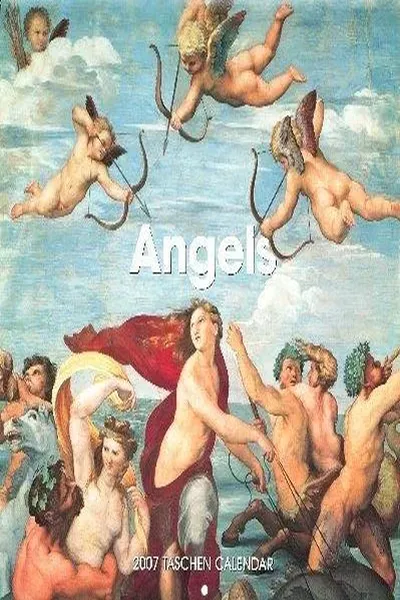
Angels in Medieval Philosophical Inquiry

 72
72

Angels in Medieval Philosophical Inquiry
The scholarship presented in Angels in Medieval Philosophical Inquiry offers a welcome deconstruction of the angelic role in scholastic thought. Rather than treating angels as mere historical curiosities, Lenz and Iribarren illuminate their function as sophisticated philosophical instruments. The essay focusing on angelic cognition, for instance, provides a particularly sharp analysis of how medieval thinkers posited non-corporeal knowledge. While the collection is dense and assumes significant prior knowledge of scholastic terminology, its strength lies in its rigorous, detailed engagement with primary texts and complex arguments. The limitation, perhaps, is that its highly specialized nature may render it inaccessible to those not already immersed in the field of medieval philosophy. Nevertheless, the book successfully demonstrates the intellectual vitality of medieval angelology.
📝 Description
72
Published in 2012, Angels in Medieval Philosophical Inquiry examines celestial beings as conceptual tools in medieval thought.
This collection of essays by Martin Lenz and Isabel Iribarren analyzes the function of angels as intellectual instruments in medieval philosophy. Moving beyond theological interpretations, the book demonstrates how medieval thinkers used angelic natures to grapple with core philosophical problems. The authors show how these celestial beings served as critical lenses for examining existence, consciousness, and the structure of reality itself. The essays detail how angels informed discussions on divine attributes and the nature of knowing.
The work is suited for scholars and advanced students of medieval philosophy, theology, and intellectual history. It will also interest those studying angelology and the history of metaphysics, particularly those familiar with scholastic methods. Readers seeking to understand the philosophical underpinnings of medieval cosmology, epistemology, and ethics will find valuable insights within its pages. The collection engages with the systematic approach to knowledge characteristic of scholasticism.
The medieval period saw a deep engagement with angelic natures, notably in the works of figures like Thomas Aquinas and Pseudo-Dionysius the Areopagite. This book situates its inquiry within that tradition, focusing on how later medieval philosophers, from the 12th century onwards, adapted and debated these concepts. It examines the intellectual architecture that angels helped construct, moving beyond purely devotional interpretations to reveal their role in philosophical inquiry. The collection investigates angels as conceptual tools for understanding existence, consciousness, and the structure of reality.
💡 Why Read This Book?
• Gain a nuanced understanding of how angels functioned as conceptual frameworks in medieval philosophy, moving beyond simple theological interpretations, as explored in the section on "models" of creation. • Grasp the intricacies of medieval metaphysical debates concerning individuation and cognition by examining how these concepts were applied to non-corporeal beings like angels, a key focus of the book. • Appreciate the intellectual heritage of scholasticism by seeing how abstract theological entities were used to construct arguments about cosmology, ethics, and language, as demonstrated through the exploration of angelic modes of existence.
⭐ Reader Reviews
Honest opinions from readers who have explored this book.
❓ Frequently Asked Questions
What specific philosophical problems did medieval thinkers address using the concept of angels?
Medieval philosophers utilized the concept of angels to explore issues such as cosmological order, the nature of movement and place, principles of individuation, modes of cognition, and theories of language. Angels served as conceptual bridges between the material and divine realms.
Who were some key figures whose ideas about angels are discussed or relevant to this book?
While the book focuses on later medieval philosophers, the foundational ideas of Pseudo-Dionysius the Areopagite and Thomas Aquinas regarding angelic hierarchies and natures are implicitly or explicitly relevant to the intellectual landscape explored.
How did medieval philosophers differentiate between individual angels?
The book examines the concept of angelic individuation, a key area of medieval debate. Unlike humans, who are individuated by their matter, angels were often considered individually distinct by their very essence or form, a concept explored within the collection.
What is meant by 'angelic cognition' in the context of medieval philosophy?
Angelic cognition refers to the way medieval thinkers understood angels to perceive and understand. It typically involved direct apprehension of intelligible forms or divine illumination, distinct from human sensory-based knowledge.
When was 'Angels in Medieval Philosophical Inquiry' first published?
The work 'Angels in Medieval Philosophical Inquiry' was first published on October 1, 2012.
Does this book cover the role of angels in popular medieval devotion?
Primarily, this book focuses on the use of angels within formal philosophical and theological inquiry during the Middle Ages, rather than popular devotional practices. It examines their conceptual utility in intellectual systems.
🔮 Key Themes & Symbolism
Angels as Philosophical Models
The collection posits angels not just as theological beings but as essential conceptual tools for medieval philosophers. They functioned as 'models' for understanding complex ideas. This perspective shifts the focus from angelic attributes to their utility in constructing arguments about the nature of God, creation, and existence itself. By examining how philosophers defined questions concerning cosmological order, movement, and place through the lens of angelic nature, the work reveals a sophisticated use of these entities in intellectual architecture.
Individuation and Non-Corporeal Existence
A central theme is the medieval debate surrounding angelic individuation. Unlike human individuals, distinguished by their physical bodies, each angel was often considered a unique species. This volume explores how philosophers grappled with the concept of distinctness in beings devoid of matter, questioning how such entities could be numerous yet individually defined. This inquiry explores the very nature of being and identity in a non-material context.
Angelic Cognition and Volition
The book dissects medieval conceptions of angelic knowledge and will. It investigates how angels were thought to apprehend reality, whether through direct intellectual intuition or divine illumination, contrasting this with human sensory experience. Furthermore, it examines the nature of angelic volition, exploring how these beings exercised choice and intention. This analysis sheds light on medieval epistemology and ethics as applied to incorporeal agents.
Language and Angelic Communication
The essays explore the philosophical implications of angelic communication. How did beings without physical vocal apparatus convey thought or will? This question prompted medieval thinkers to develop theories about the nature of language, signification, and the transmission of meaning, even in the absence of corporeal expression. The book examines these linguistic considerations as integral to understanding angelic nature.
💬 Memorable Quotes
Direct passages from the work, attributed to the author.
“Angels provided ideal ground for exploring the nature of God and his creation.”
— This highlights the function of angels not just as subjects of study, but as conceptual instruments. Their perceived nature allowed medieval thinkers to frame and investigate fundamental questions about existence and divinity.
“Creatures of two worlds, angels were perceived as 'models'.”
— This concisely captures the dual role of angels as intermediaries between the divine and material realms, and their crucial function as conceptual templates for understanding various philosophical issues.
“Questions were defined from cosmological order... to modes of language.”
— This demonstrates the vast scope of philosophical inquiry that engaged with angelic nature, showing how these beings were central to discussions ranging from the structure of the universe to the very nature of communication.
“Angels occupied a prominent place in medieval philosophical inquiry.”
— This statement underscores the significance and prevalence of angelology within the intellectual field of the Middle Ages, positioning it as a core area of philosophical investigation.
“Exploring the nature of God and his creation.”
— This phrase points to the ultimate metaphysical aims of medieval angelology, where the study of angels served as a pathway to comprehending the divine architect and the structure of the cosmos He brought into being.
🌙 Esoteric Significance
Tradition
While angels are central to Abrahamic religions, their philosophical exploration in this book aligns with Hermetic and Neoplatonic traditions that emphasize intermediary beings and hierarchies of consciousness. The concept of angels as 'models' and their role in understanding divine creation echoes Neoplatonic emanations and the Gnostic search for knowledge of the divine. The book’s focus on intellect, cognition, and order within a structured cosmos also finds resonance within Hermetic cosmology.
Symbolism
The primary 'symbol' explored is the angel itself, representing pure intellect, divine messengers, and intermediaries. Beyond this, the book likely touches upon the symbolism of light (divine illumination), hierarchy (structured order of existence), and movement (cosmological principles). These motifs represent the ascent of consciousness and the ordering principles of the universe within esoteric thought.
Modern Relevance
Contemporary esoteric thinkers and practitioners, particularly those interested in angel magic, Kabbalistic angelology, or ceremonial magic, draw upon medieval philosophical frameworks. The book’s detailed analysis of angelic cognition and volition informs modern interpretations of angelic interaction and the nature of consciousness beyond the physical form, relevant to fields like transpersonal psychology and consciousness studies.
👥 Who Should Read This Book
• Advanced students of medieval philosophy and theology seeking to understand the intellectual function of angels beyond devotional contexts. • Researchers in intellectual history interested in the development of metaphysical concepts like individuation and cognition in the scholastic period. • Practitioners of Western esoteric traditions interested in the philosophical underpinnings of angelology and its historical roots in systematic thought.
📜 Historical Context
The intellectual milieu of the later Middle Ages, particularly from the 12th century onwards, witnessed a systematic philosophical engagement with theology, largely driven by the rise of universities and scholastic methods. This era saw thinkers like Thomas Aquinas synthesize Aristotelian philosophy with Christian doctrine, profoundly shaping discussions on angelic natures. Building on earlier works, such as those attributed to Pseudo-Dionysius the Areopagite, medieval scholars meticulously analyzed angelic hierarchies, attributes, and functions. 'Angels in Medieval Philosophical Inquiry' situates its scholarly contributions within this tradition, examining how philosophers debated concepts like angelic individuation and cognition. This period was also marked by intellectual currents distinct from earlier patristic thought, with a growing emphasis on logical analysis and dialectic. While not facing overt censorship in the way some later philosophical or scientific ideas did, the rigorous dissection of angelic nature represented a sophisticated development in metaphysical thought.
📔 Journal Prompts
Angelic individuation: how does the medieval concept differ from modern notions of selfhood?
The concept of 'models': what contemporary philosophical ideas could be fruitfully examined using angelic frameworks?
Modes of language: reflect on the challenges of conceptualizing non-verbal communication.
Angelic cognition: compare and contrast with human sensory-based knowledge.
The role of intermediaries: how do concepts like angels shape our understanding of divine or cosmic processes?
🗂️ Glossary
Angelology
The systematic study of angels, their nature, properties, and roles, particularly within theological and philosophical traditions.
Scholasticism
A method of critical thought which dominated teaching by the most respected European philosophers and theologians from the Middle Ages until the 17th century, characterized by dialectical reasoning and systematic analysis.
Individuation
In philosophy, the process or fact of becoming an individual; the distinctness of a particular entity. In medieval angelology, the basis for an angel's unique identity.
Cognition
The mental action or process of acquiring knowledge and understanding through thought, experience, and the senses. In this context, how angels were believed to know.
Volition
The faculty or power of using one's will. Refers to the capacity for conscious choice and intention, applied here to angelic beings.
Cosmological Order
The principles and structure governing the universe as conceived by a particular philosophical or religious system. Angels were often seen as integral to this order.
Pseudo-Dionysius the Areopagite
A 5th or 6th-century Syrian monk, philosopher, and theologian whose writings heavily influenced medieval Christian thought, particularly regarding angelic hierarchies.
This book appears in 1 collection
🔮 Readers Also Liked
Browse all →








From the “Angelology” Collection
View all →








More Free Occult Philosophy Books
View all →