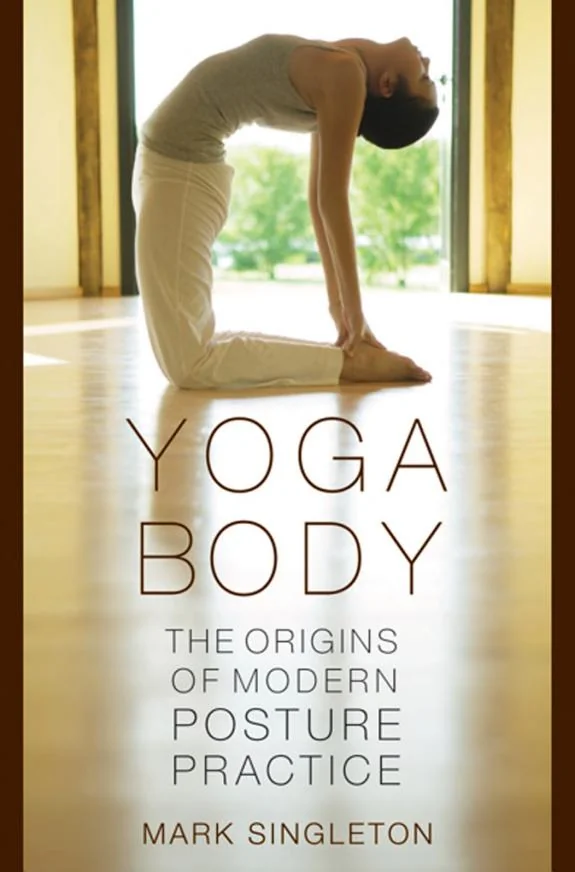
Yoga Body
 81
81

Yoga Body
Mark Singleton's *Yoga Body* is a meticulously researched corrective to the often-mythologized origins of modern postural yoga. He dismantles the notion that today's popular asana sequences are direct transmissions from antiquity, instead locating their genesis in the late 19th and early 20th centuries. Singleton’s strength lies in his detailed archival work, tracing influences from Western physical education and theosophy onto Indian yogic practices. The book is undeniably academic, at times dense, but its central argument is powerfully presented. A key takeaway is Singleton's analysis of how figures like B.K.S. Iyengar synthesized various elements into distinct, globally influential styles. While some readers might find the lack of prescriptive guidance on practice a limitation, the work’s value is in its scholarly rigor. *Yoga Body* offers an indispensable historical grounding for anyone seeking to understand the complex evolution of yoga.
📝 Description
81
Mark Singleton's 2010 book, Yoga Body, questions the ancient origins of modern postural yoga.
Published in 2010, Mark Singleton's Yoga Body examines the historical development of postural yoga. The book challenges the assumption that current asana practice is a continuous, ancient Indian tradition. Singleton traces the roots of contemporary yoga, demonstrating its more recent formation and the various influences that shaped its present state. He places the rise of postural yoga within specific historical periods, particularly the late 19th and early 20th centuries.
The research highlights the impact of Western physical culture movements, theosophy, and figures such as Swami Kuvalayananda and B.K.S. Iyengar. These developments are contextualized against Indian nationalism and the global dissemination of yoga. The book addresses concepts like the 'modernization' of yoga, distinguishing between 'ancient' and 'modern' practices, and the influence of scientific and hygienic ideals on asana. It separates India's meditative and yogic traditions from the physically focused practices that gained international recognition.
Yoga Body situates the transformation of yoga within a broader history of religious and physical practice adaptation. It examines how certain Indian traditions were reinterpreted and commercialized for Western audiences in the late 19th and early 20th centuries. This period saw a surge in interest in Eastern philosophies and practices, often filtered through colonial encounters and new age movements. Singleton's work provides a critical lens on how these practices were reconstructed, moving away from their original spiritual or meditative aims towards a more physical and therapeutic form.
💡 Why Read This Book?
• You will learn how Western physical culture movements influenced the development of modern yoga postures, a concept detailed in Singleton's examination of the early 20th century. • You will gain a critical perspective on the claimed antiquity of asana, understanding the specific historical period (late 19th/early 20th century) when many popular poses were codified. • You will discover the role of figures like Swami Kuvalayananda in synthesizing traditional Indian practices with new physical education ideals, as explored in the book's analysis.
⭐ Reader Reviews
Honest opinions from readers who have explored this book.
❓ Frequently Asked Questions
When was Mark Singleton's 'Yoga Body' first published?
Mark Singleton's 'Yoga Body' was first published on February 25, 2010, by Oxford University Press, marking a significant contribution to the historical study of yoga.
What is the central argument of 'Yoga Body' regarding yoga's origins?
The book's central argument is that modern postural yoga is not an ancient Indian tradition but a relatively recent development, primarily shaped in the late 19th and early 20th centuries.
Which historical influences does Singleton identify for modern yoga?
Singleton identifies influences from Western physical education, hygienic movements, and theosophy, alongside Indian yogic traditions, particularly in the period leading up to and during the early 20th century.
Who are some key figures discussed in relation to yoga's evolution?
The book discusses figures such as Swami Kuvalayananda and B.K.S. Iyengar, examining their roles in codifying and popularizing postural yoga in the 20th century.
How does 'Yoga Body' challenge common perceptions of yoga?
It challenges the widespread belief that current yoga postures are directly and continuously transmitted from ancient Indian scriptures, presenting a more complex, historically contingent origin story.
What is the academic field of 'Yoga Body'?
The book is an academic work of religious studies and history, focusing on the historical and cultural context of yoga's development, particularly its physical dimensions.
🔮 Key Themes & Symbolism
The Invention of Modern Posture
Singleton critically examines how the emphasis on physical postures (asana) in contemporary yoga emerged not from ancient yogic texts but from a confluence of factors in the late 19th and early 20th centuries. He details how influences from Western physical culture, medical gymnastics, and even theosophical ideas about bodily health and spiritual development coalesced. This section is crucial for understanding yoga not as a static, ancient art, but as a dynamic practice that has been continuously reshaped by historical context and external influences, particularly during the period when figures like B.K.S. Iyengar became prominent.
Ancient vs. Modern Yoga
A core theme is the stark differentiation between the practices described in classical yogic literature and the physical, often athleticism-focused, yoga prevalent today. Singleton argues that the 'postural yoga' most recognizable globally is a relatively recent phenomenon, distinct from the meditative and philosophical traditions that have historically characterized yoga in India. He scrutinizes claims of unbroken lineage, proposing that many modern asanas and sequences were developed or popularized much later, often in response to colonial encounters and evolving notions of health and discipline.
Yoga and Physical Culture
This theme explores the integration of yoga into broader systems of physical training and health. Singleton highlights how figures like Swami Kuvalayananda sought to 'scientize' yoga, adapting it to modern understandings of physiology and exercise. The book investigates the mutual influences between Indian yogic practices and Western calisthenics, gymnastics, and even early forms of bodybuilding. This perspective frames yoga's global spread not solely as a spiritual export, but also as a form of physical discipline that resonated with secular interests in well-being and bodily control.
The Colonial Context
Singleton situates the transformation of yoga within the complex dynamics of colonialism. He suggests that the adaptation and promotion of postural yoga were, in part, a response to the colonial gaze and the need to present Indian culture in forms that would be acceptable or even attractive to Western audiences. The book examines how certain yogic practices were selectively emphasized or modified to align with Western ideals of health, discipline, and even exoticism, thereby facilitating their global reception and commercialization.
💬 Memorable Quotes
Direct passages from the work, attributed to the author.
“Most people assume that 'postural' yoga is an ancient Indian tradition.”
— This opening statement immediately sets up the book's central thesis: challenging a widely held assumption about yoga's origins and historical continuity.
“Singleton presents a study of the origins of postural yoga, challenging many current notions about its nature and origins.”
— This highlights the book's academic purpose – to provide a rigorous historical analysis that questions prevalent beliefs and offers a revised understanding of postural yoga's development.
“The book questions the direct, unbroken transmission of modern asanas from classical Indian texts.”
— This interpretation underscores the book's critical stance on claims of ancient lineage, suggesting a more fragmented and inventive history for contemporary yoga postures.
💡 Key Ideas
Editorial paraphrase of the work's core concepts — not direct quotes.
The work explores the synthesis of Indian yogic practices with Western physical culture in the early 20th century.
This paraphrase points to a key analytical framework within the book, emphasizing the cross-cultural exchange and adaptation that characterized yoga's evolution during a specific historical period.
Singleton traces the influences of figures like Swami Kuvalayananda on the popularization of physical yoga.
This paraphrase emphasizes the biographical and historical focus, identifying key individuals whose contributions were instrumental in shaping the yoga practice known today.
🌙 Esoteric Significance
Tradition
While *Yoga Body* is primarily a historical and cultural study, it engages with the esoteric through its examination of yoga's spiritual dimensions and its divergence from purely physical disciplines. It implicitly critiques the reduction of yoga to mere physical exercise, even as it traces the historical pathways that led to this emphasis. The work touches upon theosophical ideas that influenced early modern yoga, a lineage often considered esoteric. It fits within a critical hermeneutics of spiritual traditions, seeking to understand their material and historical conditions rather than accepting received doctrines uncritically.
Symbolism
The book does not heavily focus on esoteric symbolism in the traditional sense (e.g., mandalas, chakras as spiritual centers). Instead, its 'symbolism' lies in the historical evolution of the body itself as a site of practice and spiritual seeking. The 'yoga body' becomes a symbol of modernity – shaped by scientific discourse, colonial encounters, and the desire for self-improvement. The asana itself, often presented as a static pose, symbolizes the complex interplay between tradition and innovation, the ancient and the modern, in the construction of spiritual practices.
Modern Relevance
Contemporary scholars of religion, critical yoga studies practitioners, and historians of embodiment frequently cite Singleton's work. Thinkers concerned with the globalization of spiritual practices, the commodification of yoga, and the historical construction of the 'wellness' industry draw heavily on his findings. His research is foundational for understanding how yoga became a global phenomenon divorced from many of its original philosophical and religious contexts, influencing discussions on authenticity, cultural appropriation, and the adaptive nature of spiritual traditions.
👥 Who Should Read This Book
• Yoga practitioners interested in the historical accuracy of their practice's origins, gaining a critical understanding of how modern asana evolved beyond claims of ancient lineage. • Historians of religion and culture seeking to analyze the impact of Western physical culture and colonial encounters on Eastern spiritual traditions. • Teachers and scholars of yoga aiming to provide a more informed and nuanced perspective on the history and development of postural yoga, moving beyond popular myths.
📜 Historical Context
Published in 2010, *Yoga Body* emerged during a period of intense global interest in yoga, yet also a growing scholarly awareness of its complex history. Mark Singleton's work arrived amidst a burgeoning academic field dedicated to the critical study of yoga, moving beyond hagiography to rigorous historical analysis. The era saw contemporaries like Elliott Goldberg publishing similar revisionist histories. Singleton's research directly engaged with the intellectual currents of the late 19th and early 20th centuries, particularly the rise of physical culture movements in Europe and America, and the impact of the Theosophical Society. His work challenged the prevailing narrative often promoted by yoga studios and practitioners, which emphasized yoga's ancient and unbroken lineage. While not facing overt censorship, the book’s findings were sometimes met with resistance from those invested in traditional narratives. Its reception was significant within academic circles, cited by scholars examining the intersection of religion, health, and global culture.
📔 Journal Prompts
The historical construction of the 'yoga body' in the early 20th century.
Swami Kuvalayananda's approach to yogic practice.
The influence of Western physical education on Indian yoga.
Comparing classical yoga texts with modern asana manuals.
The role of theosophy in early modern yoga development.
🗂️ Glossary
Asana
Literally 'seat' in Sanskrit, referring to a stable and comfortable posture. In modern contexts, it primarily denotes the physical postures practiced in yoga, often for health, flexibility, or spiritual development.
Hatha Yoga
A branch of yoga that focuses on physical postures (asanas) and breathing techniques (pranayama) to prepare the body and mind for meditation. Its historical development and relationship to modern postural yoga are central to Singleton's analysis.
Theosophy
A spiritual movement founded in the late 19th century, blending elements of Eastern and Western mysticism. It influenced many early Western adopters and practitioners of yoga in the late 19th and early 20th centuries.
Physical Culture
A broad term encompassing various forms of physical exercise, hygiene, and bodily training that gained popularity in the West during the late 19th and early 20th centuries, influencing the development of modern yoga.
Swami Kuvalayananda
An influential Indian yogi and scholar (1883-1968) who played a significant role in the scientific and academic study of yoga, contributing to the codification of asanas and their integration with modern health concepts.
B.K.S. Iyengar
A prominent Indian yoga guru (1918-2014) whose method, Iyengar Yoga, emphasized precise alignment and the use of props. His approach is considered a major development in postural yoga in the 20th century.
Lineage
In spiritual traditions, a succession of teachers and disciples, implying an unbroken transmission of knowledge or authority. Singleton critically examines claims of unbroken lineage for modern postural yoga.
This book appears in 1 collection
🔮 Readers Also Liked
Browse all →








From the “Hatha Yoga” Collection
View all →







More Free Occult Philosophy Books
View all →