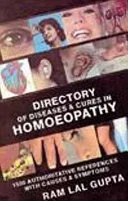
Directory of Diseases and Cures in Homeopathy
 78
78

Directory of Diseases and Cures in Homeopathy
R. L. Gupta's 'Directory of Diseases and Cures in Homeopathy' offers a straightforward, alphabetically organized compendium that serves its intended purpose with commendable clarity. The strength of this work lies in its directness; it avoids theoretical discursions and instead focuses on practical prescriptions linked to causes and symptoms, making it a useful quick-reference tool. The 2023 publication date suggests an attempt to consolidate established homeopathic knowledge for contemporary practitioners. However, its primary limitation is the lack of depth regarding the energetic or subtle aspects of remedy selection that many homeopaths consider crucial. For instance, while it lists 'fever' and potential remedies, it doesn't deeply explore the nuances of miasms or constitutional prescribing that differentiate advanced homeopathic practice. The simple language and alphabetical order, while aiding accessibility, can sometimes oversimplify complex cases that require more sophisticated repertorization. The 'Directory' stands as a functional guide for basic homeopathic prescribing, but practitioners seeking a more nuanced understanding of the art and science of homeopathy may find it wanting. It is a functional tool, albeit one that prioritizes breadth over intricate depth.
📝 Description
78
R. L. Gupta's Directory of Diseases and Cures in Homeopathy, published in late 2023, systematically catalogs ailments and their homeopathic treatments.
This volume functions as a practical reference for homeopathic practice. It lists common diseases, details their causes and symptoms, and provides specific clinical prescriptions. The book is organized alphabetically and uses clear language for accessibility. It is intended for professional homeopaths and students. The directory supports quick reference during consultations or study sessions. It is for anyone wanting to understand the link between disease presentations and their homeopathic remedies. The work emphasizes established remedies and their applications in a clinical approach.
Homeopathy originated with Samuel Hahnemann in the late 18th century, based on the principle 'like cures like.' It became prominent in the 19th century, often contrasted with allopathic medicine's harsh treatments. Gupta's 2023 publication reflects the ongoing interest in classical homeopathic principles and their application to health concerns today. The book addresses contemporary health issues through the lens of these established homeopathic methods. It aims to be a useful tool for practitioners and learners alike.
Homeopathy, a system originating in the late 18th century, operates on the principle of 'like cures like.' It posits that a substance causing symptoms in a healthy person can, in diluted form, cure similar symptoms in a sick person. This approach stands apart from conventional medicine, focusing on the individual's totality of symptoms and vital force. Gupta's directory aligns with this tradition by providing a structured guide to matching specific disease presentations with their corresponding homeopathic remedies, maintaining a focus on the holistic and energetic principles central to homeopathic philosophy.
💡 Why Read This Book?
• Gain direct access to R. L. Gupta's clinical prescriptions for over 100 common diseases, as outlined in the directory's alphabetical format, facilitating rapid treatment identification. • Understand the foundational homeopathic principle of 'similia similibus curentur' by seeing its direct application in correlating disease symptoms with specific remedies, a core concept since Hahnemann's work. • Acquire a practical reference for identifying common causes and symptoms of ailments, enabling a more structured approach to homeopathic case analysis and remedy selection, crucial for practitioners.
⭐ Reader Reviews
Honest opinions from readers who have explored this book.
❓ Frequently Asked Questions
What is the primary purpose of R. L. Gupta's 'Directory of Diseases and Cures in Homeopathy'?
The primary purpose is to serve as a practical, alphabetically organized reference guide for homeopathic practitioners and students. It lists diseases, their causes, symptoms, and provides specific clinical prescriptions based on homeopathic principles.
When was 'Directory of Diseases and Cures in Homeopathy' by R. L. Gupta first published?
The book was first published on November 21, 2023. This recent publication date indicates a contemporary compilation of homeopathic knowledge.
What is the organizational structure of the book?
The directory is organized alphabetically by disease. This structure allows for quick and easy access to information on specific ailments and their corresponding homeopathic treatments.
What level of detail is provided for each disease?
For each disease, the book provides authoritative references, common causes, characteristic symptoms, and clinical prescriptions. The language is kept simple for ease of understanding.
Who is the intended audience for this homeopathic directory?
The intended audience includes practicing homeopaths and students of homeopathy. Its practical nature makes it suitable for those seeking direct clinical guidance and reference material.
Does the book cover rare or obscure diseases?
The book focuses on general diseases with common causes and symptoms. While it aims for comprehensiveness within common ailments, its primary strength is in providing accessible information for everyday practice rather than exhaustive coverage of rare conditions.
🔮 Key Themes & Symbolism
Symptom-Remedy Correlation
This directory is built upon the core homeopathic tenet of 'similia similibus curentur'—like cures like. It meticulously details the observable symptoms and causes of various ailments, directly linking them to specific homeopathic remedies. The work emphasizes that accurate diagnosis and successful treatment in homeopathy hinge on a precise match between the patient's symptom picture and the known pathogenetic effects of a chosen remedy. Gupta’s approach prioritizes clear, factual presentation of these correlations, making it a functional tool for practitioners aiming for precise prescription based on symptom totality.
Clinical Application of Homeopathy
The book's design is fundamentally geared towards practical application within a clinical setting. By organizing information alphabetically and using simple language, it facilitates rapid consultation for homeopaths facing diverse patient presentations. The inclusion of 'clinical prescriptions' suggests a focus on established, successful treatment protocols derived from years of practice and observation since Hahnemann's initial work. It serves as a bridge between the theoretical underpinnings of homeopathy and its day-to-day therapeutic use, offering direct guidance for practitioners.
Homeopathic Materia Medica
As a directory of cures, this work functions as a condensed materia medica, focusing on the therapeutic applications of remedies. It distills essential information regarding disease causation and symptomatology, presenting it in a manner directly relevant to remedy selection. While not a comprehensive exploration of individual remedy profiles in the style of Kent or Clarke, it offers a curated selection of remedies and their indications for commonly encountered diseases, serving as an accessible entry point to the vast knowledge of homeopathic pharmacology.
💬 Memorable Quotes
Direct passages from the work, attributed to the author.
“Includes authoritative references with causes and symptoms.”
— This statement highlights the book's commitment to providing a grounded, evidence-based approach within homeopathy, suggesting that the presented information is supported by established texts and clinical experience, moving beyond mere anecdotal claims.
“General diseases with common causes, symptoms and clinical prescriptions for practicing homoeopathy.”
— This phrase underscores the directory's practical utility for homeopaths. It emphasizes the focus on prevalent ailments and provides actionable information—causes, symptoms, and prescribed remedies—designed for immediate application in a therapeutic context.
“Alphabetical order and simple language has been used.”
— This points to the deliberate design choice prioritizing user accessibility and ease of reference. The alphabetical structure and straightforward language aim to make complex homeopathic information readily available and understandable for practitioners, especially during time-sensitive consultations.
“Authoritative references”
— The mention of 'authoritative references' suggests that the prescriptions and information within the directory are not arbitrary but are grounded in respected homeopathic literature and established clinical practice, lending credibility to its contents.
“Clinical prescriptions”
— This directly addresses the book's function as a practical guide. It implies that the directory offers concrete, actionable treatment recommendations for various diseases, serving as a direct aid for homeopaths in their daily practice.
🌙 Esoteric Significance
Tradition
While homeopathy is primarily viewed as a medical system, its foundational principles share conceptual ground with certain esoteric traditions, particularly in its emphasis on vital force and subtle energies. Hahnemann's concept of the 'vital principle' or 'life force' echoes vitalistic philosophies found in Hermeticism and alchemical thought, which posit an animating energy underlying all matter and life. The practice of potentization, or serial dilution and succussion, is often interpreted esoterically as a method of imprinting energetic or spiritual information onto a medium, akin to magical or ritualistic practices aimed at amplifying intent or essence.
Symbolism
The concept of 'similia similibus curentur' itself can be seen as symbolic, representing a mirroring or resonance between the internal state of the patient and the external agent of cure. The remedy picture, a collection of symptoms produced by a drug in healthy individuals, symbolically acts as a 'key' that unlocks the body's own healing potential. The high dilutions, while scientifically debated, carry symbolic weight, suggesting that efficacy lies not in material quantity but in energetic or informational potency, a notion found in various mystical traditions that prioritize spirit over matter.
Modern Relevance
In contemporary esoteric and holistic health circles, homeopathy continues to be a significant practice. Thinkers and practitioners exploring vitalism, energy medicine, and consciousness-based healing often reference homeopathic principles. Schools of thought focusing on psychosomatic connections and the mind-body-spirit axis may find resonance with homeopathy's holistic approach. Modern practitioners of energy healing, such as Reiki or acupuncture, may also draw parallels with the energetic and informational aspects attributed to homeopathic remedies, seeing it as part of a broader spectrum of subtle energy therapies.
👥 Who Should Read This Book
• Practicing homeopaths seeking a quick-reference guide for common ailments, causes, and established clinical prescriptions, enabling efficient case management. • Students of homeopathy needing a clear, alphabetically organized text to supplement their studies, reinforcing the link between disease presentation and remedy selection based on Hahnemannian principles. • Holistic health practitioners interested in understanding the foundational approach of classical homeopathy and its systematic method for correlating symptoms with cures.
📜 Historical Context
Homeopathy, conceived by Samuel Hahnemann around 1796, emerged as a radical departure from the often harsh and invasive medical practices of the late 18th and 19th centuries. Its principle of 'like cures like' and reliance on highly diluted substances offered a gentler alternative that appealed to a growing segment of the population. By the mid-19th century, homeopathy had established significant institutions and a dedicated following, coexisting with, and often critiqued by, the dominant allopathic medical field which prioritized treatments like bloodletting and strong chemical compounds. Contemporary figures like Constantin Hering were instrumental in expanding homeopathic knowledge in the United States. R. L. Gupta's 'Directory of Diseases and Cures in Homeopathy,' published in 2023, arrives in a modern context where homeopathy continues to be practiced globally, albeit subject to ongoing scientific scrutiny and debate, representing a contemporary effort to codify and present established homeopathic knowledge for current practitioners.
📔 Journal Prompts
The correlation of disease symptoms with specific homeopathic remedies.
Reflecting on the principle of 'similia similibus curentur' in practice.
Analysis of common causes and symptoms for a chosen ailment.
The practical application of clinical prescriptions.
The significance of authoritative references in homeopathic literature.
🗂️ Glossary
Homeopathy
A system of alternative medicine based on the principle that a substance that causes symptoms in healthy people can, in turn, cure similar symptoms in sick people when used in highly diluted amounts.
Similia Similibus Curentur
Latin for 'like cures like,' the fundamental principle of homeopathy, stating that a substance that causes symptoms in a healthy person can treat similar symptoms in a sick person.
Materia Medica
A comprehensive resource detailing the effects of substances (drugs) on the human body, used in homeopathy to understand which remedy to select based on a patient's symptoms.
Clinical Prescription
A specific recommendation for a homeopathic remedy and potency to be used for a particular disease or set of symptoms, based on established practice and literature.
Potentization
The process in homeopathy of diluting a substance and vigorously shaking it (succussion), believed to increase its therapeutic efficacy while reducing toxicity.
Symptom Totality
The complete collection of a patient's characteristic symptoms, including physical, mental, and emotional aspects, considered essential for accurate homeopathic remedy selection.
Allopathic Medicine
A term used by homeopaths to refer to conventional Western medicine, often characterized by the use of treatments that produce effects different from or opposite to those produced by the disease.