Acupuncture
 79
79

Acupuncture
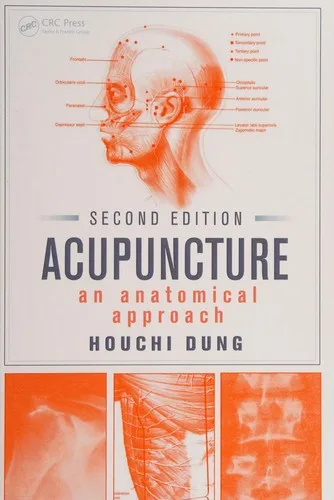
Houchi Dung and Indra K. Reddy's "Acupuncture" makes a commendable effort to anchor a historically complex practice in modern scientific discourse. Its strength lies in its systematic approach, detailing the nervous system and pain measurement in clear, accessible language for medical professionals. The work's commitment to a scientific, anatomical framework is evident throughout, particularly in its mapping of acupoints. However, the text occasionally feels more like a clinical manual than a deep exploration, which may leave those seeking the philosophical underpinnings of acupuncture wanting. A notable section discusses the quantification of pain, offering tangible metrics that demystify a subjective experience. While thorough, it sometimes sacrifices the subtle nuances of the practice for empirical clarity. Ultimately, it serves as a solid, if somewhat dry, bridge between ancient tradition and contemporary medical science.
📝 Description
79
Houchi Dung and Indra K. Reddy's 2023 work positions acupuncture as a core medical modality, not a fringe therapy.
This book addresses medical professionals and students by demystifying acupuncture and presenting its application for a contemporary audience. It moves beyond anecdotal evidence to provide a structured understanding of the practice's physiological basis. The authors aim to equip practitioners with knowledge for integrating acupuncture into standard treatment protocols through clear, evidence-based explanations. It is designed for physicians, nurses, physiotherapists, and other healthcare providers who may have previously viewed acupuncture with skepticism. Students of medicine and allied health sciences will find a scientifically grounded introduction. Those interested in the intersection of anatomy and energetic medicine will find its approach particularly relevant.
The text traces acupuncture's roots over 2,000 years, acknowledging its long history while focusing on modern applicability validated by research. It endeavors to bridge the gap between traditional practices and Western medicine by presenting acupuncture through a scientific and anatomical lens. The book dissects the fundamentals of the human nervous system as they relate to acupuncture, detailing specific acupoints and their anatomical locations. A significant focus is placed on the measurement and quantification of pain, a crucial aspect for clinical assessment and treatment efficacy. Various applications are reviewed, suggesting how these points and techniques can address a range of conditions.
While this work grounds acupuncture in scientific and anatomical principles, it acknowledges the practice's origins within a broader energetic medicine tradition. For over two millennia, acupuncture has been understood within frameworks that consider the body's vital energy, or Qi, and its flow through meridians. This book bridges the gap between those historical conceptualizations and contemporary biomedical understanding, examining how ancient theories of energetic balance find correlates in modern neurophysiology and pain science. It offers a perspective that respects the historical context of acupuncture as a holistic healing art while validating its efficacy through empirical research.
💡 Why Read This Book?
• Gain a scientifically grounded understanding of acupuncture's physiological mechanisms, including its relation to the nervous system, as detailed in the book's anatomical approach. • Learn to quantify and measure pain, a critical skill for clinical assessment, directly from the methods discussed in the text. • Discover specific acupuncture points and their anatomical locations, moving beyond traditional lore to a precise, clinical application as presented by Dung and Reddy.
⭐ Reader Reviews
Honest opinions from readers who have explored this book.
❓ Frequently Asked Questions
What is the primary goal of the book "Acupuncture" by Houchi Dung and Indra K. Reddy?
The book aims to demystify acupuncture for modern medical professionals by presenting it with a scientific and anatomical approach, moving it from alternative medicine into mainstream understanding.
How does "Acupuncture" explain the practice to medical professionals?
It explains acupuncture by detailing the basics of the nervous system, identifying specific acupuncture points throughout the body, and discussing methods for measuring and quantifying pain.
What historical context does the book provide for acupuncture?
The book notes that acupuncture has been practiced for over 2,000 years, originating as a therapy once restricted to alternative medicine before this work sought to bring it to the forefront.
Who are the authors of "Acupuncture"?
The authors are Houchi Dung and Indra K. Reddy. The book was first published on October 24, 2013.
What is the intended audience for this "Esoteric" categorized book?
The primary audience is medical professionals and students seeking a scientific and anatomical understanding of acupuncture, enabling them to comprehend and potentially integrate it into their practice.
Does the book focus on traditional Chinese medicine philosophy?
While acknowledging its history, the book emphasizes a scientific, anatomical, and measurement-focused approach, aiming to translate the practice into terms understandable by contemporary medical professionals.
🔮 Key Themes & Symbolism
Anatomical Acupoint Mapping
The work meticulously maps acupuncture points not as abstract energetic loci but as specific anatomical locations tied to the body's physical structure. It bridges traditional meridian theory with modern anatomical understanding, detailing precise points and their relation to nerves and musculature. This approach aims to ground the practice in a verifiable, physiological framework, making it accessible for practitioners accustomed to Western medical diagnostics and interventions. The emphasis is on empirical localization and functional correlation.
Quantification of Pain Experience
A significant theme is the scientific measurement and quantification of pain. The book explores methodologies that allow for objective assessment of a subjective symptom, a crucial step in integrating acupuncture into evidence-based medicine. By providing tools and frameworks for pain measurement, it enables practitioners to track treatment efficacy and communicate outcomes clearly. This focus underscores the text's commitment to translating ancient healing techniques into a quantifiable, clinical context.
Nervous System Integration
The book looks at the intricate relationship between acupuncture and the human nervous system. It elucidates how stimulating specific points can influence neural pathways and physiological responses. This exploration provides a scientific rationale for acupuncture's therapeutic effects, moving beyond traditional explanations of Qi flow. Understanding these neurological mechanisms is key to accepting acupuncture as a valid medical intervention within contemporary healthcare paradigms.
💬 Memorable Quotes
Direct passages from the work, attributed to the author.
“Acupuncture has been practiced for more than 2,000 years, moving from alternative to mainstream.”
— This statement highlights the book's core objective: to reframe acupuncture's perception. It asserts the practice's deep historical roots while emphasizing its contemporary relevance and scientific validation, aiming to elevate its status in modern medicine.
“Explaining acupuncture in terms easily comprehended by all medical professionals.”
— This signifies the book's commitment to accessibility and scientific clarity. It prioritizes a language and methodology understandable to a Western medical audience, bridging the gap between traditional knowledge and contemporary clinical practice.
“Presenting a scientific, anatomical approach to acupuncture.”
— This declaration sets the methodological tone for the entire work. It signals a departure from purely energetic or philosophical explanations, focusing instead on the physical structures and physiological processes that underpin acupuncture's effects.
“Reviews applications of acupuncture for various conditions.”
— This suggests the practical utility of the book. Beyond theoretical explanations, it aims to provide clinicians with an overview of how acupuncture can be applied to address a range of health issues.
💡 Key Ideas
Editorial paraphrase of the work's core concepts — not direct quotes.
Discusses the basics of the nervous system, acupuncture points, and measurement of pain.
This summarizes the key pillars of the book's content. It indicates a structured approach that covers the biological underpinnings, the specific therapeutic targets, and the objective assessment of outcomes.
🌙 Esoteric Significance
Tradition
While categorized as 'Esoteric,' this work significantly departs from traditional esoteric lineages like Hermeticism or Kabbalah. Its lineage is firmly rooted in the scientific and medical traditions of the West, specifically aiming to translate ancient practices into a modern biomedical paradigm. It does not engage with metaphysical concepts or spiritual interpretations of health and healing. Instead, it seeks validation and integration through empirical evidence and anatomical understanding, positioning itself as a bridge between traditional healing arts and contemporary scientific medicine.
Symbolism
The book's approach minimizes overt symbolism in favor of anatomical and physiological descriptions. The 'acupuncture points' themselves can be seen as symbolic loci where the body's energetic or nervous systems are particularly accessible. However, the text prioritizes their identification via anatomical landmarks and their correlation with nerve pathways or physiological functions. The concept of 'Qi' or vital energy, central to traditional acupuncture, is approached not as a mystical force but as a metaphor for physiological processes that can be influenced and measured.
Modern Relevance
Contemporary thinkers and practitioners in fields like integrative medicine, pain management, and neuro-acupuncture draw heavily on the scientific grounding this book provides. Researchers investigating the neurobiological effects of acupuncture, particularly its impact on the central and peripheral nervous systems, find its anatomical and pain-quantification frameworks invaluable. It serves as a foundational text for those seeking to understand and apply acupuncture based on empirical data rather than solely on historical or philosophical traditions.
👥 Who Should Read This Book
• Medical professionals (physicians, nurses, physiotherapists) seeking to understand and potentially integrate acupuncture into their clinical practice based on scientific principles. • Students of medicine and allied health sciences looking for a structured, anatomical introduction to acupuncture that aligns with Western medical education. • Researchers in pain management and neurobiology interested in the physiological mechanisms underlying acupuncture and objective methods for assessing its efficacy.
📜 Historical Context
First published in 2013, "Acupuncture" by Houchi Dung and Indra K. Reddy emerged during a period of increasing global interest in complementary and alternative medicine (CAM). While acupuncture had been practiced for over two millennia, its scientific validation and integration into Western medical curricula remained a subject of ongoing debate. The early 21st century saw a surge in research attempting to explain acupuncture's mechanisms through neurobiology and anatomy, moving away from solely traditional Chinese medicine (TCM) concepts like Qi. This book aligns with that intellectual current, seeking to provide a rigorous, scientific framework. It aimed to counter skepticism from the biomedical establishment, which often viewed TCM as unscientific or pseudoscientific. Unlike purely theoretical or historical accounts of TCM, Dung and Reddy's work focuses on providing a practical, anatomical, and quantifiable understanding for physicians and allied health professionals, directly addressing the need for evidence-based approaches in CAM.
📔 Journal Prompts
The nervous system's role in acupuncture stimulation.
Mapping specific acupuncture points to anatomical structures.
Methods for quantifying subjective pain experiences.
Bridging 2,000 years of practice with modern medicine.
The transition of acupuncture from alternative to mainstream therapy.
🗂️ Glossary
Acupuncture Points (Acupoints)
Specific locations on the body, identified anatomically, where acupuncture needles are inserted to stimulate physiological responses and treat various conditions.
Nervous System
The complex network of nerves and cells that carry messages to and from the brain and spinal cord to various parts of the body, playing a key role in how acupuncture is understood scientifically.
Pain Quantification
The process of measuring and assigning numerical values to a patient's pain experience, allowing for objective assessment of its severity and response to treatment.
Anatomical Approach
A method of understanding and explaining biological phenomena by focusing on the physical structures and their relationships within the body.
Alternative Medicine
Health practices that are used instead of conventional medicine, often contrasted with scientifically validated treatments.
Meridian Theory
A traditional Chinese medicine concept describing pathways in the body through which Qi (vital energy) flows; this book aims to correlate these with anatomical and neurological findings.
Qi
A concept in traditional Chinese culture referring to vital energy or life force; this book seeks to explain its observable physiological effects through scientific principles.