Reiki
 75
75

Reiki
Müller and Günther's "Reiki" offers a sober, informative account of this popular healing practice, distinguishing it from more speculative or commercialized interpretations. Its strength lies in its detailed exposition of the core tenets and the ethical framework provided by the Gokai. A notable passage clarifies the distinction between Reiki as a spiritual path and its application as a therapeutic modality, a crucial point often blurred. However, the book sometimes feels overly descriptive, lacking a certain spark that might engage readers less familiar with esoteric concepts. The historical section, while factually sound, could benefit from more critical engagement with the evolution of Reiki practices outside Japan. It provides a solid foundation but may leave some yearning for a deeper exploration of energetic mechanics.
📝 Description
75
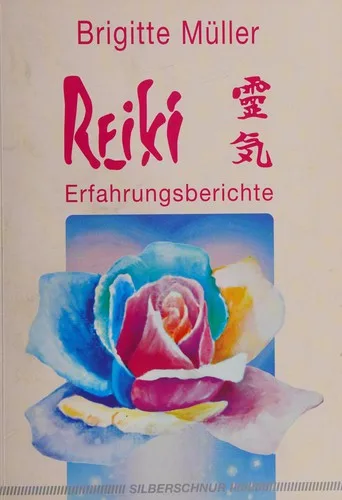
Brigitte Müller and Horst H. Günther's 1985 book explains Reiki's principles and practice.
This book presents Reiki as a Japanese healing modality that channels universal life force energy through touch. The practice aims to promote balance and self-healing across physical, emotional, mental, and spiritual dimensions, functioning as a complementary therapy rather than a medical treatment. It is written for practitioners who wish to understand Reiki beyond basic hand placements, offering insight into its philosophical foundations and historical growth. Individuals interested in energy healing, personal well-being, or complementary spiritual practices will find this text valuable. It also appeals to students of Eastern healing arts and comparative spirituality.
The work details core Reiki concepts, including 'Ki' or 'Qi,' the vital energy present in all life. It also elaborates on the five Reiki principles, the 'Gokai,' which serve as ethical guidelines for practitioners. These principles include directives on avoiding worry and anger, honoring elders and teachers, earning an honest living, and showing gratitude. The book further describes the practice itself, outlining its various levels and attunement processes.
Reiki, originating in early 20th century Japan with Mikao Usui, is placed within a lineage of energetic healing traditions. The book acknowledges connections to universal concepts of vital force found across various cultures. It situates Reiki's development as distinct yet related to broader spiritual philosophies that emphasize the flow of life energy for well-being. This approach connects the practice to a wider understanding of subtle energies used in personal and spiritual growth.
💡 Why Read This Book?
• Learn the foundational principles and ethical guidelines, the Gokai, which offer a practical framework for daily living beyond healing sessions, as detailed in the book's explanation of Reiki. • Understand the historical origins of Reiki, tracing its development from Mikao Usui's teachings in Japan around 1922 to its global dissemination. • Gain clarity on the concept of 'Ki' and its role in energetic healing, enabling a more informed approach to energy work and holistic well-being.
⭐ Reader Reviews
Honest opinions from readers who have explored this book.
❓ Frequently Asked Questions
When was Reiki first developed?
Reiki was developed in Japan by Mikao Usui. The practice is generally understood to have originated in the early 20th century, with a widely accepted date for Usui's enlightenment experience being around 1922.
What are the core principles of Reiki?
The core principles, known as the Gokai, are: just for today, do not worry; just for today, do not anger; honor your father and mother, elders, and teachers; earn your living honestly; and show gratitude to all living things.
What does 'Ki' mean in the context of Reiki?
'Ki' is the Japanese word for the universal life force energy that animates all living things. In Reiki, practitioners channel this energy to promote balance and healing.
Is Reiki a religion or a medical treatment?
Reiki is considered a spiritual practice or healing modality, not a religion. It is also not a substitute for conventional medical treatment but is often used as a complementary therapy.
Who is credited with bringing Reiki to the West?
Hawayo Takata, a Japanese-American woman, is widely credited with introducing and popularizing Reiki in the Western world, particularly in the United States, starting in the mid-20th century.
What is the purpose of Reiki attunements?
Attunements are sacred initiation ceremonies performed by a Reiki master. They are believed to open and enhance a student's ability to channel Reiki energy, acting as a spiritual and energetic upgrade.
🔮 Key Themes & Symbolism
The Nature of Ki
The work emphasizes 'Ki' (or 'Qi') as the fundamental, omnipresent life force energy. It's presented not merely as a concept but as a tangible, albeit subtle, energy that flows through all existence. Understanding Ki is crucial for grasping how Reiki functions, as practitioners act as conduits for this universal energy, facilitating its flow to promote balance and well-being in recipients. The text explores how Ki can become depleted or blocked, leading to imbalance, and how Reiki aims to restore its natural, vibrant circulation.
The Five Principles (Gokai)
Central to the practice are the Five Principles, or Gokai, which serve as ethical and spiritual guidelines. These principles encourage a mindful approach to life, emphasizing gratitude, honesty, respect for elders and teachers, and emotional regulation (avoiding worry and anger). They are presented not as mere suggestions but as integral components of the Reiki path, designed to foster inner harmony and support the healing process. Living by these principles is seen as a way to embody the essence of Reiki.
Holistic Healing and Balance
Reiki is depicted as a holistic modality that addresses the interconnectedness of mind, body, and spirit. It's not solely focused on physical ailments but aims to restore overall energetic balance, which in turn supports natural healing processes. The practice facilitates relaxation, reduces stress, and promotes a sense of peace, creating an internal environment conducive to recovery and vitality. This comprehensive approach differentiates it from purely symptomatic treatments, focusing on the root energetic causes of imbalance.
The Usui Lineage
The book touches upon the historical development of Reiki, tracing its origins to Mikao Usui in Japan. It acknowledges the importance of the lineage and the transmission of the practice through qualified masters. Understanding the historical context, including Usui's own journey and the subsequent dissemination of Reiki by figures like Hawayo Takata, provides a framework for appreciating the discipline and its evolution over time. This lineage is presented as a grounding element for practitioners.
💬 Memorable Quotes
Direct passages from the work, attributed to the author.
“Just for today, do not worry. Just for today, do not anger.”
— This foundational principle highlights the practice's focus on present-moment awareness and emotional regulation as keys to well-being, directly linking mental states to physical health.
“Honor your father and mother, elders, and teachers.”
— This principle emphasizes respect for lineage, tradition, and guidance, suggesting that acknowledging our roots and mentors is essential for personal growth and energetic harmony.
“Earn your living honestly.”
— This guideline points to the ethical foundation of a practitioner's life, underscoring that integrity in one's livelihood supports the purity of the energy channeled during healing.
“Show gratitude to all living things.”
— This principle encourages a universal sense of appreciation, fostering a connection to the web of life and promoting a positive, abundant energetic state.
“Ki is the vital energy that flows through all things.”
— This core concept defines the essence of Reiki, positing a universal life force that practitioners learn to channel for healing and balance.
🌙 Esoteric Significance
Tradition
Reiki, while originating in Japan with influences from Shinto and Buddhist practices, fits within the broader esoteric tradition of vitalistic energy work. It shares conceptual ground with Chinese Qi Gong and Taoist internal alchemy, focusing on the cultivation and circulation of 'Ki' or 'Qi.' It departs from strictly Hermetic or Kabbalistic systems by its direct emphasis on intuitive energy transmission rather than complex symbolic correspondences or structured magical operations, though it shares the goal of holistic well-being and spiritual development.
Symbolism
Key symbols within Reiki, often introduced at the practitioner (Okuden) and master (Shinpiden) levels, include the Power Symbol (Cho-Ku-Rei), which represents the 'on/off' switch for Reiki energy, symbolizing unity and illumination. The Harmony Symbol (Sei-Hei-Ki) is associated with emotional and mental balance, often linked to the subconscious and purification. The Distance Symbol (Hon-Sha-Ze-Sho-Nen) enables healing across space and time, representing connection and spiritual development.
Modern Relevance
Contemporary wellness culture heavily draws on Reiki principles, often integrating its concepts of energy flow and holistic balance into yoga, mindfulness, and therapeutic massage. Many modern energy healing modalities, while perhaps not directly lineage-based, echo Reiki's foundational ideas about channeling universal life force. Practitioners and researchers continue to explore its applications in stress reduction, pain management, and complementary care within clinical settings, reflecting its enduring appeal and adaptability.
👥 Who Should Read This Book
• Individuals new to energy healing seeking a clear, foundational understanding of Reiki's principles and historical context, moving beyond anecdotal claims. • Licensed massage therapists and wellness practitioners looking to integrate gentle, non-invasive energy work into their existing practices, informed by established techniques. • Students of comparative spirituality interested in Eastern healing arts and the concept of universal life force energy ('Ki') as explored in Japanese traditions.
📜 Historical Context
The early 21st century, when Brigitte Müller and Horst H. Günther's "Reiki" was first published in 2006, saw a burgeoning interest in complementary and alternative medicine (CAM) globally. This period was marked by a growing demand for natural healing methods and a critical re-examination of Western allopathic medicine's limitations. Reiki, having been introduced to the West primarily through Hawayo Takata from the mid-20th century onwards, was gaining significant traction. While Usui's original teachings formed the basis, various schools and interpretations had emerged. Müller and Günther's work aimed to present a more grounded and historically informed perspective on the practice, potentially in response to the increasing commercialization and sometimes superficial understanding of Reiki prevalent in popular wellness circles. They situated it within a broader context of Eastern energetic philosophies, distinguishing it from New Age trends that often lacked historical or philosophical depth.
📔 Journal Prompts
The Five Principles (Gokai) as a daily practice.
Reflect on the concept of 'Ki' and its presence in your life.
Exploration of gratitude as a healing force.
The role of intention in channeling energy.
Personal definition of holistic balance.
🗂️ Glossary
Ki
The Japanese term for the universal life force energy that animates all living things. It is believed to flow through all matter and is the fundamental energy channeled in Reiki.
Gokai
The Five Principles of Reiki, serving as ethical guidelines and a spiritual foundation for practitioners, focusing on present-moment living, respect, and gratitude.
Mikao Usui
The Japanese founder of Reiki, credited with rediscovering and systematizing the practice in the early 20th century.
Hawayo Takata
A Japanese-American woman who played a central role in bringing Reiki to the Western world, particularly the United States, from the mid-20th century.
Attunement
A ritualistic initiation ceremony performed by a Reiki master to connect a student to the Reiki energy, enhancing their ability to channel it.
Chakra
Energy centers within the subtle body, often discussed in relation to Reiki, believed to regulate the flow of Ki and influence physical and emotional well-being.
Byosen
A Japanese term used in Reiki to describe the 'sickness energy' or energetic imbalance detected by a practitioner's hands before or during a healing session.