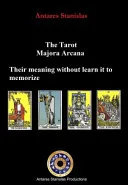
The Tarot, Major Arcana, their meaning without learn it to memorize
 83
83

The Tarot, Major Arcana, their meaning without learn it to memorize
Antares Stanislas’s approach to the Major Arcana in 'The Tarot, their meaning without learn it to memorize' is direct, aiming to cut through the often-intimidating bulk of traditional Tarot study. The author’s stated goal is to provide meanings without requiring readers to memorize extensive lists, a laudable objective for newcomers. The book’s strength lies in its concise presentation of each Major Arcana card, offering a clear, professional overview. However, the very brevity that makes it accessible can also be its limitation; deeper symbolic connections and historical nuances are necessarily streamlined. A passage discussing The Fool, for instance, might present its core meaning of new beginnings but may not fully elaborate on its connection to the divine spark or the concept of Kether in Kabbalistic traditions, if that were present. Stanislas succeeds in making the Major Arcana feel approachable, but readers seeking profound esoteric depth might find it a starting point rather than a complete exploration. It is a functional primer for the uninitiated.
📝 Description
83
Antares Stanislas published 'The Tarot, Major Arcana, their meaning without learn it to memorize' in 2016.
This 2016 text by Antares Stanislas focuses solely on the Major Arcana of the Tarot. The author's stated aim is to help readers understand the cards' meanings without requiring rote memorization. Stanislas positions this work as the initial part of a larger project concerning Tarot and future prediction.
Stanislas intends this volume for anyone interested in Tarot, particularly those who want to learn the Major Arcana's significance through intuitive understanding rather than memorization. The author seeks to provide a professional yet accessible method, suitable for beginners or individuals who found traditional study approaches difficult. It is for the curious reader ready to engage with symbolic interpretation.
The book's core idea is grasping the Major Arcana's meaning through organic understanding, not forced recall. Stanislas suggests a focus on each card's archetypal resonance and symbolic story. Readers are encouraged to connect with the imagery and its psychological or spiritual implications, fostering an intuitive sense of the cards' divinatory power.
Published in 2016, this book arrived during a period of renewed interest in esoteric practices like Tarot, often disseminated through online formats and simplified guides. Stanislas's emphasis on intuitive comprehension aligns with a wider trend in New Age and self-help literature from that era, which sought to make complex spiritual systems more approachable. This approach contrasts with older, more structured methods common in occult study.
💡 Why Read This Book?
• Understand the Major Arcana's core messages without rote memorization, as presented in Antares Stanislas's 2016 work, allowing for intuitive interpretation. • Gain a foundational grasp of the 22 Major Arcana cards, which Stanislas positions as essential for 'prediction of the future,' facilitating a practical entry into Tarot divination. • Explore the concept of 'meaning without memorization,' encouraging a personal connection to Tarot symbolism beyond conventional academic or occult study methods.
⭐ Reader Reviews
Honest opinions from readers who have explored this book.
❓ Frequently Asked Questions
What is the main goal of 'The Tarot, Major Arcana, their meaning without learn it to memorize'?
The primary goal is to teach the meanings of the Major Arcana cards without requiring students to memorize extensive details, fostering a more intuitive understanding for readers interested in divination.
Who is Antares Stanislas?
Antares Stanislas is described as a famous fortune teller and astrologer, the author of 'The Tarot, Major Arcana, their meaning without learn it to memorize,' first published in 2016.
Is this book a complete guide to Tarot?
No, this book specifically focuses only on the Major Arcana and is presented as the first integral part of a larger work titled 'Tarot the prediction of the future.'
What makes this book different from other Tarot guides?
Its key differentiator is the emphasis on grasping card meanings intuitively, bypassing the need for rote memorization, making it accessible for those new to Tarot study.
When was 'The Tarot, Major Arcana, their meaning without learn it to memorize' first published?
The book was first published on September 5, 2016.
What audience is this book intended for?
It is intended for readers who want to learn about the Major Arcana of Tarot but prefer an approach that doesn't rely on memorizing large amounts of information.
🔮 Key Themes & Symbolism
Intuitive Interpretation
The core of Stanislas's method revolves around fostering an intuitive connection with the Major Arcana. Instead of relying on memorized definitions, the work encourages readers to absorb the essence of each card through its imagery and archetypal resonance. This approach suggests that true understanding comes from internalizing the symbolic language of the Tarot, allowing its meanings to emerge organically during readings rather than being recalled from a rigid set of rules. It aligns with a more personal, less academic engagement with divinatory tools.
Major Arcana Focus
This text deliberately isolates the 22 Major Arcana cards, treating them as a self-contained system for divination. By concentrating solely on these powerful archetypal cards, Stanislas streamlines the learning process. The Major Arcana, representing significant life events, spiritual lessons, and core human experiences, are presented as foundational elements for understanding Tarot's predictive capabilities, forming the first part of a larger work.
Accessibility in Esoterica
Stanislas aims to clarify Tarot for a broad audience by presenting complex esoteric knowledge in an easily digestible format. The explicit goal of 'meaning without memorization' serves to lower the barrier to entry for those intimidated by traditional occult studies. This philosophy of accessibility makes the esoteric accessible, translating symbolic systems into practical understanding without requiring years of dedicated study or adherence to dogma.
Divination as Prediction
The work positions Tarot primarily as a tool for 'prediction of the future,' as indicated by the title of the larger project from which this book is drawn. The emphasis is on the practical application of understanding the Major Arcana to foresee or interpret forthcoming events and circumstances. This practical, outcome-oriented perspective guides the reader's engagement with the card meanings presented.
💬 Memorable Quotes
Direct passages from the work, attributed to the author.
“The text proposes bringing readers to the world of Tarot with an easy to read book.”
— This statement highlights the author's intention to make Tarot accessible, particularly for beginners. It suggests a deliberate effort to simplify complex concepts and present them in a clear, straightforward manner, removing perceived barriers to entry.
“This text is the first integral part of the complete book Tarot the prediction of the future.”
— This indicates that the current work is foundational, focusing specifically on the Major Arcana as a building block for a more comprehensive system of divination and future interpretation.
“dedicated, however, only to those who use the Major Arcana.”
— This clearly defines the book's scope, targeting readers who are specifically interested in or already working with the Major Arcana, excluding the Minor Arcana from this particular volume.
“maintains its professionalism in the concepts portrayed”
— This suggests that despite its accessible approach, the book upholds a standard of seriousness and depth in its explanations of Tarot concepts, avoiding overly simplistic or trivialized interpretations.
“their meaning without learn it to memorize”
— This phrase expresses the book's unique selling proposition: learning Tarot meanings through understanding and intuition rather than through rote memorization, aiming for organic comprehension.
🌙 Esoteric Significance
Tradition
While not explicitly tied to a single lineage like Hermeticism or Kabbalah, Stanislas's work operates within the broad spectrum of Western Esotericism, particularly its modern divinatory applications. It draws upon the established framework of the Tarot, a system deeply embedded in occult traditions since the late 18th century. The focus on archetypes and symbolic interpretation echoes themes found in various esoteric schools that seek to understand universal principles through symbolic language.
Symbolism
The primary symbolism lies within the Major Arcana themselves – archetypal figures like The Fool, The Magician, The High Priestess, and The World. Stanislas likely interprets these not just as predictive elements but as representations of spiritual stages, psychological states, or cosmic forces. The number and sequence of these 22 cards are central, forming a narrative of initiation or a cycle of existence within the esoteric framework of Tarot.
Modern Relevance
Stanislas's emphasis on intuitive understanding speaks to contemporary approaches to Tarot that prioritize personal insight and psychological exploration over predictive accuracy alone. Modern practitioners, particularly those engaged in self-help, mindfulness, and Jungian psychology-influenced Tarot readings, find value in methods that bypass rote learning. The work contributes to the ongoing evolution of Tarot as a flexible tool for self-discovery and guidance in a rapidly changing world.
👥 Who Should Read This Book
• Beginners seeking an uncomplicated entry into Tarot who are intimidated by extensive memorization, offering a direct path to understanding the Major Arcana. • Individuals interested in divination and prediction who want to grasp the core meanings of the most significant Tarot cards without a lengthy study commitment. • Those exploring esoteric subjects who prefer intuitive and symbolic interpretation over rigid, academic approaches to spiritual tools.
📜 Historical Context
Published in 2016, Antares Stanislas's work emerged during a period of widespread digital access to esoteric knowledge. The early 21st century saw a proliferation of online forums, blogs, and e-books dedicated to Tarot, often emphasizing personal interpretation and spiritual growth over rigid, traditional dogma. Stanislas's approach, focusing on intuitive meaning over memorization, aligns with this broader trend toward democratizing spiritual practices. This contrasted with earlier pedagogical methods championed by figures like Arthur Edward Waite, whose influential 1910 book 'The Pictorial Key to the Tarot' provided detailed interpretations that many students historically memorized. While not directly engaging with contemporaries in academic circles, Stanislas's publication tapped into a popular desire for accessible, self-guided spiritual learning, a significant current in contemporary popular esotericism.
📔 Journal Prompts
The Fool's journey without memorized meanings, reflecting its initial leap.
Reflect on The Magician's power through intuitive interpretation.
Consider The High Priestess's silent wisdom as presented by Stanislas.
Analyze The World card's completion in your own terms, beyond rote definition.
Explore The Tarot's predictive aspect without relying on memorized card placements.
🗂️ Glossary
Major Arcana
The set of 22 trump cards in a Tarot deck, representing significant life events, archetypal figures, and major spiritual lessons. They are often considered the core of the Tarot's divinatory power.
Meaning without Memorization
An approach to learning Tarot card interpretations that emphasizes intuitive understanding and symbolic resonance over the rote memorization of definitions, aiming for organic comprehension.
Divination
The practice of seeking knowledge of the future or the unknown by supernatural means, often through tools like Tarot cards, astrology, or runes.
Archetype
In esoteric and psychological contexts, a universal, inherited pattern of thought or image derived from the collective unconscious, often represented by figures or symbols in Tarot.
Tarot Prediction
The application of Tarot cards to foretell or interpret future events, circumstances, or outcomes based on the symbolism and arrangement of the cards drawn.
Esoteric
Intended for or likely to be understood by only a small number of people with a specialized knowledge or interest; relating to mystical or supernatural belief.
Rote Learning
The process of learning by memorization, often involving repetition, without necessarily understanding the meaning or context of the information.