Tai chi

 79
79

Tai chi
Siew Pang Chia's "Tai Chi" offers a refreshingly direct approach to a practice often shrouded in mysticism. Unlike many contemporary texts that lean heavily on vague spiritualism, Chia grounds the reader in the mechanics and philosophical underpinnings with a clarity that suggests deep personal practice and scholarly research. The detailed explanations of fundamental principles like Qi cultivation and the application of Yin/Yang dynamics within the form are particularly strong. A notable strength is its methodical breakdown of how specific movements facilitate energetic flow, a concept often glossed over. However, the book's primary limitation lies in its 1984 publication date; some of the visual aids, while functional, lack the high-definition clarity available in modern multimedia. Furthermore, the absence of a detailed exploration into the historical lineage or specific schools of Tai Chi might leave advanced practitioners wanting more comparative context. Despite these points, the passage detailing the principle of 'Song' as the foundation for all other internal development is exceptionally insightful. "Tai Chi" remains a solid, informative resource for dedicated students seeking substance over style.
📝 Description
79
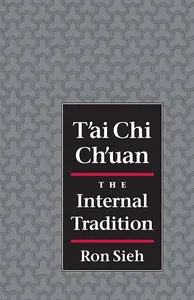
Siew Pang Chia's "Tai Chi" was first published in 1984, demystifying internal martial arts for Western readers.
Siew Pang Chia's 1984 book offers a detailed look at Tai Chi, going beyond physical movements to explain its connection between mind, body, and spirit. The text breaks down the practice's flow, balance, and energetic principles. It guides readers from basic concepts to more advanced applications, aiming to make the art understandable to a Western audience. The book presents Tai Chi not just as exercise, but as a method for personal growth and achieving harmony.
This work is a valuable resource for serious Tai Chi students interested in its deeper philosophical and esoteric aspects, rather than just its martial uses. It appeals to practitioners wanting to understand the internal elements, such as Qi cultivation and energy pathways. Anyone studying mind-body practices, complementary health, or the link between Eastern philosophy and physical training will find it useful. Researchers of internal martial arts history and meaning will also appreciate its academic perspective.
Published in 1984, Chia's "Tai Chi" arrived as Western interest in internal Chinese arts grew. At a time when external martial arts were more familiar, Chia's book provided a structured explanation of Tai Chi's internal mechanics and philosophical roots. It addressed the practice's energetic principles and its role in self-cultivation, placing it within the broader context of Taoist philosophy and traditional Chinese medicine.
💡 Why Read This Book?
• Gain a concrete understanding of 'Qi' circulation and its role in Tai Chi, as detailed in Chia's systematic explanation of energetic pathways within the body's structure. • Learn the practical application of 'Yin and Yang' principles in movement, moving beyond abstract philosophy to how these forces manifest in specific Tai Chi postures and transitions. • Grasp the critical concept of 'Song' (relaxation), as presented by Chia, to unlock deeper levels of internal energy and flexibility not typically achieved through superficial physical training.
⭐ Reader Reviews
Honest opinions from readers who have explored this book.
❓ Frequently Asked Questions
When was Siew Pang Chia's "Tai Chi" first published?
Siew Pang Chia's "Tai Chi" was first published in 1984, making it a significant contribution to the early wave of Western scholarship on the subject.
What is the core philosophy behind Tai Chi as presented in this book?
The book presents Tai Chi's core philosophy as the cultivation and circulation of 'Qi' (vital life force) through mindful movement, emphasizing the balance of Yin and Yang principles.
Does the book cover the martial applications of Tai Chi?
While the book focuses heavily on the internal and philosophical aspects, it does touch upon how these principles form the basis for self-defense applications.
Is this book suitable for complete beginners with no prior knowledge of Tai Chi?
Yes, the book provides a foundational understanding of Tai Chi principles and movements, making it suitable for beginners interested in its deeper aspects.
What is the concept of 'Song' as explained by Siew Pang Chia?
Chia explains 'Song' as a state of profound relaxation and 'letting go' within the body, essential for cultivating internal energy and enabling fluid, natural movement.
Does the book discuss the historical development of Tai Chi?
While the book focuses on principles and practice, it provides historical context for Tai Chi's emergence and its understanding in the Western world since its 1984 publication.
🔮 Key Themes & Symbolism
Qi Cultivation
The work meticulously details the concept of 'Qi', or vital life force, as central to Tai Chi practice. It explains how specific postures and mindful breathing techniques are designed not merely for physical health but to cultivate, harmonize, and circulate this energy throughout the body. Chia illustrates how the movements facilitate an unimpeded flow, essential for achieving a state of energetic well-being and internal balance, moving beyond superficial physical exercise to a deeper energetic practice.
Yin and Yang Dynamics
Central to the book's exposition is the principle of 'Yin and Yang', presented as the fundamental duality governing all existence. Within Tai Chi, this manifests as the interplay between opposing forces: stillness and motion, hardness and softness, expansion and contraction. Chia elucidates how practitioners learn to embody these dynamics, achieving a state of equilibrium and responsiveness. This understanding is crucial for both the martial applications and the health benefits derived from the art's fluid, adaptable nature.
The Principle of Song
Siew Pang Chia places significant emphasis on 'Song', often translated as relaxation or 'letting go'. This is not mere physical slackness but a profound internal state of ease and openness. The book explains that achieving 'Song' is paramount, as it allows the body's natural structure to align correctly, facilitating the unimpeded flow of Qi and enabling the practitioner to move with effortless power. It's presented as the bedrock upon which all other advanced Tai Chi skills are built.
Mind-Body Integration
A core theme is the inseparable connection between the mind and the body. The book argues that Tai Chi is not solely a physical discipline but a practice that requires conscious awareness and intention. The practitioner's mental focus directs the physical movements and influences the flow of Qi. This integration fosters a holistic approach to self-development, promoting mental clarity, emotional balance, and a heightened sense of presence alongside physical proficiency.
💬 Memorable Quotes
Direct passages from the work, attributed to the author.
“The body must be like a spring, coiled and ready, yet relaxed.”
— This highlights the paradoxical nature of Tai Chi, where immense power is generated not through brute force but through a state of relaxed readiness, akin to a coiled spring.
“Letting go is the first step to finding strength.”
— This interpretation of the concept of 'Song' suggests that true power in Tai Chi comes not from tension or effort, but from releasing unnecessary physical and mental constraints.
“Each posture is a dialogue between yielding and asserting.”
— This reflects the practical application of Yin and Yang principles, where practitioners learn to adapt and respond by subtly shifting between receptivity and directness.
💡 Key Ideas
Editorial paraphrase of the work's core concepts — not direct quotes.
Movement arises from stillness, and stillness is inherent in movement.
This quote expresses the dynamic interplay of Yin and Yang, illustrating how the practice embraces both constant motion and underlying calm, suggesting a unified energetic field.
Qi is the root, and movement is its expression.
This paraphrased concept emphasizes that the physical forms of Tai Chi are secondary to the internal cultivation and flow of vital energy (Qi), which is the true foundation of the art.
🌙 Esoteric Significance
Tradition
While Tai Chi is deeply rooted in Taoist philosophy and traditional Chinese medicine, Chia's work bridges this lineage with Western esoteric interests. It translates Taoist principles of natural harmony, Qi flow, and the balance of cosmic forces (Yin/Yang) into a framework understandable to those outside the direct cultural tradition. The book connects the physical practice to internal energetic cultivation, aligning with broader esoteric pursuits focused on consciousness, vital energy, and self-mastery.
Symbolism
The book's core symbolism revolves around the concept of 'Qi' as the vital life force, visualized as flowing energy that animates the body and the universe. The postures themselves are symbolic representations of natural forces and states of being, embodying the dynamic interplay of 'Yin' (passive, receptive) and 'Yang' (active, assertive). The continuous, circular movements symbolize the cyclical nature of existence and the pursuit of balance and harmony.
Modern Relevance
Chia's work continues to be relevant for contemporary practitioners of internal arts, somatic therapies, and contemplative movement practices. Modern schools of Qigong, therapeutic Tai Chi, and even certain branches of embodied psychology draw upon the foundational principles of Qi cultivation and mind-body integration that Chia elucidated. His accessible explanations help connect ancient Taoist concepts to modern wellness and personal development paradigms.
👥 Who Should Read This Book
• Students of internal martial arts seeking a deeper theoretical and philosophical foundation for their practice, moving beyond rote memorization of forms. • Practitioners of complementary and alternative medicine interested in understanding the energetic principles and mind-body connections inherent in disciplines like Tai Chi. • Researchers and scholars of comparative religion, philosophy, and kinesiology exploring the intersection of Eastern spiritual traditions and physical disciplines.
📜 Historical Context
Siew Pang Chia's "Tai Chi," first published in 1984, arrived at a central moment for the Western understanding of internal Chinese martial arts. While external arts like Kung Fu had seen widespread popularization through film and media, the subtler principles of Tai Chi, Qigong, and Baguazhang remained less accessible. Chia's work emerged as a significant scholarly contribution, aiming to clarify these practices for a non-Chinese readership. It appeared during an era when figures like Benjamin Lo and William C.C. Chen were actively promoting Tai Chi in North America, contributing to a growing interest in mind-body disciplines. The book provided a structured, accessible framework that contrasted with more esoteric or lineage-specific teachings, helping to bridge the gap between traditional Chinese philosophy and Western academic and personal exploration. It offered a clear exposition of core concepts like Qi and Yin-Yang, laying groundwork for future generations of practitioners and researchers.
📔 Journal Prompts
The role of 'Song' in achieving effortless power.
How the interplay of 'Yin' and 'Yang' manifests in your daily interactions.
Visualizing the flow of 'Qi' during a familiar movement.
The connection between mental focus and physical execution in practice.
Reflecting on the balance between stillness and motion in personal pursuits.
🗂️ Glossary
Qi (Chi)
The fundamental vital life force or energy believed to permeate all things in the universe, central to traditional Chinese medicine and martial arts like Tai Chi.
Yin and Yang
The Taoist concept representing complementary, interconnected, and interdependent forces that shape the natural world and human experience, such as dark/light, passive/active.
Song
A state of profound relaxation and 'letting go' in Tai Chi, essential for allowing the body's natural structure and energy flow, distinct from mere physical limpness.
Internal Martial Arts
A category of martial arts, including Tai Chi, that emphasize the cultivation and application of internal energy (Qi) and mind-body coordination over brute physical force.
Form (Tai Chi)
A pre-arranged sequence of movements in Tai Chi, designed to cultivate Qi, balance, and specific martial principles through continuous, flowing motions.
Dantian
A key energy center in the body, typically located below the navel, considered the origin and reservoir of Qi in traditional Chinese practices.
Wu Wei
A Taoist concept often translated as 'non-action' or 'effortless action,' signifying action that is in harmony with the natural flow of the universe, achieved through spontaneity and non-interference.
🔮 Readers Also Liked
Browse all →








More Free Occult Philosophy Books
View all →