Consciousness beyond life
 75
75

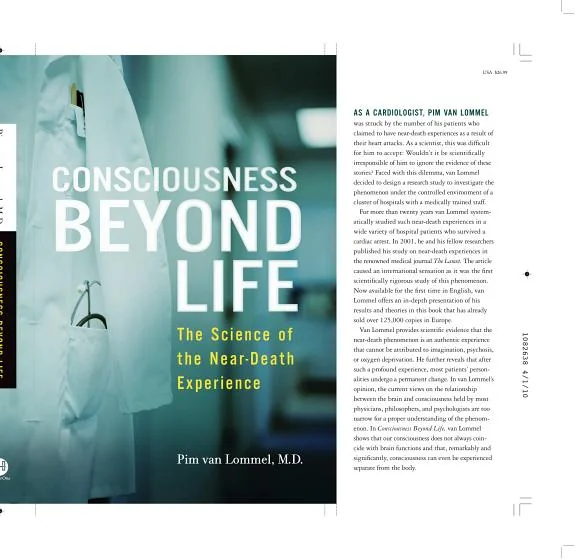
Consciousness beyond life
Pim van Lommel's "Consciousness Beyond Life" offers a substantial, if somewhat dense, compilation of research on near-death experiences. The strength lies in its scale and scientific rigor; van Lommel’s longitudinal study, initiated in 1970, provides a depth of data rarely seen in this field. He meticulously details the commonalities across thousands of reported experiences, moving beyond sensationalism to empirical observation. A particular strength is the exploration of the "life review" phenomenon, which he presents as a consistent and deeply meaningful aspect of NDEs for many individuals. However, the book’s primary limitation is its academic tone, which can make it challenging for a general reader. While van Lommel clearly aims for scientific objectivity, the sheer volume of statistical data and medical terminology occasionally obscures the profound human element of these encounters. The section discussing the implications for consciousness theory, while crucial, might benefit from more direct engagement with alternative philosophical viewpoints. Ultimately, "Consciousness Beyond Life" serves as a vital, evidence-based cornerstone for anyone investigating the boundaries of consciousness and mortality.
📝 Description
75
Pim van Lommel's 2001 research analyzed near-death experiences in Dutch hospitals.
Pim van Lommel's "Consciousness Beyond Life" presents a scientific investigation into near-death experiences (NDEs). The book synthesizes decades of research, drawing on a large-scale prospective study conducted in Dutch hospitals from 1970 to 2005. Van Lommel, a cardiologist, approaches the phenomenon not as a matter of faith, but as an observable event with significant implications for our understanding of consciousness and its relationship to the physical brain. The work is intended for a broad audience, including medical professionals, researchers in consciousness studies, philosophers, and individuals curious about life, death, and what may lie beyond. It is particularly relevant for those who approach such topics with a scientific or empirical mindset, seeking evidence-based exploration rather than purely anecdotal accounts.
The book details common characteristics reported during NDEs, such as out-of-body experiences, feelings of peace, encountering deceased relatives, and the life review. Van Lommel introduces the concept of "consciousness as primary," suggesting that consciousness may not be solely a product of brain activity but a fundamental aspect of reality, capable of existing independently. This rigorous, prospective methodology aimed to overcome the limitations of retrospective studies, which are prone to memory biases. The publication of this extensive research marked a significant moment, providing a robust dataset for a phenomenon often relegated to the fringes of scientific inquiry, challenging materialistic explanations of consciousness prevalent in academic circles.
Van Lommel's work positions itself within a lineage of spiritualist and esoteric inquiry into the nature of consciousness beyond physical death. While grounded in a scientific methodology, the book engages with concepts that resonate with traditions emphasizing the soul's independence from the body, such as certain branches of Theosophy or perennial philosophy. It seeks to bridge the gap between empirical observation and the subjective reality of profound spiritual experiences, offering a framework that supports the idea of consciousness as a fundamental force, not merely an emergent property of biological processes. This perspective challenges purely materialistic worldviews and aligns with esoteric thought that posits a non-local or transcendent aspect of consciousness.
💡 Why Read This Book?
• Gain an understanding of the scientific methodology used to study near-death experiences, particularly the large-scale prospective study initiated in Dutch hospitals, which offers a robust dataset beyond anecdotal accounts. • Explore the concept of "consciousness as primary," a central tenet of van Lommel's research suggesting consciousness may not be solely dependent on the physical brain. • Examine the consistent phenomenological characteristics of NDEs, such as out-of-body experiences and life reviews, as presented through extensive case studies gathered over several decades.
⭐ Reader Reviews
Honest opinions from readers who have explored this book.
❓ Frequently Asked Questions
What is the primary research method used in "Consciousness Beyond Life"?
The book's core is a large-scale, prospective study of near-death experiences (NDEs) conducted in Dutch hospitals from 1970 to 2005, involving thousands of patients and carefully collected data.
Who is Pim van Lommel and what is his background?
Pim van Lommel is a Dutch cardiologist and researcher who dedicated years to scientifically investigating NDEs, bringing a medical and empirical perspective to the subject.
Does the book claim consciousness survives death?
The book presents scientific evidence suggesting consciousness may not be solely a product of brain activity, implying it could potentially exist independently, but it stops short of definitive claims about survival after physical death.
What are some common elements of near-death experiences discussed?
Common elements include out-of-body experiences, encountering a light or deceased relatives, feelings of peace, and a life review, all detailed with extensive patient accounts.
How does "Consciousness Beyond Life" differ from earlier NDE research?
Its primary distinction is the use of a prospective, longitudinal study design, aiming for more objective data collection compared to retrospective studies common before its publication.
Can this book be considered scientific?
Yes, the book is grounded in extensive empirical research, statistical analysis, and a critical examination of existing scientific models, positioning it firmly within the realm of scientific inquiry.
🔮 Key Themes & Symbolism
The Scientific Study of NDEs
Van Lommel meticulously details the methodology of his prospective study, initiated in 1970, which tracked patients undergoing cardiac arrest. This approach sought to gather objective data on near-death experiences (NDEs) by observing patients' accounts immediately following resuscitation, minimizing recall bias. The research highlights the consistency of reported phenomena across diverse individuals and circumstances, challenging purely materialistic explanations of consciousness and suggesting that the brain might act more as a receiver than a generator of consciousness.
Consciousness as Primary
A central thesis of the book is the concept that consciousness is not merely an epiphenomenon of brain activity but a fundamental aspect of reality. Van Lommel argues that the reported experiences during NDEs, particularly those occurring when the brain shows no electrical activity, support the idea that consciousness can exist independently. This challenges the reductionist view prevalent in neuroscience and opens avenues for exploring consciousness as a primary field or force.
The Life Review Phenomenon
The book extensively covers the life review, a common and profound element of NDEs where individuals experience a rapid, comprehensive review of their entire life. Van Lommel emphasizes the deeply meaningful and often transformative nature of this experience, noting that it is frequently accompanied by a sense of unconditional love and an understanding of the impact of one's actions on others. This aspect provides significant data for understanding the non-local nature of consciousness.
Implications for Medicine and Society
Van Lommel discusses the practical and philosophical implications of NDE research for both medicine and society. He suggests that a deeper understanding of consciousness could lead to more compassionate healthcare, a re-evaluation of end-of-life care, and a shift in societal perspectives on life, death, and the nature of reality. The findings challenge the purely mechanistic view of life and encourage a more holistic approach to human experience.
💬 Memorable Quotes
Direct passages from the work, attributed to the author.
“during NDEs, consciousness is experienced as being detached from the body.”
— This observation highlights a key characteristic of near-death experiences where individuals report awareness and perception occurring independently of their physical form, challenging conventional mind-body dualism.
“the brain may function as a receiver or filter for consciousness.”
— This interpretation suggests that the brain doesn't create consciousness but rather tunes into it, implying that consciousness exists as a field or entity that the physical brain can access.
“life review involves seeing one's entire life from a higher perspective.”
— This describes the profound experience of reliving one's life in its entirety, often accompanied by an objective understanding of its consequences and emotional impact on oneself and others.
“the near-death experience can lead to profound personality changes.”
— This points to the lasting psychological and spiritual impact of NDEs, often resulting in increased compassion, a reduced fear of death, and a greater sense of life purpose.
“consciousness is not limited by the physical body.”
— This statement captures the core argument that our awareness and sense of self can extend beyond the physical confines of the brain and body, as evidenced by reported NDE phenomena.
🌙 Esoteric Significance
Tradition
While not explicitly aligning with a single esoteric lineage, van Lommel's work appeals to Gnostic and Neo-Platonic traditions that posit consciousness as primary and potentially independent of the material world. His emphasis on consciousness existing beyond the physical body echoes ancient ideas of the soul or spirit. The research offers empirical validation for concepts that have long been discussed within mystical and esoteric philosophy, bridging the gap between subjective spiritual experience and objective scientific inquiry.
Symbolism
The "light" encountered during NDEs is a recurring symbol, often interpreted as divine presence, ultimate consciousness, or pure energy, aligning with symbolic traditions across many religions and mystical paths. The "life review" functions as a symbolic process of judgment and integration, where an individual confronts their actions and their karmic implications, akin to symbolic trials or purification rituals found in various spiritual frameworks.
Modern Relevance
Van Lommel's research is highly relevant to contemporary fields like consciousness studies, transpersonal psychology, and contemplative science. Thinkers and practitioners exploring non-dual awareness, the nature of subjective experience, and the potential for consciousness to influence physical reality draw upon his findings. His work provides a scientific anchor for discussions in circles interested in mindfulness, meditation, and the integration of spiritual experiences into everyday life.
👥 Who Should Read This Book
• Individuals interested in the scientific investigation of consciousness and the mind-body problem, seeking empirical data beyond philosophical speculation. • Medical professionals, particularly those in critical care, emergency medicine, and palliative care, who encounter patients reporting near-death experiences and wish to understand the phenomenon better. • Researchers and students of psychology, neuroscience, and philosophy of mind who are exploring alternative models of consciousness that challenge purely materialistic paradigms.
📜 Historical Context
Published in 2010, Pim van Lommel's "Consciousness Beyond Life" emerged during a period of renewed scientific interest in consciousness, partly fueled by advancements in neuroscience and quantum physics, yet still met with skepticism from mainstream materialist perspectives. The book built upon earlier works like those of Elisabeth Kübler-Ross and Raymond Moody, but distinguished itself through a large-scale, prospective Dutch study initiated in 1970. This longitudinal research, conducted across multiple hospitals, provided a robust empirical foundation for analyzing near-death experiences (NDEs), moving beyond anecdotal collections. While figures like Stanislav Grof were exploring altered states of consciousness through psychedelic research, van Lommel's work offered a clinically observed phenomenon. The reception within academic circles was mixed; while lauded by some for its methodological rigor, it also faced criticism from neuroscientists adhering to strict biological determinism, who struggled to reconcile NDE reports with brain activity models.
📔 Journal Prompts
The concept of 'consciousness as primary' as presented by van Lommel.
Your personal understanding of the brain's role in consciousness.
The implications of the life review for personal accountability.
How the common elements of NDEs might challenge your current worldview.
The relationship between physiological states and conscious experience.
🗂️ Glossary
Near-Death Experience (NDE)
A profound personal experience associated with impending death, often involving altered perceptions, emotions, and a sense of spiritual or mystical significance.
Prospective Study
A research design where participants are followed forward in time, with data collected as events occur, to investigate relationships between variables.
Cardiac Arrest
A sudden loss of heart function, breathing, and consciousness, typically resulting from an electrical disturbance in the heart.
Out-of-Body Experience (OBE)
A sensation of floating outside one's physical body and perceiving the environment from a different vantage point, often reported during NDEs.
Life Review
A common component of NDEs where an individual experiences a rapid, comprehensive review of their life, often with emotional and evaluative aspects.
Consciousness
The state of being aware of and responsive to one's surroundings; the mind and its contents, explored in this book as potentially independent of brain activity.
Materialism
The philosophical view that matter is the fundamental substance in nature, and that all phenomena, including mental states and consciousness, are results of material interactions.
🔮 Readers Also Liked
Browse all →








More by Pim van Lommel
All books →

More Free Occult Philosophy Books
View all →