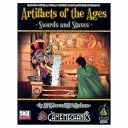
Artifacts of the Ages
 76
76

Artifacts of the Ages
The meticulous cataloging in Artifacts of the Ages is its most striking feature. Rather than broad pronouncements, the authors provide detailed examinations of specific objects, such as the alleged "Scepter of Thoth." This grounded approach lends a unique credibility to the esoteric claims made. However, the work occasionally suffers from a lack of critical distance; the authors present some accounts of artifact provenance and power with an earnestness that borders on uncritical acceptance. A particularly engaging section details the supposed discovery of the "Amulet of Alexandria" in the early 20th century, linking it to a forgotten Hermetic lodge. While the book excels at presenting the lore surrounding these items, it could benefit from more explicit analysis of potential misattributions or historical embellishments. Artifacts of the Ages is a valuable compendium for those already invested in the subject, offering a wealth of material for further personal investigation.
📝 Description
76
Published in July 2003, Artifacts of the Ages catalogs esoteric objects and their claimed magical properties.
Artifacts of the Ages, by J. D. Wiker, Clarence D. Harrison, and Rich Redman, functions as a catalog of esoteric artifacts. It details items from various historical periods, often associated with occult traditions or notable figures. The book focuses on objects believed to possess magical or spiritual qualities. It is aimed at serious students of esoteric history, occult researchers, and those curious about the material culture surrounding magical practices. Readers who prefer detailed historical accounts of objects with symbolic or ritualistic importance over purely theoretical discussions will find this work engaging.
The central concept discussed is psychometry, the supposed ability to glean information about an object's past or owner through touch. The authors examine how specific artifacts are thought to hold energetic imprints or spiritual essences from their creators or past users. The core idea is that historically significant or ritualistically used objects are not inert; instead, they retain a palpable resonance.
First appearing in 2003, Artifacts of the Ages emerged during a time of renewed interest in occultism and historical curiosities. The book documents and analyzes historical artifacts connected to hidden traditions. While broader interest in occult history had been growing, partly influenced by scholars like Frances Yates, this work specifically concentrates on tangible, object-based evidence. It situates itself within a tradition of esoteric publishing that seeks to preserve and understand the material remnants of magical practices and belief systems.
💡 Why Read This Book?
• Gain specific knowledge of the "Scepter of Thoth," understanding its described origins and purported magical functions as detailed in the text, offering a concrete example of artifact lore. • Explore the documented provenance of the "Amulet of Alexandria," learning about its connection to a purported Hermetic lodge active in the early 20th century, providing historical context. • Understand the concept of psychometric resonance as it pertains to historical artifacts, learning how objects are believed to retain energetic imprints from past events and individuals.
⭐ Reader Reviews
Honest opinions from readers who have explored this book.
❓ Frequently Asked Questions
What kind of artifacts are featured in 'Artifacts of the Ages'?
The book features a variety of esoteric artifacts, ranging from ceremonial objects like scepters and amulets to personal items believed to have spiritual or magical significance, often tied to historical occult figures or traditions.
Is 'Artifacts of the Ages' a historical analysis or a practical guide?
It functions primarily as a historical catalog and analysis of esoteric objects. While it discusses purported magical properties, it is not a how-to guide for using artifacts but rather an exploration of their lore and history.
Who were the original authors of 'Artifacts of the Ages'?
The book was first published in July 2003 and is attributed to J. D. Wiker, Clarence D. Harrison, and Rich Redman, who compiled the research and historical accounts.
Does the book discuss the origins of occult practices?
Yes, by examining the artifacts associated with these practices, the book implicitly discusses their historical development and the material culture that supported occult traditions through the ages.
Can 'Artifacts of the Ages' be considered a primary source?
It is a secondary source, compiling and interpreting historical accounts and lore surrounding artifacts. It draws upon various historical narratives and traditions rather than being a direct artifact of the periods it describes.
What is the significance of the 'Scepter of Thoth' mentioned in the book?
The 'Scepter of Thoth' is presented as an artifact embodying wisdom and arcane knowledge, linked to the Egyptian deity Thoth. Its description in the book details its supposed construction and ritualistic importance.
🔮 Key Themes & Symbolism
Material Resonance of Objects
The core concept revolves around the idea that significant historical and ritualistic objects retain energetic imprints from their past. Artifacts of the Ages details how items like the 'Amulet of Alexandria' are believed to carry the psychic residue of their creators or users. This theme explores the notion that certain objects are not merely inert historical relics but active conduits of historical memory and spiritual energy, a principle central to psychometric practices.
Historical Artifacts and Occult Traditions
This theme focuses on the tangible links between historical objects and esoteric practices. The book catalogs items such as the 'Scepter of Thoth,' examining their purported origins within specific occult lineages or historical periods. It illustrates how these artifacts served as focal points for ritual, power, or knowledge within traditions like Hermeticism, providing a material history of hidden knowledge.
The 'Scepter of Thoth' Lore
A significant focus is placed on specific artifacts like the 'Scepter of Thoth.' This theme explores the lore surrounding this object, its association with divine wisdom and magical power, and its alleged place within ancient Egyptian or Hermetic cosmology. The book presents detailed narratives about its creation, discovery, and purported capabilities, treating it as a key example of an artifact imbued with profound esoteric significance.
Psychometry and Object History
The book engages with the concept of psychometry, the alleged ability to perceive an object's past through touch. It applies this principle to the artifacts discussed, suggesting that their histories can be accessed through their inherent energetic signatures. This theme frames the artifacts not just as historical curiosities but as potential sources of direct historical and spiritual information for those attuned to such energies.
💬 Memorable Quotes
Direct passages from the work, attributed to the author.
“The Scepter of Thoth is said to channel the wisdom of the Neteru.”
— This statement highlights the artifact's perceived connection to divine knowledge and power within ancient Egyptian religious cosmology, suggesting its use as a tool for accessing higher consciousness or arcane information.
“Objects of power retain elements of their creators.”
— This concept underscores the book's central theme of material resonance, positing that artifacts, particularly those used in ritual or imbued with intent, carry a form of energetic memory from those who made or wielded them.
“The Amulet of Alexandria surfaced amidst the Hermetic revival of the early 20th century.”
— This points to the artifact's historical context, linking it to a specific period of renewed interest in Hermetic philosophy and occult studies, suggesting its creation or rediscovery was tied to these intellectual currents.
“Touching these artifacts can reveal their storied past.”
— This directly references the practice of psychometry, indicating the book's exploration of how physical contact with certain objects can purportedly unlock information about their history, use, and associated energies.
“The energy signature of the artifact is palpable to the sensitive.”
— This phrase emphasizes the esoteric belief that significant objects possess a discernible energetic field, accessible not through ordinary senses but through heightened intuition or psychic sensitivity.
🌙 Esoteric Significance
Tradition
The work aligns with Western Esoteric traditions, particularly those concerned with Hermeticism and ceremonial magic, by focusing on objects believed to be imbued with spiritual or magical power. It draws implicitly from traditions that emphasize the energetic properties of artifacts and the concept of psychometry, viewing historical objects as potential conduits for accessing ancient knowledge or power.
Symbolism
Key symbols include the "Scepter of Thoth," representing divine wisdom, communication, and magical authority, linked to the Egyptian deity of knowledge. The "Amulet of Alexandria" likely symbolizes protection, esoteric knowledge, or initiation, connected to ancient Alexandrian mystical traditions. These artifacts are presented as more than mere objects; they are symbolic embodiments of core esoteric principles.
Modern Relevance
Contemporary practitioners of ceremonial magic, occult historians, and those interested in psychometry or object-based divination may draw on Artifacts of the Ages. Its detailed cataloging provides reference points for understanding the material culture associated with historical esoteric practices, influencing modern interpretations of ritual objects and their perceived energetic qualities.
👥 Who Should Read This Book
• Researchers of Western Esotericism: Individuals studying Hermeticism, ceremonial magic, or the history of occultism will find detailed accounts of objects relevant to these fields. • Aspiring Psychometrists: Those interested in developing or understanding psychometric abilities can study the book's examination of how artifacts allegedly retain historical and energetic imprints. • Collectors of Esoteric Lore: Readers who enjoy learning about the history, mythology, and purported powers of unique and ancient objects will appreciate the book's catalog format.
📜 Historical Context
Published in July 2003, Artifacts of the Ages appeared during a period when interest in occult history and arcane objects was experiencing a resurgence. The work by J. D. Wiker, Clarence D. Harrison, and Rich Redman contributed to this trend by meticulously cataloging items believed to hold esoteric significance. This followed decades of scholarship on Western esotericism, though this book focuses on the material culture rather than purely philosophical or textual analysis. Its approach, detailing specific objects like the "Scepter of Thoth," contrasts with more theoretical works on magic or alchemy. The early 21st century saw numerous publications aiming to document historical magical practices and their accoutrements, making Artifacts of the Ages a product of its time, feeding a growing appetite for tangible evidence of the occult past.
📔 Journal Prompts
The 'Scepter of Thoth' and its connection to divine wisdom: Reflect on how such artifacts are believed to channel knowledge.
Material Resonance of Objects: Consider an object in your possession that feels historically significant and explore its potential energetic imprints.
The 'Amulet of Alexandria' and Hermetic revival: Analyze the relationship between historical artifacts and periods of renewed interest in esoteric philosophy.
Psychometry and Object History: Reflect on the concept of learning an object's past through touch and its implications for historical understanding.
The energetic signature of artifacts: Contemplate how sensitive individuals might perceive and interpret the unique energies emanating from historical items.
🗂️ Glossary
Psychometry
The alleged psychic ability to gain information about an object's history or owner by touching it. The book posits that artifacts retain energetic imprints.
Scepter of Thoth
A significant artifact discussed in the book, associated with the Egyptian deity Thoth, representing wisdom, magic, and divine knowledge.
Amulet of Alexandria
An artifact detailed in the text, purportedly linked to ancient Alexandrian esoteric traditions and the Hermetic revival of the early 20th century.
Hermeticism
A philosophical and religious tradition based on writings attributed to Hermes Trismegistus, emphasizing esoteric knowledge, alchemy, astrology, and the unity of all things.
Material Resonance
The concept that objects, particularly those with historical or ritualistic significance, can retain energetic imprints or 'echoes' from their past creators, users, or events.
Neteru
The ancient Egyptian term for deities or divine beings, often translated as 'gods.' The Scepter of Thoth is described as channeling their wisdom.
Esoteric Artifact
An object believed to possess hidden, spiritual, or magical significance, often used in rituals or associated with occult traditions and practitioners.
This book appears in 1 collection
🔮 Readers Also Liked
Browse all →









From the “Spellcraft” Collection
View all →


More Free Occult Philosophy Books
View all →