Divination
 82
82

Divination
Paul O'Brien's "Divination" attempts a grand synthesis, and largely succeeds where many falter. Its strength lies in its systematic approach, presenting a clear taxonomy of divinatory arts that moves beyond mere cataloging to explore the philosophical underpinnings. The discussion of synchronicity, for instance, offers a Jungian lens that elevates the subject beyond simple fortune-telling. However, the sheer breadth of the subject means that some areas, particularly the more obscure historical methods, are necessarily given less depth. A particularly memorable passage is its treatment of geomancy, which it outlines with admirable clarity, detailing the construction of figures and their interpretation. The work's limitation is perhaps its very ambition; a reader seeking deep dives into single systems might need supplementary texts. Nevertheless, for a foundational understanding of divination's diverse landscape, O'Brien’s work is commendably thorough.
📝 Description
82
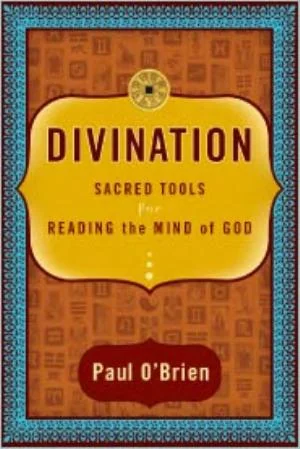
Paul O'Brien's Divination, published in 2007, examines the principles behind various predictive arts.
This 2007 book by Paul O'Brien approaches divination not as mere fortune-telling, but as a system of understanding and interpretation. O'Brien categorizes different divinatory methods, from I Ching to scrying, detailing their historical roots and practical uses. He discusses the philosophical underpinnings that lend these practices their perceived power, moving past superficial explanations to address the core ideas that have sustained them across cultures. The book offers a structured introduction suitable for those curious about the mechanics and meanings within these predictive traditions. It aims to provide a serious, non-sensationalist overview for a wide audience.
Readers will find a systematic breakdown of various divinatory techniques, each presented with historical context and guidance on application. O'Brien considers the psychological aspects that draw people to seek foresight and the human drive to interpret patterns. The work is designed for both newcomers to divination and those with some existing knowledge, as well as for students of esotericism and cultural history. It addresses enduring questions about human perception and the desire to understand what lies ahead.
Published in 2007, O'Brien's "Divination" emerged during a period of renewed interest in esoteric subjects. It sits within a tradition of authors who sought to synthesize practical application with philosophical inquiry, moving beyond simple historical accounts or how-to guides. Unlike authors focused solely on ceremonial magic or specific tools like Tarot, O'Brien aimed to create a cohesive framework for understanding divination itself. His work acknowledges the persistence of these practices across different cultures and their psychological relevance, engaging with fundamental questions about foresight and interpretation.
💡 Why Read This Book?
• Understand the philosophical underpinnings of synchronicity as a mechanism for divination, a concept explored through O'Brien's systematic categorization of various predictive arts. • Gain insight into the archetypal symbolism present in tools like the Tarot, appreciating how these universal patterns are interpreted within divinatory frameworks. • Learn about the historical development and mechanics of specific systems, such as geomancy, as presented in O'Brien's 2007 text, offering practical knowledge beyond theoretical concepts.
⭐ Reader Reviews
Honest opinions from readers who have explored this book.
❓ Frequently Asked Questions
What is the primary focus of Paul O'Brien's "Divination"?
The book primarily focuses on providing a comprehensive overview and systematic exploration of various divination methods, examining their historical contexts, underlying philosophies, and practical applications.
When was "Divination" by Paul O'Brien first published?
The original publication date for Paul O'Brien's "Divination" was June 14, 2007.
Does the book explain how to perform divination?
Yes, "Divination" offers practical guidance and explanations for performing various divinatory practices, moving from theory to actionable steps for the reader.
What kind of historical context does the book provide?
It situates divinatory practices within their historical development across different cultures and eras, discussing their persistence and evolution over time.
Is "Divination" suitable for beginners?
Absolutely. The book is designed to be an accessible yet rigorous introduction, making it suitable for novices interested in understanding the field of divination.
What esoteric concepts are explored in "Divination"?
The work delves into concepts such as synchronicity, archetypal symbolism, intuitive perception, and the potential for accessing broader consciousness for predictive purposes.
🔮 Key Themes & Symbolism
Synchronicity and Meaningful Coincidence
The work extensively explores the concept of synchronicity, a term popularized by Carl Jung, as a fundamental principle underlying divination. O'Brien posits that divination is not about predicting a fixed future but about recognizing and interpreting meaningful patterns and coincidences in the present. This perspective shifts divination from a deterministic practice to one focused on navigating life's unfolding through intuitive insight and symbolic awareness. The book illustrates how tools like the Tarot or I Ching serve as catalysts for revealing these synchronicities, allowing individuals to gain perspective on their circumstances and choices.
Archetypal Symbolism in Divination
A core theme is the role of archetypal symbols, universal patterns of human experience and consciousness, within divinatory systems. O'Brien argues that divinatory tools are effective because they tap into this shared symbolic language. Whether it's the archetypes represented by the Major Arcana in Tarot or the hexagrams of the I Ching, these symbols offer useful insights into the human condition. The book examines how interpreters decode these symbols, connecting them to the querent's personal narrative and the broader cosmic order, suggesting a form of universal wisdom accessible through symbolic interpretation.
The Practice and Philosophy of Foresight
"Divination" meticulously details various methods of foresight, including astrology, Tarot, runes, and geomancy, outlining their historical origins and practical application. Beyond the mechanics, O'Brien examines the philosophical questions surrounding the desire for knowledge of the future. He discusses the ethical considerations and the psychological impact of divination, emphasizing its role as a tool for self-understanding and spiritual growth rather than mere prediction. The work encourages a mindful approach, highlighting the interpreter's subjective role in the divinatory process.
Intuition and Perceptual Awareness
Central to O'Brien's thesis is the cultivation of intuition and heightened perceptual awareness. The book suggests that effective divination relies not solely on the mechanics of a system but on the practitioner's ability to perceive subtle energies and connections. It explores how divinatory practices can train the mind to become more receptive to intuitive insights and symbolic language. This enhanced awareness, the work argues, allows for a deeper connection to oneself, others, and the unfolding patterns of the universe, transforming divination into a practice of profound self-discovery.
💬 Memorable Quotes
Direct passages from the work, attributed to the author.
“Divination is less about seeing a fixed future and more about understanding the present's meaningful patterns.”
— This captures O'Brien's view that divination acts as a mirror to current energies and influences, highlighting synchronicities rather than dictating an inevitable destiny.
“The effectiveness of a divinatory tool often lies in its shared symbolic language, tapping into universal archetypes.”
— This highlights the book's focus on how symbolic systems like Tarot or I Ching function by resonating with fundamental patterns of human consciousness.
“Geomancy's figures are formed by simple binary principles, yet yield complex interpretations.”
— This points to the intricate relationship between simple foundational rules and the sophisticated insights derived from practices like geomancy, as detailed in the text.
“Intuition acts as the bridge between the divinatory sign and its personal meaning for the querent.”
— This emphasizes the subjective and personal nature of divination, where the practitioner's intuitive faculty is key to translating symbolic input into relevant guidance.
“The desire to know the future reflects a deep human need for guidance and understanding in life's journey.”
— This suggests a psychological and spiritual perspective on divination, framing it as a response to fundamental human questions about purpose and direction.
🌙 Esoteric Significance
Tradition
While not strictly adhering to a single lineage, O'Brien's work draws heavily from the Western Esoteric Tradition, particularly Hermeticism and its modern permutations influenced by Jungian psychology. It bridges the gap between older, more ritualistic forms of divination and contemporary understandings of consciousness and symbolism. The book implicitly aligns with the Hermetic principle of 'As Above, So Below,' suggesting that cosmic patterns are reflected in the individual's life, making divination a tool for understanding these macrocosmic and microcosmic correspondences.
Symbolism
Key symbols explored include the archetypes found in Tarot, such as The Fool or The High Priestess, representing stages of spiritual development and aspects of the psyche. The geometric figures of geomancy, derived from patterns of points, also serve as potent symbols of cosmic forces and earthly influences. The book interprets these symbols not as fixed predictions but as dynamic representations of energies and potentials, offering guidance through symbolic resonance rather than literal pronouncements.
Modern Relevance
Contemporary practitioners of Tarot, astrology, and other divinatory arts find O'Brien's work a valuable resource for grounding their practice in philosophical and psychological theory. It informs modern approaches to mindfulness and self-reflection, integrating divinatory insights into personal development and therapeutic contexts. Thinkers exploring Jungian archetypes and synchronicity continue to reference the concepts explored in "Divination" as relevant to understanding consciousness and meaning-making in the 21st century.
👥 Who Should Read This Book
• Aspiring diviners and practitioners seeking a comprehensive understanding of various methods like Tarot, runes, or astrology, and their underlying principles. • Students of comparative religion and cultural history interested in the enduring role of divination across different societies and belief systems. • Individuals exploring Jungian psychology and the concept of synchronicity, looking for practical applications and symbolic interpretations of meaningful coincidences.
📜 Historical Context
The early 21st century witnessed a significant resurgence of interest in esoteric subjects, a trend Paul O'Brien’s "Divination" tapped into upon its 2007 publication. This period saw a proliferation of online resources and communities dedicated to occult philosophy and practice. O'Brien's work emerged in a landscape where authors like Lon Milo DuQuette were actively engaging with ceremonial magic, and others were specializing in specific traditions like Kabbalah or Western astrology. Unlike purely academic treatises or beginner-focused manuals, "Divination" sought to provide a structured, philosophical overview of the field. It engaged with the enduring human fascination with foresight, positioning divination not merely as superstition but as a complex interpretative art with deep psychological and symbolic roots, acknowledging its persistence across cultures and intellectual traditions, even as mainstream discourse often dismissed such practices.
📔 Journal Prompts
Reflect on a personal experience of synchronicity and how it might relate to the concepts of divination.
Analyze the archetypal symbolism present in a familiar divinatory tool, considering its potential meanings.
Consider the role of intuition versus systematic knowledge in interpreting divinatory signs.
Explore the historical persistence of divination as a human practice across different cultures.
How might the principles of geomancy, as described, offer a framework for understanding complex situations?
🗂️ Glossary
Synchronicity
The experience of two or more events that are apparently causally unrelated but are perceived as meaningfully related. A key concept in Jungian psychology and divination theory.
Archetype
In Jungian psychology, universal, archaic patterns and images that derive from the collective unconscious and are the psychic counterpart of the instincts.
Tarot
A deck of cards, typically comprising 78 cards, used for divination, fortune-telling, and as a tool for introspection and spiritual guidance.
I Ching
An ancient Chinese divination text and wisdom book, also known as the Book of Changes, which uses a system of hexagrams to provide guidance.
Geomancy
A form of divination that interprets patterns formed by scattering earth or soil, or by drawing points, often resulting in 16 figures.
Querent
The person for whom a divination reading is performed; the individual seeking insight or answers.
Hermeticism
A religious, philosophical, and esoteric tradition based on writings attributed to Hermes Trismegistus, emphasizing the unity of all things and the pursuit of spiritual knowledge.
This book appears in 1 collection
🔮 Readers Also Liked
Browse all →








From the “Divination” Collection
View all →








More Free Occult Philosophy Books
View all →