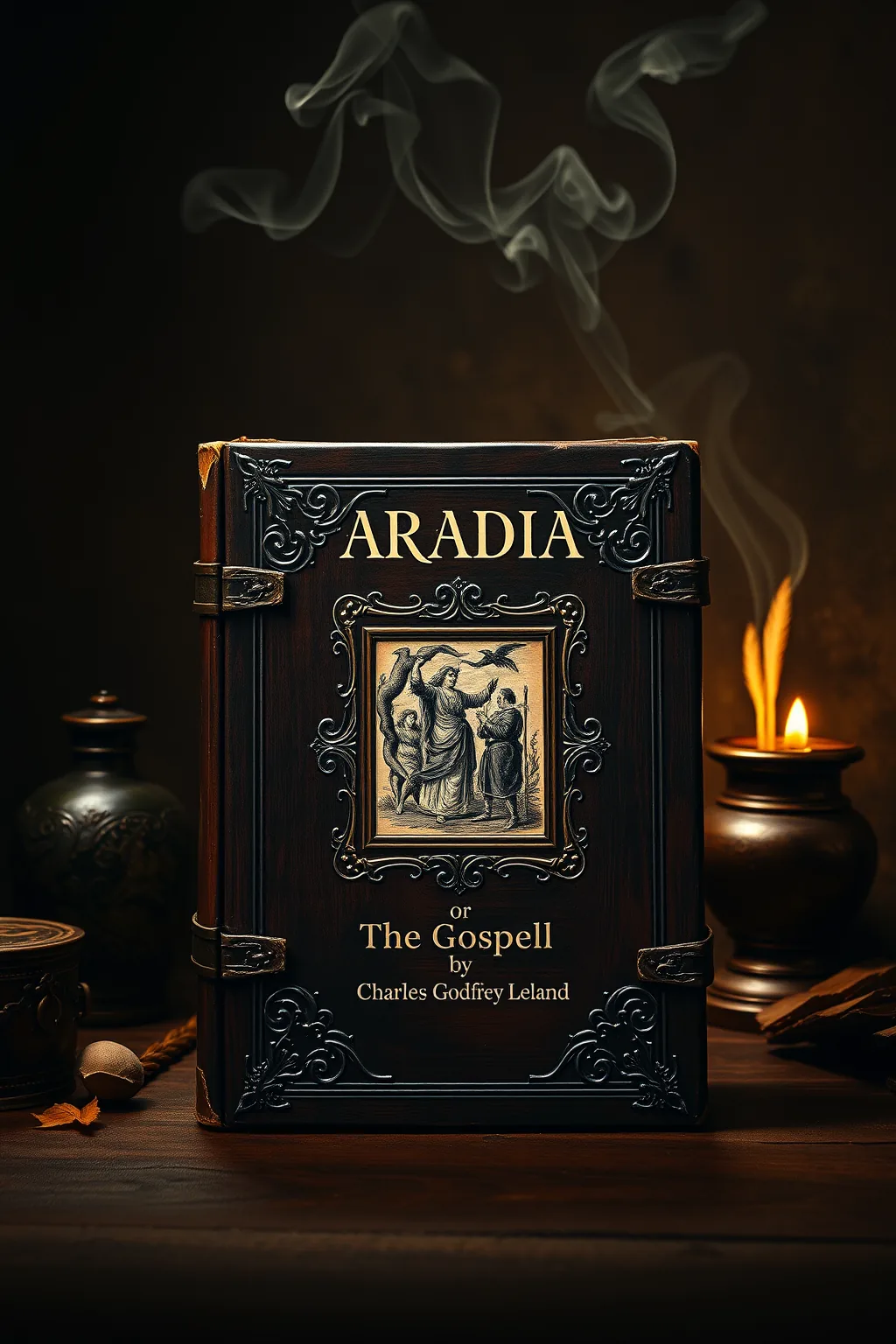
Aradia, or, The gospel of the witches
 78
78

Aradia, or, The gospel of the witches
Leland's "Aradia" presents itself as a recovered gospel, a bold claim that immediately sets it apart from mere collections of spells. The narrative of Aradia, daughter of Diana, sent to teach the oppressed, carries a powerful, almost Gnostic, undercurrent of liberation. Its strength lies in its evocative portrayal of a folk magic system, particularly its emphasis on lunar deities and natural elements. However, the work is not without its limitations. Leland's editorial hand, while aiming to preserve, also shaped the narrative, making it difficult to entirely disentangle authentic folklore from his own interpretations or those of his informants. A passage detailing the creation myth, where Lucifer and Diana are presented as primal parents, highlights both the book's unique theological perspective and the challenges in verifying its origins. Ultimately, "Aradia" remains a significant, if debated, artifact in the study of witchcraft history, offering a unique glimpse into a specific cultural and spiritual milieu.
📝 Description
78
Charles Godfrey Leland published Aradia, or, The Gospel of the Witches in 1899, claiming it was based on Italian witch traditions.
Published in 1899, Charles Godfrey Leland's Aradia, or, The Gospel of the Witches presents itself as a collection of beliefs and practices from Italian witchcraft. Leland, an American folklorist, structured the material around Aradia, a messianic figure described as the daughter of Diana, who supposedly taught witchcraft to liberate the oppressed. The book details rituals, spells, and a cosmology that connects witches to older pagan traditions, often implicitly contrasting them with dominant Christian narratives. Leland aimed to document what he perceived as an authentic, pre-Christian folk religion in Italy. The work emerged during a time of significant interest in occultism and folklore studies. Its reception was varied, with some recognizing its ethnographic potential while others debated its historical accuracy and Leland's methods of compilation. The text includes elements of magic, mythology, and religious folklore, making it a complex resource for those studying historical witchcraft.
Aradia belongs to the late 19th-century wave of occult and folkloric studies, a period marked by figures like Éliphas Lévi and the establishment of the Theosophical Society. Leland's work sought to record what he believed was an uncorrupted, indigenous Italian paganism. It stands apart from the more ceremonial magic popular at the time, focusing instead on folk beliefs and practices. This book became an early, though debated, source for those interested in historical witchcraft outside of the European ceremonial tradition, predating later Wiccan revivals.
💡 Why Read This Book?
• Gain insight into the historical concept of "stregheria" as presented by Charles Godfrey Leland, understanding its claimed lineage from Aradia and its distinct practices separate from later Wiccan traditions. • Explore the unique cosmology presented, where figures like Diana and Lucifer are recontextualized within a folk-Italian pagan framework, offering a different perspective on archetypal deities. • Discover specific incantations and ritualistic elements that Leland documented, providing concrete examples of folk magic and spellcraft as purportedly practiced in 19th-century Italy.
⭐ Reader Reviews
Honest opinions from readers who have explored this book.
❓ Frequently Asked Questions
Is Aradia, or, The Gospel of the Witches a historical account of Italian witchcraft?
The book is a compilation of folklore and beliefs collected by Charles Godfrey Leland in the late 19th century. While it presents itself as a historical gospel, its authenticity as a direct record of ancient Italian witchcraft is debated by scholars.
Who was Charles Godfrey Leland and what was his role in collecting this text?
Charles Godfrey Leland (1824-1903) was an American folklorist and writer. He collected numerous folk tales and traditions, including those presented in "Aradia," which he published in 1899, aiming to document what he believed to be an authentic Italian witch tradition.
What is the significance of Aradia herself within the text?
Aradia is presented as the daughter of the goddess Diana and a messianic figure sent to Earth to teach the oppressed the ways of witchcraft and to liberate them from servitude, particularly from Christian dominance.
Does this book contain actual spells and rituals?
Yes, "Aradia, or, The Gospel of the Witches" includes numerous spells, incantations, and ritualistic instructions for various purposes, such as love, wealth, protection, and divination, reflecting the folklore Leland collected.
How does "Aradia" relate to modern Wicca?
While "Aradia" influenced some early 20th-century occultists and later was embraced by some modern Wiccans, it is distinct from the system formalized by Gerald Gardner. It represents a specific strand of Italian folk magic, or stregheria.
When was "Aradia, or, The Gospel of the Witches" first published?
Charles Godfrey Leland's "Aradia, or, The Gospel of the Witches" was first published in 1899, making it a significant text from the late Victorian era's interest in occultism and folklore.
🔮 Key Themes & Symbolism
Aradia as Liberator
The central figure, Aradia, is portrayed not just as a witch but as a divine emissary specifically sent to liberate the poor and oppressed from societal and religious subjugation. Her teachings are framed as a sacred gospel, offering an alternative spiritual path rooted in nature and ancient paganism, directly challenging the authority of Christianity and patriarchal structures prevalent in Leland's time.
Stregheria and Folk Magic
The book is foundational in its documentation of 'Stregheria,' the Italian folk magic tradition. It details specific incantations, rituals, and beliefs associated with this practice, emphasizing the use of natural elements, lunar phases, and a distinct pantheon. This focus provides a unique window into a localized form of witchcraft, differentiating it from broader European traditions.
The Reclaiming of the 'Diabolical'
Leland's work implicitly, and sometimes explicitly, reframes the 'Diabolical' not as evil, but as a misunderstanding or vilification of ancient pagan deities and practices by the dominant Christian church. The book presents witchcraft as a continuation of these suppressed traditions, reclaiming terms and symbols that were demonized.
Lunar Deities and Nature Worship
A significant aspect of the text is its emphasis on lunar worship, with Diana often depicted as a primary deity. The rituals and spells are deeply connected to natural cycles, herbs, and the elements, reflecting a nature-based spirituality. This connection highlights a core tenet of the described witchcraft: reverence for the earth and its rhythms.
💬 Memorable Quotes
Direct passages from the work, attributed to the author.
“And the Lord said to Aradia: 'Thou shalt be the mistress of all the witches, and thou shalt teach them the art of poisoning, and of all the illusions, and of all the enchantments.'”
— This highlights the transmission of magical knowledge and the perceived authority granted to Aradia. It suggests that the book's content is presented as divinely sanctioned instruction in witchcraft.
“Take ye the head of a toad, and the heart of a frog, and the tongue of a serpent...”
— This exemplifies the specific, often visceral, ingredients mentioned in the spells and rituals. It points to the practical, albeit sometimes macabre, nature of the folk magic described within the text.
“The witches do not worship the Devil, but they worship Diana.”
— This statement directly addresses the common accusation of devil worship leveled against witches. It asserts a clear distinction, positioning Diana as the primary deity and refuting the Christian demonization of pagan figures.
💡 Key Ideas
Editorial paraphrase of the work's core concepts — not direct quotes.
The first of all the evensong of the witches, that they sing ye can make ye of the north wind, and of the west wind, and of the east wind, and of the south wind...
This passage illustrates the elemental magic described in the text, highlighting the witches' connection to and ability to command the forces of nature, a common theme in folk magic traditions.
I, Aradia, am the daughter of the Night, come from the Night to make the poor free, to break the chains of the servants, to bring the sign of the spiritualism.
This quote captures Aradia's messianic role as a liberator. It positions her as a divine agent sent to empower the downtrodden and challenge oppressive social and religious structures through her teachings.
🌙 Esoteric Significance
Tradition
Aradia fits within the broader spectrum of Western Esotericism, particularly concerning witchcraft revival and neo-paganism. While not strictly Hermetic, Gnostic, or Kabbalistic, it draws on a perceived indigenous European pagan lineage, offering a counter-narrative to Abrahamic religions. It represents an attempt to reconstruct or document a pre-Christian folk spiritual path, distinct from the more structured magical orders of its time.
Symbolism
Key symbols include Aradia herself, representing a messianic feminine divine force and liberator. The Moon, often associated with Diana, is central, symbolizing intuition, the feminine principle, and cyclical power. Herbs and natural elements are also highly symbolic, representing the tangible manifestation of divine power and the interconnectedness of the earthly and spiritual realms.
Modern Relevance
Contemporary practitioners of various witchcraft traditions, particularly those identifying with Italian or Mediterranean roots (e.g., Stregheria), draw directly from "Aradia." It has influenced modern neo-paganism and witchcraft studies, serving as a primary source for understanding historical folk magic and providing inspiration for modern magical practices and theological interpretations.
👥 Who Should Read This Book
• Students of comparative religion and folklore seeking primary source material on historical witchcraft beliefs, particularly Italian traditions. • Occultists and practitioners interested in the historical roots of witchcraft and pre-Christian European spiritualities. • Researchers examining the intersection of mythology, folklore, and the construction of religious texts in the late 19th century.
📜 Historical Context
Charles Godfrey Leland’s "Aradia, or, The Gospel of the Witches," published in 1899, emerged during a fervent period of occult revival and folkloric interest in the late 19th century. This era saw figures like Madame Blavatsky establishing Theosophy and Aleister Crowley beginning his occult career. Leland, an American expatriate deeply involved in European esoteric circles, collected and compiled materials he believed represented an authentic, pre-Christian Italian witch tradition, termed "stregheria." His work aimed to preserve this perceived folk religion from being lost or corrupted. The book's reception was complex; while it resonated with occultists seeking historical roots and alternative spiritualities, scholars debated the extent to which Leland's collection represented genuine ancient practices versus his own editorial shaping or contemporary interpretations. It stood in contrast to the more ceremonial magic championed by contemporaries like Lévi, offering a distinctly folk-based magical system.
📔 Journal Prompts
The role of Aradia as a liberator and its implications for contemporary social justice.
Reflect on the significance of lunar cycles and natural elements in the spells presented.
Analyze the book's portrayal of witches in contrast to Christian narratives.
Consider the challenges in verifying folklore presented as sacred text.
Explore the concept of 'stregheria' as distinct from other witchcraft traditions.
🗂️ Glossary
Aradia
The central figure in the book, presented as the daughter of Diana and a messianic witch sent to liberate the oppressed and teach the ways of witchcraft.
Stregheria
The Italian term for witchcraft, as documented and presented by Charles Godfrey Leland in "Aradia," referring to a specific folk magic tradition.
Diana
The Roman goddess of the moon, hunt, and childbirth, depicted in "Aradia" as a primary deity and mother of Aradia.
Incantation
A specific spoken charm or spell, often with rhythmic or poetic qualities, used in magical rituals for a desired outcome.
Paganism
A broad term for indigenous, non-Abrahamic religious traditions, often characterized by polytheism and reverence for nature, which Leland sought to document through "Aradia."
Diabolical
In the context of the book, this term refers to figures and practices demonized by Christianity, which "Aradia" reinterprets as legitimate pagan deities and magic.
Servants
Refers to the poor, oppressed, or subjugated classes whom Aradia is said to have come to liberate through witchcraft and spiritual independence.
🔮 Readers Also Liked
Browse all →





More by Charles Godfrey Leland
All books →





More Free Witchcraft & Paganism Books
View all →