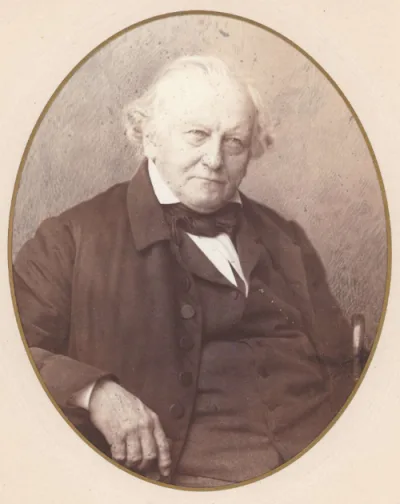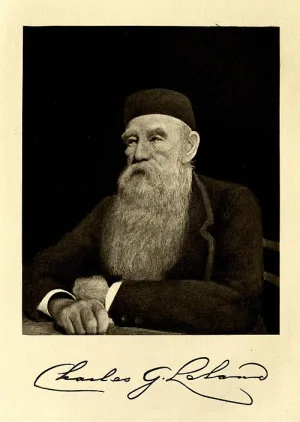
Charles Godfrey Leland
Charles Godfrey Leland documented Aradia, a figure he presented as a witch messiah, sparking debate and influencing modern paganism.
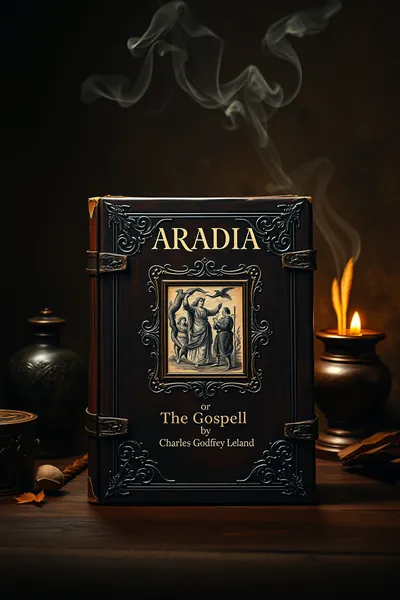
Charles Godfrey Leland, an American folklorist, published "Aradia, or the Gospel of the Witches" in 1899. In this work, he presented Aradia as a messianic figure sent to teach peasants sorcery for liberation from oppressive social structures, particularly the Roman Catholic Church and landowners. Leland claimed the text was a genuine religious document from Tuscan witches who worshipped Diana. However, his assertions have been challenged by later folklorists and historians.
Scholars suggest that the figure of Aradia may have originated from older Italian folklore, possibly merging with figures like the Sardinian "Rejusta." The name Aradia itself has connections to historical figures like Herodias, who in medieval Christian lore was seen as a wandering spirit associated with Diana's nocturnal train. Since its publication, "Aradia" has become a significant influence in the modern pagan witchcraft revival, notably within Wicca and Stregheria, where Aradia is often revered as a deity. Leland's text is viewed by scholars as a blend of collected folklore and his own creative interpretations.
Folklore Origins and Connections
The figure of Aradia, as presented by Leland, is thought by some scholars to have roots in older Italian folklore. The name and legend are linked to Herodias, a figure from the New Testament who, in medieval Christian tradition, became associated with a spectral night flight alongside nymphs of Diana. This association grew, with Herodias sometimes identified with other goddesses like Minerva and Noctiluca. Medieval texts, such as versions of the Canon Episcopi, mention women who believed they flew at night to meet Diana and her retinue. Sabina Magliocco has traced the name "Aradia" and its variants through various Italian regions, connecting it to figures like "s'Araja dimoniu" and "s'Araja justa" in Sardinia, with the latter potentially being an antecedent to the Sardinian folklore figure "sa Rejusta." Mircea Eliade also noted "Arada" as a name for a Romanian "Queen of the Fairies," whom he considered a form of Diana and a patroness of secretive dancers.
Leland's "Aradia, or the Gospel of the Witches"
In 1899, Charles Godfrey Leland published "Aradia, or the Gospel of the Witches," which he stated was a sacred text used by Tuscan witches who worshipped Diana. He claimed to have received the manuscript from a Tuscan woman named Maddalena, though this account has been questioned. The text introduces Aradia as the daughter of Diana and Lucifer, sent to Earth to teach witchcraft as a means of liberation from societal oppression. Aradia is depicted as the first witch, promising freedom to her followers. The book includes rituals and spells, such as an invocation to Diana to send Aradia for magical assistance. Leland speculated that the folklore within the text might have Etruscan origins and suggested a connection between Aradia, Herodias, and Lilith, a theory potentially influenced by Jules Michelet's work. He believed the "Gospel" offered insight into the doctrines and practices of witches' Sabbats, involving adoration of forbidden deities and rebellion against societal norms.
Influence on Modern Paganism and Witchcraft
Following its publication, Leland's "Aradia" became a significant text within the modern pagan and witchcraft revival. It has influenced various Neopagan traditions, including Wicca, where Aradia is sometimes invoked as a name for the Great Goddess or Moon Goddess. Portions of Leland's work are said to have informed the Gardnerian Book of Shadows. In the 1960s, Alex Sanders invoked Aradia as a moon goddess, and the Farrar's incorporated the name into their writings. Aradia is central to Stregheria, an Italian-based witchcraft tradition founded by Raven Grimassi, who proposed Aradia di Toscano as a historical figure and founder of 14th-century Italian witchcraft. Grimassi views Leland's text as a "distorted Christianized version" of Aradia's story. Later works, such as "The Book of the Holy Strega" and "The New Aradia," have continued to explore and reinterpret Aradia's narrative, often framing her as a symbol of magical resistance against oppression and social injustice.
Key Ideas
- Aradia as a messianic figure teaching sorcery for liberation
- Connection of Aradia to Italian folklore, Herodias, and Diana
- Aradia's role as a central figure in modern pagan witchcraft revival
- Leland's text as a blend of folklore and personal interpretation
- Witchcraft as a tool for resistance against oppression
Books by Charles Godfrey Leland
18 free public domain books · Read online or download