Appropriating the Dao
 72
72

Appropriating the Dao
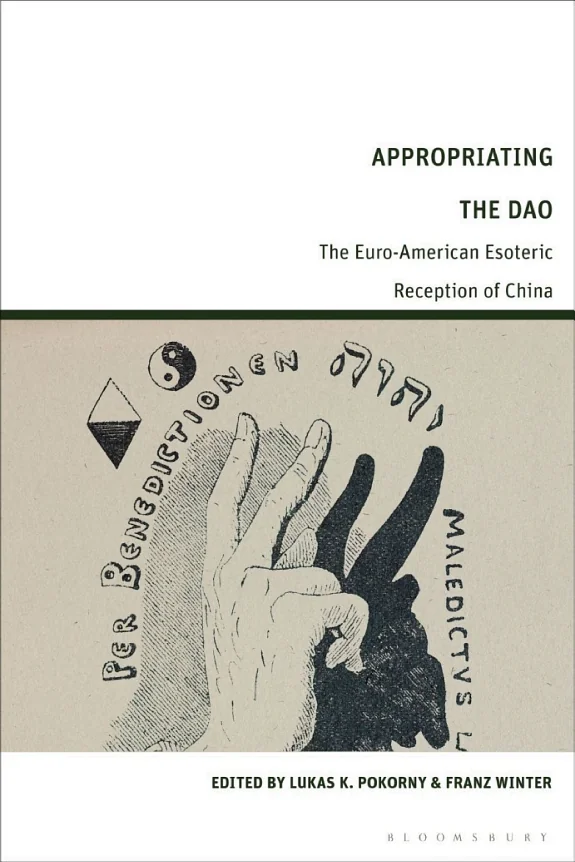
Lukas K. Pokorny and Franz Winter's 'Appropriating the Dao' offers a sober, scholarly examination of how East Asian thought has been absorbed into the Western esoteric milieu. Rather than a celebration of cross-cultural dialogue, the work presents a critical history, detailing how concepts like the Dao were often reshaped to fit Western esoteric agendas from the 18th century onward. The strength lies in its meticulous tracing of influences, demonstrating how Theosophy, for instance, acted as a significant conduit for these ideas. A limitation, however, is the sometimes dry academic prose, which can obscure the fascinating historical material. The analysis of how figures like Helena Blavatsky selectively integrated Eastern doctrines, often divorcing them from their original philosophical weight, is particularly illuminating. This book is a vital corrective to uncritical acceptance of 'Eastern wisdom' in the West.
📝 Description
72
Published in 2018, 'Appropriating the Dao' details how Eastern concepts entered Western esotericism.
Lukas K. Pokorny and Franz Winter's book examines the historical adoption of East Asian philosophical and religious ideas within Western esoteric traditions. Beginning with Enlightenment interest in the East, the study follows how concepts, symbols, and practices from China, Japan, and Korea were taken up, altered, and reshaped. The authors move beyond simple descriptions of cultural exchange to scrutinize the power dynamics and interpretive changes that accompanied these appropriations. The book traces this lineage from early European encounters and Jesuit accounts through the Orientalist discourse of the 18th and 19th centuries.
It charts the reception in movements like Theosophy, which integrated Eastern thought into its syncretic system in the late 19th century. The work then follows this influence into 20th-century New Age and alternative spirituality movements. Pokorny and Winter highlight that these appropriations often occurred without a deep understanding of the original contexts, resulting in new formations that sometimes bore little resemblance to their sources. Concepts like 'Dao,' 'Yin/Yang,' and various Buddhist and Confucian doctrines are analyzed through their reinterpretation in Western esoteric circles.
This book is situated within the study of Western esotericism, specifically its engagement with non-Western traditions. It follows how concepts and practices, often simplified or recontextualized, became incorporated into movements like Theosophy and later New Age spiritualities. The work addresses the historical processes by which Eastern philosophies were adapted to fit existing Western esoteric frameworks, sometimes creating distinct traditions separate from their origins.
💡 Why Read This Book?
• Learn how the concept of the 'Dao' was reinterpreted within 19th-century Theosophy, often detached from its original philosophical context, offering a specific historical case study of esoteric adaptation. • Understand the influence of East Asian religious and philosophical notions on Western esoteric currents from the 18th to 21st centuries, providing concrete examples of conceptual borrowing and transformation. • Gain insight into the selective processes that shaped the Western reception of Buddhist and Confucian doctrines, revealing how these were often synthesized into existing Western occult frameworks.
⭐ Reader Reviews
Honest opinions from readers who have explored this book.
❓ Frequently Asked Questions
What is the primary focus of 'Appropriating the Dao'?
The book explores the reception and adaptation of East Asian religious and philosophical ideas, such as the Dao and Confucianism, within Western esoteric traditions from the 18th to the 21st century.
Which historical periods does 'Appropriating the Dao' cover?
It spans from the Enlightenment period in the 18th century, through the rise of movements like Theosophy in the late 19th century, up to contemporary esoteric and New Age currents in the 21st century.
What are some key East Asian concepts discussed in relation to Western esotericism?
Key concepts include the Dao (Tao), Yin/Yang, and various Buddhist and Confucian doctrines, examined through their appropriation and reinterpretation in Western spiritual contexts.
Who are some influential figures or movements discussed regarding the appropriation of Eastern thought?
The work discusses influential figures and movements such as early Orientalists, Theosophy (particularly Helena Blavatsky), and later New Age spiritualities that incorporated Eastern elements.
Does the book argue for or against the validity of these appropriations?
The book adopts a critical, analytical stance, focusing on the historical processes, power dynamics, and interpretive shifts involved in appropriation, rather than judging their ultimate validity.
What is the academic discipline of the authors?
The authors are scholars specializing in religious studies, with expertise in esoteric traditions and East Asian religions.
🔮 Key Themes & Symbolism
Western Esoteric Interpretations
This theme focuses on how Western esoteric movements, from the Enlightenment onwards, selectively adopted and reinterpreted East Asian philosophical and religious concepts. It examines how ideas like the Dao, Yin/Yang, and Buddhist notions were often stripped of their original cultural and philosophical nuances and integrated into existing Western frameworks, such as Hermeticism or Theosophy. The work highlights the tendency to create syncretic systems that reflected Western spiritual needs and intellectual biases more than the original Eastern traditions.
The Role of Theosophy
Theosophy, particularly through Helena Blavatsky, emerges as a central force in popularizing and disseminating East Asian ideas within Western esoteric circles in the late 19th century. This theme examines how Theosophical literature acted as a significant intermediary, translating and often transforming complex doctrines into more accessible, albeit sometimes simplified, forms. The book scrutinizes the specific ways in which Buddhist and Hindu concepts were woven into Theosophy's unique cosmology and occult teachings.
Orientalism and Appropriation
This theme critically analyzes the relationship between Orientalist scholarship and the appropriation of East Asian traditions. It investigates how colonial-era perceptions and the Western fascination with the 'exotic' East influenced the way Eastern philosophies were perceived and utilized. The work scrutinizes the power dynamics inherent in this process, where Westerners often framed Eastern knowledge through a lens of superiority or romanticized exoticism, impacting how these traditions were adopted and presented.
Evolution of New Age Spirituality
The book traces the lineage of appropriated East Asian ideas into the broader spectrum of 20th and 21st-century New Age and alternative spirituality movements. It demonstrates how foundational esoteric appropriations, particularly those originating in the Theosophical movement, paved the way for the widespread integration of Eastern-inspired concepts into popular Western spiritual practices. The focus is on how these ideas continued to evolve and adapt in secularized and commercialized spiritual marketplaces.
💬 Memorable Quotes
Direct passages from the work, attributed to the author.
“The reception of the Dao in the West often involved its re-signification within existing esoteric paradigms.”
— This highlights how Western esoteric traditions didn't passively receive Eastern ideas but actively reshaped them to align with their own pre-existing beliefs and structures, leading to a Westernized interpretation of the Dao.
“Theosophy served as a crucial bridge, translating and synthesizing Eastern doctrines for a Western audience.”
— This points to the significant role Helena Blavatsky's Theosophical Society played in making complex Eastern philosophies accessible, though often in a modified form, to Western occultists and spiritual seekers.
“Early engagements with Chinese philosophy were frequently filtered through European lenses of rationalism and religious critique.”
— This suggests that initial European encounters with philosophies like Confucianism or Daoism were heavily influenced by prevailing Western intellectual frameworks, impacting how these ideas were understood and presented.
“Later New Age movements continued the trend of decontextualizing Eastern spiritual concepts for personal therapeutic use.”
— This interpretation points to the ongoing process where Eastern spiritual elements were extracted from their original contexts and adapted for individualistic spiritual or therapeutic goals in more recent Western movements.
“The appropriation process often prioritized symbolic resonance over systematic philosophical coherence.”
— This suggests that Western esoteric practitioners were frequently more interested in the symbolic power or perceived spiritual efficacy of Eastern concepts than in understanding their full philosophical depth or original systematic structure.
🌙 Esoteric Significance
Tradition
This work primarily addresses the Western Esoteric Tradition, particularly its engagement with non-Western sources. It fits within the lineage of comparative occultism and the study of syncretic spiritual movements that emerged from the late 19th century onwards, notably Theosophy and its successors. It departs from earlier, more uncritical integrations by offering a rigorous historical and critical analysis of the appropriation process, highlighting power dynamics and interpretive shifts rather than assuming seamless spiritual continuity.
Symbolism
Key symbols examined include the 'Dao' (Tao), representing the fundamental principle of the universe in Chinese philosophy, often simplified in Western contexts to a universal life force or cosmic energy. The 'Yin and Yang' symbol is another crucial motif, frequently adopted to represent dualistic principles or balance within Western occult systems, sometimes detached from its nuanced cosmological role in Daoism. Buddhist concepts like karma and reincarnation also appear, reinterpreted through a Western lens.
Modern Relevance
Contemporary thinkers and practitioners in fields ranging from comparative religion to Western esotericism draw upon the historical groundwork laid by earlier appropriations. Modern mindfulness practices, certain forms of neopaganism, and various New Age therapies often implicitly or explicitly utilize concepts derived from East Asian traditions, whose Western reception is detailed in this book. Scholars studying contemporary spirituality frequently reference the historical trajectory of these ideas as documented by Pokorny and Winter.
👥 Who Should Read This Book
• Researchers in comparative religion and Western esotericism seeking a critical historical overview of East Asian influences. • Students of philosophy and cultural studies interested in the dynamics of cross-cultural idea transmission and appropriation. • Spiritual practitioners curious about the historical origins and Western adaptations of Eastern concepts within their own traditions.
📜 Historical Context
Published in 2024, 'Appropriating the Dao' engages with a long history of East-West intellectual exchange, particularly concerning religious and philosophical ideas. From the 18th century, European Enlightenment thinkers and collectors developed an interest in 'Oriental' philosophies, often viewing them through a lens of exoticism or as precursors to Western thought. The late 19th century saw movements like Theosophy, founded by Helena Blavatsky, actively incorporating and reinterpreting Hindu and Buddhist concepts, significantly shaping Western esoteric discourse. Contemporaries like Rudolf Steiner, while developing his own Anthroposophy, also engaged with Eastern ideas, though often critically. The mid-20th century brought further scholarly and popular interest, accelerated by globalization and increased cultural exchange. This book arrives at a time when critical examination of cultural appropriation is paramount, offering a nuanced historical perspective on how East Asian spiritualities have been received and transformed within the Euro-American esoteric current, contrasting with the original philosophical traditions.
📔 Journal Prompts
The re-signification of the Dao: How might Western esoteric interpretations alter the original philosophical intent?
Analyze the selective integration of Buddhist concepts within Theosophy, identifying specific examples.
Reflect on the historical power dynamics inherent in the Western appropriation of Eastern spiritual traditions.
Consider the symbolic adoption of Yin and Yang in Western occultism versus its Daoist origins.
Trace the evolution of a specific East Asian concept from its original context to its modern New Age usage.
🗂️ Glossary
Dao (Tao)
The fundamental, ineffable principle of the universe in Chinese philosophy, particularly Daoism. It represents the natural order, the source, and the underlying reality from which all phenomena arise.
Yin and Yang
A core concept in Chinese philosophy representing complementary, interconnected, and interdependent forces or principles (e.g., dark/light, passive/active, feminine/masculine) whose dynamic balance constitutes the universe.
Esotericism
Systems of thought and practice characterized by esoteric (hidden or inner) knowledge, often involving initiation, spiritual disciplines, and a focus on inner transformation or direct experience of the divine/ultimate reality.
Theosophy
A syncretic spiritual movement founded in the late 19th century, notably by Helena Blavatsky, which sought to synthesize Western occultism with Eastern philosophies (Hinduism, Buddhism) and esoteric interpretations of world religions.
Orientalism
A term coined by Edward Said, describing the way Western cultures have historically perceived, represented, and constructed the 'Orient' (Eastern cultures) as exotic, inferior, or fundamentally different from the West.
Syncretism
The combining of different, often contradictory, beliefs, practices, and traditions, typically in religion or philosophy, to form a new, hybrid system.
Hermeticism
A philosophical and religious tradition based on the purported teachings of Hermes Trismegistus, emphasizing esoteric knowledge, divine wisdom, and the interconnectedness of the macrocosm and microcosm.
This book appears in 1 collection
🔮 Readers Also Liked
Browse all →








From the “Western Esotericism” Collection
View all →


More Free Sacred Texts & Gnosticism Books
View all →