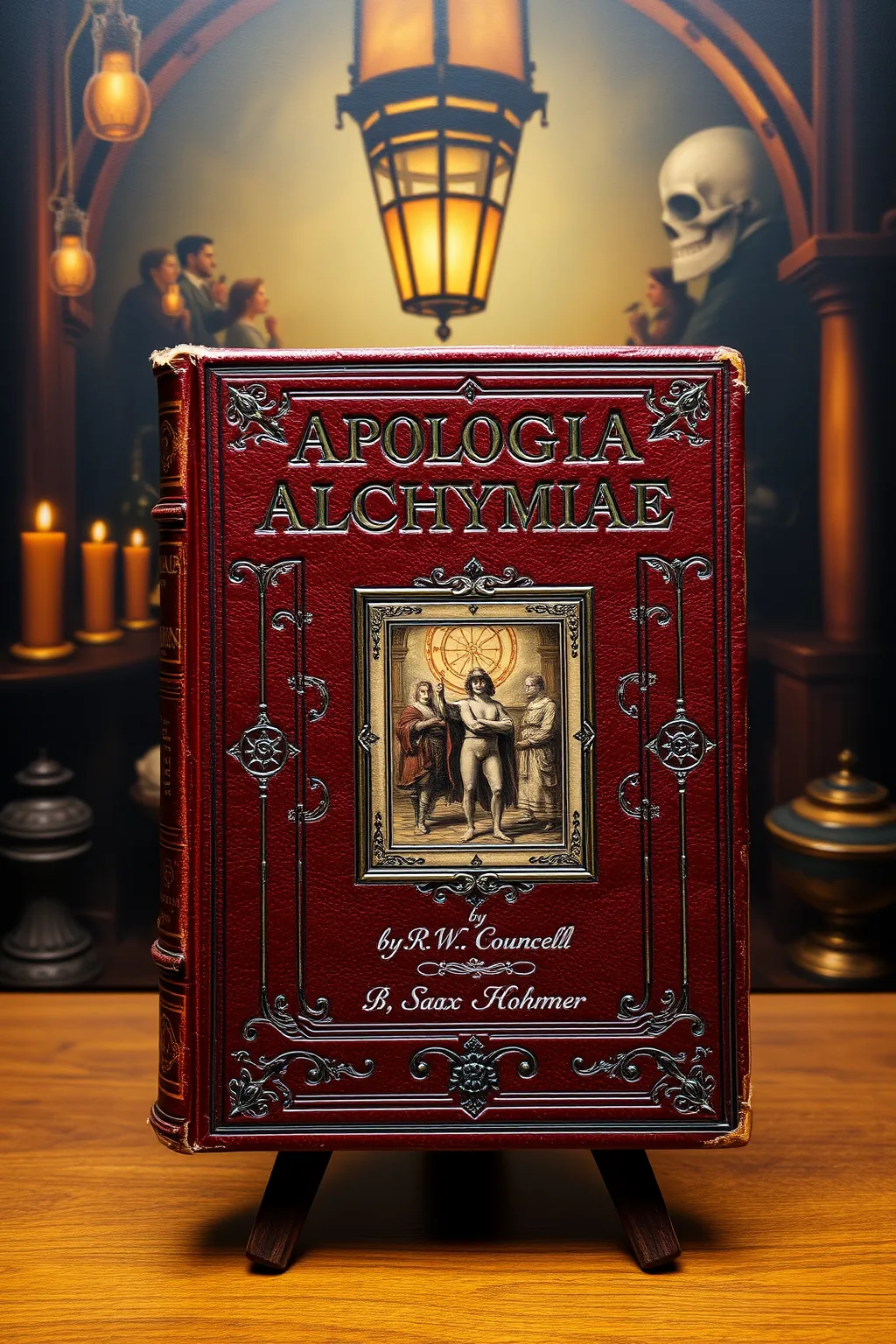
Apologia Alchymiae
 76
76

Apologia Alchymiae



Apologia Alchymiae by R. W. Councell stands as a timeless defense of alchemy in an era dominated by materialistic science. Councell's arguments are both scholarly and passionate, drawing on a deep well of historical and philosophical knowledge. The preface by Sax Rohmer adds an intriguing layer, as Rohmer's own works often explored the mysterious and supernatural. For modern esoteric seekers, this book offers a rich exploration of alchemy's spiritual and transformative potential. It challenges readers to look beyond the surface of modern chemistry and consider the deeper, more mystical dimensions of alchemical practices. The text is particularly valuable for its insights into the Hermetic principles that underpin alchemy, making it a must-read for anyone interested in the esoteric traditions. Councell's work is meticulously researched and beautifully written, providing a compelling case for the enduring relevance of alchemy.
📝 Description
76
R. W. Councell wrote Apologia Alchymiae to defend alchemy against modern materialism.
Published with a preface by Sax Rohmer, R. W. Councell's Apologia Alchymiae presents a defense of alchemical principles. Councell, who was the Rohmer family's physician, argues against the limitations of modern chemistry, asserting the validity of alchemical philosophy. The book draws on ancient symbolism and hidden knowledge, aiming to connect with those interested in spiritual enlightenment and the study of the occult.
Its tone cultivates a sense of mystery and respect for the subject matter. The work invites readers to consider esoteric insights beyond ordinary perception. Apologia Alchymiae is presented not merely as a historical artifact but as a reflection of alchemy's ongoing relevance, suggesting a path toward a deeper comprehension of the universe and humanity's role within it.
Apologia Alchymiae sits within the tradition of hermetic philosophy and Renaissance esotericism. It engages with the historical debates surrounding alchemy's place alongside emerging scientific disciplines. The book reflects a period where practitioners sought to legitimize alchemical pursuits, often framing them as a path to spiritual understanding rather than solely material transformation. It connects with a lineage of texts that reinterpreted classical and medieval alchemical ideas for a contemporary audience, emphasizing hidden correspondences and symbolic interpretations.
💡 Why Read This Book?
Reading Apologia Alchymiae today offers a unique perspective on the esoteric and mystical dimensions of alchemy. It challenges modern materialistic views of science and provides a deep dive into the Hermetic principles that underpin alchemical practices. Readers will gain a deeper understanding of the spiritual and transformative potential of alchemy, making it an invaluable resource for esoteric seekers and historians of science alike.
⭐ Reader Reviews
Honest opinions from readers who have explored this book.
❓ Frequently Asked Questions
What is the main argument of Apologia Alchymiae?
The main argument of Apologia Alchymiae is that alchemy offers a spiritual and transformative path that modern chemistry overlooks. Councell defends the esoteric practices of alchemy and their Hermetic foundations.
Who is the intended audience for this book?
This book is intended for esoteric seekers, historians of science, and anyone interested in the deeper, mystical dimensions of alchemy and Hermeticism.
Why is the preface by Sax Rohmer significant?
The preface by Sax Rohmer adds an intriguing layer to the book, as Rohmer's own works often explored the mysterious and supernatural. His endorsement lends credibility and intrigue to Councell's defense of alchemy.
🔮 Key Themes & Symbolism
Hidden Knowledge
Apologia Alchymiae looks at the hidden knowledge of alchemy, revealing secrets that have been obscured by modern science. Councell's work invites readers to uncover the deeper truths that lie beneath the surface of everyday reality, providing a collection of esoteric insights that are both intellectually stimulating and spiritually enriching.
Symbolism and Mystery
The book is a rich source of symbolic language and arcane mysteries, offering readers a gateway to a more profound understanding of the cosmos. Councell's exploration of alchemical symbolism reveals the interconnectedness of all things, inviting readers to see the world through a lens of wonder and enchantment.
Philosophical Significance
Apologia Alchymiae is not just a historical document but a living evidence of the enduring power of alchemical thought. Councell's arguments are both scholarly and evocative, appealing to a wide audience from curious beginners to seasoned practitioners. The text's rich atmosphere and philosophical depth make it a must-read for anyone interested in the occult and hermetic traditions.
💡 Key Ideas
Editorial paraphrase of the work's core concepts — not direct quotes.
Alchemy is the art of transforming the base into the noble.
This quote highlights the core principle of alchemy, emphasizing the transformative power of the art.
The true alchemist seeks not gold, but the philosopher's stone.
This line underscores the spiritual and philosophical dimensions of alchemy, moving beyond mere material gain.
In the crucible of the mind, all things are possible.
This quote emphasizes the mental and spiritual aspects of alchemical practice, inviting readers to explore their inner potential.
The symbols of alchemy are the keys to hidden knowledge.
This line highlights the importance of symbolic language in alchemy, revealing the deeper truths that lie beneath the surface.
The alchemist's journey is one of self-discovery and enlightenment.
This quote underscores the transformative nature of alchemical practice, inviting readers to begin a study of spiritual growth.
🌙 Esoteric Significance
Tradition
Apologia Alchymiae belongs to the Hermetic tradition, which emphasizes the interconnectedness of all things and the transformative power of the mind. This tradition draws on ancient alchemical principles, seeking to uncover the hidden knowledge that lies beneath the surface of reality.
Symbolism
Key symbols in the book include the philosopher's stone, the crucible, and the transformation of base metals into gold. These symbols represent the alchemist's journey of self-discovery and enlightenment, inviting readers to explore the deeper meanings of alchemical practice.
Modern Relevance
The book's exploration of hidden knowledge and symbolism continues to resonate with modern practitioners of alchemy and esoteric traditions. Today, Apologia Alchymiae is seen as a foundational text for those seeking to understand the deeper philosophical and spiritual dimensions of alchemy.
👥 Who Should Read This Book
Beginners interested in alchemy will find Apologia Alchymiae an accessible introduction to the mystical and esoteric domains of the art. Scholars of the occult will appreciate Councell's robust defense of alchemical principles against modern chemistry, while spiritual seekers will be drawn to the book's exploration of hidden knowledge and symbolism. Practitioners of alchemy will find valuable insights and techniques to enhance their practice.
📜 Historical Context
Apologia Alchymiae was written during a time when the scientific revolution was gaining momentum, challenging traditional beliefs and practices. Councell's work stands as a defense of alchemical principles against the reductive materialism of modern chemistry, offering a counterpoint to the prevailing scientific orthodoxy. The book's influence can be seen in the enduring interest in alchemy and esoteric traditions, as well as in the continued exploration of hidden knowledge and symbolism.
📔 Journal Prompts
How does the defense of alchemy in this book resonate with your own beliefs about the nature of reality?
What symbols in Apologia Alchymiae stand out to you and why?
How does the concept of transformation in alchemy apply to your personal journey?
In what ways does the book challenge or confirm your understanding of modern science?
How can you integrate the principles of alchemy into your daily life?
🗂️ Glossary
Philosopher's Stone
A legendary alchemical substance said to be capable of turning base metals into gold and granting immortality.
Alchemy
An ancient practice combining elements of chemistry, mysticism, and spirituality, aiming to transform and purify both matter and the self.
Hermetic Tradition
A philosophical and spiritual tradition based on the writings of Hermes Trismegistus, emphasizing the interconnectedness of all things.
Symbolism
The use of symbols to represent abstract ideas or qualities, often employed in alchemy to convey hidden knowledge.
Transformative Power
The ability of alchemy to bring about significant change or improvement in both material and spiritual realms.
This book appears in 3 collections
🔮 Readers Also Liked
Browse all →








From the “Hermeticism” Collection
View all →







![The alchemy of happiness, tr. from the Turk. [abridgement] by H.A. Homes](/img/thumb/the-alchemy-of-happiness-tr-from-the-turk-abridgement-by-h-a-homes-ab-mid-mu-ammad-b-mu-ammad-ghazz-l.webp)
More Free Alchemy & Hermeticism Books
View all →