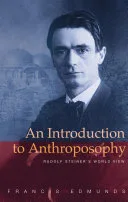
An Introduction to Anthroposophy
 71
71

An Introduction to Anthroposophy
Francis Edmunds' An Introduction to Anthroposophy provides a necessary service by attempting to distill Rudolf Steiner's vast and often intricate philosophy into digestible prose. The strength of this work lies in its clear exposition of concepts that can otherwise seem opaque, particularly its explanation of the four human bodies (physical, etheric, astral, ego). However, the book occasionally struggles to fully convey the experiential dimension that Steiner himself emphasized; the practical applications, like biodynamic farming, are presented more as outcomes than as deeply integrated practices stemming from a living cosmology. A notable passage that clarifies the distinction between anthroposophy and earlier theosophical movements highlights its effort to define its unique position. While it offers a solid conceptual framework, it doesn't quite capture the animating spirit that drives anthroposophical work. It is a useful primer for the intellectually curious, offering a competent overview of a complex subject.
📝 Description
71
Francis Edmunds's An Introduction to Anthroposophy appeared in 1996.
Francis Edmunds's An Introduction to Anthroposophy breaks down the philosophical and spiritual ideas of Rudolf Steiner. The book explains the basic principles behind practices like Waldorf education, biodynamic agriculture, and anthroposophical medicine. Edmunds aims to make Steiner's work understandable for people who are interested but find his original writings difficult. He outlines the main ideas and the aims of Steiner's broad contributions.
This book is for anyone wanting to grasp the worldview that supports movements such as Waldorf schooling and biodynamic farming. It is useful for parents, teachers, farmers, and medical professionals who seek a clearer understanding of this approach. Students of Western esotericism and comparative philosophy will also find it a thorough yet accessible overview of a significant 20th-century spiritual science.
Anthroposophy, developed by Rudolf Steiner in the early 20th century, emerged from his work within the Theosophical Society. It sought to create a 'spiritual science' that could investigate spiritual realities using methods of clear thinking and consciousness development. Steiner proposed that through specific cognitive training, individuals could perceive spiritual worlds, aiming to bridge the gap between the prevailing materialistic science and a renewed spiritual understanding.
💡 Why Read This Book?
• Gain a foundational understanding of the four human bodies (physical, etheric, astral, ego) as presented by Rudolf Steiner, allowing for a more nuanced view of human development and consciousness. • Grasp the core principles behind biodynamic agriculture, understanding its roots in a holistic, organismic worldview rather than conventional scientific farming methods. • Explore the philosophical basis of Waldorf education, learning how anthroposophy informs its pedagogical approach to nurturing the child's spiritual, intellectual, and physical faculties.
⭐ Reader Reviews
Honest opinions from readers who have explored this book.
❓ Frequently Asked Questions
What is the primary goal of anthroposophy as presented in this book?
The book explains that anthroposophy's primary goal is to develop a spiritual science that can bridge the gap between the material and spiritual worlds, offering a path for human evolution and understanding.
How does An Introduction to Anthroposophy differ from Rudolf Steiner's original writings?
This introduction aims to simplify and clarify Steiner's complex ideas for a wider audience, presenting them in a more accessible format than his dense original lectures and texts.
Is this book suitable for someone completely new to spiritual philosophy?
Yes, the book is designed as an introduction, making it suitable for newcomers interested in understanding the foundational concepts of anthroposophy and its practical applications.
What are some practical applications of anthroposophy mentioned in the book?
The book highlights practical applications such as Waldorf (Rudolf Steiner) schools, biodynamic farming (Demeter label), and anthroposophical medicine.
Does the book explain the concept of the 'ego body'?
Yes, the book explores the anthroposophical model of the human being, which includes the physical, etheric, astral, and ego bodies, explaining the ego's role in self-awareness and individuality.
When was An Introduction to Anthroposophy first published?
An Introduction to Anthroposophy by Francis Edmunds was first published on April 2, 2013.
🔮 Key Themes & Symbolism
The Four Human Bodies
This work meticulously outlines Rudolf Steiner's concept of the human being not merely as a physical form, but as a composite of distinct bodies: the physical, etheric (life forces), astral (soul or consciousness), and ego (individuality). Edmunds clarifies how these are interconnected and develop throughout life, forming the basis for understanding human health, education, and spiritual potential within the anthroposophical framework.
Spiritual Science as a Method
The book positions anthroposophy as a 'spiritual science,' a rigorous discipline aiming to perceive and study spiritual realities with the same objectivity as natural science studies the material world. It describes the potential for developing higher faculties of cognition through specific meditative and contemplative practices, enabling individuals to access a broader understanding of existence beyond sensory perception.
Anthroposophy's Practical Manifestations
A significant focus is placed on the tangible outcomes of anthroposophical thinking. The text details how principles derived from Steiner's worldview have been applied to create unique educational systems like Waldorf schools, a distinctive approach to agriculture (biodynamic farming) that considers the farm as a living organism, and a holistic model for medicine.
Evolution and Reincarnation
Edmunds introduces the anthroposophical perspective on human and cosmic evolution, incorporating concepts of karma and reincarnation. This theme explores the cyclical nature of existence, the soul's journey through multiple lifetimes, and the development of consciousness over vast epochs, providing a framework for understanding individual destiny and collective human progress.
💬 Memorable Quotes
Direct passages from the work, attributed to the author.
“The philosophy that stands behind them remains largely hidden.”
— This observation highlights a central problem addressed by the book: the disconnect between the widespread recognition of anthroposophical initiatives and the general public's lack of understanding of their underlying philosophical basis.
“Thousands of parents send their children to Rudolf Steiner (Waldorf) schools around the world.”
— This statistic underscores the significant practical reach of anthroposophy, indicating a substantial global community influenced by its educational principles, even if the philosophical source remains less known.
“Biodynamic farming (the Demeter label) is gaining increasing recognition.”
— This points to another major area where anthroposophy has made a visible impact, demonstrating its application in agriculture and its growing influence on sustainable and holistic farming practices globally.
“Few are aware of the richness of Rudolf Steiner's world view, anthroposophy.”
— This statement frames the book's purpose: to illuminate the depth and breadth of Steiner's comprehensive philosophical system for a broader audience that may only be familiar with its surface-level manifestations.
“Anthroposophical medicine is gaining increasing recognition.”
— This indicates the expansion of anthroposophy into the healthcare sector, suggesting a growing interest in its holistic approach to healing that integrates spiritual and physical dimensions of well-being.
🌙 Esoteric Significance
Tradition
Anthroposophy positions itself within the lineage of Western esoteric traditions, particularly drawing from Gnosticism, Hermeticism, and the mystical currents of German Idealism and Romanticism. However, it departs significantly by emphasizing a rigorous, almost scientific methodology for spiritual cognition, distinguishing it from purely faith-based or intuitive approaches. It aims to be a 'spiritual science' accessible through conscious effort rather than solely through inherited revelation or esoteric initiation.
Symbolism
Key symbols in anthroposophy include the "spiritual hierarchies" representing cosmic intelligences, the "four human bodies" (physical, etheric, astral, ego) as a model of consciousness, and the concept of "karma" and "reincarnation" as drivers of human evolution. The "rose cross" is also a significant symbol, representing the union of the spiritual (rose) and the soul/earthly (cross), a central theme in Steiner's work.
Modern Relevance
Contemporary thinkers and practitioners in fields like integral psychology, consciousness studies, and alternative education continue to engage with anthroposophical concepts. The enduring influence is evident in the global network of Waldorf schools, the ongoing development of biodynamic farming practices under the Demeter certification, and the specialized field of anthroposophical medicine, which offers a complementary approach to healthcare.
👥 Who Should Read This Book
• Parents and educators interested in the pedagogical philosophy behind Waldorf schools, seeking to understand the spiritual and developmental principles guiding their curriculum. • Individuals curious about the origins and principles of biodynamic agriculture, looking for a deeper connection between farming practices and a holistic worldview. • Students of Western esoteric traditions and comparative philosophy wanting to explore a 20th-century spiritual science that offers a unique framework for understanding human consciousness and cosmic evolution.
📜 Historical Context
Anthroposophy emerged from the fertile intellectual soil of early 20th-century Europe, a period characterized by rapid industrialization, societal upheaval, and a spiritual vacuum felt by many. Rudolf Steiner, a key figure who initially engaged with Theosophy, established anthroposophy in 1913 as a distinct path. This spiritual science aimed to provide a scientifically grounded method for exploring the spiritual dimensions of existence, contrasting sharply with the prevailing materialistic scientific paradigm. It sought to offer a renewed understanding of human nature and cosmic processes, influencing fields like education (leading to Waldorf schools founded in 1919), agriculture, medicine, and the arts. While gaining traction through its practical applications, anthroposophy also faced skepticism and critique from established religious and scientific institutions, particularly in the interwar years. Steiner's contemporary, Albert Einstein, while focused on physics, represented the dominant scientific mindset that anthroposophy sought to complement rather than replace.
📔 Journal Prompts
The concept of the four human bodies: How might differentiating between physical, etheric, astral, and ego bodies alter your self-perception?
Rudolf Steiner's development of anthroposophy: Reflect on the challenges and motivations for creating a distinct spiritual path in the early 20th century.
Practical applications of anthroposophy: Consider the ethical implications of viewing a farm as a living organism in biodynamic agriculture.
Spiritual science as a method: How does the idea of developing faculties to perceive spiritual realities compare to your current understanding of knowledge acquisition?
The role of karma and reincarnation: Explore how these concepts, as presented in anthroposophy, could influence one's perspective on life events.
🗂️ Glossary
Anthroposophy
A spiritual philosophy developed by Rudolf Steiner, aiming to understand the spiritual nature of the human being and the cosmos through a method of spiritual perception and scientific inquiry.
Rudolf Steiner
The Austrian philosopher, esotericist, and social reformer (1861–1925) who founded anthroposophy and inspired movements such as Waldorf education and biodynamic agriculture.
Waldorf Education
An educational approach based on anthroposophy, focusing on the holistic development of the child—intellectual, practical, and artistic—through age-appropriate curricula.
Biodynamic Agriculture
A holistic, organic approach to farming and gardening that views the farm as a self-sustaining ecosystem, incorporating principles of spiritual ecology and specific soil preparations.
Etheric Body
In anthroposophy, the subtle body responsible for life forces, growth, and reproduction; often referred to as the 'life body'.
Astral Body
In anthroposophy, the subtle body associated with consciousness, feeling, instinct, and sensation; often referred to as the 'soul body'.
Ego Body
In anthroposophy, the spiritual core of individuality, consciousness, and self-awareness, responsible for independent thought and moral judgment.