Chinese geomancy

 78
78

Chinese geomancy
Evelyn Lip's "Chinese Geomancy" offers a meticulously researched account of a discipline often reduced to superficial advice. Lip avoids the sensationalism that frequently surrounds Feng Shui, instead presenting a scholarly yet accessible examination of its underlying principles. The strength of the book lies in its detailed exposition of the historical development and theoretical underpinnings of geomancy, particularly its connection to Taoist cosmology and the intricate calculations involved. One area where the work could be expanded is in offering more case studies or visual aids to help readers grasp the spatial dynamics described. For instance, the discussion of 'Dragon Veins' is fascinating but benefits greatly from prior knowledge of traditional Chinese landscape aesthetics. Nevertheless, "Chinese Geomancy" serves as a valuable, grounded introduction for serious students of the subject.
📝 Description
78
Evelyn Lip's 1992 work deciphers Chinese geomancy, a practice harmonizing people with their environment.
Evelyn Lip's book examines Chinese geomancy, known as Feng Shui, a discipline that aligns individuals with their surroundings. Rooted in Taoist philosophy, it focuses on the flow of vital energy, or 'qi,' within spaces to foster health and prosperity. The text details the principles and calculations used to evaluate landscapes, buildings, and burial sites, aiming for auspicious cosmic alignment.
The book is for students of esoteric traditions, Feng Shui practitioners seeking deeper understanding, and scholars of environmental philosophies. It addresses how ancient cultures perceived their physical world, bridging philosophical ideas with practical uses in architecture and land management. The practice of geomancy in China has ancient origins, with principles refined over centuries for imperial decisions on city and tomb placement. Lip's work offers a scholarly perspective, distinct from popular adaptations of Feng Shui that emerged globally by the early 1990s.
Chinese geomancy, or Feng Shui, is a traditional practice that operates on the principle of harmonizing human existence with the terrestrial environment. It is deeply connected to Taoist cosmology, viewing the landscape as imbued with a vital life force, 'qi.' The arrangement of structures and the use of land are understood to influence this flow, impacting the fortune and well-being of inhabitants. This tradition employs specific calculations and symbolic interpretations to achieve balance, making it a key component of Chinese metaphysical arts.
💡 Why Read This Book?
• Gain a structured understanding of the foundational principles of Chinese geomancy, including Yin and Yang and the Five Elements, as presented through Lip's detailed analysis. • Explore the historical evolution of geomancy, tracing its roots back to ancient China and understanding its role in traditional Chinese culture and architecture. • Learn about the practical tools and concepts used in geomancy, such as the Luo Pan and the assessment of 'Dragon Veins,' to appreciate the discipline's complexity beyond popular interpretations.
⭐ Reader Reviews
Honest opinions from readers who have explored this book.
❓ Frequently Asked Questions
When was Evelyn Lip's 'Chinese Geomancy' first published?
Evelyn Lip's "Chinese Geomancy" was first published in 1992, providing a scholarly overview of the ancient practice during a period of growing global interest in Feng Shui.
What is the core philosophy behind Chinese geomancy?
The core philosophy is rooted in Taoist principles, focusing on harmonizing human existence with the flow of vital energy (qi) in the environment to promote well-being and prosperity.
What are the 'Five Elements' in Chinese geomancy?
The Five Elements are Wood, Fire, Earth, Metal, and Water. They are understood to interact in cyclical patterns of generation and destruction, influencing the balance of qi.
What is the 'Luo Pan' used for in geomancy?
The Luo Pan is a specialized Chinese compass used by geomancers to take directional readings and analyze the energetic patterns of a site, crucial for making informed decisions.
Does the book explain how to practice Feng Shui today?
While it explains the principles and historical context, the book focuses more on the theoretical and historical aspects of geomancy rather than providing prescriptive modern Feng Shui advice.
What is 'qi' in the context of Chinese geomancy?
Qi (气) is the fundamental concept of vital energy or life force that permeates the universe. Geomancy aims to ensure the auspicious flow of qi in one's environment.
🔮 Key Themes & Symbolism
The Flow of Qi
The central concept of qi (气) is explored as the vital life force that animates all things and flows through the landscape. Lip's work details how geomancy seeks to understand the patterns of this energy, identifying auspicious currents and potential blockages. The book explains how the arrangement of natural features like mountains and water, as well as the placement of human structures, can either foster or impede the healthy circulation of qi, directly impacting the inhabitants' well-being and fortune.
Yin and Yang Harmony
Lip examines the fundamental Taoist principle of Yin (阴) and Yang (阳) as it applies to geomancy. These complementary, opposing forces are seen in the interplay of light and shadow, stillness and movement, passive and active. The book illustrates how successful geomantic arrangements achieve a balance between Yin and Yang elements within a site, avoiding extremes that could lead to disharmony. This balance is crucial for creating environments conducive to health and prosperity.
The Five Elements
The interplay of the Five Elements (五行) – Wood, Fire, Earth, Metal, and Water – is presented as a dynamic system that governs natural phenomena and human interaction with the environment. Lip's text explains the generative and destructive cycles of these elements and how their presence or absence in specific locations influences geomantic outcomes. Understanding these relationships is key to assessing and modifying a site's energetic configuration for optimal results.
Site Assessment and Calculation
This theme focuses on the practical methodologies of Chinese geomancy. Lip studies the use of tools like the Luo Pan (罗盘) and the interpretation of landscape forms, often referred to as 'Dragon Veins' (龙脉). The book outlines the complex calculations and observational techniques employed by geomancers to evaluate the auspiciousness of a location for dwellings, businesses, or burial sites, emphasizing precision and deep knowledge of astronomical and terrestrial influences.
💬 Memorable Quotes
Direct passages from the work, attributed to the author.
“The Dragon's pulse must be felt.”
— This metaphorical statement refers to the geomancer's ability to discern the subtle flow of vital energy (qi) within the landscape, often conceptualized as a 'Dragon Vein,' which is essential for site selection and assessment.
“Water forms the arteries, mountains the skeleton.”
— This highlights the critical roles of water bodies and mountain ranges in Chinese geomancy. Water is seen as carrying and circulating energy (qi), while mountains act as protective barriers and anchors for the land's energetic structure.
“Balance is achieved through the right measure of Yin and Yang.”
— This emphasizes the core Taoist principle of achieving harmony not through elimination, but through the skillful integration of opposing forces. In geomancy, this translates to balancing elements like open spaces with enclosed ones, or light with shade.
“The Luo Pan is more than a compass; it is a map of cosmic forces.”
— This interpretation underscores the complexity and spiritual significance of the geomantic compass. It is not merely a directional tool but a comprehensive instrument for analyzing the energetic and astrological influences affecting a particular location.
“A properly oriented grave ensures prosperity for descendants.”
— This points to the profound importance placed on burial sites in traditional Chinese culture, where the geomantic alignment of ancestral tombs was believed to directly impact the fortune and well-being of future generations.
🌙 Esoteric Significance
Tradition
Chinese geomancy, as presented by Lip, is firmly rooted in Taoist cosmology and ancient Chinese philosophical traditions. It is not directly aligned with Western esoteric lineages like Hermeticism or Kabbalah but shares a common goal of understanding and harmonizing with universal energetic principles. Its emphasis on the flow of qi and the balance of natural forces places it within a broader category of earth-based or environmental spiritual practices that seek to align human life with cosmic order.
Symbolism
Key symbols include the 'Dragon Veins' (龙脉), representing the energetic pathways of the land, and the Luo Pan (罗盘), a complex circular compass adorned with rings of characters and diagrams, symbolizing the universe and its forces. Water and mountains are also potent symbols, representing the dynamic (Yin) and static (Yang) aspects of the environment, respectively. The Five Elements (五行) – Wood, Fire, Earth, Metal, Water – symbolize fundamental forces and their cyclical interactions.
Modern Relevance
Contemporary practitioners of Feng Shui, architectural designers interested in sustainable and psychologically attuned spaces, and scholars of comparative religion and traditional Chinese culture continue to draw upon the foundational knowledge presented in works like Lip's. Its detailed explanation of geomantic principles offers a crucial reference point for those seeking to understand the historical and philosophical depth of practices that influence modern environmental design and personal well-being.
👥 Who Should Read This Book
• Students of esoteric traditions seeking to understand ancient Chinese cosmological systems and their practical applications. • Architects and designers interested in the historical roots of environmental harmony and space planning. • Scholars of comparative religion and cultural history researching the intersection of philosophy, science, and daily life in pre-modern China.
📜 Historical Context
Evelyn Lip's "Chinese Geomancy" emerged in 1992, a period marked by a global surge of interest in Feng Shui, often presented through simplified Western lenses. Lip's work, however, offered a more scholarly grounding, tracing the practice's origins in ancient China, where geomancy was integral to imperial planning and cosmology. Its principles are deeply intertwined with Taoist philosophy and early Chinese scientific thought, distinct from contemporary New Age interpretations. While figures like L. Ron Hubbard were developing Dianetics and Scientology around the same time, Lip focused on a pre-existing, deeply traditional esoteric system. The book's detailed examination of concepts like qi, Yin/Yang, and the Five Elements provided a counterpoint to more superficial engagements with Feng Shui, aiming to preserve a more authentic understanding of the discipline's historical and philosophical depth.
📔 Journal Prompts
Reflect on the concept of 'Dragon Veins' and how energy might flow through your own environment.
Analyze the interplay of Yin and Yang elements in a space you frequently occupy.
Consider the generative and destructive cycles of the Five Elements in relation to a personal challenge.
How does the concept of 'qi' influence your perception of well-being in different locations?
Document your observations of natural landscape features and their potential geomantic significance.
🗂️ Glossary
Qi (气)
The fundamental vital life force or energy that flows through all things and the environment. Geomancy aims to harmonize its flow.
Yin (阴)
The passive, dark, feminine, receptive principle in Taoist philosophy, often associated with stillness and coolness.
Yang (阳)
The active, light, masculine, creative principle in Taoist philosophy, often associated with movement and warmth.
Five Elements (五行)
Wood, Fire, Earth, Metal, and Water. A system of interacting forces believed to govern natural phenomena and influence geomantic outcomes.
Luo Pan (罗盘)
A complex Chinese geomantic compass used for taking directional readings and analyzing the energetic patterns of a site.
Dragon Veins (龙脉)
Metaphorical pathways of vital energy (qi) believed to flow through the land, often following mountain ranges and watercourses.
Ba Gua (八卦)
The eight trigrams of the I Ching, used in geomancy to represent fundamental principles and directions, often depicted on the Luo Pan.
🔮 Readers Also Liked
Browse all →








More by Evelyn Lip
All books →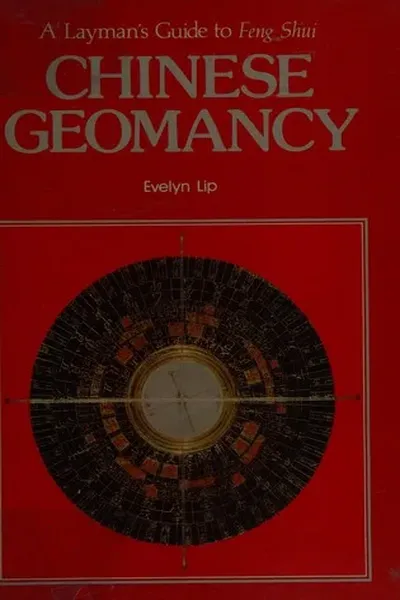





More Free Occult Philosophy Books
View all →