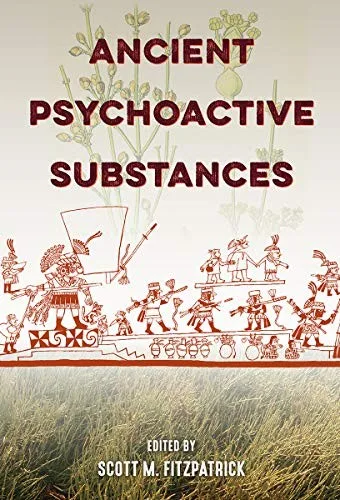
Ancient Psychoactive Substances
 71
71

Ancient Psychoactive Substances
Scott M. Fitzpatrick's Ancient Psychoactive Substances offers a welcome antidote to the more sensationalist accounts of entheogen use in antiquity. The author grounds his exploration in solid archaeological and ethnobotanical evidence, presenting a case for the integral role these substances played in societal structures, from shamanic rituals to early religious practices. A particular strength lies in Fitzpatrick's measured approach to interpreting ambiguous evidence, such as the analysis of residues found on ancient pottery shards, which he presents with appropriate scholarly caution. While the book is commendably thorough, some readers might find the dense academic prose occasionally impedes the narrative flow. The chapter discussing the challenges of archaeobotanical identification, though crucial, could benefit from more accessible explanations for the non-specialist. Nevertheless, Fitzpatrick successfully demonstrates that understanding ancient cultures requires acknowledging the profound impact of psychoactive flora. This is an essential, if demanding, contribution to the field.
📝 Description
71
Scott M. Fitzpatrick's 2023 book examines entheogenic compounds in early human cultures.
Scott M. Fitzpatrick's "Ancient Psychoactive Substances" meticulously reconstructs the historical use of plants and fungi that induce altered states of consciousness. The author draws on archaeological evidence, ethnographic accounts, and textual analysis to support his arguments. Fitzpatrick moves beyond simple explanations to detail the complex social, ritualistic, and spiritual roles these substances played in various cultures across different times and places.
The book acknowledges the difficulties in interpreting direct evidence and stresses the need for interdisciplinary research. Fitzpatrick situates his work within the mid-20th century study of ancient psychoactive substances, a field influenced by figures like R. Gordon Wasson. He contributes to a more informed understanding by critically assessing earlier research and employing firmer evidential grounding, particularly concerning archaeological findings like residue analysis and iconography.
This book engages with a long-standing interest in the role of mind altering substances within spiritual traditions. While the study of entheogens in antiquity has gained academic rigor, it touches upon themes central to shamanism and pagan practices. Fitzpatrick's approach grounds these discussions in material evidence, offering a scholarly perspective on phenomena often explored in more speculative esoteric circles. It provides a research based counterpoint to less evidence driven narratives concerning ancient ritual and consciousness.
💡 Why Read This Book?
• Gain an evidence-based understanding of how psychoactive substances were integrated into ancient societies, moving beyond myth and speculation, as detailed in the examination of archaeobotanical evidence. • Learn about the rigorous methodologies required to interpret findings related to ancient entheogenic use, such as residue analysis techniques discussed in the text. • Appreciate the complex social and ritualistic functions these substances served in prehistory, challenging simplistic notions of their purpose, as presented through case studies of diverse cultures.
⭐ Reader Reviews
Honest opinions from readers who have explored this book.
❓ Frequently Asked Questions
What kind of evidence does Scott M. Fitzpatrick use to support claims about ancient psychoactive substance use?
Fitzpatrick draws upon a range of evidence, including archaeological finds like residue analysis on pottery and plant remains, textual references from ancient writings, and ethnographic parallels from contemporary indigenous cultures.
Does the book focus on specific regions or offer a global perspective?
The book provides a broad perspective, examining evidence from various regions across the ancient world, including the Americas, Europe, and Asia, to illustrate the widespread nature of psychoactive substance use.
Is this book suitable for someone new to the topic of ancient entheogens?
While informative, the book is written with an academic audience in mind. Readers new to the topic might benefit from some background knowledge in archaeology or anthropology to fully appreciate the detailed analysis presented.
What are some of the challenges in studying ancient psychoactive substance use?
Challenges include the ephemeral nature of organic materials, the difficulty in definitively identifying plant species from fragments, and the risk of projecting modern interpretations onto ancient practices. Fitzpatrick addresses these extensively.
When was Ancient Psychoactive Substances first published?
The book was first published on March 17, 2020. This publication date situates it within contemporary scholarly discussions on the subject.
Does Fitzpatrick discuss the spiritual or shamanic aspects of ancient substance use?
Yes, a significant portion of the book is dedicated to exploring the integral role psychoactive substances played in shamanic practices, rituals, and the development of early religious beliefs across different cultures.
🔮 Key Themes & Symbolism
Archaeological Interpretation
Fitzpatrick emphasizes the critical need for rigorous interpretation of archaeological evidence related to psychoactive substances. This involves careful analysis of plant remains, residue analysis on artifacts like pottery, and consideration of iconography. The work highlights how subtle clues, such as specific vessel shapes or residues, can suggest ritualistic use, moving beyond mere speculation. It underscores the importance of interdisciplinary methods, combining archaeological data with ethnobotanical knowledge and historical texts to build a coherent picture of past practices.
Cultural Integration of Entheogens
The book posits that psychoactive substances were not isolated phenomena but were deeply interwoven into the fabric of ancient societies. Fitzpatrick explores their roles in shamanism, healing ceremonies, religious rites, and even social cohesion. He illustrates how specific plants and fungi were integrated into established cultural frameworks, influencing worldview, mythology, and social structure. This theme counters the idea of ancient substance use as solely recreational, focusing instead on its functional significance within diverse cultural contexts.
Methodological Challenges
A central theme is the inherent difficulty in definitively proving ancient psychoactive substance use. Fitzpatrick addresses the limitations of current scientific techniques and the potential for misinterpretation. He discusses the challenges of identifying plant species from fragmented archaeological samples and the need to differentiate between accidental contamination and intentional use. The work advocates for a cautious, evidence-based approach, acknowledging where definitive conclusions cannot be drawn, thereby fostering a more scientifically sound understanding.
Global Distribution
Ancient Psychoactive Substances demonstrates the widespread presence of entheogenic plant and fungi use across continents and throughout prehistory. Fitzpatrick presents evidence from various geographical locations, illustrating that this phenomenon was not confined to a single region or culture. This global perspective highlights a shared aspect of human history, suggesting a common thread in humanity's exploration of altered states of consciousness through botanical means, even in geographically disparate societies.
💬 Memorable Quotes
Direct passages from the work, attributed to the author.
“The interpretation of evidence for psychoactive use in the past remains a complex challenge.”
— This statement captures the book's core methodological stance, acknowledging the difficulties in definitively proving ancient entheogen use and the need for careful, evidence-based analysis.
“Archaeological data must be considered alongside ethnographic parallels.”
— Fitzpatrick stresses that understanding past practices requires looking at both material remains and the documented uses of similar substances by contemporary indigenous groups, providing a richer context.
“Residue analysis offers a direct avenue for identifying ancient substance consumption.”
— This highlights a key scientific technique employed in the study, pointing to the chemical traces left by consumed substances as crucial evidence for their presence in ancient contexts.
“Iconographic representations can provide clues but require cautious interpretation.”
— Fitzpatrick suggests that images from antiquity may depict or allude to psychoactive substance use, but warns against reading too much into them without corroborating evidence.
“The integration of psychoactive plants into ritual systems was common across diverse cultures.”
— This interpretation underscores the book's argument that entheogens played a significant, often ritualistic, role in the development and practice of ancient spiritual and social traditions globally.
🌙 Esoteric Significance
Tradition
While not strictly a work of esoteric doctrine, Ancient Psychoactive Substances informs esoteric traditions by providing a scholarly foundation for understanding the historical use of entheogens in ritual and spiritual practices. It bridges the gap between academic archaeology and the historical interest in altered states of consciousness found in Hermeticism, shamanism, and various forms of nature-based spirituality. The work validates, through empirical research, the ancient connection between specific botanicals and profound subjective experiences, a concept central to many esoteric paths seeking direct spiritual insight.
Symbolism
The book implicitly touches upon the symbolism inherent in psychoactive plants themselves. For instance, the mushroom, a recurring motif in discussions of ancient entheogens, often symbolizes transformation, rebirth, and connection to the chthonic or subterranean realms – concepts deeply resonant within esoteric symbolism. Similarly, the specific properties of plants used for their mind-altering effects can be seen as symbolic representations of divine power or access to hidden knowledge, aligning with the esoteric pursuit of gnosis and illumination.
Modern Relevance
Contemporary thinkers and practitioners in fields ranging from psychedelic therapy research to modern shamanic traditions draw heavily on the historical understanding that Fitzpatrick's work helps to solidify. Neo-shamanic movements and individuals exploring altered states for personal growth or spiritual insight often look to historical precedents. The book's rigorous approach provides a critical framework for understanding the cultural context and potential applications of entheogens, influencing discussions on responsible use and the historical roots of consciousness exploration within various contemporary spiritual and therapeutic movements.
👥 Who Should Read This Book
• **Archaeologists and Anthropologists:** To gain a comprehensive overview of the methodologies and evidence used to study entheogenic practices in ancient societies. • **Students of Religion and Spirituality:** To understand the historical role of psychoactive substances in the formation of early religious beliefs and shamanic traditions. • **Researchers of Consciousness Studies:** To explore the historical and cross-cultural dimensions of altered states of consciousness and their facilitators.
📜 Historical Context
The study of ancient psychoactive substances, significantly advanced by figures like R. Gordon Wasson in the mid-20th century, entered a more rigorous phase with works like Scott M. Fitzpatrick's in the 2020s. This period saw a reaction against earlier, more speculative theories, emphasizing empirical evidence. Fitzpatrick's book emerged in an era where archaeological science, particularly archaeobotany and residue analysis, offered new tools for investigation. He engages with contemporary scholars debating the interpretation of ambiguous findings, such as cave paintings or artifact residues, differentiating his approach from earlier, less critical examinations. The reception of such studies has often been polarized, with some scholars embracing new insights into ritual and consciousness, while others remain cautious about overstating the evidence, reflecting an ongoing intellectual current in the archaeology of religion and altered states.
📔 Journal Prompts
The integration of specific psychoactive plants into ancient ritual systems.
Archaeological interpretation challenges for entheogenic evidence.
The global distribution of ancient entheogen use.
The role of residue analysis in identifying ancient consumption.
Comparison of early ritualistic substance use with modern practices.
🗂️ Glossary
Entheogen
A psychoactive substance used in a religious or shamanic context, believed to facilitate spiritual experiences or communion with the divine.
Psychoactive Substance
Any chemical substance that changes brain function and affects mood, perception, consciousness, cognition, and behavior.
Archaeobotany
The study of plant remains from archaeological sites to understand past human interactions with plants, including their use for food, medicine, and ritual.
Residue Analysis
Scientific techniques used to detect and identify chemical traces of substances (like plant compounds or toxins) found on archaeological artifacts, such as pottery or tools.
Ethnographic Parallel
A comparison between cultural practices or beliefs observed in different societies, particularly using contemporary indigenous practices to interpret ancient ones.
Iconography
The visual images and symbols used in a work of art or arising from a particular tradition, often used to interpret cultural meanings.
Shamanism
A practice characterized by a practitioner who is believed to be able to heal and communicate with the spirit world, often through altered states of consciousness.