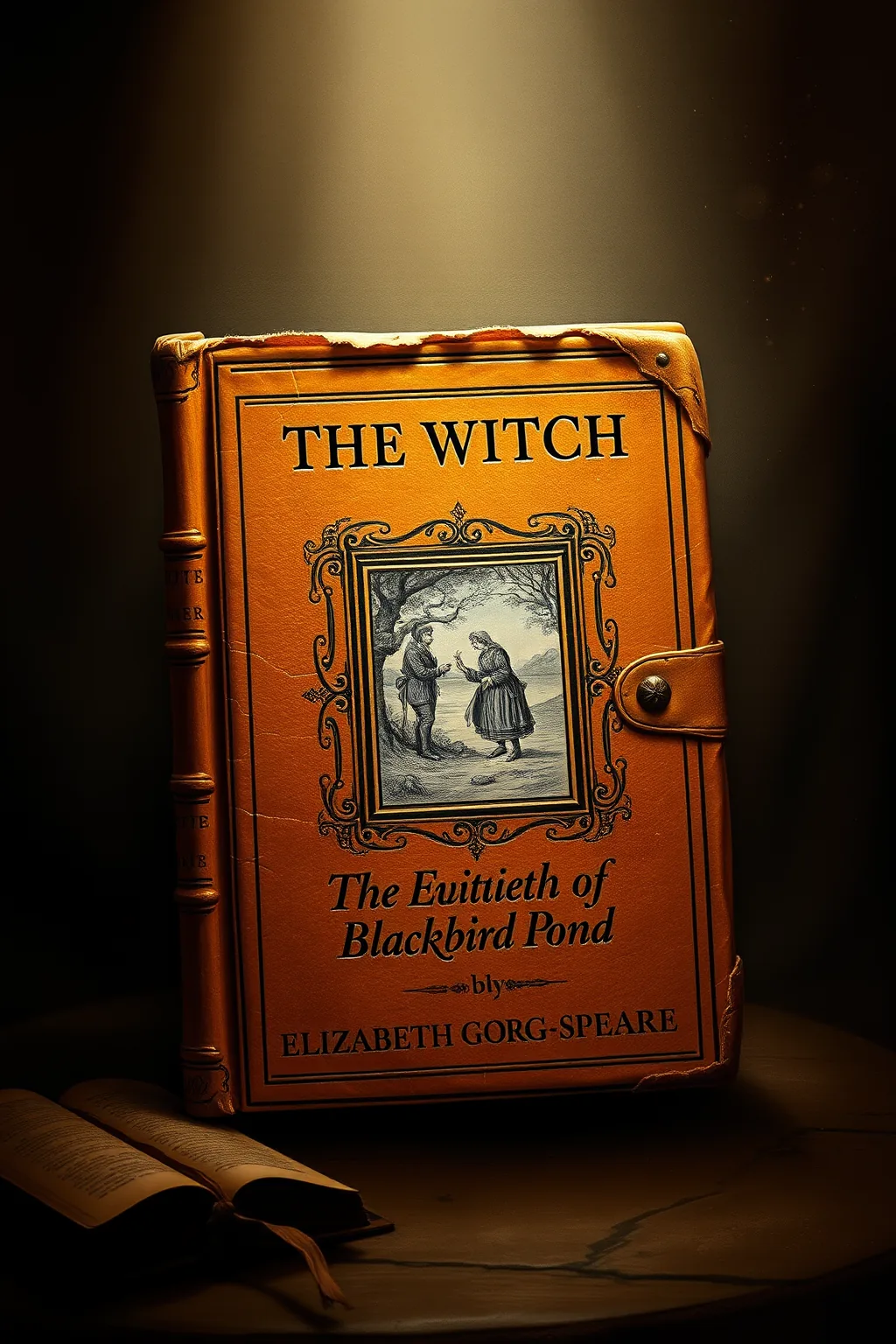
The Witch of Blackbird Pond
 71
71

The Witch of Blackbird Pond
Speare's "The Witch of Blackbird Pond" offers a compelling, if somewhat predictable, portrait of an outsider navigating the suffocating conformity of 17th-century Puritan society. Kit Tyler's journey from the sun-drenched ease of Barbados to the grim austerity of Wethersfield is rendered with palpable detail, particularly her fraught interactions with her aunt and uncle and her budding, forbidden friendship with Hannah Tupper. The novel's strength lies in its vivid depiction of colonial life and the pervasive fear that permeated the community, especially concerning accusations of witchcraft. However, the character of Kit, while spirited, occasionally feels like a modern sensibility transplanted into historical dress, making her rebellion feel less organic to the era than perhaps intended. A notable passage is Kit's defense of Hannah, showcasing her nascent courage against overwhelming social pressure. Ultimately, the book serves as a solid, accessible entry into historical fiction with a clear moral compass.
📝 Description
71
Elizabeth George Speare's 1958 novel depicts a 1687 Connecticut Colony gripped by suspicion.
Kit Tyler arrives in Wethersfield, Connecticut, in 1687, a world away from her privileged life in Barbados. Orphaned, she must now live with her aunt and uncle in a Puritan community that values strict conformity. Kit finds this new society stifling, its austere religious climate a stark contrast to the freedom she knew.
Her struggles to adapt are amplified by her association with Hannah Tupper, a woman living apart from the village and accused of witchcraft. Kit's own differences, her Barbados upbringing, and her independent spirit make her an object of suspicion. The novel examines Kit's journey as she navigates this rigid environment and learns to stand by her convictions.
Speare's work is set during a time when the colonies were still defining their identity. The fear of witchcraft, though past its peak after the Salem trials, still influenced community life. The narrative captures the tension between individual freedom and societal control, as well as the prejudices that arise from fear and misunderstanding.
While not overtly occult, the novel engages with the historical period's deep-seated anxieties surrounding witchcraft and perceived 'otherness.' The fear of witchcraft in 17th-century New England reflects a broader cultural preoccupation with unseen forces, divine judgment, and the boundaries of acceptable behavior. Hannah Tupper, the accused witch, represents an archetype of the wise woman or outsider figure often found in folklore and esoteric traditions, someone who lives in harmony with nature but is misunderstood and feared by the mainstream society. The novel thus touches on the societal mechanisms for dealing with perceived threats to order, whether those threats are real or imagined.
💡 Why Read This Book?
• Gain insight into the rigid social and religious structures of 1687 Connecticut, understanding the daily life and anxieties of colonists like Kit Tyler. • Explore the societal fear of witchcraft and its impact on individuals, exemplified by the ostracization of Hannah Tupper and its effect on Kit. • Witness a character's struggle for self-acceptance and courage in the face of intense pressure to conform, as Kit navigates her identity in Wethersfield.
⭐ Reader Reviews
Honest opinions from readers who have explored this book.
❓ Frequently Asked Questions
What historical period does "The Witch of Blackbird Pond" depict?
The novel is set in 1687 in the Puritanical Connecticut Colony, specifically in Wethersfield, offering a glimpse into the social, religious, and political climate of early colonial America.
Who is Hannah Tupper in the book?
Hannah Tupper is an elderly Quaker woman living in isolation near Blackbird Pond. She is misunderstood and feared by the Puritan community, who label her a witch, but becomes a kind and wise friend to Kit.
What is the main conflict Kit Tyler faces?
Kit's primary conflict is her struggle to adapt to the strict, judgmental Puritan society of Wethersfield after growing up in the more liberal environment of Barbados, leading to clashes with her aunt and uncle and accusations of witchcraft.
Is 'The Witch of Blackbird Pond' based on a true story?
While the novel is fictional, it is historically grounded. It draws on the documented fears and practices surrounding witchcraft accusations prevalent in colonial New England during the late 17th century.
What themes are explored in 'The Witch of Blackbird Pond'?
The book explores themes of religious intolerance, conformity versus individuality, prejudice, the courage to be different, and the challenges of adapting to new environments.
What is the significance of Blackbird Pond in the story?
Blackbird Pond is a natural boundary and a place of refuge, particularly for Hannah Tupper. It represents a space outside the strictures of Puritan society, where Kit can find solace and form her unconventional friendship.
🔮 Key Themes & Symbolism
Conformity and Individuality
The novel powerfully contrasts the rigid expectations of Puritan society with Kit Tyler's innate individuality. Wethersfield demands adherence to strict religious doctrines and social norms, viewing any deviation as potentially sinful or dangerous. Kit, accustomed to the freer ways of Barbados, finds herself constantly at odds with these expectations, her spirited nature clashing with the prevailing atmosphere of austerity. Her struggle highlights the immense pressure to conform and the personal cost of maintaining one's identity against societal dictates. The fear of witchcraft itself is a manifestation of this, as deviation from the norm can easily lead to accusations and ostracization.
Prejudice and Fear
Fear is a driving force in the Connecticut Colony, particularly the fear of the unknown and the 'other.' This manifests most acutely in the community's treatment of Hannah Tupper, who lives apart and adheres to Quaker beliefs, making her an easy target for accusations of witchcraft. Kit's willingness to look beyond the rumors and see Hannah's kindness exposes the baselessness of such prejudice. The novel illustrates how fear can warp perception, leading to the persecution of innocent individuals and the creation of an oppressive social environment where suspicion thrives.
Adaptation and Resilience
Kit Tyler's arrival in Wethersfield marks a profound challenge to her adaptability. She must learn to navigate a world vastly different from her upbringing, facing not only a new climate and social customs but also the loss of her family and familiar comforts. Her journey is one of resilience, as she grapples with loneliness, misunderstanding, and the constant threat of disapproval. Her relationships, particularly with Hannah and later with Prudence, become crucial anchors, allowing her to find her footing and develop inner strength. The narrative emphasizes the human capacity to endure and find one's place even in the most alienating circumstances.
The Role of Women
The novel provides a window into the circumscribed lives of women in 17th-century Puritan society. Women were expected to be pious, subservient, and focused on domestic duties, with little agency or public voice. Kit's unconventional upbringing and spirited personality challenge these norms. The portrayal of Hannah Tupper, an independent woman living outside societal expectations, further explores the limitations and potential dangers faced by women who did not fit the mold. The story implicitly critiques a system that sought to control female behavior and expression so rigidly.
💬 Memorable Quotes
Direct passages from the work, attributed to the author.
“Her aunt was not a kind woman. She was a stern, unbending woman.”
— This observation about Aunt Rachel immediately establishes the tense domestic atmosphere Kit enters. It signals that her new home will be a place of strict rules and emotional distance, contrasting sharply with her memories of Barbados.
“Kit remembered the Barbadian girls. They were not afraid of anything. They were not afraid of the dark, nor of the sea, nor of the devil himself.”
— This reflection highlights Kit's fundamental difference from the Wethersfield girls. It underscores her upbringing in a culture perceived as more open and less fearful, setting the stage for her internal conflict and the societal judgments she will face.
“It was like living in a prison.”
— Kit's internal thought about her new life in Wethersfield vividly conveys her sense of confinement and despair. It emphasizes the stark contrast between her former freedom and the oppressive atmosphere she now endures.
“The witch of Blackbird Pond was not a witch at all, but a kind old woman.”
— This realization, central to Kit's developing understanding, directly challenges the community's prejudiced beliefs. It marks a turning point in her empathy and her ability to discern truth beyond societal condemnation.
💡 Key Ideas
Editorial paraphrase of the work's core concepts — not direct quotes.
The law was the law, and the minister had said it was God's will.
This line captures the absolute authority of religious and legal doctrine in the Puritan community. It explains the pervasive fear and the difficulty of challenging established norms, even when they seem unjust.
🌙 Esoteric Significance
Tradition
While not explicitly aligned with a single esoteric tradition, "The Witch of Blackbird Pond" touches upon themes relevant to folk magic and animism often present in pre-Christian and syncretic spiritual practices. Hannah Tupper's connection to nature and her role as a healer, though demonized by the Puritanical worldview, carries the archetype of the wise woman or hedge witch found in various European folk traditions. Her quiet wisdom and understanding of natural remedies position her as a figure operating outside the rigid dogma of the time, hinting at older, more intuitive forms of spirituality.
Symbolism
The 'witch' figure, embodied by Hannah Tupper, symbolizes a connection to nature and intuitive knowledge, contrasted with the dogmatic, fear-based religion of the Puritans. Blackbird Pond itself functions as a liminal space, a borderland between the wild, natural world and the structured, civilized settlement, representing freedom and refuge from societal constraints. Kit's own journey from a seemingly carefree life in Barbados to the oppressive environment of Connecticut symbolizes a descent into a more challenging, perhaps more spiritually formative, reality where she must confront societal judgment and her own inner strength.
Modern Relevance
Contemporary neo-pagan movements and witchcraft practitioners often find resonance in the figure of Hannah Tupper, seeing her as an archetype of the persecuted wise woman. The novel's exploration of how fear and ignorance lead to the demonization of those perceived as 'other' remains relevant in discussions of social justice and the dangers of religious or ideological extremism. The theme of maintaining one's authentic self against societal pressure continues to inspire those seeking spiritual or personal freedom in an often conformist world.
👥 Who Should Read This Book
• Readers interested in the social history and religious climate of 17th-century New England, particularly the dynamics of Puritan settlements and the fear of witchcraft. • Young adults and adults seeking coming-of-age narratives that explore themes of identity, resilience, and the courage to stand apart from societal norms. • Those drawn to character-driven historical fiction that examines prejudice, intolerance, and the formation of community bonds under pressure.
📜 Historical Context
Published in 1958, "The Witch of Blackbird Pond" emerged during a period of renewed interest in American colonial history, often filtered through a lens of national identity and foundational myths. The late 1950s saw a cultural landscape where historical fiction, particularly that focused on early America, was popular. Speare's work arrived in the wake of McCarthyism, a period marked by suspicion and accusations, which may have subtly informed the novel's exploration of mass hysteria and unfounded accusations of witchcraft. While the Salem Witch Trials occurred in 1692, Speare sets her story a few years prior in 1687, capturing the lingering atmosphere of fear and religious rigor that pervaded New England. Contemporary authors like John Steinbeck were exploring American history, though often from a different critical perspective. The book received the prestigious Newbery Medal in 1959, solidifying its place as a significant contribution to children's literature and historical fiction.
📔 Journal Prompts
Kit's arrival in Wethersfield
Hannah Tupper's perceived 'witchcraft'
The contrast between Barbados and Connecticut
The concept of 'the other' in Puritan society
Prudence's journey from fear to learning
🗂️ Glossary
Puritan
Members of a religious reform movement within the Church of England that emerged in the 16th century. They sought to simplify Anglicanism and were known for their strict moral codes and devout beliefs, leading many to emigrate to colonial America.
Quaker
Followers of the Religious Society of Friends, a Christian movement founded in 17th-century England. They emphasize direct experience of God, inner light, pacifism, and equality, often facing persecution for their beliefs.
Witchcraft
In the context of the novel, this refers to the belief that individuals, often women, made pacts with the devil to perform malevolent acts. Accusations of witchcraft in colonial America led to severe persecution and execution.
Colony
A territory under the immediate political control of another country, typically a distant one. The novel is set in the English colony of Connecticut in North America.
Barbados
An island nation in the Caribbean. In the 17th century, it was a British colony known for its plantation economy and more relaxed social customs compared to Puritan New England.
Wethersfield
A town in Connecticut, established in 1634. It served as one of the early English settlements in the Connecticut Colony and is the primary setting for Kit's life in New England.
Austerity
A severe and strict manner or condition, often characterized by simplicity and lack of luxury. This describes the prevailing atmosphere and lifestyle in the Puritan colony of Wethersfield.
🔮 Readers Also Liked
Browse all →









More by Elizabeth George Speare
All books →
More Free Occult Philosophy Books
View all →