Palmistry
 83
83

Palmistry
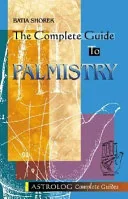
Batia Shorek’s “Palmistry” provides a refreshingly direct approach to a subject often clouded by mysticism and opaque jargon. Its strength lies in its methodical presentation, particularly how it uses illustrations to demystify the various lines and mounts. Shorek doesn't shy away from the classic interpretations, offering a solid grounding in traditional chiromancy. However, the book's focus on the "classic approach" means it offers little in the way of contemporary reinterpretation or psychological layering that some modern readers might seek. A passage detailing the interpretation of a broken Life Line, for instance, is clear and illustrative but lacks deeper speculative context beyond immediate life events. Ultimately, Shorek delivers a functional, well-illustrated primer on palmistry, prioritizing foundational knowledge over philosophical exploration.
📝 Description
83
Batia Shorek's 1998 "Palmistry" offers a clear guide to reading hands.
This book systematically breaks down the art of chiromancy, starting with basic principles and moving to more complex interpretations. Shorek aims for clarity, making the subject's core ideas accessible to newcomers. The guide is for anyone interested in using hand features like lines, mounts, and shapes for personal understanding. It suits both complete beginners and those with some existing knowledge looking to confirm their grasp of traditional palmistry. The inclusion of many visual aids benefits readers who learn best by seeing.
The text dissects the hand, detailing the major and minor lines, the mounts at the base of the fingers, and the overall hand shape and texture. It covers the meanings of the Heart Line, Head Line, Life Line, and Fate Line, as well as various markings like stars, crosses, and islands. Hand shapes, such as square, spatulate, or conic, are also interpreted, contributing to a complete method of palm reading.
Published in 1998, Shorek's "Palmistry" appeared during a time of renewed interest in esoteric subjects, partly aided by the nascent internet. The book draws on centuries of palmistry practice and foundational texts. It provides a streamlined manual for a contemporary audience. This work sits within a wider late 20th-century trend toward divination and self-examination, offering a practical approach to an ancient divinatory art.
💡 Why Read This Book?
• Gain a clear understanding of the major palm lines like the Heart Line and Head Line, as detailed in Shorek's structured explanations, enabling you to perform basic readings. • Learn to interpret the significance of the hand's mounts, such as the Mount of Venus and the Mount of Jupiter, as presented with visual aids in the 1998 edition. • Grasp the foundational theories of classic palmistry, including the meaning of hand shapes and common markings, as systematically laid out by Shorek.
⭐ Reader Reviews
Honest opinions from readers who have explored this book.
❓ Frequently Asked Questions
What are the basic lines of palmistry discussed in Batia Shorek's book?
Batia Shorek's "Palmistry" focuses on the primary lines: the Life Line, Head Line, Heart Line, and Fate Line. The book meticulously explains the traditional interpretations attributed to each, along with their variations and significant markings.
Does the book 'Palmistry' by Batia Shorek include many illustrations?
Yes, the original blurb explicitly states that "The Complete Guide to Palmistry" includes a "large number of illustrations and pictures that make it easy to grasp and learn the material."
Is Batia Shorek's 'Palmistry' suitable for complete beginners?
Absolutely. The book is designed to address the "basic theories of palmistry" in a "clear and easily understood manner," making it an ideal starting point for those with no prior knowledge of the subject.
When was Batia Shorek's 'Palmistry' first published?
Batia Shorek's "Palmistry" was first published in 1998, offering a contemporary guide to this ancient practice.
What is the 'classic approach' to palmistry mentioned in the book's description?
The 'classic approach' refers to the traditional methods and interpretations of palmistry that have been developed over centuries, focusing on the established meanings of lines, mounts, and hand shapes.
Can I learn to read palms from this book without prior experience?
Yes, the book is structured to guide beginners through the fundamental theories and practical application of palmistry, aided by its numerous illustrations.
🔮 Key Themes & Symbolism
The Language of the Hand
This work deciphers the palm as a cartographic map of human potential and experience. It moves beyond mere fortune-telling, presenting the hand's features—lines, mounts, and shape—as indicators of character, innate talents, and life's general trajectory. The meticulous detail on the major lines like the Life, Head, and Heart lines, alongside secondary markings, forms the core of this linguistic system, offering a structured framework for self-understanding.
Classic Chiromantic Principles
Shorek grounds her teachings firmly in the established traditions of palmistry, eschewing speculative modern interpretations for time-tested wisdom. The emphasis is on the "classic approach," meaning the book adheres to the interpretations that have been passed down through generations of chiromancers. This focus ensures a robust introduction to the historical underpinnings of the practice, providing a solid foundation before exploring more nuanced or contemporary views.
Visual Learning and Accessibility
A significant strength of this volume is its commitment to visual learning. The "large number of illustrations and pictures" are not mere embellishments but integral tools for comprehension. They serve to clarify the often-subtle distinctions between different line formations, mount elevations, and hand shapes, making the complex subject of palmistry accessible and manageable for students of all levels.
Character and Potential Mapping
The book frames palmistry not just as a predictive art but as a profound tool for self-awareness and personal development. By examining the hand, readers are encouraged to understand their inherent strengths, potential challenges, and unique predispositions. The interpretation of the Head Line, for instance, is presented as a key to understanding cognitive style and mental faculties.
💬 Memorable Quotes
Direct passages from the work, attributed to the author.
“The book addresses the basic theories of palmistry according to the classic approach in a clear and easily understood manner.”
— This statement expresses the book's primary objective: to explain palmistry for a broad audience by adhering to established, traditional methods rather than introducing novel or obscure theories.
“The Complete Guide to Palmistry includes a large number of illustrations and pictures that make it easy to grasp and learn the material.”
— This highlights the pedagogical strategy employed by Shorek, emphasizing the visual aids as crucial components for effective learning and comprehension of complex palmistry concepts.
“Interpretation of the Life Line.”
— The book systematically breaks down the meaning attributed to the Life Line, exploring its length, curvature, and any breaks or markings as indicators of vitality and significant life phases.
“Understanding the Mounts of the Hand.”
— Shorek dedicates sections to the fleshy mounds at the base of the fingers (e.g., Mount of Venus, Mount of Jupiter), explaining their development and significance in relation to personality traits and energies.
“The meaning of the Heart Line.”
— This section likely details how the Heart Line reflects emotional capacity, romantic inclinations, and the general state of one's emotional life, according to classical palmistry.
🌙 Esoteric Significance
Tradition
This work primarily aligns with the Western Hermetic tradition, specifically the branch concerned with divination and physiognomy. It draws heavily on the established corpus of chiromantic knowledge that has been integrated into Hermetic studies for centuries. While not explicitly Kabbalistic or Gnostic, its focus on reading divine patterns within the human form connects it to a broader understanding of the microcosm reflecting the macrocosm, a core Hermetic tenet.
Symbolism
Key symbols include the major lines—Life, Head, and Heart—each representing fundamental aspects of human existence: vitality and physical well-being (Life Line), intellect and mental processes (Head Line), and emotions and relationships (Heart Line). The mounts, such as the Mount of Venus (love, sensuality) and Mount of Jupiter (ambition, leadership), are also significant symbolic areas, representing different psychological energies and potentials.
Modern Relevance
Contemporary practitioners of divination, self-help coaches, and those interested in comparative spirituality often turn to foundational texts like Shorek's to understand the roots of palmistry. Its clear, illustrated format makes it a valuable resource for anyone exploring psychological archetypes as expressed through physical form, a concept relevant in modern archetypal psychology and mindfulness practices.
👥 Who Should Read This Book
• Beginners interested in divination seeking a clear, structured introduction to palm reading, avoiding overly complex or esoteric language. • Students of esoteric history looking to understand the practical application and popularization of chiromancy in the late 20th century. • Individuals interested in self-reflection and character analysis who want a visual and systematic method for exploring personal traits and potentials.
📜 Historical Context
Batia Shorek's "Palmistry," first published in 1998, emerged during a period of renewed public interest in esoteric practices, partly fueled by the burgeoning internet and a cultural shift towards self-exploration. While the book itself presents a distillation of classic palmistry, its publication context places it within a lineage that traces back to figures like William John Warner (Cheiro) in the late 19th and early 20th centuries, who popularized and systematized chiromancy for a wider audience. Shorek’s work can be seen as a practical manual designed for accessibility, contrasting with the more academic or philosophical treatments of divination found in earlier esoteric movements like Theosophy. It doesn't directly engage with contemporaries like, for example, the astrological writings of Liz Greene, but it serves a similar function of providing accessible esoteric knowledge. The book's straightforward approach likely appealed to those seeking concrete methods in an era where alternative spiritualities were gaining traction.
📔 Journal Prompts
The Head Line's clarity and length.
The significance of the Mount of Venus.
Interpreting the primary lines of the hand.
The texture and shape of the palm.
The relationship between hand shape and personality.
🗂️ Glossary
Chiromancy
The practice of interpreting the lines, mounts, and other features of the palm to understand character, predict future events, or gain insight into one's life.
Life Line
A major line on the palm, typically curving around the base of the thumb, traditionally interpreted as relating to vitality, physical health, and major life events.
Head Line
A prominent line running horizontally across the palm, generally believed to indicate intellectual abilities, mental processes, and communication style.
Heart Line
The uppermost horizontal line on the palm, conventionally associated with emotional disposition, romantic relationships, and heart health.
Mounts
The fleshy, raised pads at the base of the fingers and on the palm, named after classical deities (e.g., Mount of Venus, Mount of Jupiter), each associated with specific personality traits and energies.
Fate Line
A vertical line, often found in the center of the palm, believed to represent one's sense of purpose, career path, and significant life influences.
Markings
Specific symbols or formations on the palm, such as stars, crosses, squares, or islands, which modify or emphasize the meaning of the lines and mounts.
This book appears in 1 collection
🔮 Readers Also Liked
Browse all →









From the “Palmistry” Collection
View all →




More Free Occult Philosophy Books
View all →