The World in Your Hands
 78
78

The World in Your Hands
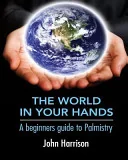
John Harrison’s ‘The World in Your Hands’ presents palmistry with a refreshing lack of pretension. Its strength lies in its directness and the generous use of clear, color hand illustrations, which significantly aid in identifying the subtle distinctions between various lines and mounts. Unlike many texts that bury practical advice within dense historical or philosophical discourse, Harrison gets straight to the point. A particularly effective section details the interpretation of the Heart Line, offering nuanced meanings for its various formations and breaks. However, the book’s straightforward approach, while beneficial for beginners, might leave those seeking deeper theoretical underpinnings wanting more. The limited exploration of the interplay between different lines and mounts feels somewhat superficial at times. Despite this, for the novice eager to begin reading hands immediately, Harrison provides a solid, visually supported foundation. It’s a functional primer that delivers on its promise of clarity.
📝 Description
78
John Harrison's 1995 book, 'The World in Your Hands,' offers a clear guide to palmistry.
Published in 1995, 'The World in Your Hands' by John Harrison provides a direct method for learning palmistry. Harrison avoids complex terminology, focusing instead on practical application suitable for newcomers. The book aims to simplify the practice, helping readers understand how to interpret the lines and mounts of the hand. It is structured for easy reference, with clear color images of hands that highlight significant features for quick identification and meaning.
This guide is specifically written for those new to studying palmistry. It appeals to individuals curious about the symbolic language of their hands and who want a straightforward introduction. Readers interested in practical divination, self discovery through physiognomy, or exploring less common spiritual paths will find this book a useful starting point. It suits learners who prefer visual aids and simple explanations over dense theoretical discussions.
Released in 1995, 'The World in Your Hands' appeared during a resurgence of interest in New Age and esoteric subjects. Following the spiritual movements of prior decades, the 90s saw a demand for accessible introductions to mystical arts. Harrison's work fit this trend by making palmistry available to a general audience, differing from more academic or historically detailed texts. Its emphasis on practical instruction aligned with a desire for personal empowerment through esoteric knowledge, moving away from purely philosophical approaches.
💡 Why Read This Book?
• You will learn to quickly identify and interpret the primary lines of the hand, such as the Head Line and Heart Line, using clear color diagrams, enabling immediate practical application of palmistry. • You will gain an understanding of the palm’s mounts, like the Mount of Venus and Mount of Jupiter, and their specific planetary associations as detailed in Harrison's system, offering a foundational element for character analysis. • You will discover how hand shapes and finger proportions, as presented in the book's comparative charts, offer distinct personality indicators, providing a unique visual method for self-assessment and interpersonal understanding.
⭐ Reader Reviews
Honest opinions from readers who have explored this book.
❓ Frequently Asked Questions
Is 'The World in Your Hands' suitable for someone with absolutely no prior knowledge of palmistry?
Yes, the book is specifically designed for beginners. John Harrison’s approach prioritizes clarity and uses large color images to identify key lines and mounts, making it accessible even without any previous exposure to palmistry.
When was 'The World in Your Hands' originally published?
The book was first published on April 1, 1995. This places its release within a period of renewed interest in esoteric and self-help literature.
What makes John Harrison qualified to write about palmistry?
John Harrison is presented as one of the UK's leading Palmistry Counsellors. This designation suggests significant practical experience and a recognized standing within the field of palmistry practice.
Does the book provide examples of actual hands for interpretation?
Yes, a key feature of 'The World in Your Hands' is its use of large color hand images. These visuals are organized to help readers quickly find and understand the interpretations of specific lines and features.
What kind of information can I expect to find regarding hand lines?
You can expect detailed information on identifying and interpreting major lines like the Life Line, Head Line, and Heart Line. The book explains their significance and various formations as indicators of personality and life patterns.
Are there any specific esoteric traditions 'The World in Your Hands' is based on?
While the book focuses on practical application, its methods align with Western chiromancy traditions that have roots in classical and Renaissance interpretations of hand analysis.
🔮 Key Themes & Symbolism
Line Interpretation
The core of Harrison's method revolves around deciphering the meaning embedded within the various lines gracing the palm. Key lines such as the Life Line, Head Line, and Heart Line are meticulously detailed, with their variations, lengths, and formations offering insights into an individual's vitality, intellect, and emotional landscape. The book presents these lines not as static destiny markers but as indicators of tendencies and potential pathways, encouraging readers to see them as a dynamic map of personal experience.
Mount Significance
Beyond the lines, 'The World in Your Hands' explores the significance of the fleshy mounds found at the base of the fingers and palm. These mounts, often associated with planetary influences in traditional astrology and chiromancy, are presented as indicators of character strengths and personality traits. For instance, the Mount of Venus relates to passion and vitality, while the Mount of Jupiter signifies ambition and leadership qualities. Harrison's approach helps beginners connect these physical areas to specific psychological attributes.
Hand Shapes and Types
The book categorizes hands into distinct shapes, often correlating them with classical elements or fundamental personality archetypes. This classification provides a broad framework for understanding an individual's inherent nature before examining the specifics of the lines. By examining the overall shape of the hand and the proportions of the fingers, readers can gain a preliminary assessment of core traits, such as whether someone is more grounded, intellectual, emotional, or active.
Practical Application
A driving principle of 'The World in Your Hands' is its emphasis on practical, immediate use. Harrison aims to equip readers with the tools to perform readings effectively and confidently. The book's structure, with its large, annotated illustrations and straightforward language, is designed to facilitate quick learning and application. It encourages readers to practice on their own hands and those of friends, fostering a hands-on understanding of palmistry's principles.
💬 Memorable Quotes
Direct passages from the work, attributed to the author.
“Identify which is your Heart Line, Head Line, and Life Line.”
— This directive expresses the book's foundational goal: to provide clear, actionable steps for identifying the most crucial elements of a palm reading, enabling immediate engagement with the subject.
“The good stuff, without the fluff.”
— This phrase highlights the author's intention to deliver essential palmistry knowledge directly, bypassing overly academic or esoteric explanations in favor of practical, easily digestible information.
“Unlock the secrets that your hands hold.”
— This statement frames palmistry as a key to self-discovery and understanding, suggesting that the hands contain hidden information about one's character, potential, and life path.
“Written and organised with large colour hand images identifying the important lines.”
— This emphasizes the visual learning approach of the book, indicating that the illustrations are central to the learning process, aiding quick recognition and interpretation of palm features.
“Answers and interpretations can be found quickly.”
— This speaks to the book's user-friendly design, promising efficient access to information and interpretations, making it a practical tool for reference rather than a text requiring exhaustive study.
🌙 Esoteric Significance
Tradition
Harrison's work aligns with the Western tradition of chiromancy, which has roots stretching back to classical antiquity and saw significant development during the Renaissance. While not explicitly tied to a specific esoteric order like the Golden Dawn, the book employs established conventions of line and mount interpretation that are common across various schools of Western esoteric practice. It departs from more complex systems by focusing on direct, practical interpretation for beginners, making it a more accessible entry point than, for example, Kabbalistically-infused palmistry.
Symbolism
The primary symbolism in 'The World in Your Hands' resides in the lines and mounts of the palm. The Life Line symbolizes vitality and physical energy; the Head Line represents intellect and cognitive style; the Heart Line signifies emotional capacity and relationships. The mounts, such as the Mount of Venus (love, sensuality) and the Mount of Jupiter (ambition, leadership), act as symbolic amplifiers or modifiers of the lines' meanings, representing planetary archetypes influencing character.
Modern Relevance
Contemporary practitioners of modern occultism and self-help often utilize Harrison's foundational approach. His emphasis on visual learning and clear, direct interpretation remains relevant for online courses and introductory workshops. Readers seeking practical divination skills, independent of deep theoretical study, find his methods accessible. The book's clear depiction of hand features continues to inform basic palmistry guides and apps that aim to explain the practice for a digitally-native audience.
👥 Who Should Read This Book
• Aspiring palmists seeking a clear, visually-supported introduction to reading hands, who want to move beyond theoretical concepts to practical interpretation skills. • Individuals interested in self-discovery and personal growth through esoteric tools, looking for a straightforward method to understand their own character and potential. • Hobbyists of divination and fortune-telling who desire a no-fluff guide to one of the oldest forms of physiognomy, valuing quick reference and actionable insights.
📜 Historical Context
Published in 1995, John Harrison's 'The World in Your Hands' entered a landscape where esoteric knowledge was increasingly commodified for a general audience. The preceding decades had seen a surge in interest in New Age philosophies and practices, fueled by figures like Shirley MacLaine and the broader counter-culture movement. While academic circles often viewed palmistry with skepticism, the 1980s and 90s witnessed a proliferation of accessible guides aimed at self-improvement and personal empowerment through divination. Harrison's book fits this trend, offering a practical, visually-driven approach that contrasted with the more theoretical or historically dense works found in earlier occult revivals, such as those associated with the Hermetic Order of the Golden Dawn in the late 19th century. Its straightforward presentation likely appealed to readers seeking tangible skills rather than complex metaphysical systems, distinguishing it from contemporary spiritual exploration which might have engaged with Jungian psychology or Eastern philosophies.
📔 Journal Prompts
The primary lines: How do the depicted variations of the Heart Line resonate with your own emotional expression?
Interpreting the Mount of Venus: What tendencies does its prominence (or lack thereof) suggest about your approach to connection?
Hand shape comparison: Assess if your hand shape aligns with the described elemental characteristics.
The concept of 'quick answers': How does Harrison’s approach to palmistry differ from more complex divination systems you've encountered?
Mapping your own palm: Identify and reflect on the meaning of your longest Head Line.
🗂️ Glossary
Life Line
The curved line originating near the thumb and extending around the base of the palm, typically interpreted as indicating vitality, physical health, and significant life events.
Head Line
A line across the palm, usually below the heart line, representing intellect, thinking patterns, communication style, and mental focus.
Heart Line
The uppermost horizontal line on the palm, below the fingers, which is traditionally interpreted as reflecting emotional capacity, romantic relationships, and matters of the heart.
Mounts
The fleshy, raised areas on the palm, located at the base of the fingers and palm, each associated with planetary influences and specific personality traits (e.g., Mount of Venus, Mount of Jupiter).
Chiromancy
The practice of fortune-telling or divination through the study of the palm, including lines, mounts, and hand shape. It is synonymous with palmistry.
Physiognomy
A system of judging character or disposition from external physical features, particularly the face, but also applicable to the hands in chiromancy.
Hand Shape
The overall form of the hand, often categorized by shape (e.g., square, rectangular) and associated with elemental types (Earth, Air, Fire, Water) and general personality characteristics.
This book appears in 1 collection
🔮 Readers Also Liked
Browse all →








From the “Palmistry” Collection
View all →








More Free Occult Philosophy Books
View all →