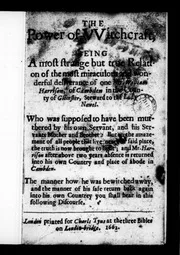
A defense of the proceedings against Jane Wenham, wherein the possibility and reality of witchcraft are demonstrated from scripture, ... By Francis Bragge, ... 1712

 81
81

A defense of the proceedings against Jane Wenham, wherein the possibility and reality of witchcraft are demonstrated from scripture, ... By Francis Bragge, ... 1712



Isolde Whitaker, Sacred Texts Editor: Francis Bragge's 1712 defense of the proceedings against Jane Wenham is a crucial, albeit controversial, text for understanding the intellectual landscape of early modern witchcraft beliefs. Bragge meticulously constructs his argument, drawing heavily on scripture to legitimize the reality and possibility of witchcraft. While rooted in a specific historical context and theological framework, the work's strength lies in its detailed dissection of belief systems and its attempt to reconcile the supernatural with divine order. It offers invaluable insights for scholars of early modern history, religious studies, and the occult, illuminating the mindset that fueled such prosecutions.
📝 Description
81
In 1712, Francis Bragge published a defense of the trials against Jane Wenham, arguing for the reality of witchcraft.
Francis Bragge's 1712 text, *A Defense of the Proceedings Against Jane Wenham*, examines the belief in witchcraft prevalent in early 18th-century England. Bragge uses scriptural interpretation and logical arguments to assert the existence of sorcery. He addresses theological texts and the social anxieties of the time, building a case for supernatural influences he believed affected human lives.
This book will appeal to readers interested in the historical background of magic, the connection between religious doctrine and folk beliefs, and humanity's ongoing efforts to comprehend the unknown. It provides a stark look at a time when the supernatural was considered an ever-present reality. The work invites contemplation on the limits of human reason and the lasting impact of deep-seated fears.
This work sits within the broader context of early modern demonology and the legal and theological justifications for prosecuting individuals accused of witchcraft. While not strictly occult or ceremonial magic, it engages with the belief in supernatural powers and the forces purportedly governing human affairs, drawing upon biblical exegesis to validate these beliefs. It reflects a period where the perceived reality of demonic influence and maleficium was a significant concern, influencing legal proceedings and public discourse.
💡 Why Read This Book?
Uncover the historical foundations of witchcraft belief through rigorous scriptural analysis. This book offers a profound look into the mindset of early 18th-century society and its grappling with the supernatural. Ideal for scholars, history enthusiasts, and those interested in the intersection of religion, law, and occult studies seeking to understand the intellectual justifications for persecution.
⭐ Reader Reviews
Honest opinions from readers who have explored this book.
❓ Frequently Asked Questions
What is the primary argument of Bragge's defense?
Bragge's primary argument is to demonstrate the possibility and reality of witchcraft, using scriptural evidence and logical reasoning to defend the legal proceedings against Jane Wenham, thereby validating the societal belief in and prosecution of witches.
What is the historical context of this book?
Published in 1712, the book emerges during a period of declining, but still present, belief in witchcraft in England. It reflects ongoing debates about the nature of evidence, divine intervention, and the role of the Church and legal system in addressing perceived supernatural threats.
Does Bragge provide actual evidence of witchcraft?
Bragge does not present empirical evidence in the modern sense. Instead, his 'evidence' is derived from his interpretation of biblical passages and theological arguments, which he uses to construct a theoretical framework for the existence and operation of witchcraft.
Who was Jane Wenham?
Jane Wenham was an elderly woman accused of witchcraft in Hertfordshire, England, in 1712. The trial generated significant public and intellectual debate, which Bragge's book directly addresses and seeks to influence.
Is this book suitable for practitioners of modern witchcraft?
While not a practical guide, the book offers historical context and insight into how witchcraft was perceived and defended by some during the early 18th century. It can be valuable for understanding historical belief systems that influenced later practices.
🔮 Key Themes & Symbolism
Scriptural Justification of Witchcraft
Bragge meticulously constructs his argument by drawing extensively from biblical texts, interpreting passages to prove that witchcraft is not only possible but a divinely acknowledged reality. He posits that scripture provides the ultimate authority for understanding the supernatural, viewing its presence as evidence of both divine judgment and the ongoing struggle between good and evil. This theme highlights the profound influence of religious doctrine on the legal and social acceptance of witchcraft accusations, framing it as a theological imperative rather than mere superstition.
The Legal and Societal Defense of Witchcraft Prosecutions
The core of Bragge's work is a defense of the legal actions taken against Jane Wenham. He argues that the proceedings were just and necessary, grounded in established legal and theological principles of the era. This theme explores the societal anxieties surrounding witchcraft and how they manifested in the justice system. Bragge aims to reassure the public and authorities that the prosecution of those accused of witchcraft is a legitimate and vital act of societal protection against malevolent spiritual forces.
The Nature of Belief and Proof in the Supernatural
Bragge grapples with the very nature of belief and how one 'proves' the existence of something as elusive as witchcraft. He champions a form of proof derived from faith and interpretation of sacred texts, contrasting it with the empirical evidence often demanded in secular matters. This theme examines the epistemological challenges of the time, exploring how intellectual and spiritual frameworks shaped what was considered valid evidence for the existence and actions of supernatural agents, particularly within a Christian worldview.
💬 Memorable Quotes
Direct passages from the work, attributed to the author.
“If we deny the Scripture, we deny God.”
— This emphasizes the absolute authority Bragge places on scripture, implying that any rejection of its testimony regarding witchcraft is a rejection of divine truth and authority.
“The very being of Witches is a fundamental Article of our Faith.”
— Here, Bragge elevates the belief in witches from a mere possibility to a core tenet of Christian faith, suggesting its denial is a heresy.
“The Devil is the great Master of Lies.”
— This highlights the perceived modus operandi of witchcraft, attributing its deceptive nature and malevolent actions to the direct influence of Satan.
“We must not be blind to the evident workings of Providence.”
— This calls for a recognition of supernatural intervention in human affairs, urging readers to see divine hand in events, including those attributed to witchcraft.
💡 Key Ideas
Editorial paraphrase of the work's core concepts — not direct quotes.
The Scripture is so full of the reality of Witches.
This quote underscores Bragge's foundational argument: that the Holy Bible itself is replete with accounts and pronouncements confirming the existence and active presence of witches.
🌙 Esoteric Significance
Tradition
This text belongs to the Christian theological tradition, specifically within its engagement with demonology and the perceived reality of spiritual warfare. While not typically classified as 'esoteric' in the modern sense of ceremonial magic or Hermeticism, its deep dive into scriptural interpretation for understanding unseen forces and its defense of the supernatural aligns with broader historical currents of occult thought that sought hidden knowledge within religious texts.
Symbolism
The primary 'symbolism' here is theological and interpretative. Bragge uses biblical narratives and pronouncements as symbolic representations of divine will and the ongoing conflict with evil. The figure of the witch, in his discourse, symbolizes a corrupted human who has entered into a pact with the ultimate antagonist, Satan. The 'proofs' he offers are symbolic interpretations of scripture, imbuing ancient texts with direct relevance to contemporary fears and legal actions, thus transforming words into tangible evidence of the supernatural.
Modern Relevance
While the direct prosecution of witches is a relic of the past, the underlying themes of Bragge's work resonate with modern discussions on belief systems, the power of narrative, and the construction of 'otherness.' His rigorous, albeit flawed, attempt to rationalize and legitimize belief in the supernatural through textual authority offers a historical lens for understanding how deeply held convictions, even when lacking empirical support, can shape societal actions and legal frameworks. It prompts reflection on how 'evidence' and 'truth' are constructed across different eras and belief systems.
👥 Who Should Read This Book
Scholars of early modern history, religious studies, and legal history will find this text indispensable for understanding the intellectual underpinnings of witchcraft accusations. Seekers of occult knowledge will appreciate its historical perspective on how the supernatural was debated and defended. Practitioners of historical witchcraft studies may gain insight into the theological arguments that once shaped perceptions of their craft. For general readers interested in the darker aspects of human belief and the evolution of societal anxieties, Bragge's work offers a compelling, if unsettling, glimpse into the past.
📜 Historical Context
Published in 1712, Francis Bragge's *A Defense of the Proceedings Against Jane Wenham* is a product of a society still deeply entrenched in a worldview where the supernatural was a tangible force. While the peak of the large-scale witch hunts had passed in England, belief in witchcraft and its attendant dangers persisted, particularly in rural areas. This period saw a complex interplay between religious dogma, legal traditions, and burgeoning rationalism. Bragge's work represents a fervent defense of older, faith-based justifications for prosecuting suspected witches, pushing back against emerging skeptical viewpoints. It reflects the intellectual anxieties of the time, seeking to reconcile divine power with human agency and the ever-present threat of malevolent spiritual influence, as evidenced by the lingering fear of 'the Devil's' pacts.
📔 Journal Prompts
How does Bragge's reliance on scripture shape his definition and understanding of witchcraft?
Analyze the societal anxieties that Bragge attempts to address and allay through his defense.
Compare Bragge's methods of 'proof' with modern standards of evidence. What are the key differences?
Consider the ethical implications of using religious texts to justify legal proceedings against individuals.
In what ways might a belief in invisible forces, as described by Bragge, influence a society's social and legal structures?
🗂️ Glossary
Demoniacal Agency
The belief that demons or the Devil actively intervene in human affairs, influencing events and individuals, often for malevolent purposes. Bragge posits this as a primary driver behind witchcraft.
Scriptural Interpretation
The practice of analyzing and explaining the meaning of biblical texts. Bragge employs a specific, often literal, interpretation to support his arguments for the existence of witchcraft.
Divine Providence
The concept that God actively governs and guides the universe and human affairs. Bragge argues that apparent 'witchcraft' is either a manifestation of divine judgment or a permitted action by malevolent forces under God's ultimate control.
Legal Proceedings
The formal actions taken in a court of law to resolve disputes or prosecute alleged offenders. Bragge is defending the specific legal actions taken against Jane Wenham.
Heresy
A belief or opinion contrary to orthodox religious doctrine. Bragge implies that denying the reality of witchcraft, as he defines it, could border on heresy.
This book appears in 2 collections
🔮 Readers Also Liked
Browse all →






More by Bragge, Francis
All books →

From the “Witchcraft” Collection
View all →






More Free Witchcraft & Paganism Books
View all →