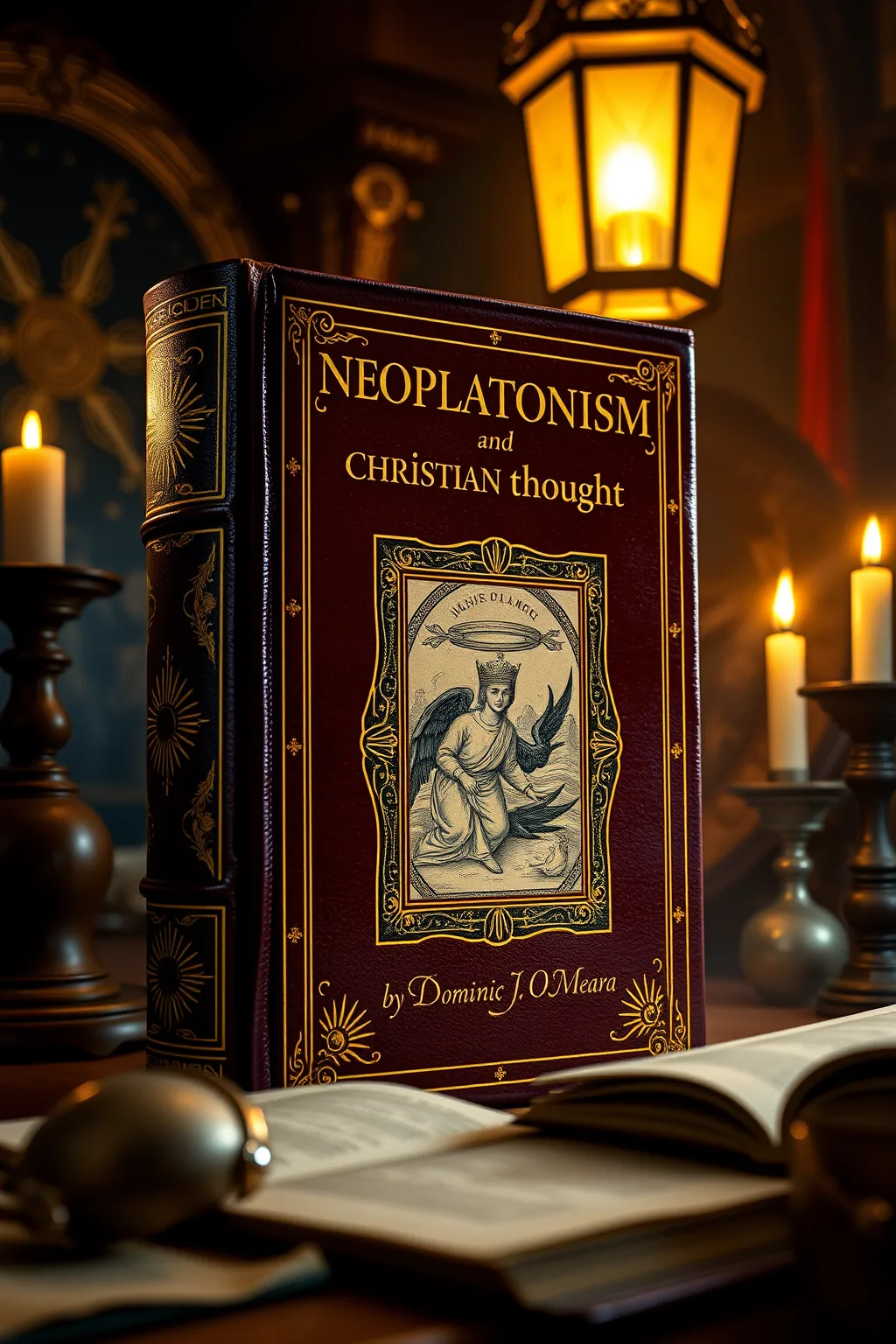
Neoplatonism and Christian thought
 61
61

Neoplatonism and Christian thought



Review by Sophia Crane (Associate Editor) — Dominic J. O'Meara's 'Neoplatonism and Christian Thought' is a masterful exploration of the esoteric links between these two powerful intellectual traditions. O'Meara's deep insights into the hidden symbolism and mystical themes make this book a must-read for anyone interested in the occult and hermeticism. The author's meticulous research and clear prose make complex ideas accessible, providing a rich tapestry of philosophical and theological discourse. This book is particularly strong in its ability to reveal the hidden currents of thought that have shaped Western spirituality. It is an essential read for scholars, spiritual seekers, and practitioners alike.
📝 Description
61
Dominic J. O'Meara's 2003 book examines the philosophical links between Neoplatonism and Christianity.
This study investigates the substantial overlap between Neoplatonic philosophy and Christian theology, particularly as developed in late antiquity and the Middle Ages. O'Meara focuses on how concepts from thinkers like Plotinus and Porphyry were adapted and transformed by Christian authors. He traces the influence of Neoplatonic ideas on Christian doctrines, including the nature of God, creation, the soul, and the afterlife.
The book addresses specific philosophical problems that arose as Christian thinkers engaged with Greek philosophy. It details how Neoplatonic metaphysics and epistemology provided a framework for articulating Christian beliefs. O'Meara highlights instances where Christian authors consciously used or reacted against Neoplatonic arguments. The work considers the implications of this philosophical inheritance for understanding the intellectual history of Western Christianity.
This work situates itself within the study of how philosophical systems, particularly Neoplatonism, informed and shaped esoteric currents within Western religious traditions. Neoplatonism itself, with its emphasis on mystical ascent, divine emanations, and the hidden unity of reality, provided a sophisticated conceptual language for articulating non-literal or mystical interpretations of religious texts and doctrines. O'Meara's analysis shows how these complex philosophical ideas were not merely academic exercises but were integrated into the very fabric of Christian thought, often serving to express the ineffable and transcendent aspects of faith.
💡 Why Read This Book?
Read 'Neoplatonism and Christian Thought' to uncover the mystical connections between two foundational traditions of Western thought. This book is ideal for seekers of esoteric wisdom, scholars of philosophy and theology, and practitioners of spiritual disciplines. O'Meara's work provides a deep dive into the hidden knowledge and symbolism that have influenced spiritual inquiry for centuries.
⭐ Reader Reviews
Honest opinions from readers who have explored this book.
❓ Frequently Asked Questions
What is the primary focus of this book?
The book explores the esoteric connections between Neoplatonism and Christian thought, revealing hidden knowledge and symbolic resonances.
Who is the intended audience for this work?
The book is aimed at scholars, spiritual seekers, and practitioners interested in the mystical and occult dimensions of philosophy and theology.
How does O'Meara approach the subject matter?
O'Meara uses a combination of scholarly research and esoteric insights to provide a deep and contemplative exploration of the themes.
What makes this book unique?
The book's unique strength lies in its ability to bridge the gap between mystical and rational thought, offering a rich tapestry of ideas.
Are there any prerequisites for reading this book?
While not strictly necessary, a basic understanding of Neoplatonism and Christian theology will enhance the reader's appreciation of the material.
🔮 Key Themes & Symbolism
Mystical Connections
The book studies the hidden mystical connections between Neoplatonism and Christian thought, revealing layers of symbolism and esoteric wisdom that have shaped Western spirituality.
Hidden Knowledge
O'Meara uncovers the hidden knowledge that lies beneath the surface of these ancient philosophies, providing readers with a deeper understanding of spiritual inquiry.
Symbolic Resonances
The work explores the symbolic resonances between Neoplatonism and Christianity, offering insights into the esoteric dimensions of religious and philosophical discourse.
💬 Memorable Quotes
Direct passages from the work, attributed to the author.
“Hidden knowledge reveals the true essence of spiritual wisdom.”
— O'Meara emphasizes the importance of uncovering esoteric insights to deepen spiritual understanding.
“Neoplatonism and Christianity share a common quest for the divine.”
— This statement underscores the book's theme of the interconnection between these two powerful intellectual traditions.
💡 Key Ideas
Editorial paraphrase of the work's core concepts — not direct quotes.
The divine and the human converge in the depths of spiritual inquiry.
This quote highlights the book's exploration of the intersection between mystical and rational thought.
Symbolism is the language of the divine.
This line underscores the book's focus on the symbolic resonances between different philosophical traditions.
The journey into the mystical is a journey into the self.
This quote reflects the book's contemplative and introspective nature, inviting readers to explore their own spiritual depths.
🌙 Esoteric Significance
Tradition
This book belongs to the Hermetic tradition, which seeks to uncover the hidden knowledge and symbolic resonances that lie beneath the surface of religious and philosophical discourse.
Symbolism
Key symbols include the divine and the human, the mystical and the rational, and the interconnection between different philosophical traditions.
Modern Relevance
Today, this book remains relevant for modern practitioners of esoteric and spiritual disciplines who seek to deepen their understanding of the mystical dimensions of thought.
👥 Who Should Read This Book
Beginners will appreciate the clear and accessible prose, which makes complex ideas approachable. Scholars will find a wealth of esoteric insights and scholarly research. Spiritual seekers will benefit from the book's contemplative and introspective nature, which invites deeper spiritual inquiry. Practitioners of spiritual disciplines will find valuable insights into the symbolic and mystical dimensions of their practices.
📜 Historical Context
Written during a time of significant intellectual and spiritual ferment, 'Neoplatonism and Christian Thought' emerged in an era when the boundaries between different philosophical and religious traditions were fluid. The book's importance lies in its ability to bridge these boundaries, revealing the hidden connections that have shaped Western thought. Its influence can be seen in the works of subsequent scholars and spiritual seekers who have drawn on its insights to deepen their own understanding of the mystical and the occult.
📔 Journal Prompts
Reflect on the mystical connections between Neoplatonism and Christianity in your own spiritual journey.
Consider how hidden knowledge has influenced your understanding of spirituality.
Explore the symbolic resonances between different philosophical traditions in your life.
Contemplate the intersection between the divine and the human in your spiritual practices.
Reflect on how the book's insights have deepened your understanding of the mystical dimensions of thought.
🗂️ Glossary
Neoplatonism
A philosophical tradition that emphasizes the mystical and esoteric dimensions of thought, particularly the relationship between the divine and the human.
Symbolism
The use of symbols to represent abstract ideas or concepts, often in a mystical or esoteric context.
Esoteric
Relating to knowledge that is hidden or mysterious, often requiring initiation or special insight to understand.
Hermetic
Relating to the philosophical and spiritual traditions of Hermetism, which seek to uncover hidden knowledge and symbolic resonances.
Theological Discourse
The study and discussion of religious beliefs and practices, often with a focus on the mystical and esoteric dimensions.
This book appears in 2 collections
🔮 Readers Also Liked
Browse all →







More by Dominic J. O'Meara
All books →
From the “Neoplatonism” Collection
View all →







More Free Alchemy & Hermeticism Books
View all →