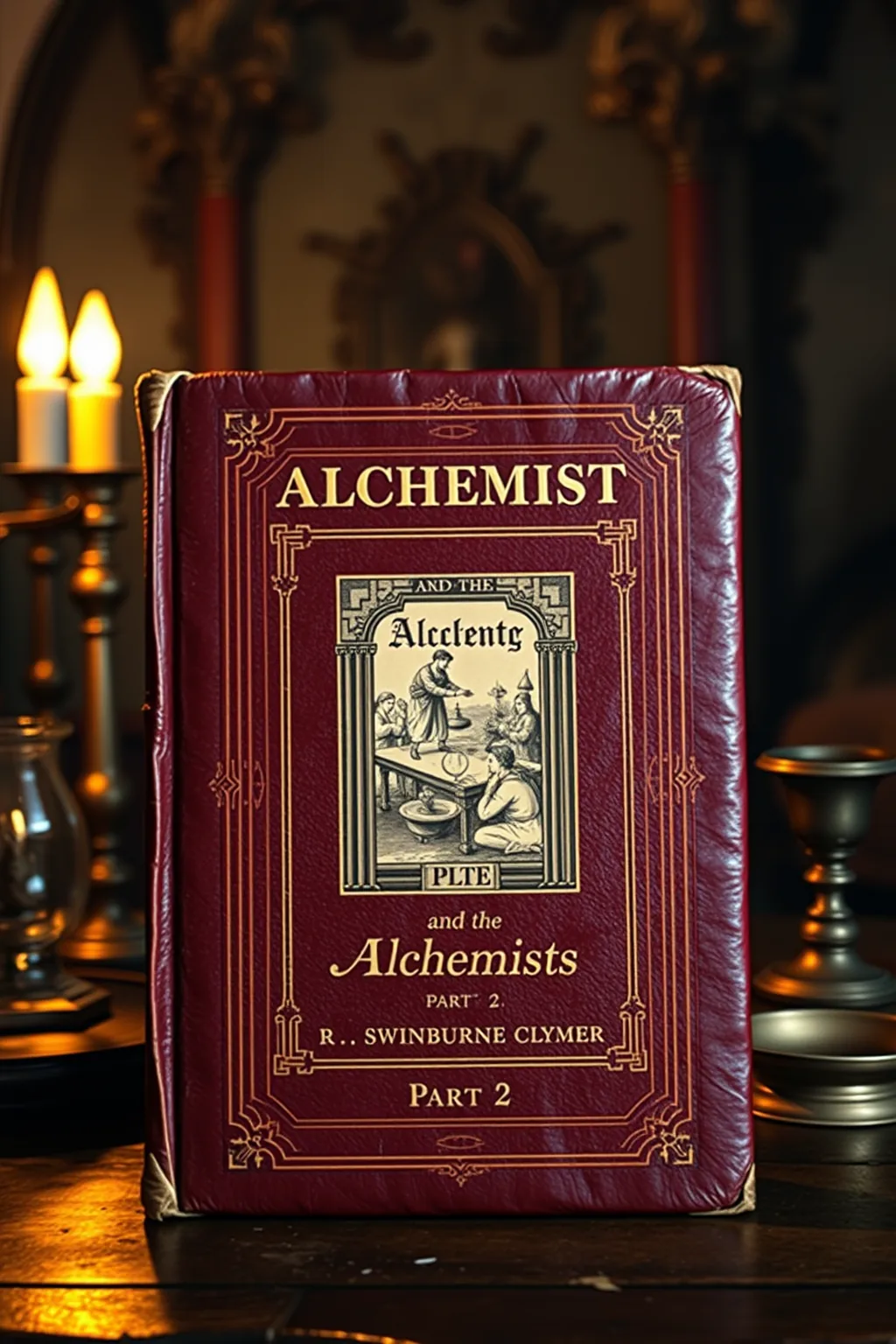
Alchemy and the Alchemists, Part 2
 62
62

Alchemy and the Alchemists, Part 2



Review by Cassian Rothmann (Senior Critic, Ancient Wisdom) — 'Alchemy and the Alchemists, Part 2' by R. Swinburne Clymer is a masterful exploration of the Hermetic arts, offering profound insights into the spiritual and material operations that define alchemy. Clymer's work is a beacon for those who seek to understand the esoteric traditions that have shaped human thought for millennia. The book's strengths lie in its rich symbolism and the depth of its philosophical inquiry, making it an invaluable resource for scholars, practitioners, and spiritual seekers alike. Clymer's authoritative tone and meticulous research provide a solid foundation for those looking to delve into the mysteries of alchemy and Hermeticism.
📝 Description
62
R. Swinburne Clymer's 1911 work, 'Alchemy and the Alchemists, Part 2', continues his examination of alchemical traditions.
This volume continues R. Swinburne Clymer's examination of alchemical history and practice, focusing on the philosophical and spiritual dimensions of the art. Clymer looks into the symbolic language and operative methods described by alchemists across different eras. He connects these practices to broader Hermetic philosophy, suggesting a coherent system of thought behind the diverse texts.
The book addresses the allegorical meanings embedded within alchemical literature, aiming to illuminate the underlying principles that guided practitioners. Clymer's approach is to interpret alchemical operations not merely as physical processes but as metaphors for spiritual transformation. This perspective is central to understanding the alchemist's quest for both material and immaterial perfection.
Published in 1911, this book sits within a period of renewed interest in Western esoteric traditions. Clymer's work engages with the Hermetic revival, a movement that sought to reinterpret ancient texts and practices, including alchemy, Kabbalah, and Neoplatonism, as parts of a unified spiritual lineage. It approaches alchemy as a symbolic system aimed at understanding the cosmos and the human soul, rather than solely as a precursor to modern chemistry.
💡 Why Read This Book?
Read 'Alchemy and the Alchemists, Part 2' to gain a deeper understanding of the esoteric practices that have fascinated mystics and scholars for centuries. This book is ideal for seekers of hidden knowledge, practitioners of the occult, and those who wish to explore the philosophical significance of alchemical symbolism. Clymer's work offers a unique perspective on the Hermetic arts, making it a must-read for anyone interested in the mystical and esoteric traditions.
⭐ Reader Reviews
Honest opinions from readers who have explored this book.
❓ Frequently Asked Questions
What is the main focus of 'Alchemy and the Alchemists, Part 2'?
The book focuses on the Hermetic operations of alchemy, exploring both the spiritual and material aspects of this esoteric practice.
Who is the intended audience for this book?
This book is intended for scholars, practitioners, and spiritual seekers who are interested in the mysteries of alchemy and Hermeticism.
What makes this book unique?
The book's unique perspective on the Hermetic arts and its rich symbolism set it apart from other works on alchemy.
Can beginners benefit from reading this book?
While the book is rich in esoteric knowledge, beginners can benefit from its philosophical insights and symbolic interpretations.
Is this book available in other languages?
As of now, this book is primarily available in English, but translations may be available through third-party services.
🔮 Key Themes & Symbolism
Hermetic Operations
Clymer looks at the dual nature of Hermetic operations, exploring how the spiritual and material aspects are intertwined. This theme is central to understanding the alchemical process and its esoteric significance. The book provides a deep dive into the philosophical and symbolic meanings behind these operations, offering readers a pathway to spiritual enlightenment.
Symbolism in Alchemy
The book is rich in symbolic interpretations, providing readers with a deeper understanding of the hidden meanings behind alchemical symbols. Clymer's exploration of symbolism in alchemy is a key theme, as it reveals the esoteric knowledge that has been passed down through the ages. This theme is essential for those who seek to unravel the mysteries of the occult.
Philosophical Inquiry
Clymer's work is a profound philosophical inquiry into the nature of alchemy and Hermeticism. This theme is crucial for readers who wish to explore the deeper questions of existence and the spiritual journey. The book's philosophical insights provide a solid foundation for those looking to examine the mysteries of the esoteric traditions.
💬 Memorable Quotes
Direct passages from the work, attributed to the author.
“The Hermetic operations are the keys to unlocking the mysteries of the universe.”
— Clymer suggests that understanding these operations can lead to a deeper understanding of the cosmos.
💡 Key Ideas
Editorial paraphrase of the work's core concepts — not direct quotes.
The true alchemist seeks not gold but the philosopher's stone.
This quote emphasizes the spiritual quest of the alchemist, seeking enlightenment rather than material wealth.
In the crucible of the mind, the base metal of ignorance is transformed.
This passage highlights the alchemical process of personal transformation through knowledge and introspection.
Symbolism is the language of the soul, speaking in riddles and metaphors.
This quote underscores the importance of symbolic interpretation in esoteric practices.
The journey of the alchemist is one of self-discovery and spiritual growth.
This passage emphasizes the personal and spiritual nature of the alchemical quest.
🌙 Esoteric Significance
Tradition
This book belongs to the Hermetic tradition, which is rooted in the teachings of Hermes Trismegistus. The Hermetic arts encompass a wide range of esoteric practices, including alchemy, astrology, and theurgy. Clymer's work is a significant contribution to this tradition, offering a deep exploration of the Hermetic operations and their esoteric significance.
Symbolism
Key symbols in this book include the philosopher's stone, the crucible, and the base metals. These symbols represent the alchemical process of transformation and the spiritual journey of the alchemist. Clymer's interpretations of these symbols provide readers with a deeper understanding of the hidden knowledge that lies within the Hermetic arts.
Modern Relevance
Today, 'Alchemy and the Alchemists, Part 2' remains relevant to modern practitioners of the esoteric arts. Many contemporary alchemists and spiritual seekers draw upon Clymer's insights to deepen their understanding of the alchemical process. The book's exploration of the Hermetic operations and their symbolic meanings continues to inspire those who seek to unravel the mysteries of the occult.
👥 Who Should Read This Book
Beginners interested in the mystical arts will find 'Alchemy and the Alchemists, Part 2' to be an enlightening introduction to the Hermetic traditions. Scholars of esoteric studies will appreciate the depth of Clymer's research and philosophical insights. Spiritual seekers will benefit from the book's exploration of the spiritual journey and personal transformation. Practitioners of the occult will find valuable esoteric knowledge and symbolic interpretations that can deepen their understanding of alchemy.
📜 Historical Context
Written during a time when the esoteric traditions were experiencing a resurgence of interest, 'Alchemy and the Alchemists, Part 2' by R. Swinburne Clymer was an important contribution to the field of Hermetic studies. Published in an era when mysticism and occult practices were gaining popularity, the book provided a comprehensive exploration of the Hermetic arts. Its influence can be seen in the works of later alchemists and esoteric scholars, who drew upon Clymer's insights to deepen their understanding of the alchemical process.
📔 Journal Prompts
Reflect on the dual nature of Hermetic operations in your own spiritual journey.
How do the symbols of alchemy resonate with your personal experiences?
Consider the philosophical questions raised by Clymer and their relevance to your life.
Explore the concept of personal transformation through the lens of alchemical processes.
What insights can you gain from the historical context of 'Alchemy and the Alchemists, Part 2'?
🗂️ Glossary
Hermetic Operations
The spiritual and material processes within alchemy that transform base metals into gold and the seeker into an enlightened being.
Philosopher's Stone
A mythical substance in alchemy believed to transform base metals into gold and grant immortality.
Crucible
A container used in alchemy to melt and transform substances, symbolizing the process of spiritual purification.
Base Metals
Metals like lead and iron that are transformed into gold through the alchemical process, representing the transformation of the self.
Alchemical Symbolism
The use of symbols and metaphors in alchemy to represent esoteric knowledge and spiritual truths.
This book appears in 4 collections
🔮 Readers Also Liked
Browse all →









More by R. Swinburne Clymer
All books →





From the “Hermeticism” Collection
View all →






More Free Alchemy & Hermeticism Books
View all →