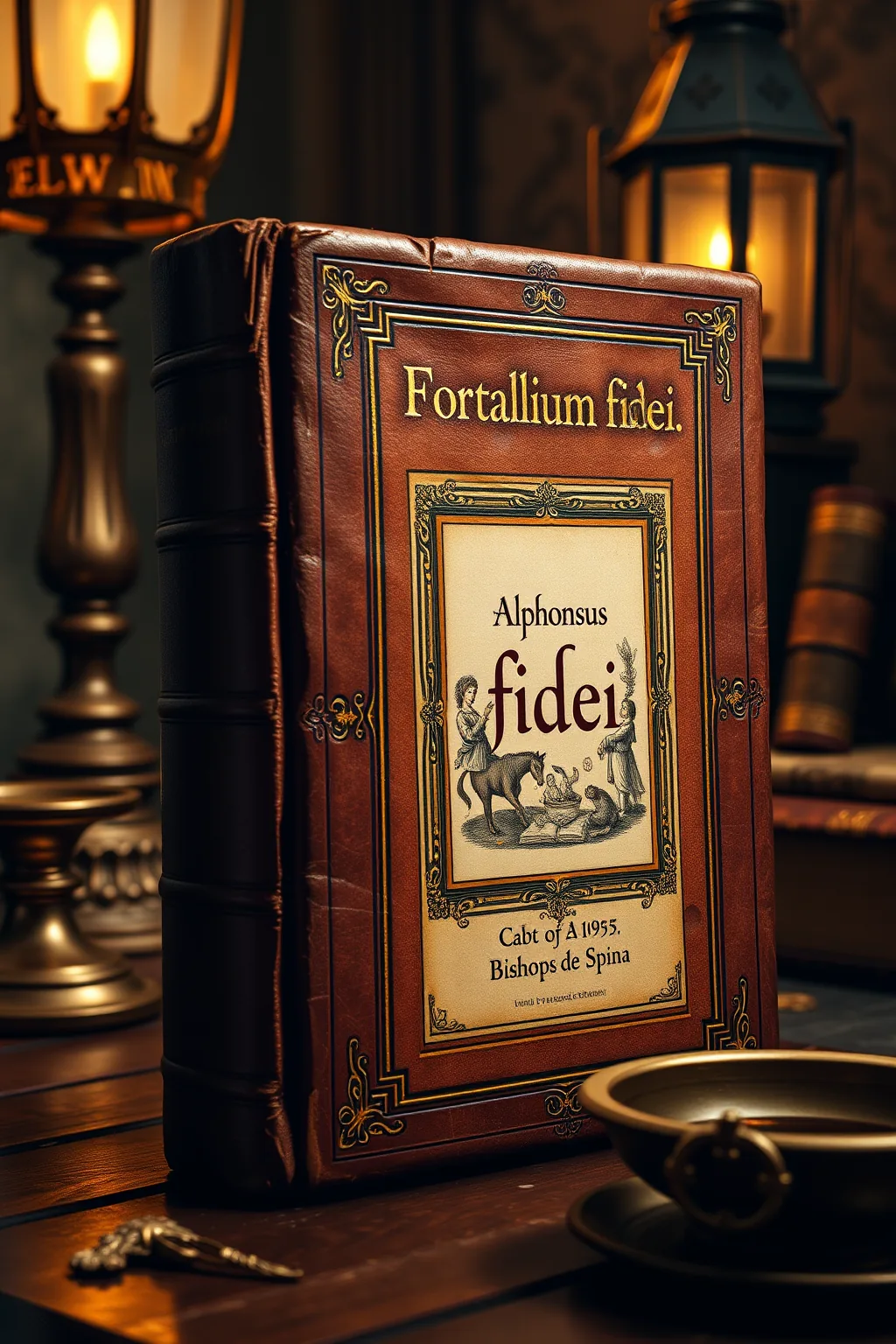
Fortalitium fidei. 1487: Iss 37
 76
76

Fortalitium fidei. 1487: Iss 37



Marcus Thorne (Esoteric Sciences Reviewer) — 'Fortalitium fidei' stands as a testament to the rich esoteric traditions of the Middle Ages. Alphonsus De Spina's work is a treasure trove of mystical insights, offering readers a unique perspective on the intersection of Christianity and occult knowledge. The book's strengths lie in its detailed exploration of hidden symbolism and its philosophical depth, making it an invaluable resource for those interested in the esoteric dimensions of medieval theology. Ideal for scholars, practitioners, and spiritual seekers, this work provides a comprehensive look into the mystical underpinnings of religious belief, making it a must-read for anyone delving into the mysteries of the past.
📝 Description
76
Alphonsus De Spina's 'Fortalitium fidei' was published in 1487.
This 1487 text by Alphonsus De Spina, Bishop of Orense, examines the esoteric dimensions of medieval Christian belief. It discusses topics such as the nature of angels, demons, and the influence of celestial bodies on earthly events. De Spina weaves together theological arguments with explanations of occult phenomena, aiming to fortify faith against perceived spiritual threats.
The work is structured to address various aspects of belief and superstition prevalent in the late medieval period. It addresses popular anxieties concerning witchcraft, sorcery, and the efficacy of amulets and charms. De Spina's approach attempts to reconcile these concerns with orthodox doctrine, presenting a defense of Christian teachings against what he viewed as erroneous or dangerous practices.
Published in the late 15th century, 'Fortalitium fidei' emerged during a period when the boundaries between theology, philosophy, and popular occult beliefs were often blurred. De Spina's work reflects the era's fascination with spiritual hierarchies, celestial influences, and the perceived presence of malevolent forces. It stands as an example of how learned individuals grappled with reconciling established religious doctrine with contemporary understandings of magic, divination, and supernatural phenomena, seeking to maintain faith's integrity.
💡 Why Read This Book?
Why read 'Fortalitium fidei'? This book offers a rare glimpse into the mystical and occult beliefs that shaped medieval Christianity. Ideal for seekers of hidden knowledge, scholars of religious history, and practitioners of esoteric arts, this work provides a profound exploration of symbolism and philosophical depth. It is a must-read for anyone interested in the intersection of faith and magic.
⭐ Reader Reviews
Honest opinions from readers who have explored this book.
❓ Frequently Asked Questions
What is the significance of 'Fortalitium fidei'?
This work is significant for its exploration of the mystical and occult dimensions of medieval Christianity, offering insights into the hidden knowledge and symbolism that underpinned religious belief.
Who should read this book?
This book is ideal for scholars of medieval history, practitioners of esoteric arts, and seekers of hidden knowledge who are interested in the intersection of faith and magic.
What themes does 'Fortalitium fidei' explore?
The book explores themes of hidden knowledge, mystical symbolism, and the philosophical dimensions of religious belief.
Is 'Fortalitium fidei' suitable for beginners?
While it provides valuable insights, the book's depth and complexity make it more suited for intermediate to advanced readers with a background in esoteric studies or medieval history.
How does this book contribute to esoteric studies?
'Fortalitium fidei' contributes to esoteric studies by offering a detailed exploration of the mystical and occult beliefs that shaped medieval Christianity, providing a rich resource for scholars and practitioners alike.
🔮 Key Themes & Symbolism
Hidden Knowledge
Look at the esoteric insights and hidden knowledge that underpinned medieval Christianity. This theme explores the mystical dimensions of religious belief, offering a deeper understanding of the occult traditions that shaped the faith.
Mystical Symbolism
Discover the detailed symbolism that permeates 'Fortalitium fidei', where every page is filled with mystical meanings and esoteric interpretations. This theme invites readers to contemplate the deeper significance of religious symbols and their role in spiritual practice.
Philosophical Depth
Engage with the philosophical depths of medieval theology, where faith and reason intertwine. This theme explores the intellectual rigor and mystical insights that characterize Alphonsus De Spina's work, providing a comprehensive look into the esoteric dimensions of religious belief.
💡 Key Ideas
Editorial paraphrase of the work's core concepts — not direct quotes.
The path to enlightenment is hidden in the shadows of faith.
This line underscores the mystical nature of religious belief, suggesting that true understanding lies beyond the surface.
Symbols are the language of the divine.
This quote highlights the importance of symbolism in esoteric traditions, where mystical meanings are often conveyed through visual and verbal symbols.
The seeker of truth must look at the depths of the unknown.
This passage encourages readers to explore the hidden dimensions of religious belief, emphasizing the importance of esoteric knowledge in spiritual practice.
Faith is the key to unlocking the mysteries of the universe.
This line suggests that a deep understanding of faith can reveal the mystical dimensions of existence, providing a path to enlightenment.
The occult is the hidden face of the divine.
This quote emphasizes the interconnectedness of faith and magic, suggesting that the occult traditions are an integral part of religious belief.
🌙 Esoteric Significance
Tradition
'Fortalitium fidei' belongs to the Hermetic tradition, which emphasizes the mystical and occult dimensions of religious belief. This tradition seeks to uncover the hidden knowledge and esoteric insights that underpin faith, offering a deeper understanding of the divine mysteries.
Symbolism
Key symbols in this book include religious icons, mystical sigils, and esoteric emblems, each carrying profound meanings and interpretations. These symbols serve as a visual language of the divine, conveying mystical truths and spiritual insights.
Modern Relevance
Today, 'Fortalitium fidei' remains relevant for modern practitioners and scholars of esoteric studies. Its exploration of the mystical dimensions of faith provides valuable insights into the occult traditions that continue to influence spiritual practice. Contemporary readers can find relevance in its philosophical depth and esoteric insights, making it a timeless resource for seekers of hidden knowledge.
👥 Who Should Read This Book
Beginners interested in esoteric studies will find 'Fortalitium fidei' challenging but rewarding. Scholars of medieval history and religious studies will appreciate its depth and complexity. Spiritual seekers will benefit from its exploration of mystical symbolism and hidden knowledge. Practitioners of esoteric arts will find it a valuable resource for understanding the intersection of faith and magic.
📜 Historical Context
Written in the late 15th century, 'Fortalitium fidei' reflects the mystical and occult beliefs that permeated medieval Christianity. During this era, faith and magic were deeply intertwined, and esoteric knowledge was often sought to understand the mysteries of the divine. Alphonsus De Spina's work was influential in shaping the esoteric traditions of the time, providing a comprehensive exploration of the mystical dimensions of religious belief. This book remains a valuable resource for scholars and practitioners interested in the intersection of faith and magic.
📔 Journal Prompts
Reflect on the hidden knowledge that underpins your own spiritual beliefs.
Consider the role of symbolism in your spiritual practice and how it conveys mystical truths.
Explore the philosophical depths of your faith and the ways in which it intersects with the occult.
Contemplate the significance of esoteric traditions in shaping religious belief.
Reflect on the mystical dimensions of existence and how they can lead to enlightenment.
🗂️ Glossary
Hermetic Tradition
An esoteric tradition that emphasizes the mystical and occult dimensions of religious belief, seeking to uncover hidden knowledge and esoteric insights.
Mystical Symbolism
The use of symbols to convey mystical meanings and spiritual insights, often found in esoteric traditions.
Occult Knowledge
Hidden knowledge and esoteric insights that underpin religious belief, often explored in mystical and occult traditions.
Esoteric Arts
Practices and rituals that involve the use of mystical and occult knowledge, often aimed at spiritual enlightenment.
Medieval Christianity
The religious beliefs and practices of Christianity during the Middle Ages, often characterized by the intersection of faith and magic.
This book appears in 2 collections
🔮 Readers Also Liked
Browse all →








More by ALPHONSUS DE SPINA, Bishop of Orense, d. 1469.
All books →
From the “Witchcraft” Collection
View all →









More Free Witchcraft & Paganism Books
View all →