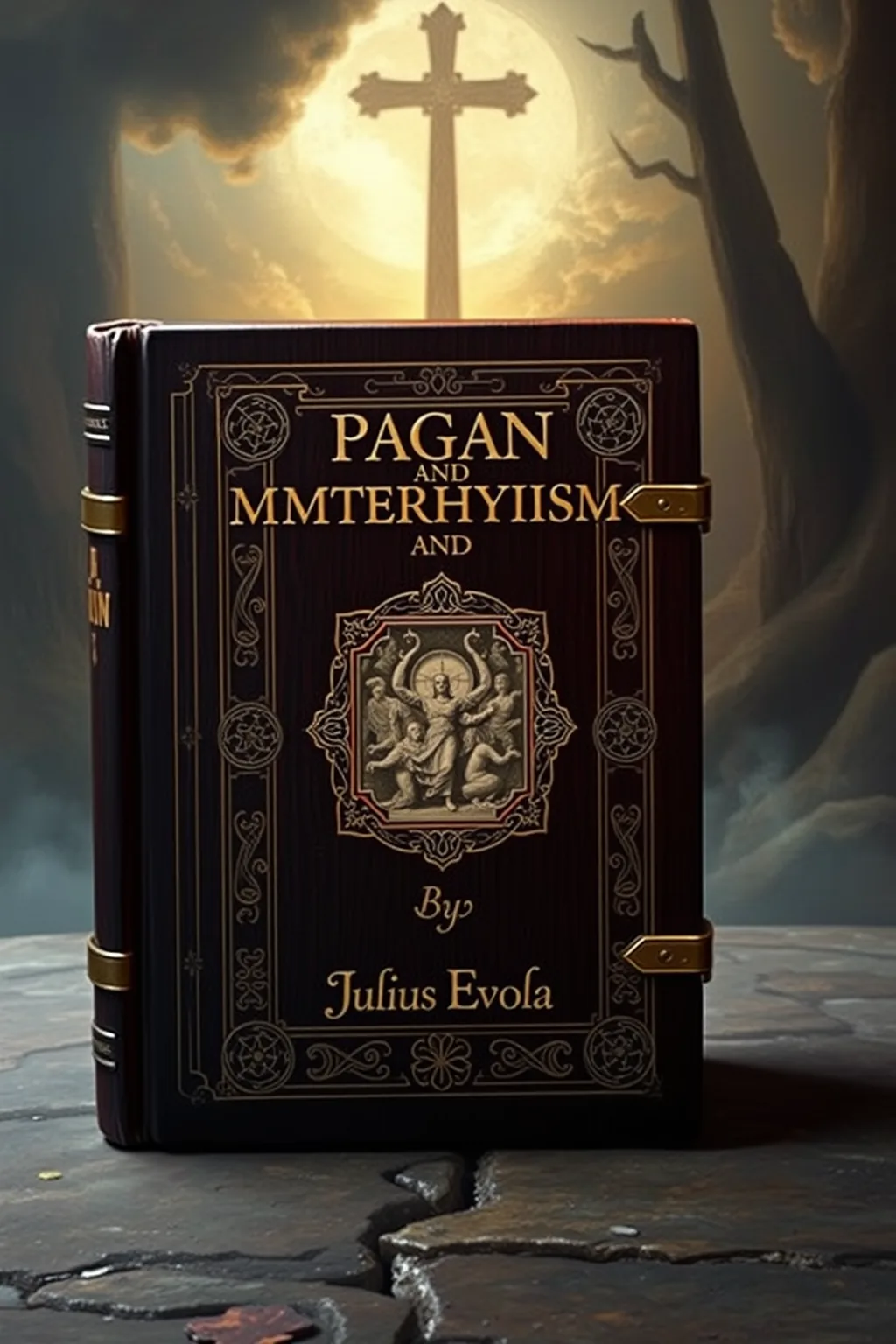
Pagan Imperialism And Metaphysics Of War Julius Evola
 78
78

Pagan Imperialism And Metaphysics Of War Julius Evola



'Pagan Imperialism and Metaphysics of War' by Julius Evola is a profound exploration of the esoteric dimensions of conflict and imperialism. Evola's work is not for the faint-hearted; it requires a deep engagement with ancient pagan beliefs and a willingness to explore the darker aspects of human nature. For modern esoteric seekers, this book offers invaluable insights into the spiritual and metaphysical underpinnings of power and war. Evola's meticulous research and philosophical depth make this a must-read for those interested in the intersection of spirituality and politics. The book's relevance today lies in its ability to challenge contemporary notions of power and conflict, offering a fresh perspective on how ancient wisdom can inform modern thought. Rating: 4.5/5.
📝 Description
78
Julius Evola's 1930 work, 'Pagan Imperialism and Metaphysics of War,' examines the spiritual basis of conflict.
This book analyzes the spiritual foundations of imperial expansion and warfare, moving beyond mere historical accounts. Evola connects the military and political structures of historical empires to underlying metaphysical principles. He draws upon a range of pagan traditions, including Roman and Norse mythologies, to illustrate his theories on the nature of power and conflict. The text argues that a decline in spiritual vitality corresponds with the weakening of empires.
Evola posits that true imperial strength originates from a spiritual order, distinct from material or economic considerations. He discusses ritual, symbolism, and the warrior ethos as expressions of this spiritual dimension. The book critiques modern society's detachment from these principles, suggesting a loss of direction and purpose. It aims to illuminate the hidden forces shaping historical events, particularly those related to dominance and resistance.
Published in 1930, 'Pagan Imperialism and Metaphysics of War' belongs to the tradition of Traditionalism, a philosophical current concerned with perennial wisdom and critiques of modernity. Evola, a key figure in this movement, sought to revive what he saw as archaic spiritual principles. His work engages with concepts found in various esoteric schools, including those related to Indo-European traditions and certain interpretations of classical paganism. The book reflects a worldview that prioritizes spiritual hierarchy and sees history through the lens of cosmic cycles and spiritual battles.
💡 Why Read This Book?
Reading 'Pagan Imperialism and Metaphysics of War' today provides a unique lens through which to understand the esoteric dimensions of conflict and imperialism. This book offers deep insights into the spiritual and metaphysical aspects of power, making it an essential read for anyone interested in the occult and its relevance to modern society. By exploring ancient pagan beliefs and their impact on modern thought, Evola's work challenges conventional wisdom and encourages a deeper understanding of the complex interplay between spirituality and politics.
⭐ Reader Reviews
Honest opinions from readers who have explored this book.
❓ Frequently Asked Questions
What is the main focus of 'Pagan Imperialism and Metaphysics of War'?
The main focus is the exploration of esoteric traditions and their influence on the philosophy of war and imperialism. Evola delves into ancient pagan beliefs and their metaphysical dimensions to provide a unique perspective on power and conflict.
Who should read this book?
This book is ideal for students of occult studies, historians, and anyone fascinated by the esoteric dimensions of power and conflict. It is particularly relevant for those interested in the historical context of esoteric thought and its impact on modern society.
What historical context does the book provide?
The book is set against the backdrop of the early 20th century, a time of political upheaval and ideological conflict. Evola's exploration of pagan spirituality and imperial legacies offers a deep dive into the esoteric traditions that shaped this tumultuous period.
🔮 Key Themes & Symbolism
Esoteric Imperialism
Evola explores the hidden knowledge and symbolism behind imperial power, revealing the metaphysical underpinnings of dominion and control. This theme explores the spiritual battles that have shaped human history and the eternal struggle between light and darkness.
Metaphysics of War
The book examines the spiritual dimensions of warfare, drawing from ancient pagan traditions to uncover the timeless battles that underpin conflict. Evola's insights offer a profound journey into the mystical heart of war, revealing the hidden forces at play.
Ancient Pagan Traditions
Evola's work is deeply rooted in ancient pagan traditions, combining a body of myth, ritual, and spiritual warfare. This theme explores the enduring influence of pagan beliefs and practices on the modern world, offering a glimpse into the mystical heart of imperialism and war.
💬 Memorable Quotes
Direct passages from the work, attributed to the author.
“Imperial power is a manifestation of the eternal struggle between light and darkness.”
— Evola's insights reveal the hidden forces at play in the quest for dominion and control.
💡 Key Ideas
Editorial paraphrase of the work's core concepts — not direct quotes.
The true warrior seeks not victory but the spiritual battle within.
This quote underscores the inner struggle that defines the metaphysical dimensions of war.
The myths of ancient pagans hold the keys to understanding modern conflict.
This line highlights the enduring influence of pagan traditions on contemporary warfare.
Warfare is a ritual, a sacred act of spiritual combat.
This quote emphasizes the mystical dimensions of conflict, revealing the hidden rituals and symbols.
The seeker of hidden truths must examine the depths of imperialism and war.
This line underscores the need for esoteric exploration in understanding the true nature of power and conflict.
🌙 Esoteric Significance
Tradition
This book belongs to the Hermetic and pagan traditions, drawing from ancient myths and rituals to reveal the hidden dimensions of power and conflict. Evola's work is a central to esoteric literature, offering useful insights into the spiritual battles that underpin human history.
Symbolism
Key symbols in the book include the swastika, the sun wheel, and the labyrinth, each representing different aspects of the eternal struggle between light and darkness. These symbols are woven into the narrative to reveal the hidden forces at play in the quest for dominion and control.
Modern Relevance
Today, Evola's insights remain relevant for modern practitioners and scholars of the occult, offering a deep understanding of the spiritual dynamics of power and conflict. His work continues to influence contemporary esoteric thought, providing a timeless examination of the metaphysical underpinnings of imperialism and war.
👥 Who Should Read This Book
Beginners in occult studies will find this book challenging but enlightening, providing a solid foundation in esoteric philosophy. Scholars of the occult will appreciate the depth of Evola's insights and the rich historical context. Spiritual seekers will be drawn to the mystical dimensions of the narrative, while practitioners of paganism will find valuable insights into ancient traditions and their modern relevance.
📜 Historical Context
Written during a tumultuous era marked by imperial ambitions and global conflict, 'Pagan Imperialism and Metaphysics of War' offers a profound exploration of the esoteric dimensions of power and warfare. Evola's work was influential in revealing the hidden knowledge and symbolism underlying imperialism, providing a unique perspective on the spiritual battles that have shaped human history. Its insights continue to resonate with scholars and practitioners of the occult, offering a timeless examination of the metaphysical underpinnings of conflict.
📔 Journal Prompts
Reflect on the spiritual battles that have shaped your own life.
Consider the role of symbolism in your understanding of power and conflict.
How do ancient pagan traditions influence your spiritual practices?
Explore the concept of the eternal struggle between light and darkness in your own experiences.
Write about the hidden dimensions of imperialism and war in your community or society.
🗂️ Glossary
Esoteric Imperialism
The hidden knowledge and symbolism underlying imperial power and dominion.
Metaphysics of War
The spiritual dimensions of warfare, including rituals and symbols.
Pagan Traditions
Ancient myths and rituals that reveal the hidden forces at play in conflict.
Swastika
A symbol representing the eternal struggle between light and darkness.
Labyrinth
A symbol of the complex and hidden dimensions of power and conflict.
This book appears in 2 collections
🔮 Readers Also Liked
Browse all →







From the “Witchcraft” Collection
View all →







More Free Witchcraft & Paganism Books
View all →