A practical guide to Qabalistic symbolism
 83
83

A practical guide to Qabalistic symbolism
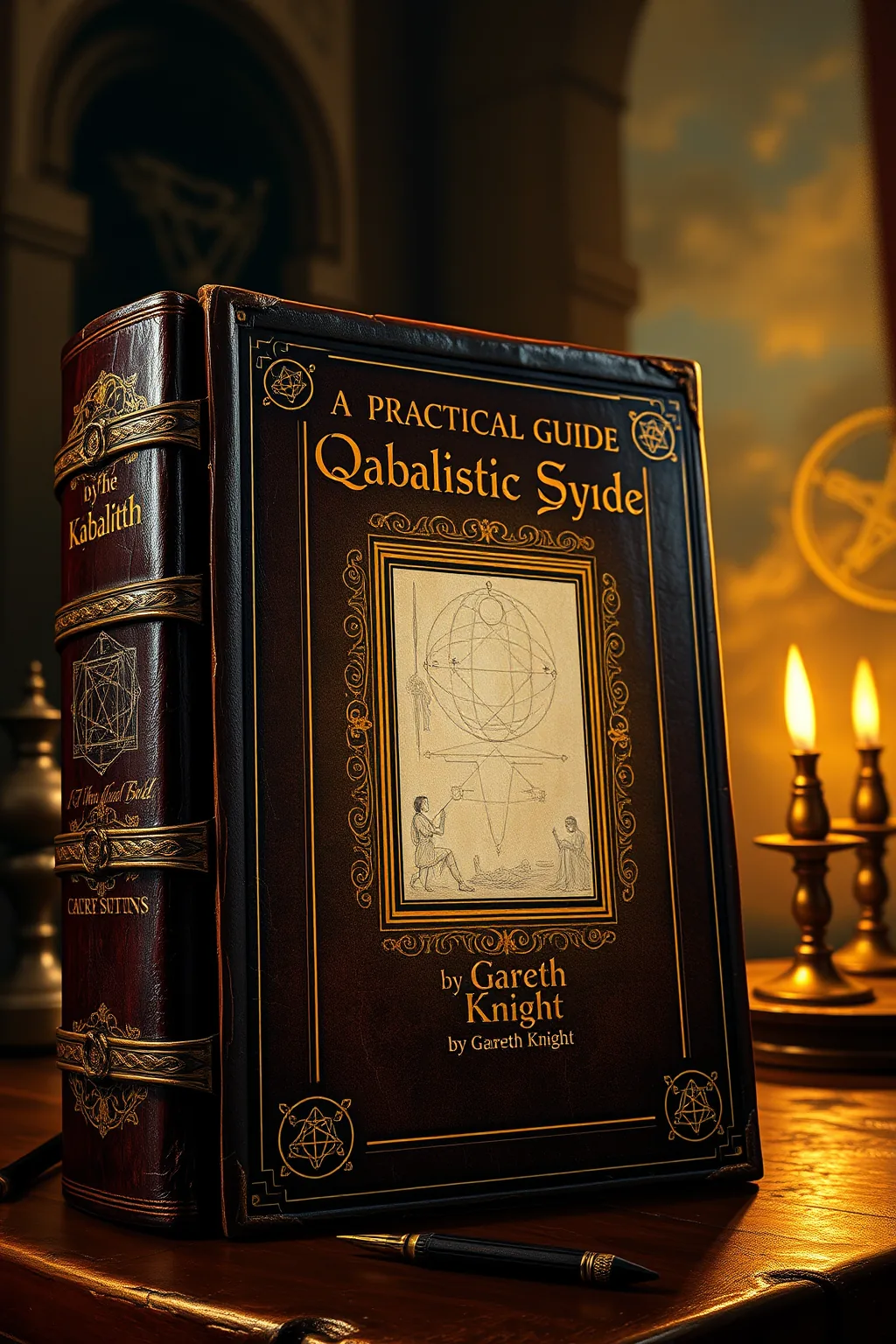
Gareth Knight’s 1991 offering, A Practical Guide to Qabalistic Symbolism, attempts to demystify a subject often left to arcane texts. Knight excels in presenting the Tree of Life not as a static diagram, but as a dynamic map of consciousness. His explanation of the Sephiroth, particularly the transition from Malkuth to Yesod, feels particularly grounded, avoiding the pitfalls of overly abstract theorizing. However, the work occasionally suffers from a certain earnestness that can border on the didactic, especially when discussing the practical application of Qabalistic concepts in meditation. The inclusion of diagrams is helpful, though some could benefit from more detailed annotations. Ultimately, Knight’s guide is a solid, if sometimes uninspired, introduction for the earnest beginner.
📝 Description
83
Gareth Knight's 1991 book offers a clear introduction to Qabalistic symbolism.
This practical guide, first published in 1991, explains the symbolic language of the Kabbalah. Knight breaks down the visual and conceptual elements central to this esoteric tradition, making complex ideas accessible to newcomers. The book is structured to help students of Western Esotericism build a basic understanding of Qabalistic principles. It appeals to those interested in occult philosophy, comparative religion, and the symbolic systems that shaped Western thought.
Aspiring practitioners of magic and meditation will find this work useful for grounding their practices within a coherent symbolic framework. Knight's approach contrasts with dense academic analyses, providing a viewpoint from someone engaged in spiritual practice. The book covers key Qabalistic concepts such as the Tree of Life, its Sephiroth and Paths, and the Hebrew alphabet. It also details correspondences with consciousness, astrology, and magical practices, presenting them as a map for spiritual growth.
Published in 1991, Knight's guide appeared during a resurgence of interest in esoteric traditions. It met a need for straightforward introductions to subjects often presented in dense or archaic language. Knight's work offered a practitioner's perspective, aligning with figures like Aleister Crowley and Dion Fortune who integrated Qabalistic concepts into modern spiritual paths. This book serves as a bridge for those seeking to understand Kabbalah's role within the broader Western esoteric lineage.
💡 Why Read This Book?
• Gain a structured understanding of the Qabalistic Tree of Life, including the ten Sephiroth and twenty-two Paths, as presented in Knight's 1991 guide, enabling you to map spiritual concepts. • Decipher the symbolic meanings embedded within the Hebrew alphabet and its connection to the Paths of the Tree of Life, offering a unique interpretive lens. • Explore the practical applications of Qabalistic symbolism in meditation and personal development, moving beyond theoretical knowledge to experiential understanding.
⭐ Reader Reviews
Honest opinions from readers who have explored this book.
❓ Frequently Asked Questions
What is the primary purpose of Gareth Knight's 'A Practical Guide to Qabalistic Symbolism'?
The book aims to provide a clear and accessible introduction to the symbolic language of the Kabbalah, focusing on the Tree of Life and its associated elements for students of Western Esotericism.
When was 'A Practical Guide to Qabalistic Symbolism' first published?
Gareth Knight's influential guide was first published in 1991, a period marked by renewed interest in esoteric studies.
Does the book explain the Sephiroth and Paths of the Tree of Life?
Yes, the work systematically explains the ten Sephiroth and twenty-two Paths, detailing their interrelationships and symbolic correspondences.
Is this book suitable for complete beginners to Qabalah?
Absolutely. Knight's approach is designed for those new to the subject, breaking down complex Qabalistic symbolism into manageable concepts.
What kind of esoteric tradition does this book focus on?
It focuses on Western Esotericism, specifically the Qabalistic tradition as it has been interpreted and applied within Western magical and mystical practices.
Are there practical exercises or meditations suggested in the book?
Yes, the book guides readers on how to integrate Qabalistic symbolism into their meditative practices and spiritual development.
🔮 Key Themes & Symbolism
The Tree of Life as a Map
Knight presents the Qabalistic Tree of Life not merely as a diagram but as a comprehensive map of consciousness and the cosmos. He details the ten Sephiroth, often referred to as divine emanations, and the twenty-two Paths connecting them, explaining how each element corresponds to various spiritual, psychological, and physical phenomena. This framework allows practitioners to chart their spiritual journey and understand the interconnectedness of all existence within the Qabalistic cosmology.
Symbolism of the Hebrew Alphabet
A significant portion of the book is dedicated to the twenty-two letters of the Hebrew alphabet and their deep symbolic resonance within Qabalah. Knight explores how each letter not only represents a sound and a character but also embodies specific concepts, energies, and correspondences that align with the Paths on the Tree of Life. Understanding these letters is presented as crucial for unlocking deeper layers of meaning in Qabalistic texts and practices.
Practical Application and Meditation
Beyond theoretical exploration, Knight emphasizes the practical utility of Qabalistic symbolism for personal development and spiritual work. The guide offers insights into how these symbols can be employed in meditation, visualization, and ritual to foster inner transformation and facilitate contact with higher consciousness. The aim is to bridge the gap between abstract knowledge and lived esoteric experience.
Esoteric Correspondences
The work meticulously outlines the vast network of correspondences inherent in Qabalistic systems. This includes links between the Sephiroth and Paths, astrological planets and zodiac signs, the Tarot, the elements, and various deities or archetypal forces. Knight demonstrates how these interconnected layers of symbolism create a coherent and unified worldview, essential for practitioners seeking to engage with the subtle energies of the universe.
💬 Memorable Quotes
Direct passages from the work, attributed to the author.
“The Tree of Life is a symbolic representation of the process of creation and evolution.”
— This highlights Knight's view of the Tree not as static theology, but as a dynamic, active model for understanding existence and spiritual growth.
“Each Hebrew letter carries a profound significance, acting as a key to understanding the Paths.”
— This underscores the importance Knight places on the Hebrew alphabet as an integral component of Qabalistic symbolism, essential for deeper interpretation.
“Symbolism provides a language for that which cannot be expressed in ordinary terms.”
— This emphasizes the role of esoteric symbols, as presented in the book, in articulating ineffable spiritual and psychological experiences.
“Understanding the Sephiroth is fundamental to grasping the Qabalistic cosmology.”
— This points to the central role of the ten Sephiroth as the building blocks of the Qabalistic universe and spiritual hierarchy in Knight's explanation.
“The Paths represent the journey of consciousness through the different levels of existence.”
— This interpretation focuses on the dynamic, experiential aspect of the Paths, portraying them as routes for spiritual development and exploration.
🌙 Esoteric Significance
Tradition
This work firmly belongs to the Western Esoteric tradition, specifically drawing from the Hermetic Qabalah. It interprets and adapts the principles of the Jewish Kabbalah for a broader, often non-Jewish, audience interested in magic, spiritual development, and comparative mysticism. Knight's lineage connects to earlier 20th-century interpreters like Dion Fortune and Arthur Edward Waite, who sought to synthesize Qabalistic concepts with other esoteric systems and present them in a structured, pedagogical manner.
Symbolism
Central to the book is the Qabalistic Tree of Life, depicted as a symbolic map of creation and consciousness. Knight elucidates the symbolism of its ten Sephiroth (emanations like Kether, Chokmah, Binah) and the twenty-two Paths connecting them, often associating them with Hebrew letters, Tarot cards, and astrological influences. Another key motif is the symbolic power of the Hebrew alphabet itself, where each letter is imbued with complex meanings and energies that unlock deeper layers of esoteric understanding.
Modern Relevance
Knight's guide remains relevant for contemporary practitioners of Western Esotericism, including those involved in ceremonial magic, neo-paganism, and modern occultism. Its clear exposition of the Tree of Life and its symbolic correspondences provides a foundational framework that continues to inform practices in various spiritual communities. Thinkers and practitioners interested in the intersection of psychology, symbolism, and spirituality often reference this work as a reliable starting point for Qabalistic studies.
👥 Who Should Read This Book
• Beginning students of Western Esotericism seeking a clear introduction to Qabalistic principles and the Tree of Life. • Individuals interested in comparative religion and mythology who wish to understand the symbolic systems underpinning Western mystical traditions. • Aspiring practitioners of magic and meditation looking for a structured symbolic language to enhance their spiritual practices and inner work.
📜 Historical Context
Gareth Knight's A Practical Guide to Qabalistic Symbolism, published in 1991, emerged in a range of Western Esotericism that had seen a resurgence following the counter-culture movements of the 1960s and 70s. The book sought to provide a clear, accessible entry point into Qabalistic studies, a field often dominated by dense, scholarly works or the more occult-focused writings of figures like Aleister Crowley. Knight's approach, while rooted in traditional Qabalistic concepts, aimed for a more universally applicable and less dogmatic presentation, aligning with a broader interest in comparative spirituality. It offered a practitioner-oriented perspective that contrasted with purely academic historical analyses of Jewish mysticism. The work did not engage directly with academic debates but instead served the growing community of individuals seeking practical spiritual tools derived from esoteric traditions.
📔 Journal Prompts
The symbolic representation of Malkuth on the Tree of Life: what aspects of the material world does it encompass for you?
Reflect on the concept of the Paths as journeys of consciousness, referencing the twenty-two Paths.
How does the Hebrew alphabet's symbolism, as described by Knight, inform your understanding of divine communication?
Consider the Sephiroth as stages of spiritual evolution; which Sephirah currently reflects your primary inner work?
The interplay between Kether and Malkuth: how do the highest and lowest points of the Tree connect in your experience?
🗂️ Glossary
Qabalah
An esoteric system of Jewish mysticism that seeks to understand the nature of God and the universe through symbolic interpretation of scripture and mystical practices. Western Esotericism has adapted many of its concepts.
Tree of Life
A central symbolic diagram in Qabalah, consisting of ten interconnected spheres (Sephiroth) and twenty-two paths, representing divine emanations, creation, and the structure of the cosmos and consciousness.
Sephirah (plural: Sephiroth)
The ten divine emanations or spheres on the Qabalistic Tree of Life, representing different aspects of the divine and the process of creation, such as Kether (Crown) and Malkuth (Kingdom).
Path
The connections or links between the Sephiroth on the Tree of Life. There are twenty-two Paths, typically corresponding to the letters of the Hebrew alphabet and major Arcana of the Tarot.
Hebrew Alphabet
The alphabet used for writing Hebrew, consisting of 22 consonants. In Qabalah, each letter is imbued with profound symbolic meaning, numerical value (gematria), and esoteric correspondences.
Hermetic Qabalah
A Western esoteric tradition that draws heavily upon the Kabbalah, integrating it with Hermeticism, Neoplatonism, and other mystical or magical systems, often for practical spiritual or magical purposes.
Correspondences
In esoteric systems, the relationships and connections established between different symbols, elements, planets, deities, or concepts, forming a web of symbolic meaning.
🔮 Readers Also Liked
Browse all →









More by Gareth Knight
All books →



More Free Divination & Tarot Books
View all →