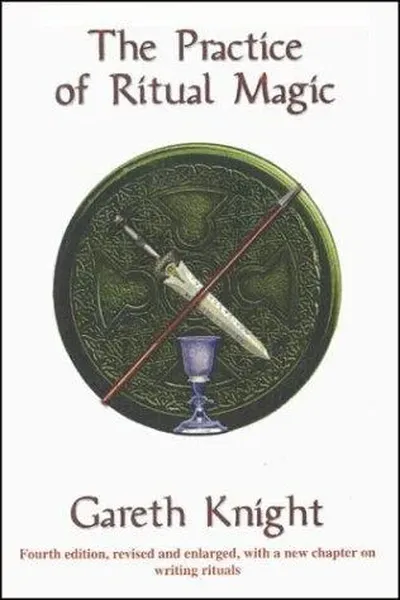
The Practice of Ritual Magic

 80
80

The Practice of Ritual Magic
Gareth Knight’s *The Practice of Ritual Magic* offers a refreshingly direct approach to a subject often shrouded in mystique. Unlike many texts that lean heavily on arcane jargon or historical anecdote, Knight grounds his discussion in the operational mechanics of ritual, emphasizing the magician's inner state and disciplined will. His exposition on the construction of the magical circle, for instance, is clear and methodical, avoiding sensationalism. A particular strength lies in his consistent focus on the psychological underpinnings of magical work, presenting ritual as a potent tool for inner transformation as well as external manipulation of energies. However, the book's focus on the mechanics can sometimes feel a touch dry for readers seeking more philosophical or cosmological exploration. While the 1987 publication date means some references might feel dated, the core principles remain robust. Knight’s clear, no-nonsense style makes it an accessible entry point for serious students of ceremonial magic. It’s a practical manual that respects the intelligence of its reader, prioritizing clear instruction over vague pronouncements.
📝 Description
80
Gareth Knight's The Practice of Ritual Magic, published in 1987, details the construction and execution of magical rituals.
This book examines the theory and practice of ritual magic, focusing on how rituals are built and performed. Knight emphasizes the psychological and symbolic elements that make rituals effective, going beyond simple instructions to build a deeper understanding of the forces involved. The author's systematic approach covers everything from preparing the ritual space to invoking and banishing energies.
Knight intends this work for those serious about practicing ritual magic, especially those with some background in esoteric ideas. It offers a structured method for newcomers and a way for experienced practitioners to refine their skills and understanding. Readers interested in Western Esotericism, comparative religion, and depth psychology will find its analysis of symbolic systems and the mind's role in magic useful. The book is for individuals who see magic as a discipline requiring dedicated study.
Published in 1987, The Practice of Ritual Magic emerged during a resurgence of interest in Western esoteric traditions. This period saw increased attention on occultism and hermeticism, influenced by figures like Aleister Crowley. Knight's book provided a practical guide rooted in the British ceremonial magic tradition, a lineage shaped by earlier groups such as the Hermetic Order of the Golden Dawn.
💡 Why Read This Book?
• Learn the fundamental principles of ritual construction, including the symbolic significance of the magical circle as detailed in Knight's methodical approach, enabling you to create potent sacred space. • Understand the role of disciplined will and visualization in magical operations, a core concept explored through practical exercises that can enhance your focus and intent. • Grasp the importance of banishing rituals for energetic equilibrium, a critical aspect covered extensively in the text that ensures safe and balanced magical practice.
⭐ Reader Reviews
Honest opinions from readers who have explored this book.
❓ Frequently Asked Questions
What is the primary focus of Gareth Knight's The Practice of Ritual Magic?
The book's primary focus is on the practical execution and theoretical underpinnings of ritual magic. It guides practitioners through the systematic construction and performance of rituals, emphasizing the psychological and symbolic elements crucial for their effectiveness, rather than solely historical or theoretical aspects.
Is The Practice of Ritual Magic suitable for beginners?
Yes, it is suitable for beginners who are serious about learning ritual magic. While it assumes some basic familiarity with esoteric concepts, Knight's clear, step-by-step approach and emphasis on discipline make it accessible for those willing to engage with the material studiously.
What distinguishes Knight's approach to ritual magic?
Knight distinguishes his approach through a strong emphasis on psychological mechanics and disciplined practice. He presents ritual as a structured art and science, focusing on the magician's inner state, will, and visualization as key components for success.
When was The Practice of Ritual Magic first published?
The Practice of Ritual Magic was first published in 1987. This places it within a period of significant renewed interest in Western esoteric traditions and occult studies.
Does the book cover specific deities or pantheons?
While the book discusses the invocation of various forces and energies, it does not exclusively focus on specific deities or pantheons. Its emphasis is on the principles of energy manipulation and symbolic invocation applicable across different traditions.
What are the essential components of a ritual according to Knight?
According to Knight, essential components include the preparation of the ritual space (often a circle), the clear formulation of intent, the invocation of specific energies or forces, focused visualization, and a proper banishing ritual to conclude and restore energetic balance.
🔮 Key Themes & Symbolism
Ritual Construction
This theme examines the meticulous process of designing and executing magical rituals. Knight breaks down each stage, from the consecration of space and the drawing of the magical circle to the precise wording of invocations and banishings. The emphasis is on order, discipline, and symbolic coherence, ensuring that each element serves a specific purpose within the ritual framework. The work stresses that the efficacy of a ritual is deeply tied to its structural integrity and the practitioner's focused intent, offering a blueprint for creating impactful ceremonial work.
The Magician's Will and Psyche
Knight places significant importance on the internal field of the practitioner. The magician's will, imagination, and focused visualization are presented not merely as mental exercises but as active forces capable of shaping reality. The text explores how the psyche interacts with symbolic language and energetic currents during ritual. Understanding and mastering one's own psychological processes is therefore paramount, positioning the magician as the primary instrument through which ritual magic operates. This focus underscores the psychological discipline required for effective practice.
Invocation and Banishment
A core aspect of the book is the exploration of how to call forth specific energies or forces (invocation) and how to effectively dismiss them afterwards (banishment). Knight details techniques for invoking divine, elemental, or other forces, emphasizing the importance of clear intent and symbolic representation. Crucially, he dedicates substantial attention to banishing rituals, highlighting their role in clearing residual energies, restoring energetic balance, and preventing unwanted psychic entanglements. This dual focus ensures a balanced approach to energy work.
Symbolism in Practice
The book underscores the profound role of symbolism within ritual magic. Every element—from the shape of the circle to the gestures and words used—carries symbolic weight. Knight explains how these symbols act as keys, unlocking specific energetic potentials and communicating directly with the subconscious mind. The effective use of symbolism is presented as essential for directing magical energies and achieving desired outcomes. This theme highlights the semiotic nature of ritual, where meaning and power are inextricably linked.
💬 Memorable Quotes
Direct passages from the work, attributed to the author.
“The magical circle is a place set apart, a miniature cosmos...”
— This highlights the symbolic function of the ritual space. It is not merely a physical boundary but a consecrated zone where the practitioner can safely interact with subtle energies, creating a microcosm that reflects the desired magical outcome.
“Without a proper banishing, the magician leaves the door ajar.”
— This metaphor conveys the critical importance of concluding rituals correctly. Failing to banish leaves energetic residue and can lead to unintended consequences or lingering influences, stressing the need for closure.
“The quality of the ritual depends on the quality of the magician's inner preparation.”
— This statement underscores that external actions in ritual are secondary to the internal state of the practitioner. Mental clarity, emotional balance, and focused intent are prerequisites for any successful magical working.
“Ritual is the art of impressing the will upon the subconscious.”
— This interpretation focuses on the psychological mechanism of ritual. It suggests that magic functions by using symbolic actions and focused intent to communicate directly with and influence the magician's own deeper mind, which then manifests outward effects.
💡 Key Ideas
Editorial paraphrase of the work's core concepts — not direct quotes.
Will is the engine of magic, and visualization is its steering wheel.
This paraphrase emphasizes the dual nature of intention in ritual. The focused will provides the driving force, while precise visualization directs that energy towards a specific, intended result, akin to navigating a vehicle.
🌙 Esoteric Significance
Tradition
This work firmly belongs to the Western Esoteric tradition, specifically within the lineage of Ceremonial Magic that traces its roots through organizations like the Hermetic Order of the Golden Dawn. Knight's approach emphasizes methodical practice, symbolic language, and the disciplined application of will, aligning with the operational magic espoused by many within this lineage. It departs from purely theoretical or mystical traditions by focusing intensely on the practical construction and execution of rituals as a means of effecting change.
Symbolism
Key symbols in the book include the magical circle, representing consecrated space, protection, and a microcosm of the universe. The five-pointed star (pentagram) is frequently discussed as a symbol of humanity and elemental forces, used in both invocation and banishing. The author also explores the symbolism of divine names and geometric forms, explaining how these abstract concepts are made manifest and potent through ritualistic application to influence the magician's psyche and environment.
Modern Relevance
Knight's emphasis on the psychological mechanics of ritual and disciplined practice continues to resonate with contemporary practitioners of Western Esotericism. Modern ceremonial magicians, occultists, and even those in psychologically-oriented spiritual practices often draw upon his clear methodologies. Thinkers and practitioners focusing on practical magic, energy work, and the integration of esoteric principles into daily life find his systematic approach a valuable foundation for their own evolving systems and personal magical paths.
👥 Who Should Read This Book
• Aspiring ceremonial magicians seeking a structured, step-by-step guide to constructing and performing rituals, with clear explanations of core concepts like the magical circle and banishing. • Practitioners of Western Esotericism looking to deepen their understanding of the psychological underpinnings and practical application of ritual magic, moving beyond theory. • Students of comparative religion and occult history interested in the operational aspects of magical traditions and how they were presented in the late 20th century.
📜 Historical Context
Published in 1987, *The Practice of Ritual Magic* emerged during a period of burgeoning interest in Western Esotericism, building upon foundations laid by earlier 20th-century occultists. The mid-to-late 20th century saw a revival of ceremonial magic, influenced by the legacies of figures like Aleister Crowley and Dion Fortune. Knight’s work contributed to this by offering a practical, structured approach grounded in the British ceremonial magic tradition, particularly that stemming from the Hermetic Order of the Golden Dawn. While academic study of occultism was growing, Knight’s book focused on operational practice rather than historical analysis. It provided a valuable resource for practitioners seeking to understand the mechanics of ritual, offering a systematic methodology that contrasted with more philosophical or psychologically-focused interpretations prevalent in some circles. The book’s clarity and focus on technique made it a significant contribution to the practical literature available to magicians at the time.
📔 Journal Prompts
The magician's will as the engine of magic: how has your focused intention shaped recent events?
Reflecting on the consecrated space: what are the essential elements for creating your personal ritual circle?
The quality of inner preparation: how can you enhance your mental and emotional readiness for focused practice?
Symbolism in action: identify one symbol from this book and explore its personal meaning for you.
The importance of banishing: how do you ensure energetic closure in your daily practices or significant undertakings?
🗂️ Glossary
Magical Circle
A consecrated space, typically circular, created through ritual means to serve as a boundary for protection and a focal point for magical operations. It acts as a sacred arena where the magician can safely interact with subtle energies.
Invocation
The act of calling forth specific energies, forces, or divine intelligences into the ritual space or the magician's own being, typically for purposes of empowerment, guidance, or manifestation.
Banishment
A ritual designed to dismiss or clear energies, forces, or presences that have been invoked or that linger in the ritual space after operations, ensuring energetic equilibrium and safety.
Will
In ritual magic, the focused, directed intention and psychic energy of the practitioner, considered the primary force capable of initiating and sustaining magical effects.
Visualization
The mental faculty of forming images or pictures in the mind; in ritual magic, it is a key technique used to focus the will, embody symbolic forms, and direct energies.
Consecration
The act of dedicating or setting apart a space, object, or person for sacred purposes through ritual means, imbuing it with specific energies or qualities.
Elemental Forces
The fundamental energies associated with the classical elements: Earth, Air, Fire, and Water. These are often invoked or worked with symbolically in ritual magic.
🔮 Readers Also Liked
Browse all →







More by Gareth Knight
All books →



More Free Magic & Ritual Books
View all →