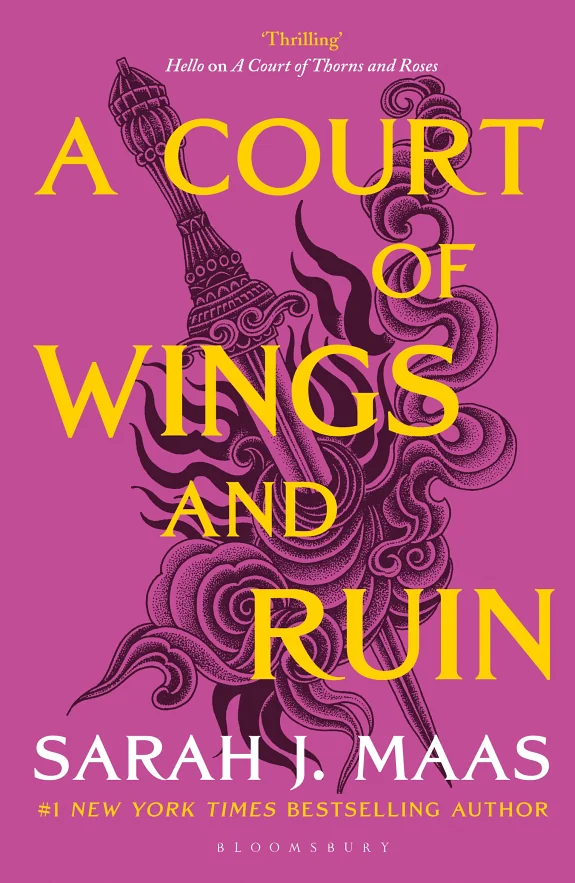
A Court of Wings and Ruin
 78
78

A Court of Wings and Ruin
Sarah J. Maas's A Court of Wings and Ruin delivers the expected large-scale conflict and emotional stakes for fans invested in the ACOTAR saga. The sheer scope of the war against Hybern is impressive, weaving together multiple character perspectives and court dynamics into a grand, if sometimes sprawling, narrative. The strength lies in Maas's consistent ability to craft compelling relationships amidst chaos, particularly the central bond between Feyre and Rhysand. However, the pacing occasionally falters under the weight of its own ambition, with certain plot threads feeling rushed towards the climax, particularly concerning the resolution of the war itself. A standout element is the exploration of Feyre's strategic acumen, moving beyond pure emotional response to calculated action. Ultimately, this installment provides a satisfying, albeit predictable, culmination of the initial conflict, serving its dedicated readership well.
📝 Description
78
Published in 2020, A Court of Wings and Ruin escalates the conflict of Sarah J. Maas's series with an impending war.
This third novel in Sarah J. Maas's romantic fantasy series thrusts readers into a brewing war. The story focuses on the High Lord of the Night Court, Rhysand, and his allies as they prepare for an assault from Hybern. The narrative expands its scope, detailing the political maneuvering, strategic preparations, and personal sacrifices necessary to defend Prythian.
The book is written for established fans of the ACOTAR series who have followed Feyre Archeron's progress and her developing relationships. Readers who enjoy detailed world building, high tension romance, and character focused plots with fae, magic, and large battles will find themselves absorbed. It appeals to those who appreciate a mix of warfare, personal growth, and complicated interpersonal dynamics in a fantasy setting.
A Court of Wings and Ruin operates within the adult fantasy genre, a space that has seen considerable growth, particularly online. Maas's work contributes to the 'romantasy' trend, which combines romantic plotlines with fantastical elements. The series is often discussed alongside other contemporary fantasy authors, highlighting its role in shaping current trends in the genre.
💡 Why Read This Book?
• Gain insight into the sacrifices demanded by leadership through Feyre's strategic planning and the High Lords' council meetings, illustrating the personal cost of defending Prythian. • Experience the intricate politics and alliances between the Fae courts, observing how historical animosities and new pacts shape the war effort against Hybern. • Witness the evolution of power dynamics, particularly how characters like Feyre and Rhysand redefine strength through unity and emotional resilience in the face of overwhelming odds.
⭐ Reader Reviews
Honest opinions from readers who have explored this book.
❓ Frequently Asked Questions
When was A Court of Wings and Ruin first published?
A Court of Wings and Ruin was first published in 2020, marking the third major release in the A Court of Thorns and Roses series.
Who is the primary antagonist in A Court of Wings and Ruin?
The primary antagonist is Hybern, the ancient and ruthless king from the human lands, who seeks to conquer Prythian and subjugate its Fae inhabitants.
What is the significance of the Bone Carver in the story?
The Bone Carver is a powerful, enigmatic entity encountered by Feyre and her companions. He represents a neutral, ancient force whose allegiance is crucial but difficult to secure.
How does A Court of Wings and Ruin conclude the initial arc of the series?
The novel concludes the war against Hybern, resolving major conflicts and setting the stage for future developments, while solidifying the relationships and political landscape of Prythian.
Are there new Fae courts introduced in this book?
While it focuses on the existing courts, the narrative expands on their alliances and histories, particularly emphasizing the roles of the Spring Court, Winter Court, and the Night Court.
What role does Amren play in the war effort?
Amren, a mysterious and ancient being with immense power, plays a critical role in the war against Hybern, often acting as a powerful and direct force when conventional tactics fail.
🔮 Key Themes & Symbolism
The Weight of Command
This installment scrutinizes the immense burden placed upon leaders like High Lord Rhysand and Feyre Archeron. Their decisions carry the fate of entire courts, forcing them into morally ambiguous choices and personal sacrifices. The narrative illustrates how true leadership transcends brute force, demanding strategic foresight, empathy, and the willingness to absorb devastating loss for the greater good of Prythian.
Unity Against Tyranny
The central conflict against Hybern serves as a stark allegory for the necessity of unity in the face of oppressive forces. The novel highlights how deep-seated rivalries between Fae courts must be overcome to forge alliances capable of repelling an existential threat. This theme underscores the idea that collective strength, built on trust and shared purpose, is paramount when confronting overwhelming external aggression.
Sacrifice and Resilience
Characters consistently face situations requiring profound personal sacrifice, whether it's giving up loved ones, their own desires, or even their lives. The resilience displayed by the inhabitants of Prythian, particularly Feyre and her Inner Circle, in the face of immense devastation and loss is a recurring motif. The book explores how trauma can forge unbreakable bonds and strengthen resolve, even in the darkest hours.
The Nature of Power
Beyond raw magical ability, the novel explores different facets of power: political influence, strategic intellect, emotional fortitude, and the strength derived from deep interpersonal connections. Rhysand and Feyre demonstrate that true power lies not just in wielding magic, but in understanding people, forging alliances, and inspiring loyalty. The book questions the corrupting nature of absolute power and champions a more balanced, collaborative approach.
💬 Memorable Quotes
Direct passages from the work, attributed to the author.
“When you fall, I fall with you.”
— This declaration, central to the bond between Feyre and Rhysand, expresses the theme of intertwined destinies and unwavering support. It signifies a partnership where personal well-being is intrinsically linked, emphasizing mutual dependence and shared fate in the face of adversity.
“It was a dangerous, thrilling, and utterly consuming fire.”
— This describes the intense, all-encompassing nature of the war and the relationships forged within it. It speaks to the passion, risk, and profound emotional impact of the characters' experiences as they fight for survival and love.
“I was not a pet to be passed from owner to owner. I was a weapon. And I was dangerous.”
— Feyre's assertion of her agency and power reflects her transformation from a pawn to a formidable force. It highlights her journey of self-discovery and her refusal to be controlled, emphasizing her growing strength and strategic mind.
“We are the light in the dark, the hope in the void.”
— This statement, often echoed by the Inner Circle, defines their collective purpose and identity. It positions them as beacons of resilience and courage against the encroaching darkness represented by Hybern, underscoring their role as protectors.
“The world was not built for us. We must tear it down and build it again.”
— This sentiment reflects a revolutionary spirit, suggesting that existing structures are inadequate and must be fundamentally reshaped. It speaks to the desire for a new order, one that accommodates and empowers those who have been marginalized or oppressed.
🌙 Esoteric Significance
Tradition
While not explicitly adhering to a single esoteric tradition, A Court of Wings and Ruin draws heavily from archetypal narratives found across mythologies and folklores, which often contain Gnostic and Hermetic undertones. The concept of a hidden, magical realm (Prythian) separate from the mundane world, and the journey of a protagonist who bridges these realms, echoes Gnostic themes of awakening and liberation from ignorance. The emphasis on inner transformation and the discovery of hidden potential aligns with Hermetic principles of 'As Above, So Below'.
Symbolism
The 'Cauldron,' a source of immense primordial power, symbolizes creation, chaos, and the ultimate feminine divine, reminiscent of ancient Mother Goddess imagery. The 'High Lords' represent patriarchal structures and established powers, whose authority is challenged and ultimately reformed through the actions of characters like Feyre. The recurring motif of 'Stars and Shadows,' particularly associated with Rhysand and the Night Court, symbolizes duality – the balance between profound darkness and guiding light, hidden knowledge and overt power.
Modern Relevance
Contemporary fantasy readers and writers often look to Maas's work as a prime example of modern myth-making, blending romance, action, and intricate world-building. Practitioners of modern witchcraft or those interested in archetypal psychology might find resonance in the symbolic representation of divine feminine power and the journey of self-actualization. The series' success also highlights the cultural impact of internet-driven literary trends and the power of community in shaping a work's legacy.
👥 Who Should Read This Book
• Established fans of the ACOTAR series seeking the resolution to the war against Hybern and further development of beloved characters like Feyre and Rhysand. • Readers of epic fantasy who enjoy intricate world-building, complex political landscapes, and large-scale magical conflicts with significant romantic subplots. • Individuals interested in character-driven narratives that explore themes of sacrifice, leadership, and resilience within a richly imagined fae world.
📜 Historical Context
Published in 2020, A Court of Wings and Ruin arrived amidst a surge in the popularity of adult fantasy, particularly the 'romantasy' subgenre. Sarah J. Maas's series capitalized on this trend, building a massive online following, heavily amplified by platforms like TikTok. The novel's success placed it in conversation with other contemporary fantasy titans such as V.E. Schwab and Leigh Bardugo, who were also defining the modern fantasy landscape. While not directly engaging in academic discourse, Maas's work implicitly participated in broader discussions about female agency, complex relationships, and epic world-building that characterized much of the genre's output during the late 2010s. The reception was overwhelmingly positive from its dedicated fanbase, further solidifying Maas's position as a dominant voice in commercial fantasy fiction.
📔 Journal Prompts
Feyre's strategic prowess during the war against Hybern.
The symbolism of the Cauldron and its connection to primordial power.
Rhysand's internal conflict between his duty as High Lord and his personal desires.
The impact of ancient pacts on the present-day political range of Prythian.
Amren's true nature and her role in the final confrontation.
🗂️ Glossary
Hybern
The ancient, malevolent king from the human lands whose invasion of Prythian drives the central conflict of the novel, seeking to conquer and subjugate the Fae.
Inner Circle
The core group of powerful Fae individuals loyal to Rhysand, High Lord of the Night Court, including Feyre, Cassian, Azriel, Mor, and Amren.
High Lord
The ruler of one of the seven Fae courts in Prythian, possessing significant magical power and political authority over their domain.
The Bone Carver
An ancient, enigmatic entity dwelling in the Prison, possessing immense power and the ability to manipulate bone and souls; his allegiance is sought by both sides.
The Cauldron
A primordial source of immense magical power, often depicted as a sacred feminine entity, central to the creation and magic of Prythian.
The Prison
A place of exile and torment where dangerous entities, like the Bone Carver and the Weaver, are kept imprisoned, often holding secrets vital to the war.
Suriel
A knowledgeable, often cryptic, ancient spirit who acts as an informant, possessing vast knowledge of Prythian's history and secrets, though his motives can be ambiguous.
This book appears in 1 collection
🔮 Readers Also Liked
Browse all →







From the “Fairies” Collection
View all →






More Free Occult Philosophy Books
View all →