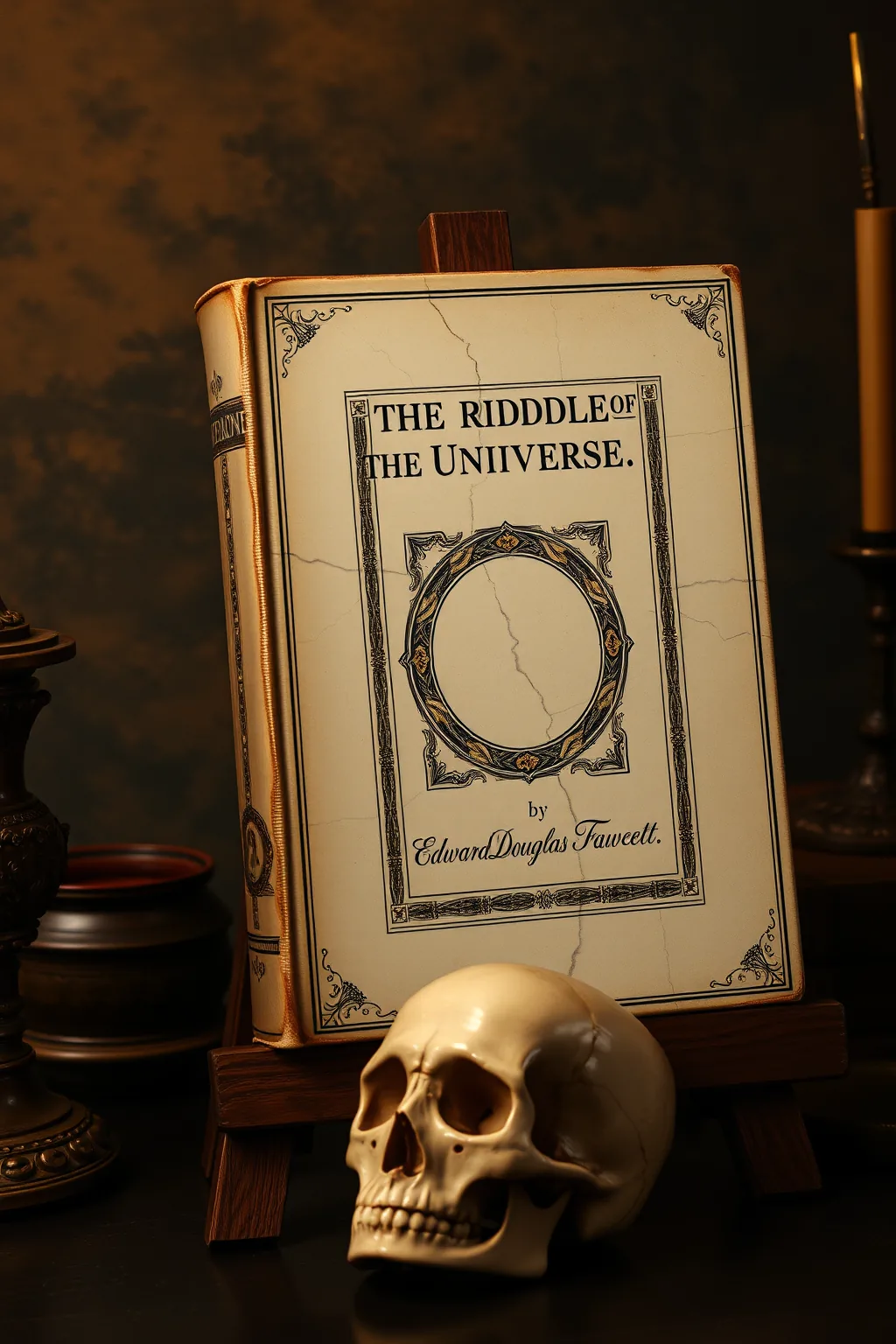
The Riddle of the Universe: Being an Attempt to Determine the First Principles of Metaphysic ...
 77
77

The Riddle of the Universe: Being an Attempt to Determine the First Principles of Metaphysic ...



The Riddle of the Universe by Edward Douglas Fawcett is a timeless classic that continues to captivate readers with its deep exploration of metaphysical principles. Published in 1893, this book stands as a testament to Fawcett's intellectual prowess and his ability to bridge the gap between academic philosophy and esoteric wisdom. For modern esoteric seekers, this text is invaluable as it provides a historical perspective on the development of occult thought. Fawcett's clear and concise writing style makes complex ideas accessible, allowing readers to engage with the material on multiple levels. The book's exploration of the first principles of metaphysics is particularly enlightening, offering insights into the nature of reality and the interconnectedness of all things. This makes it an essential read for anyone interested in understanding the foundations of occult philosophy. The Riddle of the Universe is a must-have for anyone serious about delving into the mysteries of the universe and the human experience.
📝 Description
77
Edward Douglas Fawcett's 1908 work attempts to determine the first principles of metaphysics.
In "The Riddle of the Universe," Edward Douglas Fawcett sets out to establish the fundamental principles of metaphysics. Published in 1908, the book approaches occult philosophy with a focus on the hidden laws governing existence. Fawcett seeks to connect the material world with the immaterial, examining the symbolism and deeper meanings within reality. The text is structured around a deep contemplation of esoteric wisdom. It is intended for those interested in understanding the cosmos and the human condition through a metaphysical lens. Fawcett's approach is dense, requiring careful attention to his arguments about perception and reality. The book aims to provoke thought on the nature of consciousness and the universe's underlying structure.
Fawcett's "The Riddle of the Universe" sits within the broader esoteric and occult revival of the late 19th and early 20th centuries. This period saw a surge of interest in spiritualism, theosophy, and various schools of occult thought that sought to understand reality beyond the confines of conventional materialism and scientific positivism. Fawcett engages with these currents by attempting a systematic metaphysical framework, drawing on philosophical traditions while aiming for a unique synthesis. His work reflects a desire to articulate a coherent worldview that accounts for both the observable world and a hidden, spiritual dimension.
💡 Why Read This Book?
Reading The Riddle of the Universe today offers a unique opportunity to explore the esoteric and occult dimensions of human thought. This book provides a historical perspective on the development of metaphysical ideas, making it an invaluable resource for modern esoteric seekers. By engaging with Fawcett's insights, readers can gain a deeper understanding of the interconnectedness of all things and the nature of reality. This book is a gateway to the hidden knowledge that has shaped contemporary occult thought, offering a rich and rewarding journey into the mysteries of the universe.
⭐ Reader Reviews
Honest opinions from readers who have explored this book.
❓ Frequently Asked Questions
What is the main focus of The Riddle of the Universe?
The main focus of the book is to determine the first principles of metaphysics, exploring esoteric and occult dimensions of human thought.
Is this book suitable for beginners in occult philosophy?
Yes, Fawcett's clear writing style makes complex ideas accessible, making it suitable for both beginners and experienced practitioners.
How does this book contribute to modern esoteric thought?
The book provides a historical perspective on the development of metaphysical ideas, offering insights into the foundations of contemporary occult philosophy.
🔮 Key Themes & Symbolism
Metaphysical First Principles
Fawcett's exploration of the fundamental principles of metaphysics reveals the hidden knowledge that governs the universe. This theme explores the symbolism and mysteries that lie beneath the surface of reality, offering insights into the nature of existence.
Symbolism and Mystery
The book is rich in symbolism, inviting readers to uncover the hidden meanings that lie within the text. Fawcett's use of esoteric symbols and metaphors adds depth to his philosophical inquiries, making this a fascinating read for those interested in the mystical aspects of reality.
The Quest for Hidden Knowledge
The Riddle of the Universe is a journey into the depths of occult philosophy, seeking to uncover the hidden knowledge that has eluded humanity for centuries. This theme is central to the book's exploration of metaphysical first principles and the symbolism that underpins our reality.
💬 Memorable Quotes
Direct passages from the work, attributed to the author.
“The universe is a riddle, and the key to its solution lies in the depths of our own souls.”
— Fawcett suggests that the mysteries of the universe are intertwined with our inner selves, encouraging readers to look within for answers.
“Symbolism is the bridge that connects the tangible and the intangible, revealing the hidden truths that lie beneath the surface.”
— Fawcett's use of symbolism is a key aspect of his philosophical approach, inviting readers to explore the deeper meanings that lie within the text.
“The first principles of metaphysics are the foundation upon which all knowledge is built, and their exploration is the key to unlocking the secrets of the universe.”
— Fawcett's focus on first principles underscores the importance of foundational knowledge in the quest for understanding the mysteries of existence.
💡 Key Ideas
Editorial paraphrase of the work's core concepts — not direct quotes.
Metaphysics is the language of the divine, and its principles are the building blocks of reality.
This quote emphasizes the importance of metaphysical inquiry in understanding the fundamental nature of existence.
The quest for hidden knowledge is a journey into the unknown, where the boundaries of reality are blurred and the mysteries of existence are revealed.
This quote highlights the exploratory nature of Fawcett's work, encouraging readers to embrace the unknown and seek deeper understanding.
🌙 Esoteric Significance
Tradition
The Riddle of the Universe belongs to the Hermetic tradition, which seeks to uncover the hidden knowledge and symbolism that lie beneath the surface of reality. This tradition emphasizes the importance of metaphysical inquiry and the exploration of first principles in understanding the nature of existence.
Symbolism
Key symbols in the book include the use of esoteric metaphors and allegories to represent abstract concepts. These symbols serve as a bridge between the tangible and the intangible, inviting readers to delve deeper into the mysteries of the universe.
Modern Relevance
Today, Fawcett's work continues to be relevant for modern practitioners of occult philosophy and esoteric traditions. His exploration of first principles and symbolism offers valuable insights into the hidden knowledge that underpins our reality, making it a valuable resource for seekers of hidden truths.
👥 Who Should Read This Book
Beginners in occult studies may find The Riddle of the Universe challenging due to its deep exploration of metaphysical concepts. However, it is an invaluable resource for scholars and practitioners who are already familiar with the field. Spiritual seekers who are drawn to the mysteries of existence will find this book to be a rich source of inspiration and insight. Practitioners of esoteric traditions will appreciate Fawcett's meticulous examination of first principles and symbolism, making it a must-read for those seeking to deepen their understanding of the occult.
📜 Historical Context
Published in the late 19th century, The Riddle of the Universe emerged during a time of significant intellectual and spiritual exploration. The era was marked by a renewed interest in occult and mystical traditions, as well as a growing fascination with the hidden principles that govern the universe. Fawcett's work contributed to this intellectual ferment, offering a profound examination of metaphysical first principles that challenged the prevailing scientific and philosophical paradigms of the time. The book's influence can be seen in the works of later occult philosophers and mystics, who continued to explore the deeper mysteries of existence.
📔 Journal Prompts
Reflect on the idea that the universe is a riddle to be solved. What personal mysteries do you seek to uncover?
How do metaphysical first principles influence your understanding of reality?
Consider the role of symbolism in your spiritual journey. What symbols hold deep meaning for you?
Explore the concept of hidden knowledge. What secrets do you believe lie beneath the surface of everyday life?
Reflect on the idea that the quest for hidden knowledge is a journey into the unknown. What unknowns are you willing to explore?
🗂️ Glossary
Metaphysical First Principles
The fundamental principles that govern the nature of existence and reality.
Esoteric Symbolism
The use of symbols and metaphors to represent abstract concepts and hidden knowledge.
Occult Philosophy
The study of hidden knowledge and mystical traditions that seek to uncover the mysteries of the universe.
Hermetic Tradition
A mystical and philosophical tradition that emphasizes the importance of hidden knowledge and the exploration of first principles.
Symbolic Allegory
The use of stories and metaphors to convey deeper meanings and hidden truths.
This book appears in 4 collections
🔮 Readers Also Liked
Browse all →








From the “Occultism” Collection
View all →







More Free Occult Philosophy Books
View all →