Reading the Runes
 71
71

Reading the Runes
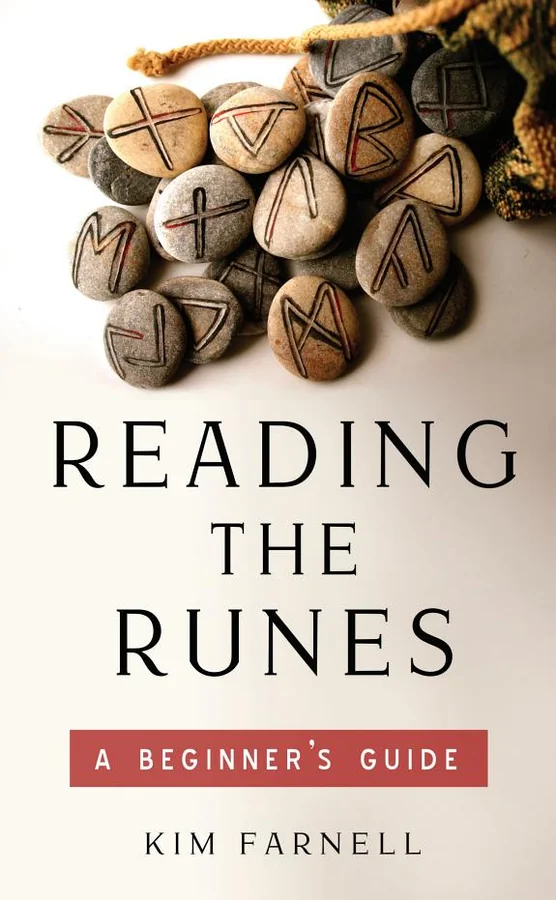
Kim Farnell’s Reading the Runes offers a grounded approach to a subject often shrouded in dense academic prose or sensationalized mysticism. The book’s strength lies in its clarity and directness, making the complex world of rune divination accessible without sacrificing depth. Farnell avoids overly esoteric jargon, focusing instead on practical application and historical context. A particularly insightful section discusses the positional meanings of runes in a cast, illustrating how a single symbol’s interpretation shifts based on its neighbors and the spread’s layout. However, the book occasionally feels a bit too brief in exploring the deeper mythological underpinnings of certain runes, leaving the reader wanting more exploration of the Norse deities and sagas linked to them. Despite this, it stands as a reliable primer for newcomers. Farnell provides a functional framework for engaging with the runes that is both educational and empowering.
📝 Description
71
Kim Farnell's Reading the Runes explains the Elder Futhark for divination starting in the 2nd century CE.
Kim Farnell's book introduces the Elder Futhark, the oldest runic alphabet, as a system for divination. It moves past the symbols' use as a simple alphabet or decorative items to detail their practical application in personal guidance and magical work. The text covers the historical origins of these Germanic runes within Northern European traditions, focusing on their emergence around the 2nd century CE. Farnell explains how the very word "rune" signifies secrecy or mystery, reflecting their ancient use in inscriptions, protection, and ritual.
The book details methods for interpreting rune casts, explaining the specific meanings of each of the 24 Elder Futhark symbols. It guides readers on how to integrate rune work into daily life for insight and personal growth. This work is intended for those new to rune divination seeking an accessible starting point. It also appeals to individuals who have previously viewed runes superficially and wish to grasp their deeper esoteric significance, offering a path to understanding beyond surface-level knowledge.
This book situates the runes within the esoteric traditions of Northern Europe, where symbols were seen as having magical and divinatory power alongside their linguistic function. The Elder Futhark, originating around the 2nd century CE, is presented not merely as an alphabet but as a system of potent symbols tied to pre-Christian spirituality. Farnell connects the runes to their historical use in inscriptions, protection, and ritual, emphasizing the ancient understanding of 'rune' as secret or mystery. The work guides readers toward using these symbols for personal insight and magical practice, aligning with a long history of using alphabetic forms for esoteric purposes.
💡 Why Read This Book?
• Gain a practical understanding of the Elder Futhark, learning the historical origins and symbolic meanings of each of the 24 runes, as presented in Farnell's detailed explanations. • Develop skills in rune casting and interpretation, enabling you to perform divinations for personal guidance by understanding concepts like rune placement and interrelationships. • Explore the magical applications of runes, learning how to use rune staves and their inherent energies for protection and manifestation, as detailed in the latter sections of the book.
⭐ Reader Reviews
Honest opinions from readers who have explored this book.
❓ Frequently Asked Questions
What is the origin of the word 'rune' and its significance?
The word 'rune' originates from the Old Norse word 'rún,' which means 'secret' or 'mystery.' This etymology underscores the symbolic and divinatory nature of runes, suggesting they hold hidden knowledge accessible through interpretation and esoteric practice.
Which runic alphabet does Kim Farnell's book primarily focus on?
The book primarily focuses on the Elder Futhark, which is the oldest form of the runic alphabet. It comprises 24 distinct symbols that were used by Germanic tribes in Northern Europe.
How does 'Reading the Runes' approach rune divination?
It approaches rune divination by detailing methods for casting runes and interpreting their meanings based on their individual symbolism, position in the cast, and relationships with other runes.
What are the practical uses of runes discussed in the book?
The book discusses practical uses such as personal guidance, self-reflection, and magical applications like protection and manifestation, moving beyond simple fortune-telling.
Is this book suitable for someone with no prior knowledge of runes?
Yes, the book is designed as an introductory guide, making it suitable for beginners. It explains the historical background, symbol meanings, and practical methods for using runes.
What distinguishes the runes from a standard alphabet?
Unlike a standard alphabet used solely for written communication, runes possess inherent symbolic meanings, magical properties, and divinatory significance rooted in ancient Northern European traditions.
🔮 Key Themes & Symbolism
The Elder Futhark System
This theme centers on the 24-rune Elder Futhark alphabet, presented not merely as historical script but as a living system of divination and magic. Farnell meticulously details each rune, linking its phonetic value and visual form to its deeper symbolic meaning, mythological associations, and potential for insight. The work emphasizes understanding the runes as archetypal forces and energies that can be consulted for guidance on life's challenges and opportunities, moving beyond simple alphabetical identification to a profound symbolic language.
Divination and Personal Guidance
A core theme is the practical application of runes for divination. The book guides readers through the process of casting runes, interpreting their positions, and understanding the narrative that emerges from a rune spread. It stresses that rune divination is a tool for self-reflection and personal growth, offering clarity on situations and pathways forward. Farnell encourages a mindful approach, where the runes act as mirrors to the subconscious and guides for conscious decision-making, facilitating a deeper connection with one's inner wisdom.
Runic Magic and Energetics
Beyond divination, the book explores the magical dimensions of runes. This includes understanding how each rune embodies specific energies and powers that can be harnessed for practical magical work, such as protection, healing, or manifestation. Farnell discusses the creation and use of rune staves (bindrunes) and sigils, explaining how to imbue them with intention. This aspect connects the ancient practices of Germanic peoples with contemporary magical theory, offering readers tangible methods for working with runic power.
Historical and Mythological Roots
This theme anchors the practice of rune reading in its historical and mythological context. Farnell studies the origins of the runes within the Northern European traditions, exploring their use by ancient Germanic peoples. The book often references Norse mythology, connecting specific runes to deities like Odin or concepts like the World Tree, providing a richer understanding of their symbolic weight. This grounding in history and myth lends authority and depth to the practice of rune divination.
💬 Memorable Quotes
Direct passages from the work, attributed to the author.
“The word rune comes from the Norse word runa, meaning 'secret.'”
— This etymological link highlights the fundamental esoteric nature of runes. It suggests that their primary function is not merely communication but the revelation of hidden knowledge and deeper truths through symbolic interpretation.
“Runes have an undeniable mystery and allure.”
— This observation captures the immediate appeal of rune symbols to many. It speaks to their ancient origins and enigmatic meanings, which draw individuals to explore their potential for divination and magical practice.
“On the surface, they make up an ancient alphabet known as the Futhark.”
— This points to the basic, recognizable function of runes as a script. However, it immediately implies that their true value and purpose lie beneath this surface level, in their esoteric and divinatory applications.
“They are so much more...”
— This ellipsis serves as a powerful invitation to explore the deeper layers of meaning and application associated with runes. It signals that the book will move beyond the obvious to reveal the hidden potential and significance of these ancient symbols.
“An essential introductory guide for anyone who wishes to use the runes for divination, personal guidance, and magic.”
— This statement clearly defines the book's purpose and target audience. It positions the work as a foundational resource for those seeking practical, actionable knowledge in using runes for spiritual and magical ends.
🌙 Esoteric Significance
Tradition
This work firmly resides within the Western Esoteric tradition, specifically drawing from Norse and Germanic paganism, often referred to as Heathenry or Ásatrú. It connects to the broader Hermetic principle of 'As Above, So Below,' applying it to the symbolic language of the runes to understand earthly matters through celestial or divine patterns. Farnell's approach departs from strictly academic interpretations by emphasizing the practical, magical, and divinatory use of the runes, aligning with modern magical practices that seek to reconnect with ancient European spiritual currents.
Symbolism
Key symbols like the rune 'Fehu' (wealth, abundance, cattle) represent primal energy and material prosperity, connecting to the foundational aspects of survival and growth. 'Uruz' (aurochs, primal strength) symbolizes untamed power, raw energy, and vitality, often invoked for physical strength and endurance. 'Thurisaz' (thorn, giant, defense) embodies disruptive force, protection, and the need for careful action, representing both destructive and defensive power rooted in Norse mythic landscapes.
Modern Relevance
Contemporary practitioners of modern Paganism, Asatru, and eclectic witchcraft frequently utilize Farnell's approach. The book serves as a gateway for individuals exploring ancestral spiritualities or seeking divination systems outside of Tarot or I Ching. Its clear methodology makes it relevant to online communities focused on runic magic, historical reconstruction, and personal spiritual development, influencing how modern practitioners engage with these ancient symbols for guidance and empowerment.
👥 Who Should Read This Book
• Beginners interested in divination systems beyond Tarot, seeking a direct and practical introduction to rune casting and interpretation. • Students of Northern European history and mythology who wish to understand the practical, spiritual, and magical uses of the Elder Futhark. • Individuals seeking tools for personal growth and self-reflection, looking for a symbolic language to gain clarity and insight into their life circumstances.
📜 Historical Context
Kim Farnell's Reading the Runes emerges within a contemporary resurgence of interest in esoteric practices and ancient systems of divination, a trend that gained significant momentum in the late 20th century. While runes have a history stretching back to at least the 2nd century CE with the Elder Futhark, their modern interpretation is influenced by scholars and practitioners like Guido von List in the early 20th century, who, despite controversial associations, helped revive runic studies. Farnell's work builds upon this legacy, offering a more accessible and practical guide compared to the denser academic or occult texts that often dominate the field. It situates itself against a backdrop where comparative mythology and spiritual traditions from Northern Europe are increasingly studied, often drawing parallels with movements like Theosophy or modern Paganism, though Farnell focuses on direct application rather than broad philosophical integration.
📔 Journal Prompts
Reflect on the rune 'Fehu' and its connection to your current sense of abundance.
Consider how the 'Uruz' energy manifests in your personal drive and physical vitality.
Explore the challenges represented by 'Thurisaz' in a recent decision.
How might the symbolic meaning of 'Ansuz' inform your communication style?
Analyze the divinatory message received from a rune spread using the principles outlined in the book.
🗂️ Glossary
Elder Futhark
The oldest known runic alphabet, comprising 24 symbols, used by Germanic tribes from approximately the 2nd to the 8th centuries CE. It is the primary runic system discussed for divination and magic.
Rune Casting
The practice of throwing runes (traditionally onto a cloth or surface) and interpreting their resulting positions and combinations to gain insight or answer questions.
Bindrune
A magical symbol created by combining two or more runes, often by overlaying or merging their shapes, to represent a specific intention or magical working.
Divination
The practice of seeking knowledge of the future or the unknown by supernatural means; in this context, using runes to gain insight into situations and potential outcomes.
Stave
A single rune symbol, often used in the context of magical workings or inscriptions. 'Rune stave' can also refer to a staff or stick inscribed with runes.
Elder
Refers to the Elder Futhark, distinguishing it from later runic alphabets like the Younger Futhark or Anglo-Saxon Futhorc.
Norse Traditions
Refers to the cultural, religious, and mythological practices of the ancient Scandinavian peoples, from which the runes and their associated meanings largely derive.
This book appears in 1 collection
🔮 Readers Also Liked
Browse all →


From the “Rune Reading” Collection
View all →
More Free Occult Philosophy Books
View all →