I Ching

 62
62

I Ching



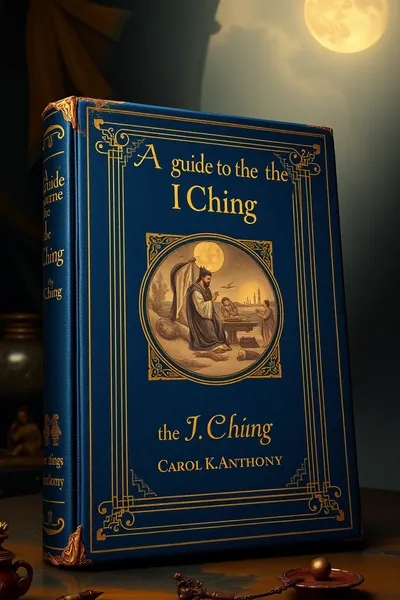
Carol K. Anthony's rendition of the I Ching is a masterful illumination of this foundational text for esoteric practitioners. Thorne notes, 'Anthony masterfully distills the dense symbolism of the Yi Jing into accessible yet profound guidance, bridging ancient wisdom with contemporary relevance. Her interpretations offer potent insights for those seeking to align with natural cycles and the subtle energies of the universe. This edition is an indispensable companion for serious students of divination, hermeticism, and the profound art of self-transformation, making it a must-read for any serious practitioner aiming to deepen their connection to cosmic synchronicity.'
📝 Description
62
Carol K. Anthony's 1991 I Ching interpretation focuses on the hexagrams as psychological archetypes.
Carol K. Anthony's 1991 work presents the I Ching not merely as a divination tool, but as a system for understanding personal psychology. She maps the 64 hexagrams to archetypal patterns of human experience, suggesting they reflect inner states and relational dynamics. This approach moves beyond traditional fortune-telling, framing the oracle as a mirror for self-reflection and personal growth.
Anthony's interpretation encourages readers to engage with the text to gain insight into their own motivations and the forces influencing their lives. She details how the interactions between Yin and Yang within each hexagram can illuminate complex situations and guide decision-making. The book aims to help individuals find clarity and inner balance by understanding these fundamental principles as they manifest in everyday life.
This interpretation of the I Ching places it within the Western esoteric tradition that seeks to extract psychological and philosophical meaning from ancient oracular systems. While the I Ching originated in Chinese cosmology and divination, Anthony's work aligns with a broader interest in Jungian psychology and archetypal symbolism. It reframes the text as a tool for inner transformation, connecting its ancient imagery to modern understandings of the human psyche, similar to how other esoteric traditions interpret symbolic languages for self-discovery.
💡 Why Read This Book?
Unlock the secrets of ancient wisdom and gain profound insight into life's challenges. This book offers a unique lens for self-discovery and decision-making, connecting you to universal patterns. Ideal for spiritual seekers, practitioners of Eastern philosophies, and anyone desiring a deeper understanding of destiny and causality.
⭐ Reader Reviews
Honest opinions from readers who have explored this book.
❓ Frequently Asked Questions
What is the I Ching?
The I Ching, or Book of Changes, is an ancient Chinese divination text and philosophical work, considered one of the oldest classics. It uses a system of 64 hexagrams, formed from six stacked lines, to represent fundamental archetypes and offer guidance on decision-making and understanding life's circumstances.
How does Carol K. Anthony's version differ?
Anthony's rendition emphasizes the philosophical and psychological depth of the I Ching, offering clear, modern interpretations of the hexagrams and their changing lines. Her approach focuses on self-awareness and personal transformation, making the oracle highly applicable to contemporary life.
Can I use the I Ching without prior knowledge?
Yes, this version is designed for both beginners and experienced practitioners. Anthony provides clear instructions on how to consult the oracle, making it accessible for those new to its wisdom.
What is a hexagram?
A hexagram is a figure composed of six stacked horizontal lines, each either solid (Yang) or broken (Yin). There are 64 unique hexagrams, each representing a specific situation, archetype, or stage of development within the cosmic cycle.
How can the I Ching help me?
The I Ching acts as a mirror, reflecting the underlying dynamics of your situation and suggesting potential courses of action. It encourages introspection, helping you to understand the forces at play and to make more aligned and conscious choices.
🔮 Key Themes & Symbolism
The Cosmic Dance of Yin and Yang
This theme looks at the fundamental principle of duality that permeates the I Ching. Yin, the receptive, dark, and feminine, and Yang, the active, light, and masculine, are not opposing forces but complementary aspects of a single, unified reality. Their interplay, ceaseless transformation, and harmonious balance are central to understanding the ebb and flow of existence, the cycles of nature, and the dynamics within human experience. Anthony's work illuminates how this ancient concept provides a framework for comprehending change and finding equilibrium in all aspects of life.
The Art of Synchronicity and Meaningful Coincidence
The I Ching is a powerful tool for exploring the concept of synchronicity, the meaningful coincidences that appear to guide our lives. By consulting the oracle, individuals can gain insight into the subtle connections between their inner state and outer events. This theme explores how the hexagrams act as symbolic mirrors, reflecting the 'right time' for action or contemplation, and how attuning to these synchronistic whispers can lead to more purposeful and divinely guided choices, fostering a deeper sense of connection to the universal flow.
Navigating Change and Embracing Transformation
Fundamentally, the I Ching is a guide to understanding and navigating change. It teaches that life is in constant flux, and resistance to this natural evolution leads to stagnation. Anthony's interpretation emphasizes the hexagrams not as predictions, but as maps of potential development. This theme explores how the oracle empowers individuals to face transitions with wisdom, to adapt to new circumstances, and to actively participate in their own growth and transformation, ultimately leading to greater resilience and inner strength.
💬 Memorable Quotes
Direct passages from the work, attributed to the author.
“The Book of Changes is a mirror.”
— This simple yet profound statement highlights the I Ching's function as a reflective tool, showing us the underlying dynamics of our situations and ourselves.
“Seek harmony within the currents.”
— This suggests finding peace and effectiveness not by fighting life's natural progressions, but by understanding and flowing with them.
“Wisdom lies in the subtle shifts.”
— The I Ching teaches that clear insights and effective actions often arise from understanding the smallest, most nuanced changes.
“The hexagrams are archetypes of experience.”
— This emphasizes that the 64 figures represent universal patterns of human life and cosmic principles, offering timeless guidance.
💡 Key Ideas
Editorial paraphrase of the work's core concepts — not direct quotes.
Change is the only constant.
A fundamental tenet of the I Ching, this quote underscores the impermanence of all things and the wisdom in accepting and adapting to flux.
🌙 Esoteric Significance
Tradition
The I Ching is a foundational text within multiple esoteric traditions, most notably Chinese Taoism and its related philosophies, as well as Hermeticism and Jungian psychology. It is viewed as a living oracle that embodies the principles of the Tao, the underlying order of the universe. Its cyclical nature, emphasis on balance, and symbolic language align with the Hermetic axiom 'As Above, So Below,' offering a microcosm of cosmic laws accessible through its hexagrams and changing lines.
Symbolism
The core symbolism of the I Ching lies in its 64 hexagrams, each composed of six lines (broken for Yin, solid for Yang). These lines and their arrangements represent fundamental archetypes of human experience and natural phenomena, from creation and growth to conflict and completion. The trigrams (three-line figures) within the hexagrams further add layers of meaning, symbolizing elements, directions, and family relationships. The dynamic interplay between hexagrams, particularly through their changing lines, reveals the process of transformation and the unfolding of destiny.
Modern Relevance
In the modern era, the I Ching continues to offer profound relevance as a tool for psychological insight, ethical guidance, and spiritual development. It provides a framework for understanding the interconnectedness of all things and the importance of aligning oneself with natural cycles. For individuals reading through the complexities of contemporary life, the oracle serves as a source of clarity, helping to discern opportune moments for action, fostering resilience in the face of adversity, and encouraging a more conscious and balanced approach to decision-making and personal growth.
👥 Who Should Read This Book
This rendition of the I Ching is important for a diverse audience. Beginners starting their spiritual journey will find clear guidance and an accessible entry point into profound Eastern wisdom. Scholars of comparative religion and philosophy will appreciate its depth and nuanced interpretations. Dedicated practitioners of divination, tarot, and other esoteric arts will discover a powerful complementary system for insight and self-reflection. Ultimately, anyone seeking to understand the subtle forces shaping their lives, to make more conscious choices, and to cultivate inner harmony will find this book an indispensable companion on their path.
📜 Historical Context
Originating in ancient China, the I Ching's roots stretch back over 3,000 years, making it one of the world's oldest philosophical and divinatory texts. Initially used by shamans and rulers for divination and statecraft, its influence expanded over centuries, becoming a central to Confucianism and Taoism. During the Spring and Autumn period (771-476 BCE) and the Warring States period (475-221 BCE), its philosophical layers deepened, incorporating cosmological and ethical dimensions. It profoundly shaped Chinese thought, art, and governance, influencing not only East Asia but also, through translations and scholarly study, the Western esoteric traditions from the 19th century onwards. Carol K. Anthony's interpretation draws on this rich historical range, presenting its timeless wisdom in a manner accessible to contemporary seekers.
📔 Journal Prompts
Reflect on a recent challenge: which hexagram best describes its essence, and what does its advice suggest for your approach?
Consider the balance of Yin and Yang in your life: where do you feel an imbalance, and how can you foster greater harmony?
What 'changing lines' are present in your current situation? How do these transitional energies guide your next steps?
How does the I Ching's concept of synchronicity resonate with your personal experiences of meaningful coincidences?
Imagine the I Ching as a wise elder. What is the most important piece of advice it would offer you today for navigating your path?
🗂️ Glossary
Hexagram
A figure composed of six stacked lines, each either solid (Yang) or broken (Yin), representing a specific archetype or situation in the I Ching.
Trigram
A figure composed of three lines, representing fundamental elements and concepts such as Heaven, Earth, Water, Fire, etc.
Yin
The principle of receptivity, darkness, passivity, and the feminine. Represented by a broken line (— —).
Yang
The principle of activity, light, assertiveness, and the masculine. Represented by a solid line (—).
Tao
The fundamental, ineffable principle of the universe in Taoist philosophy; the natural order and flow of existence.
This book appears in 3 collections
🔮 Readers Also Liked
Browse all →









More by Carol K. Anthony
All books →


From the “Tarot” Collection
View all →






More Free Divination & Tarot Books
View all →