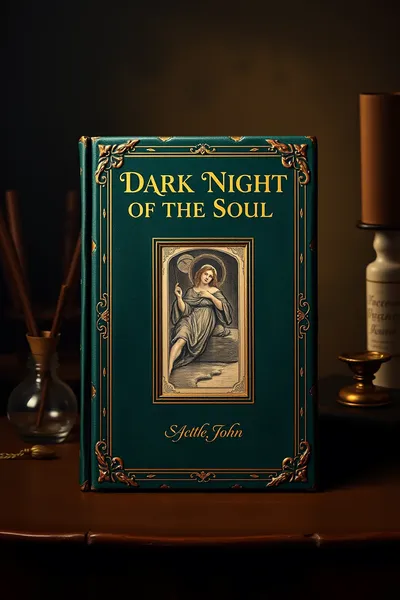
The Dark Night of the Soul (Classic Reprint)

 83
83

The Dark Night of the Soul (Classic Reprint)
John of the Cross's The Dark Night of the Soul offers a stark, unvarnished account of the soul's passage through spiritual desolation. Unlike more saccharine devotional literature, this 16th-century text confronts the reader with the raw, often painful, process of purification. The author's unflinching focus on the 'night' – the absence of God's perceived presence – makes it a challenging yet rewarding read for those deep in contemplative practice. A particularly potent section describes the "night of the spirit," where the soul feels abandoned by God, a state the author argues is crucial for ultimate union. While its dense theological language can be an obstacle for modern readers, the work's core message about embracing spiritual dryness as a path to divine proximity remains powerfully relevant. It is an essential, albeit demanding, exploration of the soul's ascent.
📝 Description
83
John of the Cross wrote 'The Dark Night of the Soul' in the 16th century to describe spiritual purification.
Penned in the late 1500s, John of the Cross's 'The Dark Night of the Soul' details the soul's progression toward divine union through a process of purification. This purification often involves periods of spiritual emptiness and desolation. John of the Cross presents this not as a literal illness but as a theological and mystical framework for understanding spiritual trials and achieving a deeper connection with God.
This work is suited for those interested in Christian mysticism, contemplative prayer, and the history of Western spirituality. It speaks to individuals seeking to grasp the psychological and spiritual aspects of faith, especially during times of spiritual dryness or inner conflict. Students of ascetic and mystical theology will find its thorough exposition valuable for understanding these deeper dimensions of religious experience.
Written during the Spanish Golden Age, a time of intense religious reform and mystical exploration within Catholicism, 'The Dark Night of the Soul' emerged from the Carmelite tradition. John of the Cross, collaborating with Teresa of Ávila, articulated a mystical path that faced scrutiny from religious authorities. His work reflects the intellectual and spiritual currents of the Counter-Reformation, detailing a transformative process of detachment and passive surrender as a means to achieve direct, loving union with the divine.
💡 Why Read This Book?
• You will learn to reframe spiritual dryness not as abandonment, but as a necessary stage of purification, drawing on John of the Cross's concept of the "night of the senses." • You will gain a deeper understanding of passive contemplation, as detailed in the "night of the spirit," allowing you to surrender more fully to the divine will. • You will appreciate the historical context of 16th-century Carmelite reform and its impact on mystical theology, as outlined by John of the Cross himself.
⭐ Reader Reviews
Honest opinions from readers who have explored this book.
❓ Frequently Asked Questions
Is 'The Dark Night of the Soul' about clinical depression?
No, while it describes periods of desolation, John of the Cross distinguishes this spiritual 'night' from psychological depression. It's a theological concept about the soul's purification, not a clinical diagnosis.
Who was John of the Cross?
John of the Cross (San Juan de la Cruz) was a 16th-century Spanish mystic and Carmelite friar, known for his poetry and theological writings on the soul's journey to God.
What is the 'night of the senses'?
It's the initial stage of spiritual purification where the soul detaches from sensory pleasures and consolations, learning to find God without external spiritual 'feelings'.
What is the 'night of the spirit'?
This is a more advanced and profound stage of purification where the intellect, memory, and will are cleansed, often leading to a feeling of profound dryness and abandonment by God.
Why is this book considered important in Christian mysticism?
It provides a systematic and profound explanation of the passive purification of the soul, offering a roadmap for achieving union with God through spiritual trials.
What is the historical context of this book?
Written in the latter half of the 16th century, it emerged during the Counter-Reformation and reflects the intense spiritual climate and mystical theology of Spain at that time.
🔮 Key Themes & Symbolism
The Dark Night as Purification
The central thesis posits the 'dark night' not as an absence of God, but as a divinely ordained process of purification. This involves the stripping away of attachments, both sensory and spiritual, to prepare the soul for union. The text details two primary phases: the night of the senses, which purges faulty reliance on spiritual consolations, and the night of the spirit, a deeper, more abstract purgation of the intellect and will, leading to a profound sense of divine emptiness.
Detachment and Surrender
Central to the journey through the dark night is the principle of detachment from all created things and a complete surrender to God's will. John of the Cross emphasizes that active striving is often counterproductive during these stages. Instead, the soul must learn to passively receive God's action, even when it feels like abandonment. This surrender is not resignation but a profound act of trust, allowing divine love to reshape the soul.
The Goal of Union
The ultimate purpose of the dark night is not suffering for its own sake, but the achievement of perfect union with God. This union is described as a transformation where the soul becomes so infused with divine love that it is no longer distinct from God, akin to a drop of water merging into a large body of water. The arduous journey through darkness is the necessary crucible for this ultimate spiritual realization and beatitude.
The Role of Divine Love
Despite the emphasis on suffering and emptiness, divine love is the driving force behind the dark night. It is God's love that initiates and sustains the purification process. The text suggests that the soul's perceived dryness is actually a sign of God drawing it into a more profound, direct experience of His love, beyond the limited capacity of the senses or intellect to grasp.
💬 Memorable Quotes
Direct passages from the work, attributed to the author.
“In the evening of life, I shall be judged on love.”
— This concise statement captures a core tenet of Christian asceticism: that the ultimate measure of one's spiritual life is not adherence to rules or performance of rituals, but the depth and authenticity of one's love for God and neighbor.
“The soul that is attached to anything, however much, by a perfect detachment, does not walk toward God.”
— This highlights the necessity of radical detachment from all worldly and even spiritual comforts. Attachment, even to seemingly good things, can impede the soul's progress towards direct, unmediated union with the Divine.
“To pass from the state of beginners to the state of proficients, God requires of the soul that it enter into the dark night.”
— This interprets the 'dark night' as a required transition point in spiritual development. It is not an optional trial but a necessary step for moving from a superficial understanding of faith to a deeper, more transformative spiritual life.
“This active night is the beginning of the purification of the senses.”
— This refers to the initial phase where the soul consciously begins to withdraw from worldly distractions and sensory gratifications, actively choosing to focus its attention inward and toward the Divine.
“The passive night is a more sublime state than the active night.”
— This distinguishes between the soul's own efforts (active night) and the deeper, more profound work God does within the soul (passive night), emphasizing that true transformation often requires surrendering to God's direct action.
🌙 Esoteric Significance
Tradition
While rooted in Catholic mysticism, *The Dark Night of the Soul* has become a foundational text for many Western esoteric traditions. Its exploration of inner purification and the soul's journey toward unity with the Absolute speaks to Neoplatonic, Hermetic, and Gnostic themes of transcendence and spiritual ascent, offering a Christian framework for achieving states of consciousness sought in other esoteric paths.
Symbolism
The primary symbol is the 'dark night' itself, representing the necessary obscuration of the senses and intellect to perceive divine reality. Other motifs include light (representing God's presence, often absent in the night), thirst (the soul's longing for God), and the journey (the soul's progression through spiritual stages). These symbols articulate the paradoxical nature of spiritual experience: finding God through His apparent absence.
Modern Relevance
Contemporary spiritual seekers, contemplative practitioners, and even some depth psychologists draw upon *The Dark Night of the Soul*. Its frank discussion of spiritual suffering and the process of detachment finds echoes in modern mindfulness practices, existentialist thought, and psychospiritual development, making its insights applicable to those navigating personal crises and seeking deeper meaning.
👥 Who Should Read This Book
• Advanced practitioners of Christian contemplative prayer seeking to understand and navigate periods of spiritual dryness and desolation. • Students of Western mysticism and comparative religion interested in the historical development of ascetic theology and the soul's journey towards union. • Philosophers and theologians examining the intersection of faith, suffering, and divine encounter within a rigorous theological framework.
📜 Historical Context
Written in the late 16th century, John of the Cross's *The Dark Night of the Soul* emerged from the fervent spiritual field of Counter-Reformation Spain. As a Carmelite friar, he collaborated with Teresa of Ávila in reforming their order, a movement that emphasized contemplative prayer and asceticism. This era was rife with theological debate and mystical exploration. John's work, particularly its stark portrayal of spiritual desolation, was considered radical by some contemporaries, reflecting the tensions between mystical experience and institutional orthodoxy. His writings offered a counterpoint to the more humanistic currents of the Renaissance and engaged with the established traditions of Christian asceticism, providing a profound articulation of the soul's journey toward divine union within the context of Spanish mysticism.
📔 Journal Prompts
The soul's detachment from sensory consolations during the night of the senses.
The paradox of finding God through His perceived absence in the night of the spirit.
The transformation of the will through passive purification.
The role of divine love in initiating and sustaining the dark night.
Interpreting spiritual dryness as a prelude to deeper union.
🗂️ Glossary
Night of the Senses
The initial stage of purification where the soul detaches from sensory pleasures and spiritual consolations, learning to find God without relying on external spiritual feelings or experiences.
Night of the Spirit
A more profound and difficult stage of purification where the intellect, memory, and will are cleansed, often characterized by a sense of profound emptiness and abandonment by God.
Union with God
The ultimate goal of the spiritual life, described as a transformation where the soul becomes one with God through divine love, losing its distinctness in the divine essence.
Spiritual Desolation
A state of spiritual dryness, emptiness, or lack of spiritual joy and consolation, which John of the Cross interprets as a necessary part of the soul's purification.
Detachment
The process of freeing oneself from attachment to all created things, including spiritual comforts, in order to be wholly oriented towards God.
Passive Night
The stage where God actively purifies the soul, often without the soul's direct cooperation beyond surrender and acceptance.
Active Night
The initial stage where the soul consciously endeavors to detach itself from imperfections and sensory gratifications.
This book appears in 1 collection
🔮 Readers Also Liked
Browse all →








From the “Dark Night of the Soul” Collection
View all →







More Free Occult Philosophy Books
View all →