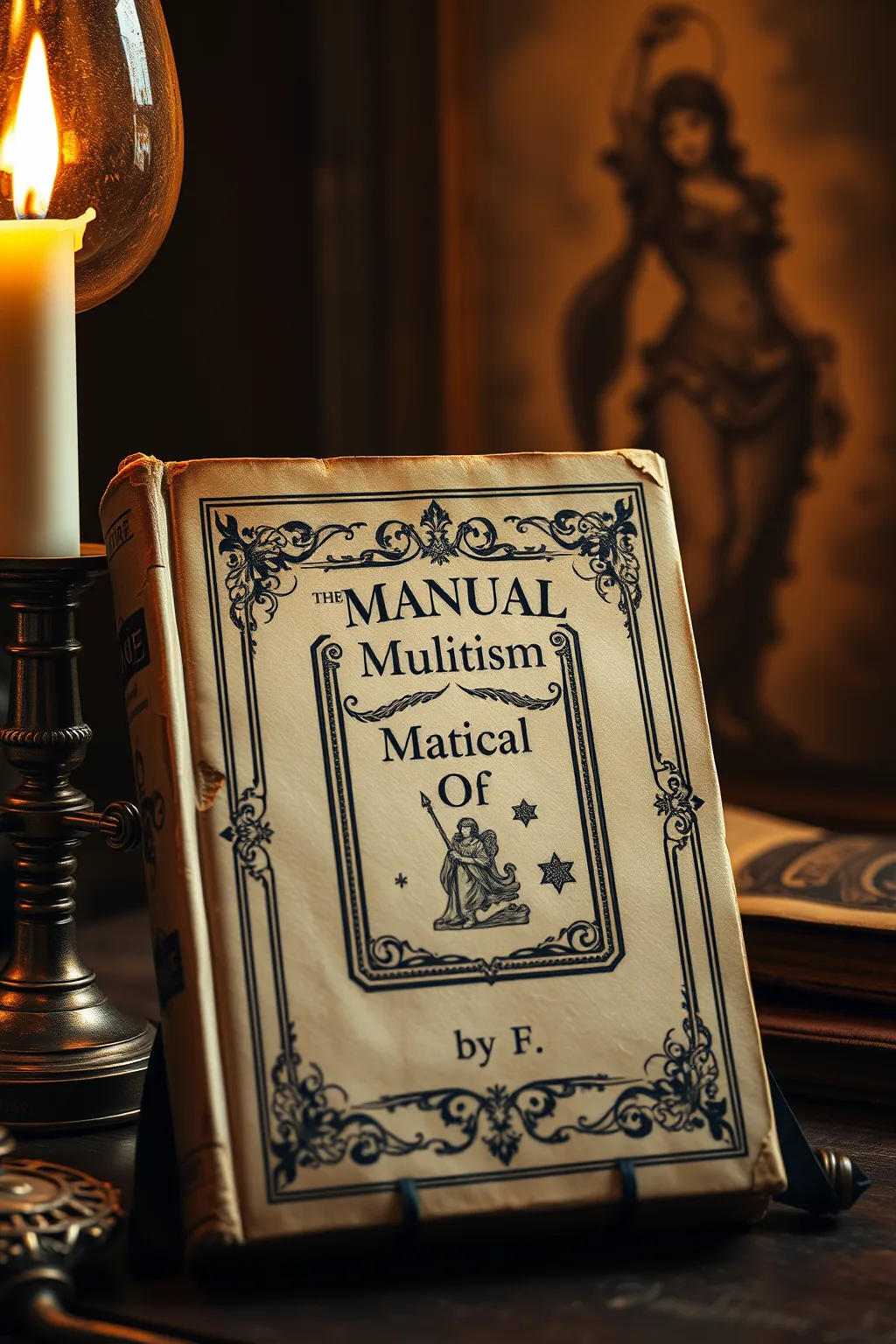
Manual Of Occultism
 78
78

Manual Of Occultism



The Manual of Occultism is a treasure trove of esoteric knowledge that continues to captivate modern seekers. Its timeless wisdom and comprehensive coverage of occult practices make it an essential read for anyone interested in the mystical arts. The book's anonymous authorship adds an air of mystery, enhancing its allure. For contemporary esoteric seekers, this manual provides a solid foundation in occult philosophy, bridging ancient traditions with modern spiritual inquiry. It is particularly valuable for its detailed explanations of rituals and spiritual dimensions, making complex concepts accessible. The Manual of Occultism is a must-have for anyone looking to deepen their understanding of the occult.
📝 Description
78
Published anonymously, the 'Manual of Occultism' appeared around the turn of the 20th century.
This anonymous text, appearing circa 1900, addresses occult subjects with a systematic approach. It covers a range of topics including ceremonial magic, astrology, and the nature of spiritual entities. The author attempts to present these subjects as coherent disciplines rather than mere folklore. The book aims to instruct the reader in understanding and potentially applying occult principles.
It speaks to a desire for structured knowledge within esoteric circles. The text is concerned with the philosophical underpinnings of hidden traditions and their practical application for personal development. The language suggests an audience already familiar with or seeking to become familiar with arcane concepts, treating them as subjects worthy of serious study and contemplation.
The 'Manual of Occultism' fits within the surge of esoteric literature that characterized the late 19th and early 20th centuries. This period saw a renewed interest in spiritualism, theosophy, and various forms of occultism, often seeking to synthesize ancient traditions with contemporary philosophical ideas. The book's systematic presentation of subjects like magic and astrology reflects a broader trend to codify and legitimize these practices within a framework of serious inquiry, separate from purely religious or folk belief.
💡 Why Read This Book?
Reading the Manual of Occultism today offers a unique opportunity to connect with ancient wisdom and esoteric traditions. This book provides a comprehensive guide to the occult, helping readers understand the spiritual dimensions of existence. Whether you are seeking spiritual enlightenment or curious about mystical practices, this manual offers valuable insights. It is a gateway to a deeper understanding of the occult, making it an essential read for modern seekers.
⭐ Reader Reviews
Honest opinions from readers who have explored this book.
❓ Frequently Asked Questions
Who is the author of the Manual of Occultism?
The author of the Manual of Occultism is anonymous, adding to the book's mysterious and esoteric appeal.
What topics does the book cover?
The book covers a wide range of topics including the nature of the occult, ritual practices, and spiritual dimensions of existence.
Is this book suitable for beginners?
Yes, the Manual of Occultism is suitable for both beginners and experienced practitioners, providing a comprehensive guide to occult philosophy.
🔮 Key Themes & Symbolism
Ancient Wisdom
The 'Manual Of Occultism' looks at the ancient wisdom that has been passed down through generations of mystics and secret societies. This theme explores the timeless truths that govern the universe and the mystical practices that connect us to these deeper realities.
Symbolism and Mystery
Symbolism is a central theme in the 'Manual Of Occultism', revealing the hidden meanings behind ancient symbols and their significance in the occult. This theme unravels the mysteries of symbolism and its role in the mystical journey.
Philosophical Significance
The 'Manual Of Occultism' explores the philosophical significance of occult knowledge, providing insights into the deeper truths that shape our understanding of the world and our place in it. This theme looks at the esoteric traditions that have influenced human thought and spirituality for centuries.
💡 Key Ideas
Editorial paraphrase of the work's core concepts — not direct quotes.
The veil of mystery is lifted only for those who seek with an open heart.
This quote underscores the importance of an open mind and heart in the mystical journey.
Symbolism is the language of the soul, speaking in whispers and dreams.
This line highlights the profound role of symbolism in connecting us to our inner selves.
Ancient wisdom is the compass that guides us through the labyrinth of existence.
This quote emphasizes the timeless relevance of ancient wisdom in navigating life's complexities.
The occult is not a path of darkness but a journey into the light of hidden knowledge.
This passage clarifies the true nature of the occult as a means to enlightenment.
The mysteries of the universe are revealed to those who dare to look beyond the surface.
This quote encourages readers to explore the deeper truths that lie beneath the surface of reality.
🌙 Esoteric Significance
Tradition
The 'Manual Of Occultism' belongs to the Hermetic tradition, which emphasizes the unity of all things and the pursuit of hidden knowledge. This tradition has deeply influenced Western esotericism, shaping our understanding of the occult and its philosophical significance.
Symbolism
Key symbols in this book include the pentagram, the all-seeing eye, and the caduceus, each representing different aspects of occult wisdom and mystical practices. These symbols serve as visual keys to unlocking the deeper truths hidden within the text.
Modern Relevance
The 'Manual Of Occultism' remains relevant today, influencing modern practitioners of the occult and those interested in esoteric traditions. Its insights into ancient wisdom and symbolism provide valuable guidance for seekers on the mystical journey, offering a bridge between the past and the present.
👥 Who Should Read This Book
The 'Manual Of Occultism' is ideal for beginners seeking an introduction to the occult, scholars of esoteric traditions, and spiritual seekers looking to deepen their understanding of hidden knowledge. Practitioners of the occult will find valuable insights and guidance in this book, making it an essential read for anyone interested in the mystical and occult realms.
📜 Historical Context
The 'Manual Of Occultism' was written during a time when esoteric knowledge was closely guarded by secret societies and mystics. In an era marked by religious and philosophical upheaval, this book offered a refuge for those seeking hidden truths and spiritual enlightenment. Its influence can be seen in various esoteric traditions, from Hermeticism to Gnosticism, shaping the way we understand the mystical and occult realms today.
📔 Journal Prompts
Reflect on a time when you felt a deep connection to hidden knowledge.
What symbols resonate with you the most and why?
How does ancient wisdom influence your understanding of the world?
What mysteries of the universe do you seek to uncover?
How can you apply the insights from the 'Manual Of Occultism' to your spiritual journey?
🗂️ Glossary
Occult
The study of hidden knowledge and mystical practices, often involving esoteric traditions and symbolism.
Esoteric
Knowledge that is intended for a small, select group of people, often involving mystical or spiritual insights.
Hermeticism
An esoteric tradition based on the writings attributed to Hermes Trismegistus, emphasizing the unity of all things.
Gnosticism
An ancient religious movement emphasizing personal spiritual knowledge and the revelation of hidden truths.
Symbolism
The use of symbols to represent abstract ideas or qualities, often in a mystical or esoteric context.
This book appears in 2 collections
🔮 Readers Also Liked
Browse all →








From the “Occultism” Collection
View all →







More Free Occult Philosophy Books
View all →