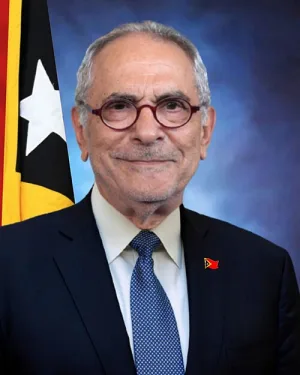
✍️ Author Biography
Leonora Leet
📅 1906 – 1995
🌍 American
📚 5 free books
⭐ Known for: Coming of Age in Samoa (1928)
Margaret Mead was a pioneering cultural anthropologist known for her influential studies on adolescence, sexuality, and gender roles.
Margaret Mead was a prominent American cultural anthropologist whose work significantly impacted public understanding of human behavior and societal structures in the mid-twentieth century. Her initial fieldwork in Samoa, documented in her 1928 book "Coming of Age in Samoa," explored adolescent development and sexuality, contrasting it with Western norms and bringing her national recognition. She further investigated gender roles and personality through studies in Papua New Guinea, as detailed in "Sex and Temperament in Three Primitive Societies" (1935). Mead's research extended to various communities, including the Omaha people, Manus, and Bali, and she also examined American culture during World War II.
Mead's methodological contributions were also substantial. She pioneered the use of participant observation, living within communities for extended periods, and was an early adopter of photography and film in ethnographic research, earning her the title "mother of visual anthropology." Her work often focused on childhood, adolescence, kinship, and social change. Despite facing significant academic debate, particularly the Mead-Freeman controversy regarding her Samoan research, Mead remained a leading public intellectual, serving as president of the American Association for the Advancement of Science and curator at the American Museum of Natural History.
Early Life and Education
Born in Philadelphia in 1901 and raised in Pennsylvania, Margaret Mead was the eldest of five children. Her father was a finance professor at the University of Pennsylvania, and her mother was a sociologist studying Italian immigrants. A significant early event was the death of her infant sister, which deeply affected Mead. Her education was influenced by her grandmother due to frequent family moves. She attended DePauw University before transferring to Barnard College, where she earned her bachelor's degree in 1923. She pursued graduate studies at Columbia University under anthropologists Franz Boas and Ruth Benedict, obtaining her master's degree in 1924 and her Ph.D. in 1929. Her academic journey laid the groundwork for her extensive fieldwork and research.
Ethnographic Research and Methods
Mead's anthropological approach centered on participant observation, involving deep immersion in the communities she studied. Her research often focused on themes of childhood, adolescence, sexuality, and kinship, aiming to create comprehensive ethnographies that reflected the experiences of both men and women. She was a trailblazer in employing still and motion photography during her fieldwork in Bali with Gregory Bateson, establishing one of the first film archives for anthropological research. This innovative use of visual media led to her recognition as a foundational figure in visual anthropology. During World War II, she shifted her focus to analyzing American culture and national character, contributing to wartime efforts and future international relations through projects like the Columbia University Research in Contemporary Culture.
Key Fieldwork and Contributions
Mead's seminal work, "Coming of Age in Samoa" (1928), examined the lives of Samoan girls and women, contrasting adolescent experiences with those in the United States and questioning the biological inevitability of adolescent turmoil. She proposed that cultural practices largely shaped these developmental stages. Her research in Manus, documented in "Growing Up in New Guinea" (1930), explored childhood development in that region. Mead's findings on sexual attitudes in South Pacific and Southeast Asian cultures are believed to have influenced the sexual revolution of the 1960s. Her extensive fieldwork and public engagement solidified her reputation as a significant public voice in anthropology.
Academic Reception and Legacy
Margaret Mead's work generated considerable public interest and academic discussion. Her research, particularly "Coming of Age in Samoa," became the subject of intense debate, most notably the Mead-Freeman controversy initiated by Derek Freeman's critiques. Freeman challenged Mead's portrayal of Samoan society, suggesting it was more repressive than she described. Despite these challenges, Mead is regarded as a founding figure in public and visual anthropology. Her efforts to make anthropological findings accessible to the public and her influence on discussions surrounding cultural relativism and social norms continue to shape the field.
Key Ideas
- Adolescence and sexuality are largely shaped by cultural practices rather than solely biological factors.
- Participant observation is a primary method for ethnographic research.
- Visual media, such as photography and film, can be valuable tools in anthropological study.
- Cultural relativism allows for understanding diverse societal norms without imposing external judgments.
- Public anthropology involves engaging the wider public with anthropological insights.