Andrei A. Orlov
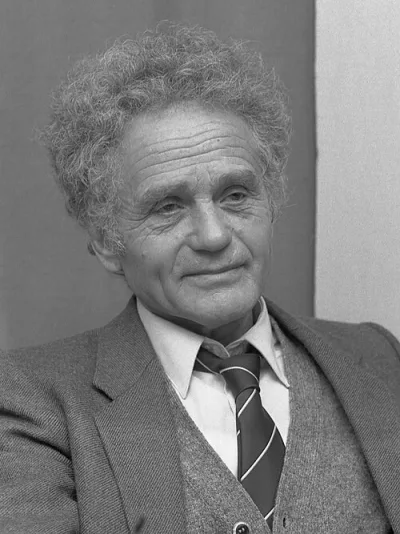
Yuri Orlov was a physicist and dissident who founded the Moscow Helsinki Group and championed human rights.
Yuri Fyodorovich Orlov was a physicist specializing in particle accelerators and a prominent human rights activist in the Soviet Union. Born in 1924, he graduated from Moscow State University and began a career in physics. However, his outspoken advocacy for democracy and human rights led to significant personal and professional repercussions.
Orlov was a founding member of the Moscow Helsinki Group in 1976, dedicated to monitoring Soviet compliance with the Helsinki human rights accords. His activism led to his arrest in 1977 and a subsequent trial where he was denied fair legal representation. Sentenced to prison and internal exile, he was declared a prisoner of conscience by Amnesty International. Following his release and eventual emigration to the U.S., Orlov continued his scientific career as a professor at Cornell University, while also remaining a vocal advocate for human rights.
Scientific and Early Activist Career
Yuri Orlov began his career as a particle accelerator physicist, earning his degrees from Moscow State University and the Institute for Theoretical and Experimental Physics. His scientific pursuits led him to work at the Yerevan Physics Institute and later the Institute of Terrestrial Magnetism. During the 20th Congress of the CPSU in 1956, Orlov took a bold stance, criticizing Stalin and Beria and advocating for socialist democracy. This action resulted in his expulsion from the Communist Party and dismissal from his job, nearly ending his scientific career. Despite these setbacks, he continued his academic work, obtaining advanced degrees and becoming an expert in particle acceleration. His scientific contributions were recognized with a corresponding membership in the Armenian Academy of Sciences.
Human Rights Advocacy and Dissidence
In the early 1970s, Orlov became increasingly involved in human rights activism. He publicly supported Andrei Sakharov and authored articles, including "Open Letter to L.I. Brezhnev about the Reasons for the Intellectual Backwardness in the USSR and Proposals to Overcome It," which circulated in samizdat. In 1973, he was dismissed from his position after co-founding the first Amnesty International group in the Soviet Union. He then organized the Moscow Helsinki Group in 1976, serving as its chairman and systematically documenting Soviet human rights violations under the Helsinki Accords, despite KGB pressure to disband the organization.
Imprisonment, Exile, and Emigration
Orlov's activism culminated in his arrest on February 10, 1977. His trial was conducted in a closed session, with limited rights for the defense. He was ultimately sentenced to seven years in a labor camp followed by five years of internal exile for his work with the Moscow Helsinki Group. During his imprisonment, Orlov endured harsh conditions and health deterioration, undertaking hunger strikes to protest the confiscation of his writings. International attention was drawn to his case, with figures like U.S. President Jimmy Carter expressing concern. In 1984, he was exiled to Siberia. In 1986, as part of a U.S.-Soviet agreement, Orlov was expelled from the USSR, stripped of his citizenship, and allowed to emigrate to the United States.
Later Life and Legacy
Upon arriving in the U.S. in 1987, Yuri Orlov resumed his scientific career, becoming a professor of physics at Cornell University. He also continued his engagement with human rights issues and scientific freedom. His work was recognized with numerous accolades, including the Carter–Menil Human Rights Prize and the Nicholson Medal for Humanitarian Service. In later years, Orlov continued to express strong opinions on the political direction of Russia. He was posthumously awarded the Robert R. Wilson Prize for Achievement in the Physics of Particle Accelerators, acknowledging both his scientific contributions and his dedication to scientific freedom.
Notable Quotes
“What is the meaning of life? That your soul may outlive your remains in something sacred and should escape decay ... I have again looked at, added up, corrected, and sized up what I have been doing during these last years and have seen that this is good ...”
“Russia is flying backwards in time. Putin is like Stalin, and he speaks in the language of the thug, the mafia.”
Books by Andrei A. Orlov
0 free public domain books · Read online or download