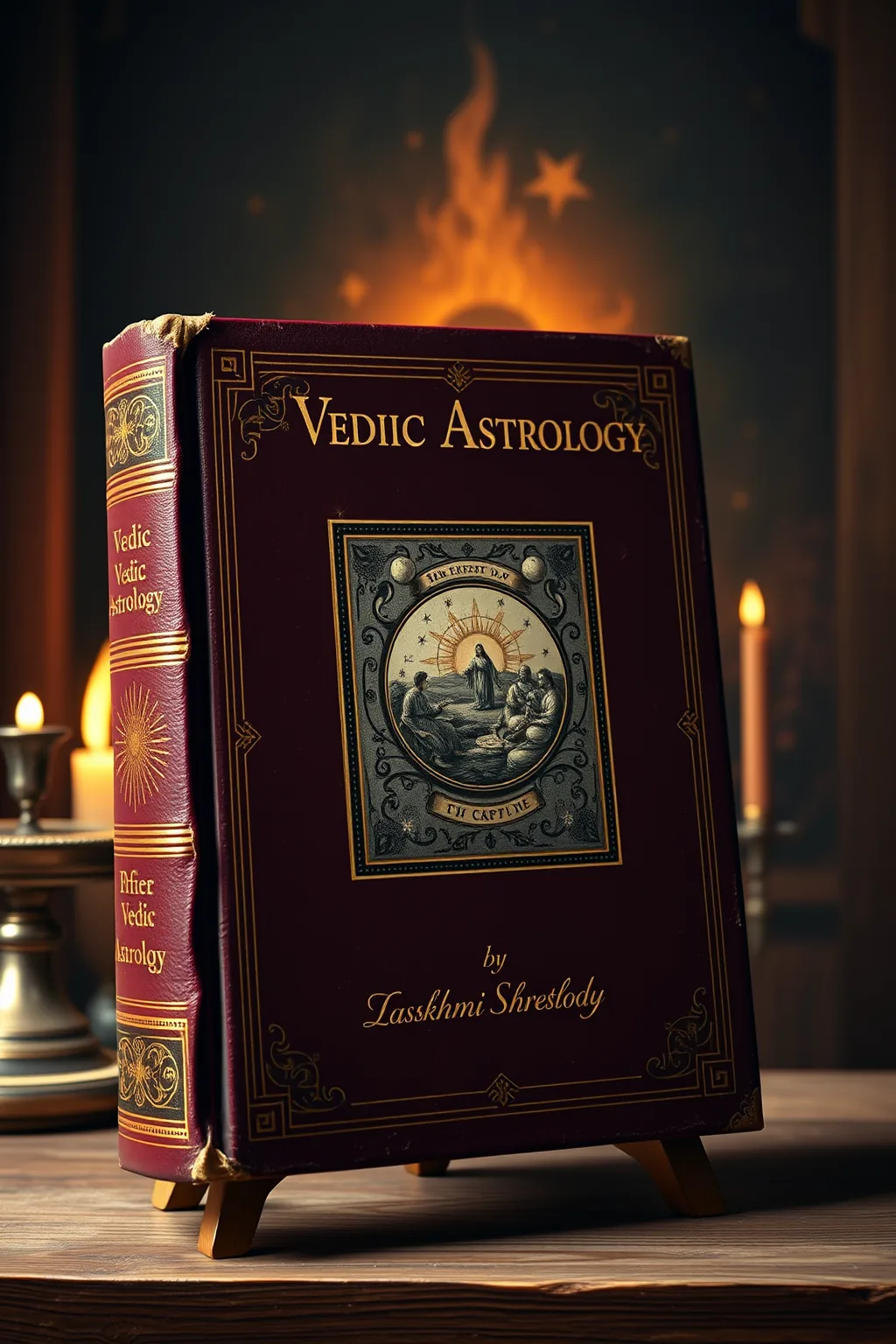
Vedic Astrology
 62
62

Vedic Astrology


Lorelei Sage, Contemplative Literature Editor: Laskhmi Shrestha's 'Vedic Astrology' is a masterful exposition of Jyotisha, presented with a rare blend of scholarly rigor and spiritual insight. Shrestha transcends the superficial, guiding readers into the heart of this ancient cosmic science, revealing its profound connection to karma and dharma. The book excels in its clarity, demystifying complex concepts like planetary yogas and dashas without sacrificing their esoteric essence. It is an indispensable resource for those seeking a genuine understanding of astrological principles as a path to self-awareness and spiritual growth. This work is a treasure for dedicated practitioners and earnest seekers alike, offering not just knowledge, but transformative wisdom.
📝 Description
62
Laskhmi Shrestha's Vedic Astrology (2023) explains Jyotisha beyond horoscopes.
Laskhmi Shrestha's Vedic Astrology explains Jyotisha, the Indian system of astrology, not as simple horoscopes but as a map for the soul. The book details the interactions of planets, star signs, and their energies. It connects these celestial movements to concepts like karma and dharma, suggesting they form a blueprint for individual lives. The text examines specific astrological elements, including yogas, dashas, and planetary strengths. Shrestha aims to guide students and seekers toward understanding the cosmic patterns that influence existence.
The book encourages readers to view the universe as interconnected, filled with consciousness and intention. It provides methods for self-understanding and spiritual growth, moving beyond basic chart interpretation. The author's writing style is intended to foster a calm approach to learning, suitable for those dedicated to studying the subject.
Vedic Astrology is rooted in the ancient Indian tradition of Jyotisha, which is one of the six Vedangas, auxiliary disciplines associated with the Vedas. Unlike Western astrology, which often focuses on psychological archetypes, Jyotisha is traditionally understood as a tool for understanding destiny and the results of past actions (karma). It is deeply integrated with Hindu philosophy and cosmology, viewing the cosmos as a living entity. The system uses specific calculations for planetary positions and timings, known as dashas, to predict life events and understand spiritual progress.
💡 Why Read This Book?
Uncover the ancient secrets of Jyotisha, a celestial map of your soul's journey. 'Vedic Astrology' offers profound insights into karma, dharma, and cosmic interconnectedness. Ideal for seekers of spiritual wisdom, aspiring astrologers, and scholars interested in the esoteric traditions of the East. This book provides tools for self-discovery and a deeper understanding of life's grand design.
⭐ Reader Reviews
Honest opinions from readers who have explored this book.
❓ Frequently Asked Questions
What is Vedic Astrology (Jyotisha)?
Vedic Astrology, or Jyotisha, is an ancient Indian system of divination that uses the positions of celestial bodies at the time of birth to understand an individual's destiny, karmic patterns, and life path. It is considered a sacred science, offering insights into the subtle energies that shape our existence.
How does Vedic Astrology differ from Western Astrology?
While both systems use celestial bodies, Vedic Astrology adheres to the sidereal zodiac, which aligns with the actual constellations, whereas Western astrology uses the tropical zodiac. Jyotisha places a greater emphasis on karma, dharma, and remedial measures.
What are 'Yogas' in Vedic Astrology?
Yogas are specific planetary combinations in a birth chart that indicate particular potentials, strengths, weaknesses, or life events. They are considered crucial for a deeper and more nuanced interpretation of an astrological chart.
Can Vedic Astrology predict the future?
Vedic Astrology does not 'predict' the future in a deterministic sense. Instead, it illuminates potential tendencies, karmic influences, and opportune times for action, empowering individuals to navigate their life path with greater awareness and wisdom.
What are remedial measures (Upayes)?
Upayes are practices, rituals, or suggestions offered within Vedic Astrology to mitigate challenging planetary influences or enhance positive ones. These can include mantra chanting, gemstone wearing, or specific charitable acts, aimed at spiritual growth and balance.
🔮 Key Themes & Symbolism
The Celestial Blueprint and Karma
This theme examines the profound concept that our birth chart is not merely a snapshot of the sky, but a divine blueprint encoded with our karmic inheritance. It explores how the positions and relationships of planets at the moment of birth reveal the unresolved lessons, strengths, and challenges carried from past lives. The text elucidates how Jyotisha serves as a sacred map, guiding individuals to understand the subtle interplay between destiny and free will, and how conscious action can harmonize with cosmic currents.
Planetary Symbolism and Archetypes
Beyond their physical presence, the planets in Vedic Astrology embody potent archetypal energies and cosmic forces. This theme unpacks the detailed symbolism of each graha (planet) – from the fiery drive of Mars to the expansive wisdom of Jupiter and the transformative power of Saturn. It illuminates how these celestial archetypes manifest in human consciousness and experience, influencing our personality, motivations, and life circumstances. Understanding this symbolism is key to deciphering the intricate language of the cosmos.
The Science of Time and Cycles (Dashas)
Vedic Astrology offers a sophisticated understanding of time through its unique dasa systems, particularly the Vimshottari Dasa. This theme explores how these planetary periods mark the unfolding of our karmic journey, revealing specific phases of life where certain energies and potentials come to the forefront. It presents dasas not as rigid predictions, but as cyclical opportunities for growth, learning, and soul evolution, providing a framework for navigating life's ever-changing currents with insight and grace.
💬 Memorable Quotes
Direct passages from the work, attributed to the author.
“Jyotisha is the eye of the Veda, clear the unseen currents of existence.”
— This profound statement positions Vedic Astrology as a divine instrument for perception, capable of revealing the subtle, hidden forces that govern the universe and our lives.
“The birth chart is a sacred scroll, each planet a syllable of our soul's ancient story.”
— This evocative metaphor likens the astrological chart to a sacred text, where planetary placements narrate the deep, unfolding narrative of our spiritual evolution.
💡 Key Ideas
Editorial paraphrase of the work's core concepts — not direct quotes.
The stars do not compel; they reveal the path etched by our own soul's journey.
This quote emphasizes that astrology is a tool for understanding, not absolute predestination. It highlights the agency we have in navigating our destiny, guided by the wisdom of celestial patterns.
Every planetary alignment is a cosmic whisper, guiding us towards our highest dharma.
This quote frames astrological configurations as gentle, guiding messages from the cosmos, urging us to align our actions with our inherent purpose and duty.
Through the celestial mirror, we find not fate, but the keys to our own liberation.
This quote reframes astrological study as a pathway to freedom, suggesting that understanding our chart offers insights that empower us to transcend limitations and achieve spiritual emancipation.
🌙 Esoteric Significance
Tradition
Vedic Astrology is a central to the vast esoteric tradition of ancient India, deeply rooted in the Vedic and Upanishadic philosophies. It is considered one of the six Vedangas, auxiliary disciplines intended to aid in the study of the Vedas. Its esoteric nature lies in its premise that the macrocosm (the universe) is reflected in the microcosm (the individual), and that celestial bodies act as divine messengers and energetic influences shaping our karma and spiritual evolution. It offers a framework for understanding divine will and cosmic order.
Symbolism
The symbolism in Vedic Astrology is incredibly rich and multi-layered. Planets (Grahas) are not mere celestial bodies but represent divine energies and archetypes (e.g., Sun as the soul, Moon as the mind, Jupiter as wisdom). The Zodiac signs (Rashis) symbolize different qualities and life stages, while the Houses (Bhavas) represent various spheres of life. The Nakshatras, or lunar mansions, add an even finer layer of nuanced symbolism, often linked to elemental forces and spiritual archetypes, revealing hidden potentials and karmic patterns.
Modern Relevance
In the modern era, Vedic Astrology offers a powerful antidote to the fragmentation and existential anxieties of contemporary life. It provides a holistic framework for understanding oneself and one's place in the universe, fostering a sense of interconnectedness and cosmic purpose. Its emphasis on karma and dharma encourages personal responsibility and ethical living. Furthermore, its predictive and remedial aspects can offer guidance and solace, empowering individuals to navigate challenges with greater awareness and to actively participate in their own spiritual growth and well-being.
👥 Who Should Read This Book
This book is a profound resource for a diverse audience. **Beginners** seeking an authentic introduction to the spiritual underpinnings of astrology will find a clear, inspiring guide. **Aspiring astrologers** and **practitioners** will discover a deeper, more nuanced understanding of Jyotisha's complex systems. **Spiritual seekers** and **philosophy enthusiasts** will be drawn to its exploration of karma, dharma, and cosmic consciousness. **Scholars** of comparative religion and esoteric traditions will appreciate its historical and philosophical depth, offering a comprehensive look at this ancient science.
📜 Historical Context
Vedic Astrology, or Jyotisha, emerged from the Vedic civilization of ancient India, a period characterized by profound philosophical inquiry and the development of sophisticated scientific and spiritual knowledge systems. Its roots are deeply intertwined with the Vedas, the oldest scriptures of Hinduism, where celestial observations and their perceived influence on earthly events were first systematically explored. Developed and refined over thousands of years by sages and scholars like Varahamihira and Aryabhata, Jyotisha became an integral part of Indian culture, influencing everything from religious ceremonies and auspicious timings (muhurta) to medical practices (Ayurveda) and governance. Its transmission across Asia and its enduring influence on various astrological traditions underscore its status as a foundational pillar of esoteric thought, offering a unique lens through which to view the cosmos and humanity's place within it.
📔 Journal Prompts
Reflect on a planetary influence in your birth chart and how it manifests in your daily life. How can you consciously work with this energy?
Consider a prominent yoga in your chart. What life lessons or potentials does it suggest?
How does the concept of karma, as presented in Vedic Astrology, resonate with your personal experiences and beliefs?
Explore the symbolism of a Nakshatra that holds significance in your chart. What deeper archetypal energies might it represent for you?
In what ways can understanding the cyclical nature of time, as depicted by dashas, help you navigate current life challenges or opportunities?
🗂️ Glossary
Jyotisha
The Sanskrit term for Vedic Astrology, meaning 'the science of celestial light.' It is an ancient Indian system of astrology considered a Vedanga, or limb of the Vedas.
Graha
Literally 'seizer,' referring to the nine planets (Sun, Moon, Mars, Mercury, Jupiter, Venus, Saturn, Rahu, Ketu) used in Vedic Astrology, each embodying distinct energies and archetypes.
Rashi
The twelve signs of the zodiac in Vedic Astrology, derived from the sidereal zodiac. Each Rashi represents a distinct temperament and set of characteristics.
Bhava
The twelve houses of the astrological chart, representing different areas of life experience such as self, family, career, and spiritual pursuits.
Dasha
A system of planetary periods in Vedic Astrology used to time life events and indicate the unfolding of karmic influences throughout a person's life.
This book appears in 2 collections
🔮 Readers Also Liked
Browse all →









From the “Astrology” Collection
View all →







More Free Astrology & Cosmology Books
View all →