Jyotish
 62
62

Jyotish


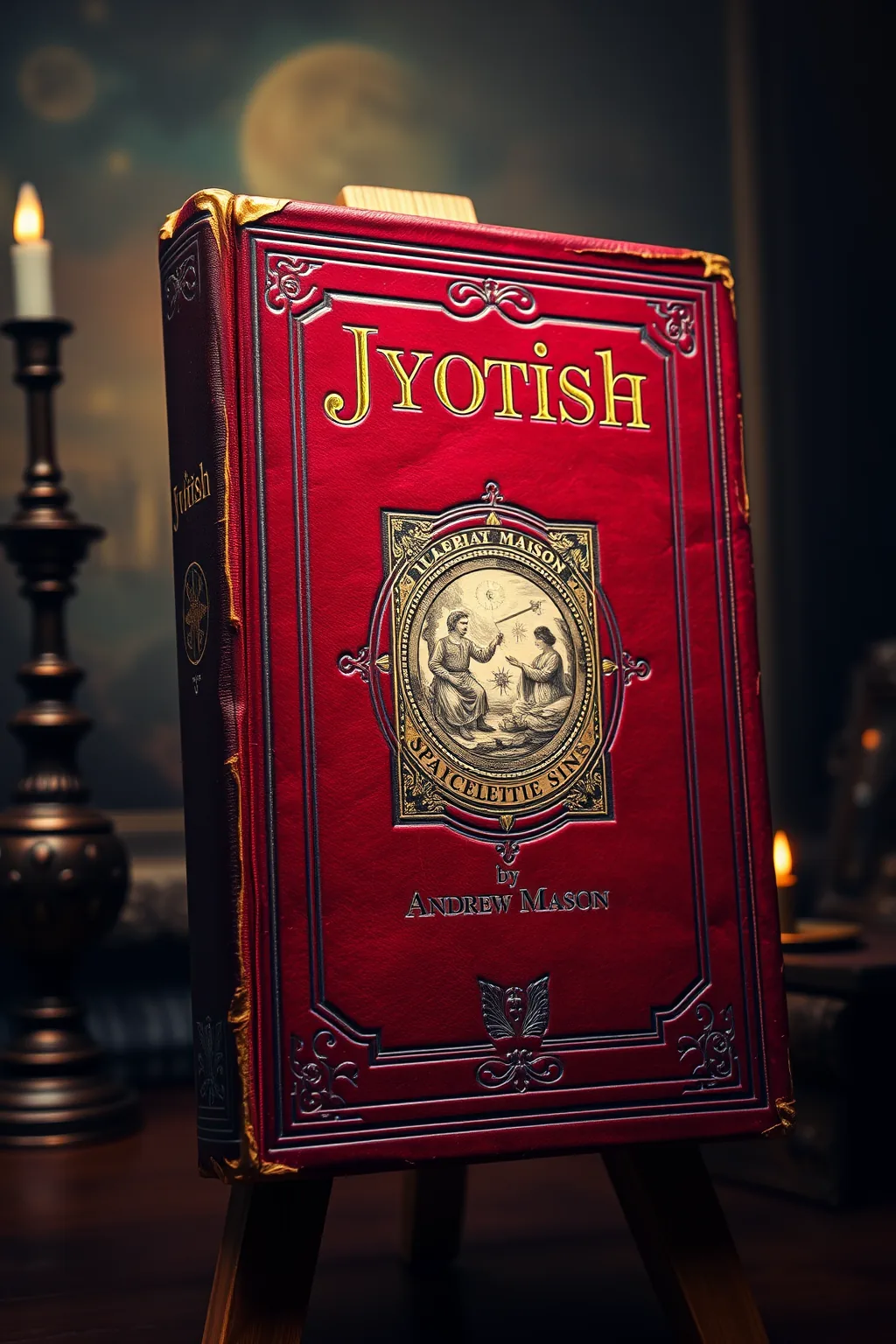
Andrew Mason's 'Jyotish' is a luminous exposition of Vedic astrology, offering a rich and nuanced exploration of its esoteric depths. Celeste Moreau commends Mason for his ability to translate complex concepts into accessible yet deeply profound prose, illuminating the spiritual and philosophical underpinnings of this ancient system. The book excels in revealing the symbolic language of the planets, nakshatras, and divisional charts, offering practitioners and earnest seekers alike a powerful framework for self-discovery and spiritual growth. Moreau highlights its authoritative tone and the clarity with which it demystifies the intricate workings of Hindu astrology, making it an indispensable resource for anyone serious about engaging with its hidden wisdom.
📝 Description
62
Andrew Mason's 'Jyotish' (2017) decodes the Vedic science of celestial bodies.
Andrew Mason's 'Jyotish' examines the Vedic astrological system, moving beyond simple birth chart readings. The book details how planets and stars communicate symbolic meanings and influence human lives. Mason explains the complex relationships between celestial bodies, astrological houses, and the philosophical underpinnings of Hindu astrology. It addresses the concept of a cosmic blueprint and how it relates to karma and personal destiny.
The work aims to assist readers in understanding their karmic patterns and using ancient knowledge for self-improvement. It presents Jyotish as a means to a greater awareness of consciousness, time, and universal connection. The book is intended for those seeking spiritual understanding and for practitioners looking to deepen their knowledge of this astrological discipline.
Jyotish, or Vedic astrology, is an ancient system originating in India. It is one of the six Vedangas, or auxiliary disciplines, associated with the study of the Vedas. Unlike Western astrology, Jyotish often uses a sidereal zodiac and places significant emphasis on planetary periods (dashas) for predictive purposes. It is deeply intertwined with Hindu philosophy, karma theory, and concepts of dharma. The practice is seen as a science of light, connecting earthly events and individual lives to celestial movements and cosmic cycles.
💡 Why Read This Book?
Uncover the ancient wisdom of Vedic astrology with Andrew Mason's 'Jyotish.' This book offers profound insights into cosmic influences, karmic patterns, and spiritual destiny. Ideal for seekers, astrology students, and practitioners, it provides a gateway to understanding your unique celestial blueprint and harnessing its transformative power. Discover a deeper connection to the universe and your own soul's journey.
⭐ Reader Reviews
Honest opinions from readers who have explored this book.
❓ Frequently Asked Questions
What is Jyotish?
Jyotish, often referred to as Vedic astrology, is an ancient Indian system of astrology that uses celestial positions and movements to understand life's patterns, karma, and spiritual evolution. It is considered a 'science of light' (Jyoti = light, Ish = lord).
Is Jyotish the same as Western astrology?
While both systems use planetary positions, Jyotish utilizes a sidereal zodiac, which is fixed to the constellations, whereas Western astrology typically uses a tropical zodiac, based on the seasons. This fundamental difference leads to unique interpretations and techniques.
What are Nakshatras in Jyotish?
Nakshatras, or lunar mansions, are 27 divisions of the ecliptic in Vedic astrology. Each Nakshatra has its own ruling deity, symbol, and characteristics, offering a more granular and nuanced understanding of astrological influences than zodiac signs alone.
How can Jyotish help with personal growth?
Jyotish provides insights into one's inherent strengths, challenges, and karmic predispositions. By understanding these influences, individuals can make informed choices, navigate life's obstacles more effectively, and align themselves with their soul's purpose for greater fulfillment.
Is Jyotish deterministic?
Jyotish is not strictly deterministic. While it reveals potentials and tendencies, it emphasizes free will and the power of conscious action to shape one's destiny. It offers guidance rather than predestination.
🔮 Key Themes & Symbolism
The Cosmic Dance of Karma and Destiny
Look at the profound concept of karma as understood through Jyotish, where celestial alignments are seen as reflections of past actions and their unfolding consequences. This theme explores how the birth chart serves as a cosmic map of one's karmic journey, offering insights into the lessons and opportunities presented in this lifetime. It examines the interplay between predetermined fate and the power of free will, highlighting how understanding astrological influences can empower individuals to consciously navigate their path and manifest positive change.
Symbolism of the Celestial Archetypes
This section unravels the collection of symbolism inherent in Jyotish, exploring the archetypal meanings of the planets, zodiac signs, and astrological houses. Each celestial body is viewed as a divine principle or force, and their placement in the chart illuminates specific psychological tendencies, life experiences, and spiritual lessons. The intricate relationships between these symbols form a complex language that, when deciphered, reveals the underlying order and purpose of the cosmos and its connection to the human psyche.
The Path to Spiritual Illumination
Beyond prediction, Jyotish serves as a potent tool for spiritual growth and self-realization. This theme focuses on how understanding one's astrological chart can illuminate the soul's evolutionary path, identifying areas for spiritual development and offering guidance on aligning with one's higher purpose. It explores the use of planetary energies and remedial measures (upayas) not as a means of manipulation, but as pathways to harmonize with cosmic forces and foster inner peace, wisdom, and ultimately, liberation.
💬 Memorable Quotes
Direct passages from the work, attributed to the author.
“Our birth chart is the soul's cosmic itinerary.”
— This suggests that the astrological chart is a divinely orchestrated plan for the soul's journey, outlining lessons, experiences, and growth opportunities.
“Jyotish is the whisper of the divine in the language of light.”
— This poetic phrase highlights the sacred and intuitive nature of Vedic astrology, portraying it as a direct channel of cosmic wisdom.
“To read the stars is to read the heart of the universe within ourselves.”
— This emphasizes the profound interconnectedness between the macrocosm (universe) and the microcosm (individual), suggesting self-knowledge through celestial study.
“The true power lies not in knowing the future, but in understanding the present.”
— This underscores the practical application of Jyotish for present-moment awareness and informed action, rather than mere passive prediction.
💡 Key Ideas
Editorial paraphrase of the work's core concepts — not direct quotes.
The stars do not dictate, they illuminate.
This quote emphasizes that astrological influences are not rigid commands but rather guiding lights that reveal potentials and pathways, empowering conscious choice.
🌙 Esoteric Significance
Tradition
Jyotish is a central to the Vedic esoteric tradition, deeply rooted in the philosophical and spiritual insights of ancient India. It is considered one of the Vedangas, the six auxiliary disciplines that support the study of the Vedas. Within this context, Jyotish is not merely a predictive science but a sacred tool for understanding the divine order, the cycles of time, and the soul's evolutionary journey. Its esoteric dimension lies in its ability to reveal the subtle energies and karmic imprints that shape human experience, guiding practitioners towards spiritual liberation and alignment with cosmic consciousness.
Symbolism
The symbolism in Jyotish is vast and multi-layered. Planets (Grahas) represent divine forces and psychological archetypes, while zodiac signs (Rashis) describe the quality of energies. Nakshatras (lunar mansions) offer further refinement, and houses (Bhavas) delineate specific areas of life. The interplay of these symbols, along with yogas (planetary combinations) and Dasha systems (planetary periods), creates a complex symbolic language. Key symbols include the dynamic opposition of Rahu and Ketu (lunar nodes) representing karmic shadows and spiritual breakthroughs, and the elemental nature of the signs, all working together to map the individual's journey.
Modern Relevance
In the modern era, Jyotish offers a profound counterpoint to materialistic worldviews, providing a framework for understanding life's deeper meanings and interconnectedness. It empowers individuals with self-awareness, helping them navigate challenges with greater wisdom and purpose. Its emphasis on karma and spiritual growth appeals to the contemporary search for authenticity and meaning. Furthermore, the principles of Jyotish can be applied to personal well-being, relationships, and even career choices, offering a holistic approach to life that integrates the spiritual, psychological, and material dimensions.
👥 Who Should Read This Book
Andrew Mason's 'Jyotish' is a treasure for a diverse audience. Beginners in astrology will find a clear and engaging introduction to the fundamental principles of Vedic astrology, presented with a mystical allure. Scholars of comparative religion and cosmology will appreciate the historical depth and philosophical nuances. Spiritual seekers yearning for a deeper understanding of their life's purpose and karmic path will discover useful insights and guidance. Experienced practitioners of astrology, both Western and Vedic, will benefit from Mason's unique perspective and the esoteric dimensions he illuminates, enriching their practice with a renewed sense of wonder and spiritual connection.
📜 Historical Context
Jyotish, or Vedic astrology, is an ancient system originating in India, with roots stretching back thousands of years. Its development is intertwined with the Vedic civilization, the Rigveda and other sacred texts, and the philosophical schools of Vedanta. It flourished alongside the development of astronomy and mathematics in ancient India, with scholars meticulously observing celestial bodies and developing sophisticated calendrical and predictive systems. During the Gupta Empire (c. 320–550 CE), a period often considered a golden age for Indian science and art, Jyotish saw significant advancements and systematization. The influence of Greek astrology also played a role in its evolution. Over centuries, Jyotish became deeply embedded in Indian culture, influencing personal decisions, religious practices, and societal structures. Its transmission across generations, both orally and through written commentaries, ensured its continuity as a living tradition, offering timeless wisdom on the human condition and its cosmic connections.
📔 Journal Prompts
Reflect on the planetary influences that feel most prominent in your life right now. How do they manifest in your daily experiences and emotions?
Consider one of the key symbols discussed in this book (e.g., a specific planet or Nakshatra). How does its archetypal meaning resonate with your personal journey or current life situation?
What does the concept of 'karma' mean to you after reading this book? How can understanding your astrological chart help you navigate your karmic patterns consciously?
Explore the idea of the 'soul's cosmic itinerary.' What aspects of your birth chart might represent the soul's primary lessons or growth objectives for this lifetime?
How can you use the wisdom of Jyotish to foster greater self-compassion and acceptance of your unique path and challenges?
🗂️ Glossary
Graha
In Jyotish, a Graha refers to a planet (Sun, Moon, Mercury, Venus, Mars, Jupiter, Saturn) or the lunar nodes (Rahu and Ketu). They are considered celestial influences that embody specific energies and archetypes.
Rashi
Rashi translates to 'sign' in Jyotish and refers to the twelve zodiac signs (Aries, Taurus, Gemini, etc.) that divide the ecliptic. Each Rashi possesses distinct characteristics and influences.
Nakshatra
A Nakshatra, or lunar mansion, is one of the 27 divisions of the ecliptic in Vedic astrology. Each Nakshatra has a ruling deity, symbol, and specific qualities, offering a more detailed astrological analysis.
Bhava
Bhava refers to an astrological house in Jyotish, representing specific areas of life such as self, wealth, siblings, home, children, health, relationships, career, and spirituality. There are typically 12 Bhavas.
Dasha
Dasha is a predictive system in Jyotish that delineates planetary periods. These periods indicate when the influences of specific planets are likely to manifest most strongly in a person's life, guiding predictions and timings.
This book appears in 2 collections
🔮 Readers Also Liked
Browse all →









More by Mason, Andrew
All books →
From the “Astrology” Collection
View all →







More Free Astrology & Cosmology Books
View all →