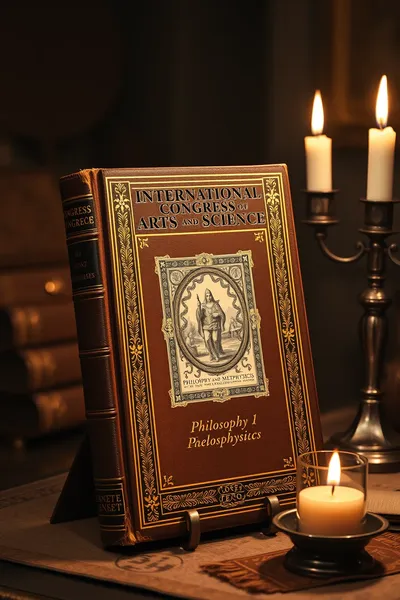
Oracles and Mysteries

 84
84

Oracles and Mysteries
The strength of Oracles and Mysteries lies in its compilation of disparate yet thematically linked ancient sources, offering a raw glimpse into pre-Christian divinatory practices. The unattributed authorship, while historically accurate for a compilation, leaves a void for critical engagement; one wishes for a guiding voice to contextualize the fragmented accounts. A particularly compelling section explores the Pythia's trance at Delphi, presenting the historical accounts of her ecstatic state. While the text itself is valuable for its source material, its presentation lacks the analytical depth found in modern scholarly works on ancient religion. Still, for those seeking primary source material on ancient oracular traditions, it serves as a useful, if unadorned, resource.
📝 Description
84
Oracles and Mysteries is a 1995 compilation of texts on ancient divination and ritual.
This volume gathers fragments and accounts detailing ancient divinatory practices and how people sought divine guidance. It is not the work of a single author but an assembly of historical and philosophical writings that illuminate esoteric methods used in antiquity. The compilation includes discussions on the mechanics of prophecy and the interpretation of omens.
It aims to help readers understand the worldview that supported these ancient practices, moving beyond purely academic interest. The book examines how individuals perceived the world as divinely intelligent and responsive to human questions. It offers a perspective that contrasts with purely rationalistic views of ancient belief systems, focusing on the cultural context of these inquiries.
The book emerges from a period when oracular sites were influential and philosophical schools debated prophecy. Its 1995 publication coincided with renewed interest in Western esotericism. The texts here informed later Hermetic and Neoplatonic traditions, offering insight into how ancient peoples understood divine communication and sought meaning through various means.
💡 Why Read This Book?
• Understand the mechanics of ancient oracular practices, such as the Delphic rites, gaining specific knowledge about how these systems functioned in antiquity. • Explore the concept of ecstatic states as a means of divine communication, learning how ancient cultures perceived and utilized altered consciousness for divination. • Examine the philosophical underpinnings of ancient prophecy, grasping the worldview that considered the cosmos inherently communicative and responsive to human inquiry.
⭐ Reader Reviews
Honest opinions from readers who have explored this book.
❓ Frequently Asked Questions
What historical periods does 'Oracles and Mysteries' primarily cover?
The work primarily focuses on ancient periods, drawing from sources that illuminate pre-Christian divinatory practices and the function of oracular sites like Delphi.
Is 'Oracles and Mysteries' a single author's interpretation of oracles?
No, it is a compilation of ancient texts and accounts, rather than a singular author's interpretation or treatise on the subject.
What kind of esoteric traditions does this book engage with?
It engages with ancient Mediterranean and Near Eastern traditions, particularly those involving prophecy, divination, and ecstatic experiences with the divine.
Who would benefit most from reading 'Oracles and Mysteries'?
Students of ancient religions, comparative mythology, and those interested in the history of divination and esoteric practices will find this compilation particularly valuable.
Does the book explain how to perform ancient divination rituals today?
The book focuses on describing and contextualizing ancient practices and beliefs, rather than providing direct instructions for modern ritual performance.
What is the significance of the 1995 publication date for this compilation?
The 1995 publication occurred during a renewed interest in Western esotericism, making this collection of ancient source material accessible to a contemporary audience.
🔮 Key Themes & Symbolism
The Mechanics of Prophecy
This theme explores the operational aspects of ancient prophecy, detailing how oracular sites functioned and what methods were employed to elicit divine pronouncements. It examines the role of intermediaries, such as priestesses and seers, and the physical or psychological conditions believed necessary for receiving prophetic messages. The text provides insight into the structured, yet often ecstatic, nature of these ancient communication channels.
Ecstatic States and Divine Contact
Central to the work is the exploration of altered states of consciousness utilized for divine communion. This includes accounts of trance states, intoxication, and other methods employed to bridge the gap between the human and the divine. The compilation highlights how these experiences were not seen as aberrant but as essential pathways to receiving wisdom and guidance from higher powers.
Worldview of a Responsive Cosmos
Oracles and Mysteries illuminates a worldview where the cosmos is not inert but alive, communicative, and responsive to human spiritual inquiry. It reveals how natural phenomena, dreams, and specific rituals were interpreted as signs and messages. This perspective underscores a deeply interconnected reality where the divine actively participates in the unfolding of events.
The Interpretation of Omens
A significant focus is placed on the art and science of interpreting omens – signs, portents, and unusual occurrences believed to carry divine meaning. The work examines the various systems and symbolic languages used to decipher these messages, illustrating how ancient peoples navigated their lives with a constant awareness of celestial and terrestrial communications.
💬 Memorable Quotes
Direct passages from the work, attributed to the author.
“The Pythia spoke riddles, her voice carrying the weight of Apollo's will.”
— This highlights the role of oracles as divine mouthpieces, delivering messages that often required careful interpretation, reflecting a belief in divine agency mediated through human vessels.
“Seers entered a sacred trance, their souls momentarily unbound from earthly concerns.”
— This emphasizes the importance of altered states of consciousness in ancient divination, suggesting a belief that the spiritual realm becomes accessible only when the mundane self is temporarily suspended.
“Every rustle of leaves, every flight of birds, could be a message from the gods.”
— This conveys the pervasive belief in a living, communicative cosmos where divine will was constantly expressed through natural phenomena, requiring constant vigilance and interpretative skill.
“The oracle's pronouncements were sought to steer the fate of cities and individuals alike.”
— This underscores the practical and consequential nature of ancient divination, demonstrating its integral role in decision-making for both public policy and personal life.
“Divination was not mere fortune-telling, but a dialogue with the sacred.”
— This reframes divination as a participatory act of communication with the divine, rather than a passive reception of predetermined fate, emphasizing the interactive aspect of seeking guidance.
🌙 Esoteric Significance
Tradition
This compilation taps into the broader tradition of Western Esotericism, particularly its roots in ancient Greek and Roman divination and ecstatic practices. It aligns with Hermetic and Neoplatonic streams by focusing on the possibility of direct divine communication and the interpretation of symbolic phenomena. The work departs from purely philosophical exegesis by emphasizing the practical, ritualistic aspects of seeking divine knowledge.
Symbolism
The **tripod** at Delphi symbolizes the nexus of the earthly, divine, and prophetic realms, where the Pythia sat to channel Apollo. **Laurel leaves**, often chewed or burned, represent purification and the ecstatic state induced for prophecy. The **flight of birds** (augury) signifies the divine will manifesting through natural, observable phenomena, requiring skilled interpretation.
Modern Relevance
Contemporary practitioners of divination, especially those focused on Hellenistic or Greco-Roman traditions, draw upon the source material presented here. Modern Neopaganism and certain strands of ceremonial magic find value in understanding the historical context and methods of ancient oracular systems. Thinkers exploring consciousness studies and the history of altered states also reference these ancient practices as foundational examples.
👥 Who Should Read This Book
• Students of ancient religions and mythology: To gain direct access to historical accounts and concepts surrounding prophecy and divine communication in antiquity. • Practitioners of esoteric arts: To understand the historical lineage and foundational practices of divination within Western traditions. • Comparative religion scholars: To examine cross-cultural approaches to spirituality, omens, and the human relationship with the divine.
📜 Historical Context
Published in 1995, Oracles and Mysteries arrived during a period marked by a significant resurgence of interest in Western esotericism and ancient mystery traditions. This era saw academics and practitioners alike re-examining pre-Christian spiritualities, often in dialogue with philosophical movements like Neoplatonism and Hermeticism. The compilation itself draws from a vast historical milieu, encompassing the practices of ancient Greece and Rome, where oracular sites like Delphi and Dodona were central to civic and religious life. This period contrasted sharply with the purely rationalistic interpretations that had dominated classical scholarship for centuries. While not directly engaging with specific contemporary scholars by name within its text, the work provided source material relevant to discussions happening concurrently with figures exploring comparative religion and ancient magic, such as those influenced by the work of Mircea Eliade, although Eliade himself passed away in 1986.
📔 Journal Prompts
The Pythia's pronouncements: How might a modern interpretation of her cryptic messages offer guidance?
Reflect on the concept of a 'responsive cosmos' and instances where you perceived such responsiveness.
Analyze the role of ecstatic states in ancient divination and compare it to modern altered consciousness practices.
Consider the symbolism of the laurel leaves in ancient prophecy and its potential modern symbolic meaning.
How did the interpretation of omens shape decision-making in ancient societies?
🗂️ Glossary
Oracle
A person or agency considered to be a source of divine wisdom or prophetic prediction, often consulted for guidance on important matters.
Delphi
An ancient Greek sanctuary sacred to the god Apollo, famous for its oracle, the Pythia, who delivered prophecies.
Pythia
The high priestess of the Temple of Apollo at Delphi, believed to deliver prophecies inspired by the god.
Augury
A practice of divination derived from the observation of the flight of birds, their calls, and other natural phenomena.
Ecstatic State
A state of being in which the individual feels a profound sense of spiritual ecstasy or transcendence, often induced through ritual or trance.
Omens
Events or phenomena believed to portend future good or evil; signs interpreted as messages from the divine.
Hermeticism
A religious, philosophical, and esoteric tradition based on writings attributed to Hermes Trismegistus, emphasizing divine wisdom and spiritual attainment.
This book appears in 1 collection
🔮 Readers Also Liked
Browse all →









From the “Eleusinian Mysteries” Collection
View all →








More Free Occult Philosophy Books
View all →