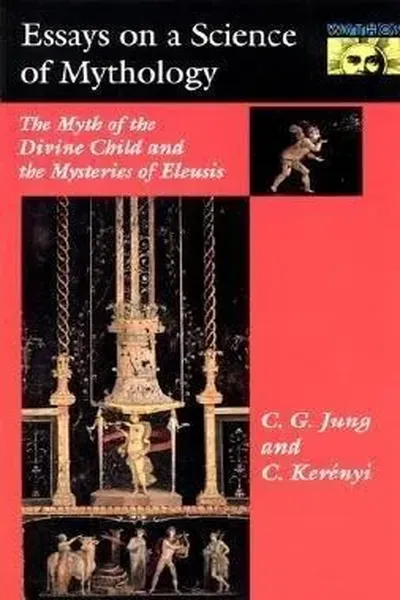
Ελευσίνα
 74
74

Ελευσίνα
The joint effort by Papagelli and Mavrommatis offers a welcome, sober account of the Eleusinian Mysteries, steering clear of the more fanciful speculations that often cloud discussions of ancient rites. Its strength lies in its methodical presentation of archaeological findings and textual fragments, grounding the discussion in the tangible evidence from the sanctuary itself. A particular passage detailing the possible structure and function of the *telesterion* is commendably precise, acknowledging the limitations of our knowledge while still drawing reasoned inferences. However, the work occasionally feels overly cautious, its scholarly reserve sometimes hindering a full exploration of the psychological and spiritual impact these rites likely had on initiates. The lack of extensive discussion on the Dionysian or Orphic elements, often intertwined with Eleusinian themes, feels like a missed opportunity for a more holistic picture. Ultimately, Ελευσίνα serves as a valuable, if somewhat dry, academic resource for understanding the historical framework of one of antiquity's most significant spiritual traditions.
📝 Description
74
Published in 2002, Ελευσίνα offers a rigorous analysis of the Eleusinian Mysteries.
Kalliopi Papagelli and Socrates Mavrommatis's 2002 book, Ελευσίνα, examines the ancient Greek initiation rites central to the cult of Demeter and Persephone. Moving past popular accounts, the authors present a detailed analysis based on available historical and archaeological evidence. They aim to reconstruct the structure, theology, and philosophical ideas behind these ceremonies, practiced for nearly two millennia at Eleusis.
The book is suited for students of ancient religions, classical studies, and comparative mythology seeking a scholarly approach to the Mysteries. It also speaks to practitioners of Western esotericism interested in the historical roots of initiation traditions and their philosophical underpinnings. A basic understanding of ancient Greek culture and religion is recommended for full engagement with the text.
The Eleusinian Mysteries were a significant religious phenomenon in the ancient Greek world, celebrated from around the 15th century BCE until their suppression in the late 4th century CE. Their influence spanned the Hellenistic and Roman periods, drawing initiates from all social classes, including notable figures like Plato. The secrecy surrounding the rites led to much speculation over the centuries. This 2002 publication engages with current scholarship, building on earlier research and incorporating new archaeological findings and interpretive methods.
This work engages with the historical roots of Western esoteric traditions, specifically through its examination of the Eleusinian Mysteries. These ancient rites, centered on the myth of Demeter and Persephone, served as a potent model for concepts of death, rebirth, and spiritual transformation. For practitioners of Western esotericism, understanding the historical context and philosophical underpinnings of such ancient initiation ceremonies provides insight into the lineage of initiatory practices and the enduring archetypes that have shaped later esoteric thought.
💡 Why Read This Book?
• Gain a scholarly understanding of the Eleusinian Mysteries' historical framework, differentiating between verifiable evidence and later speculation, a perspective often absent in popular accounts. • Grasp the central role of the Demeter and Persephone myth, as detailed in the text's analysis of the *telesterion*, and its significance for ancient Greek views on life and death. • Explore the philosophical currents of the 4th century BCE, including how thinkers like Plato may have been influenced by Eleusinian concepts of the soul's journey, as presented in the book.
⭐ Reader Reviews
Honest opinions from readers who have explored this book.
❓ Frequently Asked Questions
What is the primary focus of the book Ελευσίνα?
The book Ελευσίνα offers a scholarly examination of the ancient Greek Eleusinian Mysteries, focusing on their historical context, ritual practices, and philosophical implications as derived from archaeological and textual evidence.
When was Ελευσίνα first published?
Ελευσίνα was first published in 2002, reflecting a synthesis of archaeological discoveries and scholarly interpretations available at the turn of the 21st century.
Who are the authors of Ελευσίνα?
The authors are Kalliopi Papagelli and Socrates Mavrommatis, who collaborated to produce this academic study of the Eleusinian initiation rites.
What is the significance of the term 'telesterion' in the context of Ελευσίνα?
The 'telesterion' refers to the great hall at the sanctuary of Eleusis where the most sacred initiation rites of the Eleusinian Mysteries were performed; the book analyzes its architectural features and ritualistic purpose.
Does Ελευσίνα discuss the myth of Demeter and Persephone?
Yes, the book extensively discusses the myth of Demeter and Persephone, presenting it as the foundational narrative for the Eleusinian Mysteries and exploring its themes of grief, death, and rebirth.
Is Ελευσίνα suitable for beginners in esoteric studies?
While informative, Ελευσίνα is written from a scholarly perspective and may be challenging for absolute beginners. It is best suited for those with some background in classical studies or ancient religions.
🔮 Key Themes & Symbolism
The Ritual Structure
The book meticulously reconstructs the likely sequence of events within the Eleusinian Mysteries, from the initial stages of preparation to the climactic revelations within the *telesterion*. It details the symbolic significance of the procession, the purification rites, and the consumption of the *kykeon*, the sacred drink. The authors emphasize the experiential nature of the initiation, suggesting it aimed at a profound personal transformation rather than mere intellectual understanding.
Mythic Archetypes
Central to the Eleusinian experience was the myth of Demeter's search for her abducted daughter, Persephone, and her subsequent descent into the underworld. Ελευσίνα analyzes this narrative not just as a story, but as an archetypal drama mirroring the initiate's own journey through darkness and loss towards enlightenment and rebirth. The relationship between the goddesses is explored as a powerful representation of cyclical life, death, and renewal.
Philosophical Echoes
The authors investigate the philosophical underpinnings and implications of the Mysteries, particularly their potential influence on classical Greek thought. They examine how the rites offered a tangible experience of concepts later articulated by philosophers such as Plato, concerning the soul's immortality, the nature of the afterlife, and the pursuit of true knowledge. The book posits the Mysteries as a vital, lived philosophy for many ancient Greeks.
Sanctuary and Secrecy
Ελευσίνα places significant emphasis on the physical sanctuary at Eleusis and the profound importance of the oaths of secrecy surrounding the rites. The book discusses the archaeological evidence for the site's development and the architectural significance of the *telesterion*. The necessity of secrecy is framed not merely as a means to preserve mystery, but as integral to the transformative power of the initiatory experience itself.
💬 Memorable Quotes
Direct passages from the work, attributed to the author.
“The *telesterion* was designed to induce awe and alter perception.”
— This interpretation highlights the architectural and psychological intent behind the main initiation hall. It suggests that the very space was a tool, crafted to overwhelm the senses and prepare the initiate for a profound shift in consciousness, moving beyond ordinary experience.
“The *kykeon* likely served as more than mere sustenance; it was a ritual catalyst.”
— This points to the sacred beverage as a crucial element in the initiation process. It implies the *kykeon* possessed properties, whether psychoactive or symbolic, designed to facilitate the initiate's transition into a new state of awareness or spiritual connection.
“The myth of Demeter and Persephone provided the essential narrative arc.”
— This highlights the foundational role of the goddess myth in the Eleusinian tradition. The story of loss, descent, and return served as the symbolic blueprint for the initiate's own transformative journey, providing a relatable and powerful framework.
“Evidence for the Mysteries remains fragmented, demanding careful interpretation.”
— This acknowledges the inherent challenges in studying the Eleusinian Rites due to their secretive nature. It underscores the authors' approach of scholarly caution, relying on piecing together limited archaeological and textual clues rather than asserting definitive knowledge.
💡 Key Ideas
Editorial paraphrase of the work's core concepts — not direct quotes.
Initiation offered a structured confrontation with mortality.
This paraphrased concept emphasizes the Eleusinian Mysteries' function as a ritualistic engagement with the concept of death. It suggests the rites provided a framework for individuals to confront their own finitude and potentially find solace or understanding regarding the afterlife.
🌙 Esoteric Significance
Tradition
The Eleusinian Mysteries represent a foundational stratum within Western esoteric traditions, particularly influencing Hermeticism, Gnosticism, and later Renaissance magical practices. While not directly part of a codified lineage like Kabbalah, its emphasis on initiation, symbolic death and rebirth, and the revelation of sacred knowledge aligns with core esoteric principles. Ελευσίνα fits within this by providing a scholarly lens on a primary source of Western initiatory symbolism, offering historical context for later esoteric developments.
Symbolism
Key symbols include the *kykeon*, a mixture often interpreted as representing the union of opposites or a psychoactive sacrament facilitating altered states. The pomegranate, associated with Persephone's descent, symbolizes the inescapable cycles of life, death, and return, as well as the binding nature of certain spiritual pacts. The torch represents enlightenment, the illumination of hidden truths, and the guiding light through the underworld of ignorance or spiritual darkness.
Modern Relevance
Contemporary esoteric practitioners and scholars continue to draw inspiration from the Eleusinian model. Groups focused on nature-based spirituality, mystery school traditions, and depth psychology often reference the Demeter-Persephone myth and the concept of sacred initiation. The work's detailed examination of the *telesterion* and the experiential nature of the rites informs modern understandings of ritual design and the psychological impact of symbolic practice.
👥 Who Should Read This Book
• Students of comparative religion and classical antiquity seeking a scholarly, evidence-based account of the Eleusinian Mysteries, moving beyond speculative theories. • Practitioners of Western esoteric traditions interested in the historical roots of initiatory practices and the archetypal symbolism that underpins many modern magical and spiritual systems. • Academics and researchers in mythology and religious studies looking for a comprehensive analysis that integrates archaeological findings with textual interpretation of a central ancient Greek cult.
📜 Historical Context
The early 21st century saw continued scholarly interest in the ancient Greek Mysteries, with researchers like Walter Burkert having significantly shaped the field. Ελευσίνα (2002) emerges within this landscape, seeking to synthesize established knowledge with emerging archaeological data and critical theory. The era was marked by a move away from purely mythological interpretations towards more socio-historical and phenomenological analyses of religious practice. While popular culture often sensationalized the Mysteries, academic discourse, as exemplified by this work, focused on rigorous reconstruction. Unlike the Neoplatonists of late antiquity, who interpreted the rites through complex philosophical allegories, Papagelli and Mavrommatis ground their analysis in the material remains and textual fragments from the sanctuary itself, placing the work within a lineage of empirical classical scholarship.
📔 Journal Prompts
The *telesterion*'s architectural design and its intended psychological effect.
The symbolism of Demeter's grief and Persephone's return to the upper world.
Reflecting on the *kykeon* as a potential catalyst for spiritual insight.
Ancient oaths of secrecy and their role in preserving sacred knowledge.
The Eleusinian Mysteries' concept of the afterlife compared to other ancient traditions.
🗂️ Glossary
Eleusinian Mysteries
Ancient Greek initiation rites celebrated at Eleusis, centered on the cults of Demeter and Persephone, promising initiates a better afterlife.
Demeter
Greek goddess of agriculture, grain, and the harvest; mother of Persephone. Her grief over her daughter's abduction is central to the Mysteries' mythos.
Persephone
Daughter of Demeter, abducted by Hades to become Queen of the Underworld. Her cyclical return symbolizes rebirth and the changing seasons.
Telesterion
The large, roofed hall at the sanctuary of Eleusis where the main rites of the Mysteries were performed. Its exact interior arrangement remains debated.
Kykeon
A ritualistic drink, likely a mixture of barley, water, and mint, consumed by initiates during the Eleusinian ceremonies. Its precise composition and effects are unknown.
Hiera
Sacred objects or relics used in the Eleusinian Mysteries, kept secret and revealed only to initiates within the *telesterion*.
Initiation
The process of being formally admitted into a society or group, in this context, undergoing the secret rites of the Eleusinian Mysteries.