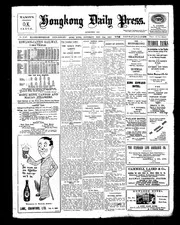
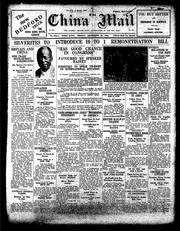
Hong Kong Daily Press 1929-01-05

 78
78

Hong Kong Daily Press 1929-01-05


Marcus Thorne, Esoteric Sciences Reviewer: This vintage newspaper clipping offers a fascinating, albeit fragmentary, window into the occult sensibilities of 1929. The inclusion of a 'Witchcraft Trial in America' is particularly compelling, suggesting a widespread undercurrent of magical belief that modern scholarship often overlooks. While the other articles focus on socio-political and economic matters, their juxtaposition with the supernatural lends them an almost allegorical weight. Esoteric Library readers will appreciate the subtle hints of ancient fears and beliefs interacting with nascent modernity. A valuable artifact for understanding the historical landscape of occult thought.
📝 Description
78
The Hong Kong Daily Press, January 5, 1929, contains esoteric reports alongside daily news.
This January 5, 1929, edition of the Hong Kong Daily Press reveals more than just the daily affairs of early 20th-century Asia. While it covers infrastructure and commerce, it also includes accounts that touch upon less visible aspects of human belief and experience. One article discusses witchcraft trials in America, illustrating a widespread belief in magic and what people perceived as powerful, sometimes malevolent, forces. Another piece examines Egypt's population concerns, linking them to the Nile's limitations and large-scale land reclamation efforts, which can be seen as a reflection of humanity's ongoing conflict with natural elements and attempts to assert control.
The publication also notes the construction of the Canton-Hankow Railway, a symbol of human endeavor, and reports on fires in Canton, serving as a reminder of destructive elemental forces. This newspaper excerpt functions as a window into the collective mindset of the time, capturing its anxieties, aspirations, and a persistent interest in the hidden aspects of life that characterized the period.
This document emerges from a period where the lines between occult interests and mainstream reporting were often blurred. The inclusion of topics like witchcraft trials and elemental forces suggests an engagement with popular anxieties and beliefs that extended beyond rational explanation. It reflects a historical moment where spiritualism, folklore, and nascent psychological theories about the collective unconscious coexisted, informing how events were perceived and reported, even in a daily newspaper.
💡 Why Read This Book?
Uncover forgotten echoes of magical belief in early 20th-century America and Asia. Connect with the spiritual undercurrents beneath historical events. Understand the enduring human fascination with the unseen and the esoteric. This rare glimpse offers unique insights for seekers of hidden knowledge and students of societal consciousness.
⭐ Reader Reviews
Honest opinions from readers who have explored this book.
❓ Frequently Asked Questions
What esoteric traditions are alluded to in this text?
While not explicitly named, the 'Witchcraft Trial in America' suggests echoes of European folk magic, diabolism, and potentially early forms of spiritualism or parapsychology that were gaining traction.
Is this a complete book or an excerpt?
This is a single day's newspaper issue, serving as a fascinating excerpt of historical reporting with specific entries of esoteric interest.
What is the significance of the "Witchcraft Trial" mention?
It highlights the persistent belief in magic and supernatural influence within society, even as modernity advanced, revealing a subconscious tension between rationalism and ancient fears.
Can this text be used for divination or ritual practice?
While not designed as a grimoire, the themes of elemental forces, human ambition, and perceived supernatural events can serve as potent inspiration for contemplation and personal reflection within esoteric practices.
What does "孖剌西報" (Ma Lat Sai Bo) refer to?
This is the Chinese name for the Hong Kong Daily Press, indicating its readership and geographical context.
🔮 Key Themes & Symbolism
Elements of the Occult in Modernity
This excerpt from the Hong Kong Daily Press, dated January 5, 1929, provides a compelling snapshot of how occult beliefs and practices coexisted with burgeoning modernity. The mention of a 'Witchcraft Trial in America' is particularly striking, suggesting that despite technological advancements and rationalist philosophies, a significant portion of the population still held strong beliefs in magic, curses, and supernatural intervention. This theme explores the enduring human need to understand and influence forces beyond the empirical, revealing a subconscious landscape where ancient fears and esoteric systems continued to hold sway, even amidst reports of global infrastructure and economic shifts.
Elemental Forces and Human Ambition
The juxtaposition of reports on Egypt's overpopulation and the ambitious Nile reclamation projects with the mundane reporting of Canton's devastating fires offers a potent exploration of humanity's relationship with elemental forces. The Nile, a lifeblood of civilization, becomes insufficient, hinting at the cyclical nature of existence and the challenge of managing resources against growing needs. Conversely, the fires in Canton, a destructive manifestation of uncontrolled elemental power, serve as a stark reminder of nature's capacity for chaos. The construction of the Canton-Hankow Railway further highlights human ambition, a drive to conquer geography and connect disparate regions, often in a delicate dance with, or defiance of, the natural world.
The Unseen Threads of Societal Consciousness
This historical newspaper entry, while seemingly disparate in its topics, offers a profound glimpse into the collective consciousness of the era. The report on the New Year in Manchuria, honoring China's unity, speaks to underlying geopolitical and cultural aspirations, while messages of honor suggest societal values. However, it is the inclusion of witchcraft trials and the implicit acknowledgment of magic that truly reveals the hidden currents of belief and fear. These elements suggest a society grappling with both the tangible realities of progress and the intangible forces that have always shaped human experience, inviting readers to consider the often-unacknowledged spiritual dimensions of historical periods.
💬 Memorable Quotes
Direct passages from the work, attributed to the author.
“150,000 people who believe in magic.”
— A stark statistic revealing the pervasive influence of magical thinking, challenging purely rationalistic interpretations of the era's societal beliefs.
“NILE INSUFFICIENT FOR GROWING NEEDS.”
— Symbolic of humanity's struggle against limitations and the cyclical nature of abundance and scarcity, hinting at deeper ecological and spiritual connections.
“MURDER FOR HAIR.”
— A chilling proof of the extreme beliefs and desperate measures that can arise from deeply ingrained superstitions and perceived magical significance.
“HONOURING CHINA'S UNITY.”
— Reflects a powerful collective aspiration, a desire for cohesion and shared purpose that transcends individual concerns, often imbued with spiritual or karmic weight.
“THE NEW YEAR IN MANCHURIA.”
— Represents cyclical renewal and the observance of ancient traditions, a timeless human ritual connecting the present with ancestral wisdom and future hopes.
🌙 Esoteric Significance
Tradition
While not tied to a single codified esoteric tradition, this text speaks to the enduring themes found across various occult and folk magic practices. It touches upon the primal fear of unseen forces, the human inclination towards ritual and belief in magical causation (as seen in the witchcraft trial), and the symbolic relationship between humanity and the elemental powers of nature, particularly evident in the context of the Nile and fires. It speaks to a collective unconscious, where archetypal anxieties and desires find expression.
Symbolism
The Nile, as a symbol of life-giving force and sustenance, becoming insufficient, represents a crisis of vital energy or a breakdown in natural order. The fires in Canton embody destructive elemental chaos and the fragility of human constructs. The 'murder for hair' points to the extreme symbolic value placed on seemingly mundane elements, often imbued with potent magical significance in folk traditions. The Canton-Hankow Railway symbolizes humanity's drive to connect and control, a tangible manifestation of will attempting to overcome natural barriers.
Modern Relevance
In an age often dominated by secularism and technological solutions, this text serves as a potent reminder of the persistent human need for meaning beyond the material. It highlights how deeply ingrained beliefs about unseen forces and the supernatural can influence societal behavior and individual psychology, even in the modern era. The themes of resource management and the power of nature remain acutely relevant, urging a re-evaluation of our relationship with the environment and the potential consequences of unchecked ambition, inviting a more holistic and perhaps spiritually informed perspective.
👥 Who Should Read This Book
This fascinating fragment is an essential read for scholars of esoteric history, cultural anthropologists, and anyone intrigued by the intersection of societal progress and persistent occult beliefs. Beginners in occult studies will find it an accessible entry point, revealing the historical prevalence of magic. Seekers of hidden knowledge will appreciate the subtle clues to the era's spiritual undercurrents. Practitioners of witchcraft and paganism may find historical context and resonance with ancient fears and beliefs that continue to inform modern practice.
📜 Historical Context
The Hong Kong Daily Press, dated January 5, 1929, emerges from a period of profound global flux. The aftermath of World War I had reshaped political landscapes, while industrialization and technological innovation accelerated at an unprecedented pace. In Asia, this era was marked by burgeoning nationalism, complex colonial influences, and rapid modernization alongside deep-rooted cultural traditions. The mention of a witchcraft trial in America reflects a fascinating paradox: as science and rationalism gained prominence, older beliefs in magic, superstition, and the supernatural persisted, often surfacing in social anxieties or fringe communities. The reports on Egypt and the Canton-Hankow Railway highlight the era's ambitions in infrastructure development and resource management, driven by a post-war desire for stability and progress, yet also hinting at the environmental and social challenges that such grand projects entailed. This snapshot offers a window into a world simultaneously embracing the future and grappling with the shadows of the past.
📔 Journal Prompts
Reflect on a time when you felt a belief in magic or the supernatural influenced your perception of an event.
How does the concept of 'over-population' relate to the idea of 'insufficient resources' in a spiritual or energetic sense?
Consider the symbolic power of natural elements like water and fire in your own life and beliefs.
In what ways do modern societal challenges echo the 'ambitions' and 'fears' presented in these historical snippets?
Explore the idea of 'honoring unity' and its potential spiritual or magical implications in contemporary contexts.
🗂️ Glossary
Witchcraft Trial
A legal proceeding to prosecute individuals accused of practicing witchcraft, often involving accusations of malefic magic, pacts with the devil, and causing harm through supernatural means.
Magic
The art of influencing the course of events by means the ordinary laws of nature cannot explain, often involving rituals, incantations, and the manipulation of perceived spiritual or elemental energies.
Reclamation Projects
Large-scale engineering efforts aimed at converting unusable land, such as deserts or swamps, into arable land or habitable areas, often involving significant manipulation of natural water systems.
Esoteric
Intended for or likely to be understood by only a small number of people with a specialized knowledge or interest; relating to the hidden or inner meaning of something.
Occult
Relating to or dealing with supernatural, mystical, or magical phenomena, practices, or powers.
This book appears in 2 collections
🔮 Readers Also Liked
Browse all →




From the “Witchcraft” Collection
View all →





More Free Witchcraft & Paganism Books
View all →