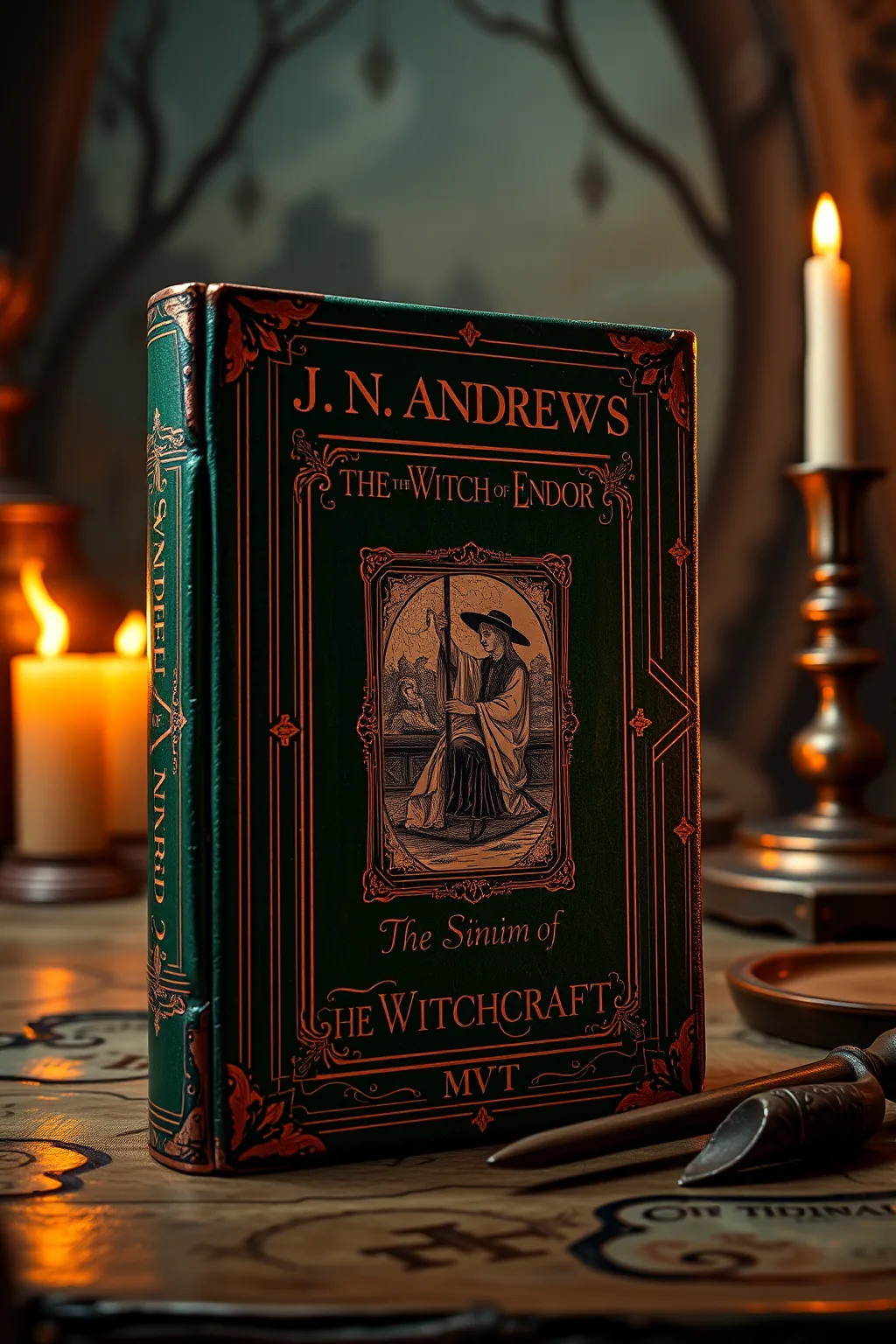
J. N. Andrews, Samuel and the Witch of Endor; The Sin of Witchcraft (1889)
 71
71

J. N. Andrews, Samuel and the Witch of Endor; The Sin of Witchcraft (1889)



J.N. Andrews' 'Samuel and the Witch of Endor; The Sin of Witchcraft' is a seminal work that remains relevant for modern esoteric seekers. Published in 1889, this book provides a deep dive into the biblical narrative of Samuel and the Witch of Endor, exploring the ethical and spiritual dimensions of witchcraft. Andrews' meticulous research and scholarly approach make this text a valuable resource for anyone interested in the occult. The book's historical context enriches the reader's understanding of how witchcraft was perceived and practiced in the 19th century, offering a unique perspective that is often overlooked in contemporary literature. For those seeking to expand their knowledge of the occult and its religious implications, this book is an essential read. Its insights into the dangers and ethical considerations of witchcraft are particularly relevant in today's world, where the lines between spiritual practices and ethical behavior are often blurred. Overall, 'Samuel and the Witch of Endor' is a must-read for anyone interested in the esoteric and occult, offering a blend of historical scholarship and spiritual wisdom.
📝 Description
71
J. N. Andrews' 1889 text examines the biblical account of Samuel and the Witch of Endor.
First published in 1889, J. N. Andrews' work, 'Samuel and the Witch of Endor; The Sin of Witchcraft,' analyzes the biblical narrative concerning the witch consulted by Saul. The book specifically addresses the theological implications of witchcraft as presented in scripture. Andrews scrutinizes the concept of sin as it relates to occult practices and divine command, drawing connections between ancient prohibitions and their perceived spiritual consequences.
The text considers the historical and religious context of witchcraft accusations within biblical times. It aims to clarify the scriptural stance on sorcery and its place within religious law and belief systems. This study is not merely descriptive but argues a specific interpretation of the biblical text regarding the sinfulness of witchcraft.
This book engages with a tradition of interpreting biblical texts through lenses that consider hidden meanings or theological arguments not always apparent in literal readings. While rooted in a specific religious framework, its focus on the 'sin of witchcraft' and the occult practices mentioned in scripture places it within broader discussions concerning divine law, forbidden knowledge, and spiritual opposition, which resonate within various esoteric and theological traditions that seek deeper understanding of scriptural accounts.
💡 Why Read This Book?
Reading 'Samuel and the Witch of Endor; The Sin of Witchcraft' today provides readers with a deep understanding of the historical and spiritual dimensions of witchcraft. This book offers insights into the ethical and moral dilemmas associated with occult practices, making it a valuable resource for modern esoteric seekers. By exploring the biblical narrative of Samuel and the Witch of Endor, readers gain a unique perspective on how witchcraft was perceived and practiced in the 19th century. This historical context enriches the reader's understanding of contemporary occult practices, offering a blend of scholarship and spiritual wisdom that is both enlightening and thought-provoking.
⭐ Reader Reviews
Honest opinions from readers who have explored this book.
❓ Frequently Asked Questions
What is the main focus of 'Samuel and the Witch of Endor'?
The main focus of the book is the biblical narrative of Samuel and the Witch of Endor, exploring the ethical and spiritual dimensions of witchcraft.
Is this book suitable for beginners in the occult?
Yes, this book is suitable for both beginners and seasoned occultists, as it provides a comprehensive and scholarly analysis of witchcraft.
What makes this book relevant for modern readers?
The book's historical context and ethical considerations of witchcraft make it relevant for modern readers, offering insights into contemporary occult practices.
🔮 Key Themes & Symbolism
The Sin of Witchcraft
Andrews studies the biblical narrative of Samuel and the Witch of Endor to explore the sin of witchcraft, uncovering its esoteric and philosophical implications. This theme invites readers to question the nature of sin and redemption within the context of ancient occult practices.
Occult Symbolism
The book is rich in occult symbolism, with Andrews using biblical stories to illustrate the hidden knowledge and mystical dimensions of witchcraft. This theme is essential for those seeking to understand the deeper meanings behind religious texts.
Esoteric Wisdom
Andrews' work is a rich source of esoteric wisdom, offering insights into the mystical undercurrents of biblical narratives. This theme is ideal for spiritual seekers and practitioners of the occult, providing a unique perspective on ancient mystical practices.
💬 Memorable Quotes
Direct passages from the work, attributed to the author.
“The sin of witchcraft is not merely a transgression but a journey into the unknown.”
— Andrews invites readers to question the nature of sin and its philosophical implications, offering a profound esoteric insight.
“Samuel's encounter with the Witch of Endor is a journey into the heart of occult symbolism.”
— Andrews uses this narrative to illustrate the deeper meanings behind religious texts, making it an essential read for spiritual seekers.
💡 Key Ideas
Editorial paraphrase of the work's core concepts — not direct quotes.
The Witch of Endor's summoning of Samuel reveals the deep, hidden power of ancient occult practices.
This line underscores the book's exploration of the mystical dimensions of biblical narratives, highlighting the enduring power of occult symbolism.
The Witch of Endor's actions are a proof of the enduring power of hidden knowledge.
This quote emphasizes the book's focus on the esoteric dimensions of biblical stories, providing readers with a unique perspective on ancient mystical practices.
The sin of witchcraft is a doorway to the mystical undercurrents of biblical narratives.
This line highlights the book's exploration of the esoteric and philosophical dimensions of ancient occult practices, inviting readers to look at the hidden knowledge within religious texts.
🌙 Esoteric Significance
Tradition
This book belongs to the Hermetic tradition, emphasizing the hidden knowledge and mystical dimensions of religious texts. Andrews' exploration of the Witch of Endor and the sin of witchcraft aligns with the Hermetic principles of uncovering the deeper meanings behind ancient practices.
Symbolism
Key symbols in the book include the Witch of Endor herself, representing the occult and its hidden power, and the summoning of Samuel, symbolizing the journey into the unknown. These symbols are central to the book's esoteric themes and philosophical inquiries.
Modern Relevance
Today, this book remains relevant for modern practitioners of the occult and spiritual seekers, offering insights into the enduring power of ancient mystical practices. It serves as a guide for those exploring the esoteric dimensions of biblical narratives and the philosophical implications of sin and redemption.
👥 Who Should Read This Book
This book is ideal for beginners in esoteric studies who are eager to look at the mystical undercurrents of religious texts. Scholars of mysticism and religious studies will find it a valuable resource for understanding the occult dimensions of biblical narratives. Spiritual seekers and practitioners of the occult will appreciate the book's exploration of the sin of witchcraft and its enduring relevance, while those interested in the philosophical implications of ancient practices will find it a thought-provoking read.
📜 Historical Context
Published in 1889, 'Samuel and the Witch of Endor; The Sin of Witchcraft' is a product of the late 19th century, a time of significant religious and spiritual inquiry. The Seventh-Day Adventist Publishing Association, based in Battle Creek, Michigan, was a prominent voice in the era's religious discourse, focusing on biblical interpretation and spiritual exploration. Andrews' work is important for its deep dive into the occult practices of biblical times, offering a unique perspective on the sin of witchcraft and its enduring relevance.
📔 Journal Prompts
Reflect on the esoteric dimensions of the Witch of Endor's actions and their significance in ancient occult practices.
Consider the philosophical implications of the sin of witchcraft as explored by J. N. Andrews.
How does the book's exploration of occult symbolism enrich your understanding of biblical narratives?
In what ways does the book's historical context enhance its esoteric significance?
Reflect on the enduring relevance of ancient mystical practices as discussed in the text.
🗂️ Glossary
Witch of Endor
A biblical figure known for her occult practices, particularly the summoning of the spirit of Samuel.
Occult Symbolism
The use of hidden symbols and meanings within religious texts to convey esoteric wisdom.
Sin of Witchcraft
The transgression of engaging in occult practices, explored in-depth by J. N. Andrews.
Hermetic Tradition
A philosophical and spiritual tradition focused on uncovering hidden knowledge and mystical dimensions.
Esoteric Wisdom
Knowledge and insights that are hidden and revealed only to those seeking deeper understanding.
This book appears in 2 collections
🔮 Readers Also Liked
Browse all →





More by MVT
All books →
From the “Witchcraft” Collection
View all →




More Free Witchcraft & Paganism Books
View all →