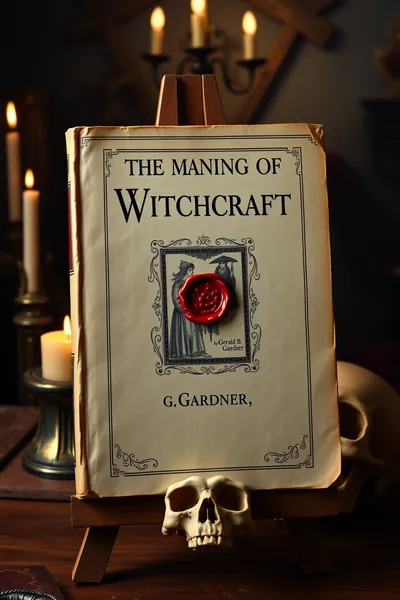
De la demonomanie des sorciers ... 1580: Iss 124

 74
74

De la demonomanie des sorciers ... 1580: Iss 124



Alaric Kestrel (Metaphysical Studies Reviewer) — Jean Bodin's 'De la demonomanie des sorciers' is a cornerstone text for understanding the historical trajectory of Western esotericism and demonology. Beyond its legalistic framework, Bodin offers a compelling, albeit terrifying, exposition of late Renaissance occult beliefs. He meticulously catalogues the perceived manifestations of demonic pacts and the supposed mechanisms of sorcery, revealing a deep engagement with theological and philosophical ideas surrounding evil. This work is essential for scholars of witchcraft, comparative religion, and anyone seeking to grasp the profound societal anxieties that shaped early modern Europe. Its detailed descriptions of infernal hierarchies and magical practices provide invaluable insights into the era's esoteric worldview, making it a compelling, albeit somber, read for the serious student of the occult.
📝 Description
74
Jean Bodin published 'De la demonomanie des sorciers' in 1580, a comprehensive study of witchcraft.
Jean Bodin's 1580 treatise, 'De la demonomanie des sorciers,' systematically analyzes the nature and practice of witchcraft as understood in the late 16th century. Bodin, a jurist and philosopher, approached the subject with the rigor of legal and theological inquiry, outlining what he believed to be the structure of demonic pacts and the operational methods of sorcerers. The book details beliefs about the pacts witches made with demonic forces and the ways they were thought to enact their malevolent influence. It reflects a worldview where the supernatural was considered an active force with tangible consequences for individuals and society.
This work examines specific aspects of demonology, including ritualistic acts, the perceived hierarchy of demons, and the anxieties that contributed to the persecution of alleged witches. Bodin’s text is crucial for understanding the intellectual currents that intertwined law, religion, and occult beliefs in early modern Europe. It provides a detailed account of the fears and justifications surrounding witchcraft accusations during that era.
Published in 1580, Bodin's work engages with a long tradition of demonological literature that sought to categorize and understand supernatural malevolence. It fits within the broader context of late medieval and early modern attempts to rationalize and systematize beliefs about the demonic, particularly in relation to heresy and perceived threats to social order. The book is less about occult practice itself and more about the juridical and theological framework used to condemn it.
💡 Why Read This Book?
Uncover the historical roots of Western demonology and witchcraft beliefs. Gain insight into the philosophical and theological frameworks that defined early modern Europe's understanding of the supernatural. Essential for scholars, practitioners of esoteric traditions, and seekers of hidden knowledge interested in the evolution of occult thought.
⭐ Reader Reviews
Honest opinions from readers who have explored this book.
❓ Frequently Asked Questions
What is the primary focus of 'De la demonomanie des sorciers'?
The book primarily focuses on the perceived nature of sorcery, its alleged pacts with demons, and the legal and theological justifications for prosecuting witchcraft in 16th-century Europe.
Who was Jean Bodin?
Jean Bodin (1530-1596) was a prominent French jurist, political philosopher, and economist, known for his theories on sovereignty and his significant contributions to the discourse on witchcraft.
Is this book a practical guide to magic?
No, it is not a practical guide but rather a theoretical and legalistic examination of witchcraft from the perspective of its time, aiming to understand and combat it.
What historical period does this book illuminate?
The book powerfully illuminates the late Renaissance period, a time of intense religious upheaval and widespread fear of witchcraft across Europe.
How does this work relate to modern esoteric studies?
It provides crucial historical context for understanding the evolution of occult beliefs, demonology, and the societal impact of fear surrounding forbidden knowledge.
🔮 Key Themes & Symbolism
The Pact with Infernal Forces
Bodin meticulously details the alleged pacts between sorcerers and demons, exploring the nature of these infernal contracts. He examines the perceived motivations for such alliances, the rituals involved in their formation, and the hierarchical structure of the demonic realm as understood by theologians and jurists of the era. This theme examines the symbolic representation of evil and the perceived mechanisms through which supernatural power was believed to be transferred from the infernal to the human agent, offering a chilling insight into the period's theological anxieties and its framework for understanding malevolent spiritual influence.
The Identification and Prosecution of Sorcerers
A significant portion of Bodin's work is dedicated to the identification and legal prosecution of individuals accused of witchcraft. He outlines the 'signs' and 'proofs' that were considered indicative of sorcery, ranging from physical marks to behavioral patterns and confessions extracted under duress. This theme explores the intersection of religious dogma, legal practice, and societal fear, revealing how the belief in demonic influence translated into tangible mechanisms of control and punishment. It highlights the complex, often brutal, societal response to perceived threats from the unseen world.
Theological and Philosophical Underpinnings of Evil
Bodin's treatise is deeply rooted in the theological and philosophical discussions of his time concerning the nature of evil, the existence of the Devil, and the role of free will in succumbing to temptation. He synthesizes biblical interpretations, patristic writings, and contemporary philosophical debates to construct a comprehensive worldview where demonic agency is a tangible and pervasive threat. This theme explores the intellectual landscape that shaped the perception of witchcraft, demonstrating how abstract theological concepts were applied to interpret and condemn perceived transgressions against divine order.
💬 Memorable Quotes
Direct passages from the work, attributed to the author.
“The Devil is the source of all evil.”
— This statement expresses the dualistic worldview prevalent during the period, identifying the ultimate origin of malevolence with the chief adversary, shaping societal perceptions of sin and misfortune.
“Witches are those who practice forbidden arts through demonic pacts.”
— This defines the core accusation and belief surrounding witchcraft, linking forbidden practices directly to infernal collaboration and establishing a framework for identification and condemnation.
“The law must protect the faithful from hidden enemies.”
— This reflects the perceived duty of the state and legal system to combat perceived supernatural threats, underscoring the fear of unseen forces and their potential to disrupt societal order.
“Confession is often extracted through divine intervention or necessity.”
— This points to the methods used to obtain confessions, often under duress or torture, and the belief that such admissions were divinely sanctioned or unavoidable under severe circumstances.
“The signs of a witch are manifold and often subtle.”
— This highlights the difficulty and often arbitrary nature of identifying witches, suggesting that perceived evidence could be interpreted in numerous ways, leading to widespread accusations.
🌙 Esoteric Significance
Tradition
This work is foundational to the Western esoteric tradition of demonology and the study of witchcraft. While framed within a legal and theological context, Bodin's meticulous cataloging of demonic hierarchies, pacts, and supposed sorcerous practices draws heavily on existing occult lore and demonological treatises. It represents a critical juncture where academic and legal discourse engaged deeply with beliefs previously confined to more clandestine circles, effectively formalizing and disseminating certain esoteric concepts into mainstream intellectual and judicial frameworks.
Symbolism
The symbolism in Bodin's work is potent and many-sided. Demons are depicted as fallen angels, representing primal chaos and rebellion against divine authority. The pact itself is a perversion of sacred covenants, symbolizing the ultimate act of spiritual betrayal and the surrender of free will. Witchcraft rituals, as described, often involve inversions of Christian sacraments and natural order, signifying a deliberate embrace of darkness and destruction. The physical marks attributed to witches are symbolic stigmata of their infernal allegiance, marking them as agents of the adversarial force within society.
Modern Relevance
For modern esoteric practitioners and scholars, 'De la demonomanie des sorciers' offers invaluable historical context. It illuminates the origins of many demonological concepts that persist in various occult systems and provides a stark reminder of the societal impact of fear-driven beliefs. Understanding Bodin's arguments is crucial for deconstructing the historical narratives surrounding witchcraft and recognizing how religious and legal frameworks can shape and even weaponize esoteric ideas. It serves as a cautionary tale about the dangers of unchecked belief and the persecution of the marginalized.
👥 Who Should Read This Book
This important work is essential for historians of witchcraft and early modern Europe, providing direct insight into the intellectual currents that fueled persecution. Scholars of comparative religion and demonology will find it an invaluable resource for understanding the evolution of beliefs about evil. Esoteric practitioners seeking to understand the historical roots of their traditions, particularly those related to demonolatry or ceremonial magic, will benefit from its detailed descriptions and conceptual frameworks. For the general seeker of hidden knowledge, it offers a profound, albeit dark, glimpse into a worldview where the supernatural was an ever-present force shaping human lives and destinies.
📜 Historical Context
Published in 1580, Jean Bodin's 'De la demonomanie des sorciers' emerged during a period of immense social, religious, and political upheaval in Europe. The Protestant Reformation and the ensuing Counter-Reformation had fractured religious unity, creating an atmosphere of suspicion and intolerance. Simultaneously, the growth of centralized states and legal systems saw rulers seeking to assert control and order. In this volatile environment, the fear of witchcraft and demonic influence became a potent social phenomenon. Bodin's work, therefore, was not an isolated academic exercise but a reflection of widespread anxieties about heresy, social deviance, and the perceived erosion of divine order. It provided a theological, philosophical, and legal framework that legitimized and intensified the witch hunts, influencing judicial practices across the continent for decades and contributing to the persecution of thousands.
📔 Journal Prompts
Reflect on the concept of 'pacts' with supernatural entities – what might these represent psychologically or symbolically beyond the literal?
How did the legal and theological frameworks of the 16th century influence the perception and prosecution of those accused of witchcraft?
Consider the role of fear and societal anxiety in shaping beliefs about the supernatural, as evidenced by Bodin's work.
Analyze the symbolic language used to describe demons and witchcraft. What does this symbolism reveal about the values and fears of the era?
In what ways might the historical context of religious schism and political instability have contributed to the phenomenon of witch hunts?
🗂️ Glossary
Demon
In the context of Bodin's work, a demon is a fallen angel, a spirit that rebelled against God and now actively seeks to corrupt humanity and sow discord, often through direct influence or pacts.
Sorcery
The practice of magic, often perceived as malevolent, achieved through invoking or collaborating with demonic forces. It encompasses a range of alleged activities from curses to shape-shifting.
Pact
A formal agreement, often believed to be sealed through ritual, between a human and a demon, in which the human offers allegiance or service in exchange for supernatural power or knowledge.
Inquisition
While not solely an inquisitorial text, it reflects the spirit of inquiry and judgment prevalent in religious and secular courts tasked with rooting out heresy and perceived supernatural threats.
Heresy
A belief or opinion contrary to orthodox religious doctrine. In Bodin's time, witchcraft was often conflated with heresy, as it was seen as a fundamental rejection of divine authority.
This book appears in 2 collections
🔮 Readers Also Liked
Browse all →
![Disputatio physica qua magiam doemoniacam [sic] ceu illicitam, & naturalem ceu licitam, ... 1667: Iss 181](/img/thumb/disputatio-physica-qua-magiam-doemoniacam-sic-ceu-illicitam-naturalem-ceu-licitam-1667-iss-181-bugges-laurentius.webp)


![The old colony town [Plymouth, Mass.], and other sketches. 1893: Iss 118](/img/thumb/the-old-colony-town-plymouth-mass-and-other-sketches-1893-iss-118-bliss-william-root-1825-1906.webp)



More by BODIN, Jean, 1530-1596.
All books →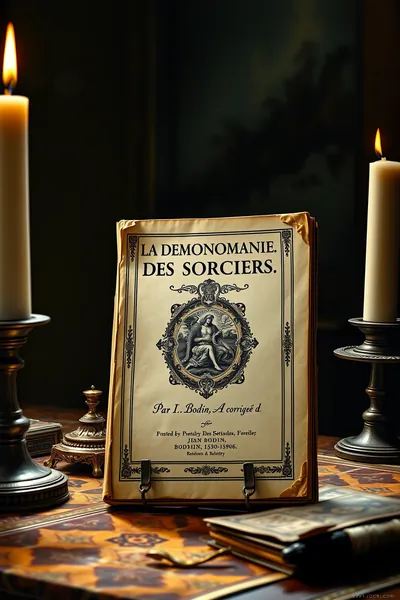



From the “Witchcraft” Collection
View all →






More Free Witchcraft & Paganism Books
View all →






![D. [i. e., Doktor] Balthasar Bekkers reformierten Predigers in Amsterdam bezauberte Welt. ... 1781: Vol 2 Iss 81](/img/thumb/d-i-e-doktor-balthasar-bekkers-reformierten-predigers-in-amsterdam-bezauberte-welt-1781-vol-2-iss-81-bekker-balthasar-1634-1698.webp)