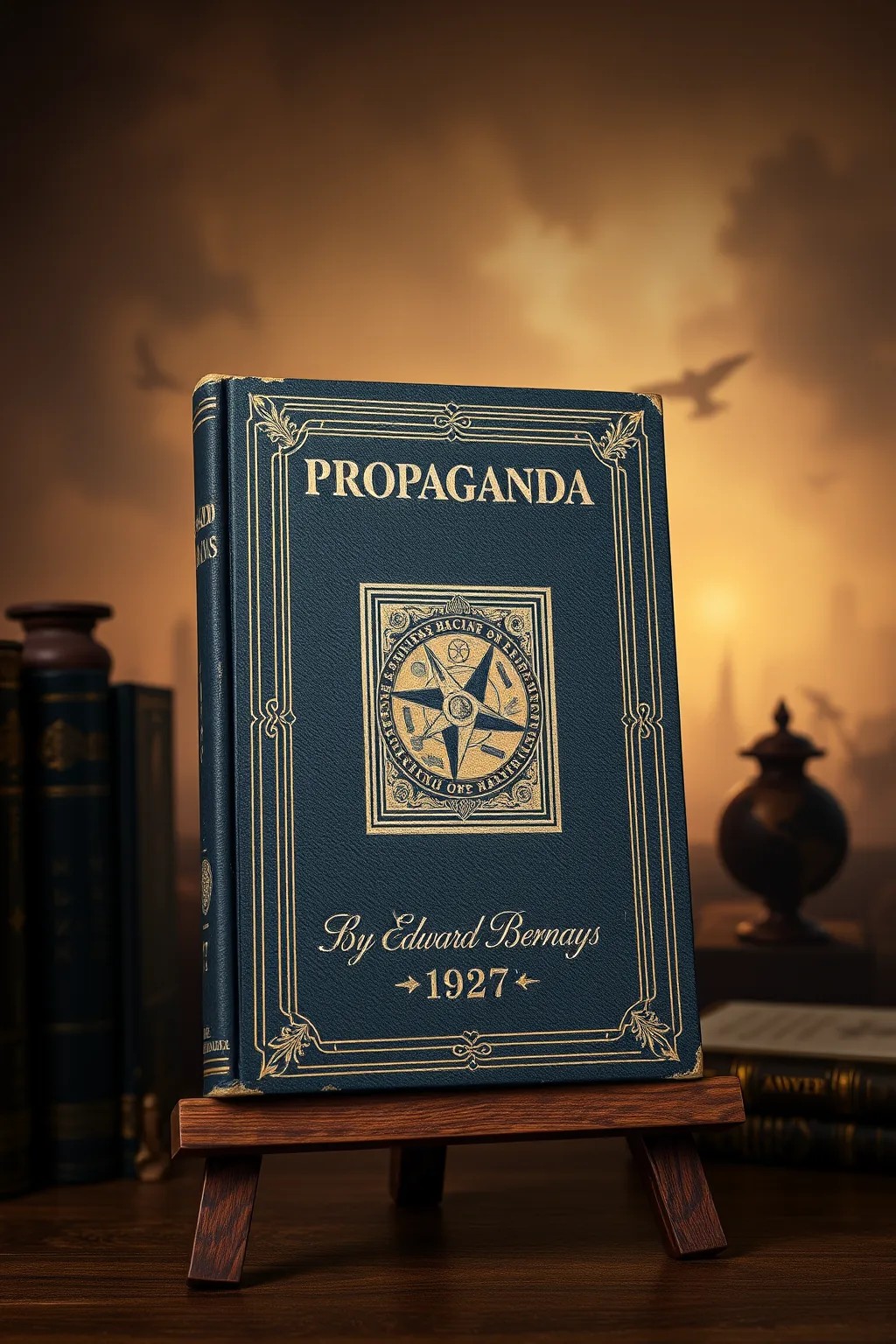
Edward Bernays, Propaganda (1927)
 72
72

Edward Bernays, Propaganda (1927)


Edward Bernays' 'Propaganda' (1927) is a masterclass in the art of manipulation and persuasion. While it may not immediately strike one as an esoteric text, its insights into the mechanics of societal control are invaluable for modern occult seekers. Bernays' exploration of the psychology of crowds and the techniques used to shape public opinion provides a fascinating lens through which to view the New World Order. The book's historical context is particularly enlightening, as it reveals how the principles of propaganda have been applied over the decades. For those interested in witchcraft and paganism, 'Propaganda' offers a unique perspective on the hidden forces that govern our world. It is a thought-provoking read that challenges readers to question the narratives they encounter daily. Overall, 'Propaganda' is a 4-star read for anyone interested in the esoteric dimensions of power and control.
📝 Description
72
Edward Bernays wrote 'Propaganda' in 1927, detailing how to engineer consent.
Edward Bernays' 1927 book 'Propaganda' examines the techniques used to shape public opinion and control masses. Bernays, a nephew of Sigmund Freud, applied psychological principles to public relations, arguing that manipulating public perception is necessary for a functioning democracy. He described how 'invisible governors' operate, directing the public mind through symbols, propaganda, and carefully crafted messages. The book details methods for influencing crowds and individuals, revealing the often unseen forces at play in societal control.
Bernays believed that the common person is incapable of rational thought and needs guidance. He outlined how public relations professionals could create and manage public opinion through the use of propaganda. This was not presented as inherently evil, but as a practical necessity for managing a complex society. He discussed the role of mass media, advertising, and influential figures in disseminating ideas and shaping beliefs.
While Bernays' work is primarily a foundational text in public relations and propaganda studies, its reception within certain esoteric circles stems from its frank discussion of manipulation and control. Readers interested in occult traditions that focus on power dynamics, psychic influence, or the hidden architecture of society have sometimes drawn parallels. The book's clinical dissection of how beliefs are manufactured and how masses are directed can resonate with those who study hermeticism or other traditions concerned with the subtle forces governing human behavior and societal structures. It offers a practical, albeit secular, lens on mechanisms often discussed in more spiritual or mystical terms.
💡 Why Read This Book?
Reading 'Propaganda' today is essential for understanding the hidden mechanisms of societal control. It provides a historical context for the New World Order and reveals the techniques used to manipulate public opinion. For esoteric seekers, this book offers a unique perspective on the occult forces at play in modern politics and society. By delving into the psychology of crowds and the ethics of mass persuasion, 'Propaganda' equips readers with the knowledge to navigate the complex web of influences that shape our world.
⭐ Reader Reviews
Honest opinions from readers who have explored this book.
❓ Frequently Asked Questions
What makes 'Propaganda' relevant to esoteric studies?
'Propaganda' is relevant to esoteric studies because it reveals the hidden techniques used to control public opinion, which are often rooted in occult principles. It provides a unique perspective on the New World Order and the forces that govern our world.
Is this book suitable for beginners in the occult?
While 'Propaganda' is a valuable read, it may be more suitable for those with some background in esoteric studies. It provides deep insights into the mechanics of societal control, which can be challenging for beginners to grasp without context.
How does 'Propaganda' relate to the New World Order?
'Propaganda' provides a historical context for understanding the New World Order by revealing the techniques used to manipulate public opinion. It shows how these techniques have been systematically implemented over the decades to shape societal beliefs and behaviors.
🔮 Key Themes & Symbolism
The Art of Persuasion
Bernays explores the mystical and occult techniques used to manipulate public opinion. This theme looks at the hermetic principles that govern the art of persuasion, revealing the hidden knowledge that underpins propaganda.
Symbolism and Social Control
The use of symbolism in social control is a central theme in 'Propaganda'. Bernays uncovers the esoteric symbols and their meanings, showing how they are employed to influence and control the masses.
The Hidden Elite
Bernays exposes the occult elite who use propaganda as a tool of power. This theme reveals the hidden forces that shape our world, offering insights into the clandestine operations of the New World Order.
💬 Memorable Quotes
Direct passages from the work, attributed to the author.
“The conscious and intelligent manipulation of the organized habits and opinions of the masses is an important element in democratic society.”
— Bernays highlights the hermetic principles that govern the manipulation of public opinion.
“The manipulators of public opinion are the invisible government.”
— Bernays exposes the occult methods used by the elite to influence and control the masses.
“The average citizen is the easiest dupe of propaganda.”
— Bernays highlights the vulnerability of the masses to occult techniques of persuasion.
💡 Key Ideas
Editorial paraphrase of the work's core concepts — not direct quotes.
Those who manipulate the unseen mechanism of society constitute an invisible government which is the true ruling power of our country.
This quote reveals the hidden elite who control society through esoteric means.
Propaganda will never die out. Intelligent men must realize that propaganda is the modern instrument by which they can fight for productive ends and help bring order out of chaos.
This quote underscores the importance of understanding propaganda in the modern world.
🌙 Esoteric Significance
Tradition
Bernays' 'Propaganda' belongs to the hermetic tradition, which emphasizes the hidden knowledge and symbolism that govern the manipulation of consciousness. This text is a key resource for practitioners of the occult and spiritual seekers.
Symbolism
Key symbols in 'Propaganda' include the use of esoteric imagery and hidden messages to influence public opinion. Bernays reveals the deep significance of these symbols, showing how they are employed to control and manipulate the masses.
Modern Relevance
The esoteric techniques described in 'Propaganda' are highly relevant to modern practitioners of the occult. This book provides a deep understanding of the hidden forces that shape our world, making it an essential resource for anyone interested in the New World Order.
👥 Who Should Read This Book
Beginners interested in the occult will find 'Propaganda' an accessible introduction to the esoteric themes of power and persuasion. Scholars of the arcane will appreciate the useful insights into the hermetic principles that govern the manipulation of public opinion. Spiritual seekers will benefit from the mystical and symbolic revelations that uncover the hidden knowledge underlying propaganda. Practitioners of the mystical arts will find this book a valuable resource for understanding the occult methods employed by the elite.
📜 Historical Context
Published in 1927, 'Propaganda' by Edward Bernays emerged during a time of significant social and political upheaval. The post-World War I era was marked by a growing awareness of the power of media and propaganda, which Bernays himself had helped to pioneer. The book was important for its revelation of the hidden mechanisms of social control, providing insights into the esoteric and occult methods employed by the elite. Bernays' work has had a lasting influence on the fields of public relations, psychology, and political science, making it a foundational text for scholars of the occult.
📔 Journal Prompts
Reflect on the ways in which propaganda influences your daily life.
Explore the hermetic principles that govern the manipulation of public opinion.
Consider the role of symbolism in social control and how it affects you.
Analyze the hidden elite and their methods of influencing society.
How does 'Propaganda' by Edward Bernays relate to your spiritual journey?
🗂️ Glossary
Propaganda
The deliberate and systematic manipulation of public opinion through esoteric and occult methods.
Hermetic Principles
The hidden knowledge and symbolism that govern the manipulation of consciousness.
New World Order
A clandestine global elite that uses propaganda and occult techniques to control society.
Symbolism
The use of esoteric imagery and hidden messages to influence and control the masses.
Public Opinion
The collective beliefs and attitudes of the public, which can be manipulated through propaganda.
This book appears in 2 collections
🔮 Readers Also Liked
Browse all →








From the “Witchcraft” Collection
View all →





More Free Witchcraft & Paganism Books
View all →